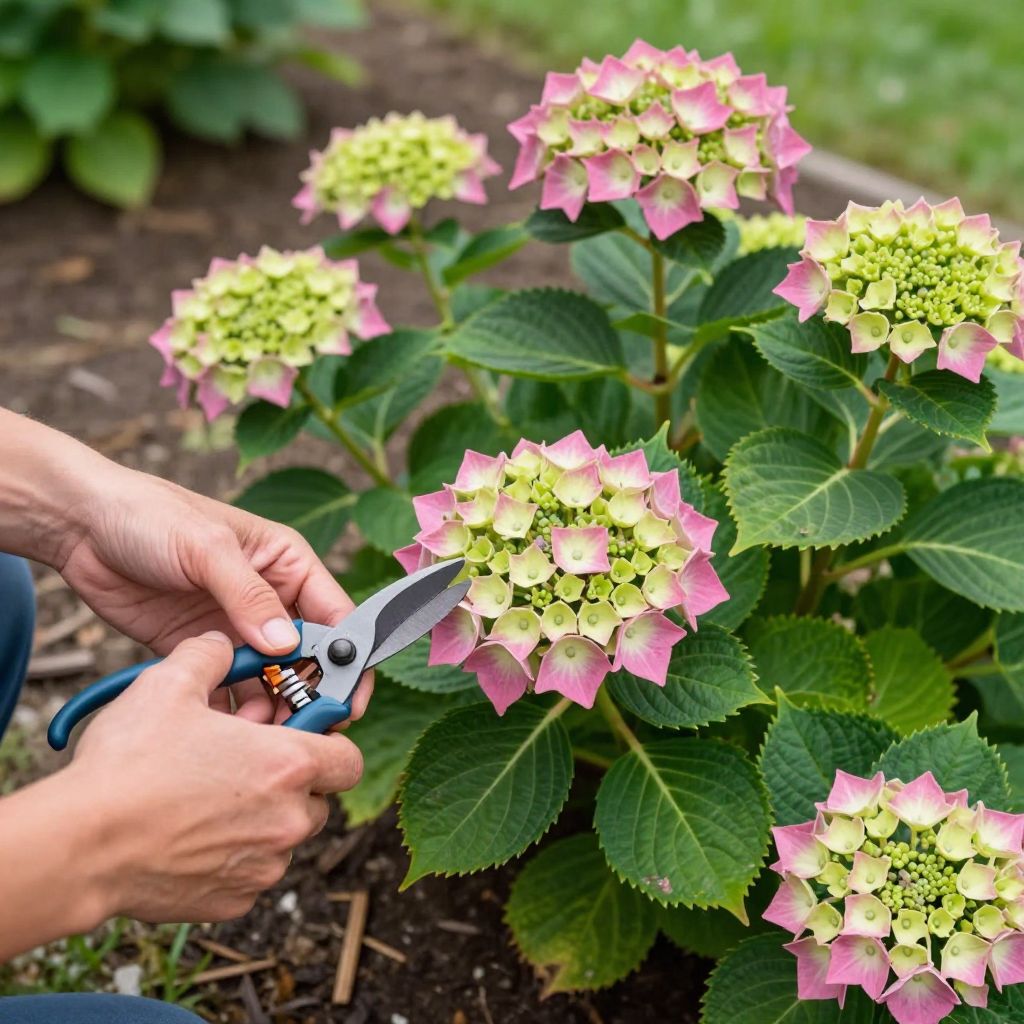
Do you deadhead hydrangeas? In many gardens, yes—but not always, and the right answer depends on the type of hydrangea you grow. Deadheading can tidy the plant, improve appearance, and sometimes encourage better flowering, but using the wrong pruning approach can remove next year’s buds.
The key is to identify your hydrangea first, then deadhead only what makes sense for that variety and season. With a few simple checks, you can keep blooms looking neat without sacrificing flowers.
Do you deadhead hydrangeas?
Yes, you can deadhead hydrangeas to remove faded flowers and keep the plant looking tidy. For many types, snipping off spent blooms is safe, but avoid cutting too far down the stem on varieties that set next year’s flower buds on old wood. Deadheading is maintenance, not major pruning.
Why deadhead hydrangeas at all?
Deadheading is mainly about plant appearance and light cleanup. It can also reduce the energy the plant spends on making seed heads, though the effect on reblooming is usually modest compared with good light, moisture, and overall care.
Benefits of deadheading
- Removes brown, papery flowers that can make the plant look tired.
- Reduces the risk of weak stems bending under old blooms in some varieties.
- Helps you spot new growth, pests, or disease more easily.
- Can improve the look of borders, foundation plantings, and containers.
When deadheading is optional
Some gardeners leave the dried flower heads on hydrangeas through fall and winter for structure and seasonal interest. In colder climates, the faded blooms can also add texture in the dormant garden. If you like that look, you do not need to deadhead every flower.
Know your hydrangea before you cut
Not all hydrangeas bloom the same way. That matters because some types flower on old wood (stems formed last year), while others bloom on new wood (current season’s growth). Deadheading is usually fine on both, but heavy pruning is not.
Common garden hydrangeas and deadheading basics
- Bigleaf hydrangea (Hydrangea macrophylla): deadhead spent blooms carefully; avoid cutting into the next set of buds.
- Mountain hydrangea (Hydrangea serrata): similar to bigleaf types; light deadheading is fine.
- Panicle hydrangea (Hydrangea paniculata): deadheading is safe, and these often tolerate more pruning.
- Smooth hydrangea (Hydrangea arborescens): deadhead freely; these bloom on new wood.
- Oakleaf hydrangea (Hydrangea quercifolia): deadhead lightly if desired, but avoid hard pruning unless needed.
A simple rule if you are unsure
If you do not know which hydrangea you have, deadhead only the faded flower cluster and stop above the first healthy pair of leaves. Do not shorten the stem deeply unless you are certain the plant blooms on new wood.
How to deadhead hydrangeas correctly
Deadheading hydrangeas is simple, but the cut location matters. The goal is to remove the spent flower without removing the stem sections that hold future buds.
- Wait until the bloom has faded, browned, or become papery.
- Follow the flower stem down to the first strong pair of leaves or a healthy leaf node.
- Make a clean cut just above that point with clean pruners or snips.
- Remove only the spent flower head unless the stem is damaged or diseased.
- Disinfect tools if you are cutting through diseased tissue or moving between plants.
Best tools to use
- Bypass pruners for thicker stems.
- Sharp hand snips for smaller flower stalks.
- Gloves if the stems are woody or you are pruning a large shrub.
Use clean, sharp tools. Ragged cuts heal more slowly and can invite disease, especially in humid weather or after rain.
When is the best time to deadhead hydrangeas?
You can deadhead hydrangeas during the blooming season as flowers fade. In most gardens, this means from early summer through late summer, though timing varies by species, climate, and whether the plant reblooms.
Seasonal guidance
- Spring: Avoid heavy pruning on old-wood bloomers, since flower buds may already be forming.
- Summer: Deadhead as blooms fade to keep the plant neat.
- Fall: You may leave some flowers in place for winter interest, especially on larger shrubs.
- Winter: Avoid cutting back too much unless you are removing broken, dead, or diseased stems.
If your hydrangea blooms on new wood, you have more flexibility. Even so, deadheading is still best done as flowers fade rather than waiting until the shrub is overgrown with old blooms.
What not to do when deadheading hydrangeas
Most hydrangea mistakes happen when deadheading turns into pruning. A light trim is fine, but a hard cut can remove flower buds or stress the plant.
Common mistakes to avoid
- Cutting too far down the stem on old-wood bloomers.
- Removing healthy green growth along with the faded flower.
- Pruning in late summer or fall without knowing the bloom type.
- Shearing the whole shrub into a round shape, which can reduce flowering.
- Ignoring dead, broken, or diseased stems that should be removed separately.
If your hydrangea did not bloom well this year, overpruning may be part of the problem. Other common causes include too much shade, late frost damage, drought stress, or a spring cold snap that killed flower buds.
Deadheading versus pruning: they are not the same
Deadheading removes spent flowers. Pruning changes the shape, size, and structure of the shrub. Hydrangeas often need only light deadheading and occasional selective pruning, not a yearly hard cut.
Light maintenance pruning can include
- Removing dead or damaged stems at the base.
- Cutting out crossing branches to improve airflow.
- Shortening a stem slightly to keep the plant balanced.
- Taking out weak growth that crowds the center.
For bigleaf, mountain, and oakleaf hydrangeas, major pruning is usually best done only when you know exactly where the flower buds are forming. If you are unsure, keep pruning minimal.
How deadheading fits into overall hydrangea care
Deadheading helps the plant look better, but it will not fix poor growing conditions. Healthy hydrangeas bloom best when they are planted in the right spot and cared for consistently.
Growing conditions that support better blooms
- Sunlight: Most hydrangeas do best with morning sun and afternoon shade, especially in hot climates.
- Soil: Rich, well-drained soil with plenty of organic matter supports strong growth.
- Moisture: Even moisture is important, especially during bud formation and flowering.
- Drainage: Waterlogged soil can weaken roots and reduce bloom quality.
Watering and mulch
Hydrangeas prefer steady moisture, but they do not like soggy roots. Water deeply when the top few inches of soil begin to dry, then mulch around the base to help hold moisture and moderate soil temperature.
A 2- to 3-inch layer of organic mulch, such as shredded bark or composted leaves, is usually enough. Keep mulch a few inches away from the stems to reduce rot.
Feeding and soil care
Hydrangeas generally respond well to compost worked into the soil in spring or top-dressed around the root zone. If your soil is poor, adding organic matter can improve structure and moisture retention over time.
Avoid overfertilizing, which can push leafy growth at the expense of flowers. If your plant is healthy but not blooming, soil conditions, pruning timing, and light exposure are often more important than extra feed.
Special notes for reblooming hydrangeas
Some hydrangeas, especially certain bigleaf types, are bred to rebloom. For these, deadheading can help the plant look tidy between flushes, but it is not a guarantee of more flowers. The plant still needs enough light, moisture, and time to produce new buds.
If a reblooming hydrangea is slow to flower again, check whether it is getting too much shade or whether the first flush was damaged by cold weather or pruning. Sometimes the issue is not deadheading at all.
Pests, diseases, and damaged blooms
Faded flowers are normal, but browning that happens too quickly can point to stress. If you see spots, mildew, or damaged stems, inspect the plant before deadheading.
Watch for these problems
- Powdery mildew: white, dusty coating on leaves, often in humid conditions with poor airflow.
- Leaf spot: dark or brown lesions that can weaken the plant over time.
- Aphids: small soft-bodied insects that cluster on tender growth.
- Bud damage: cold injury or late frost can kill developing flowers.
If disease is present, remove only the affected material and dispose of it appropriately. Do not compost heavily diseased plant parts unless your compost system gets hot enough to break them down safely.
Can you propagate hydrangeas from deadheaded stems?
Deadheaded flower stems are usually not the best choice for propagation because they are often too mature or too spent. If you want to take cuttings, use healthy, nonflowering stems instead.
For most home gardeners, the better use of deadheaded stems is simply cleanup. If you want to try propagation, take softwood or semi-ripe cuttings from vigorous growth at the right time for your climate and hydrangea type.
Quick answer: should you deadhead hydrangeas every year?
Not necessarily. Deadheading is helpful, but it is optional for many hydrangeas and should be done gently. If you want a neat look, remove faded blooms as they age. If you prefer winter structure or are unsure of the bloom type, you can leave the flowers in place until late winter or early spring.
Conclusion
So, do you deadhead hydrangeas? Yes, if you want a cleaner-looking shrub and you do it carefully. The safest approach is to remove only the spent bloom, stop above healthy leaves, and avoid heavy pruning unless you know your hydrangea blooms on new wood.
For more practical hydrangea guidance, you may also want to read about how to prune hydrangeas correctly and general hydrangea care tips.