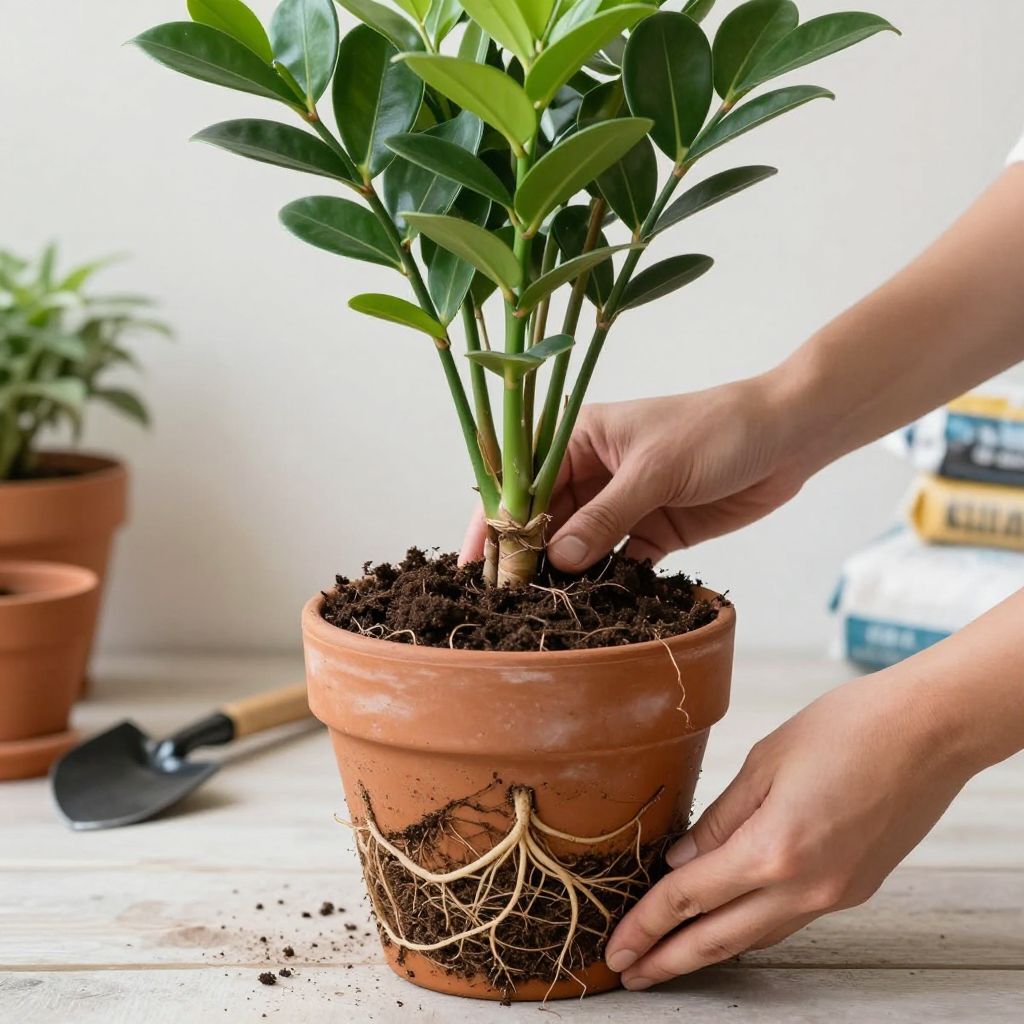
Do ZZ plants like to be root bound? Many houseplant owners notice their ZZ plant staying healthy in a tight pot and wonder whether that’s normal or a problem. The short answer is yes—ZZ plants often tolerate, and may even prefer, being somewhat root bound.
That said, “root bound” should not mean severely cramped for years. A slightly snug pot can help a ZZ plant stay stable and reduce overwatering risk, but if roots are circling tightly, pushing the plant upward, or breaking the pot, it’s time to repot.
Do ZZ Plants Like To Be Root Bound?
Yes, ZZ plants (Zamioculcas zamiifolia) generally do well in a pot that is only slightly snug. They are slow growers with rhizomes that store water, so they often prefer being a bit crowded rather than sitting in an oversized container with extra wet soil. Severe root binding, however, can slow growth and make watering harder to manage.
Why ZZ Plants Handle Tight Pots So Well
ZZ plants evolved to store moisture in thick rhizomes and roots, which makes them drought-tolerant and naturally slow to expand. Because of that, they do not need frequent repotting like faster-growing houseplants.
What “root bound” means for a ZZ plant
A mildly root-bound ZZ plant has roots filling much of the pot, but the plant is still functioning normally. A severely root-bound plant has roots packed so tightly that they spiral, dry out too fast, or crowd out the potting mix.
- Mildly root bound: usually fine for a while
- Moderately root bound: growth may slow, repotting soon is wise
- Severely root bound: repotting is needed
For many indoor growers, a slightly snug container is actually safer than a pot that is too large.
Signs Your ZZ Plant Is Root Bound
ZZ plants do not always show distress quickly, so look for several clues together rather than one symptom alone.
- Roots or rhizomes are visible at drainage holes
- The pot feels crowded or bulges
- The plant dries out unusually fast after watering
- New growth is very slow or stops for long periods
- The plant lifts slightly out of the pot as roots expand
- Water runs through the pot too quickly because there is little soil left
One important note: slow growth alone does not always mean root bound. ZZ plants grow slowly by nature, especially in lower light or during cooler months.
When a ZZ Plant Should Be Repotted
Repotting is usually needed when the plant is clearly outgrowing its container or when the potting mix has broken down. A ZZ plant may stay in the same pot for several years if conditions are stable.
Repot sooner if you notice these problems
- The pot cracks, warps, or becomes unstable
- Roots are tightly circling the inside of the pot
- The plant is top-heavy and tips over easily
- The soil stays soggy for too long because drainage is poor
- Rhizomes are pressing hard against the pot walls
If the plant looks healthy and the pot is only slightly snug, you can often wait until the next active growth period to repot.
Best Pot Size for ZZ Plants
When repotting, choose a container only one size larger than the current pot. A pot that is too large holds excess moisture, which is one of the easiest ways to damage a ZZ plant.
- Move up about 1 to 2 inches in diameter for smaller pots
- For larger, established plants, increase only slightly
- Always use a pot with drainage holes
A slightly snug pot is better than an oversized one. ZZ plants are much more likely to suffer from wet soil than from being a little crowded.
How to Repot a Root-Bound ZZ Plant
Repotting a ZZ plant is straightforward, but you should work carefully because the rhizomes are thick and can snap if forced.
- Water lightly a day or two before repotting if the soil is very dry.
- Lay the pot on its side and ease the plant out gently.
- Loosen only the outermost roots if they are tightly circling.
- Inspect the rhizomes and roots for soft, black, or mushy areas.
- Place the plant in a new pot with fresh, well-draining mix.
- Set the crown at the same depth it was growing before.
- Water lightly after repotting, then let excess water drain away fully.
If roots are extremely packed, you can tease them apart a little, but avoid aggressive root pruning unless the plant is badly bound and healthy enough to recover.
Soil and Drainage Matter More Than Pot Size
For ZZ plants, the potting mix is just as important as the container. A fast-draining, airy mix helps prevent rot, especially if the plant is sitting in a pot that is slightly larger than necessary.
Good potting mix characteristics
- Drains quickly but still holds a little moisture
- Contains chunky material for airflow
- Does not compact into a dense, muddy mass
A quality indoor potting mix amended with perlite, pumice, or orchid bark often works well. Heavy garden soil is usually too dense for indoor ZZ plants.
If you are growing a ZZ plant outdoors in a warm climate, drainage becomes even more important. In-ground soil should be loose and well-drained, not waterlogged after rain.
Watering a Root-Bound ZZ Plant
Root-bound ZZ plants can dry out faster because there is less soil to hold moisture. Even so, they still need careful watering rather than frequent watering.
How to tell when to water
- Check the top few inches of soil
- Lift the pot to judge its weight
- Wait until the mix is mostly dry before watering again
Water thoroughly until excess drains out, then empty the saucer. Do not water on a fixed schedule if the plant’s light, temperature, and pot size have changed.
Overwatering is the biggest risk for ZZ plants. A root-bound plant may look thirsty, but watering too often can quickly lead to rhizome rot.
Light, Temperature, and Growth Rate
ZZ plants tolerate low light, but they grow best in bright, indirect light. Better light can encourage stronger growth, which may make a root-bound plant fill its pot faster.
What to expect in different conditions
- Bright indirect light: steadier growth, faster pot fill-up
- Low light: slower growth, less frequent repotting
- Cooler seasons: growth may pause naturally
Keep indoor plants away from cold drafts and sudden temperature swings. In cooler months, a ZZ plant may appear to “stall,” but that does not always mean it needs repotting.
Common Problems Mistaken for Root Bound Issues
Sometimes a ZZ plant seems cramped when the real issue is something else. Before repotting, check whether the plant is actually struggling with light, water, or soil quality.
Possible look-alikes
- Yellowing from overwatering: often caused by soggy soil, not tight roots
- Slow growth: normal for ZZ plants in lower light or winter
- Drooping stems: may indicate watering issues or weak light
- Stunted growth: could be compacted soil rather than root crowding alone
If the soil smells sour, stays wet for days, or the stems feel soft at the base, focus on drainage and root health first.
Pests and Diseases to Watch For
ZZ plants are generally tough, but stressed plants can be more vulnerable to pests and rot. Root-bound plants are not automatically diseased, but crowded roots can make poor watering habits more damaging.
Watch for these issues
- Mealybugs: white, cottony clusters on stems or leaf joints
- Scale insects: small, fixed bumps on stems
- Root rot: mushy rhizomes, yellowing, collapse
Inspect the plant when repotting. If you see soft, dark roots, trim away the damaged tissue with clean tools and repot into fresh, dry-to-slightly-moist mix.
Propagation and Division When Repotting
Repotting is a convenient time to divide a crowded ZZ plant if it has multiple rhizomes and healthy growth points. Division is often easier than trying to force a very crowded plant into a larger pot.
Basic division tips
- Separate sections only if each division has roots and at least one growth point
- Use a clean, sharp knife if roots are tangled
- Let cuts dry briefly before potting if needed
- Use small pots for new divisions, not oversized containers
Division is optional. If the plant is healthy and you simply want a larger specimen, repotting into a slightly larger container is usually enough.
Practical Mistakes to Avoid
Most ZZ plant problems come from trying to “help” too much. A plant that likes tight roots still needs the right balance of air, moisture, and drainage.
- Do not jump to a much larger pot
- Do not repot into dense, heavy soil
- Do not water on a rigid schedule
- Do not bury the rhizomes deeper than before
- Do not repot just because the plant is slow-growing
If you are unsure, it is usually safer to wait a little longer than to repot too soon into a pot that stays wet.
Conclusion: The Best Approach for a ZZ Plant
So, do ZZ plants like to be root bound? They usually tolerate it well and may even prefer being slightly snug, but they should not be left severely cramped for too long. Watch for crowded roots, poor drainage, or unstable growth, then repot only one size up into a fast-draining mix.
If you want to keep your ZZ plant thriving, check the roots the next time you repot and adjust the pot size slowly. For more houseplant care help, you may also want to read about choosing the right potting mix for indoor plants and how to tell when a houseplant needs repotting.