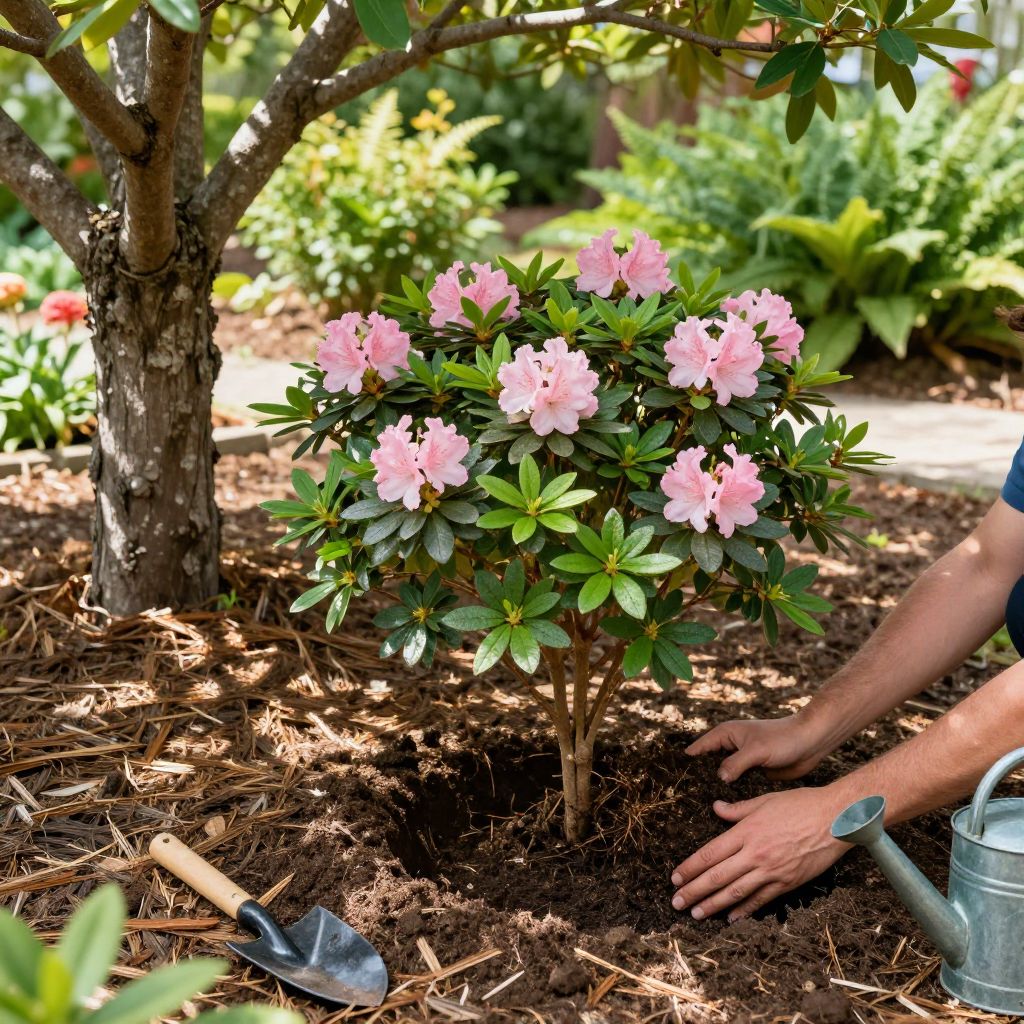
Where should you plant azaleas so they actually thrive? The best spot is one that gives morning sun or dappled shade, acidic well-drained soil, and shelter from harsh afternoon heat and wind. Azaleas are woodland shrubs, so they do best in conditions that mimic a lightly shaded forest edge rather than an open, exposed bed.
If you place them in the wrong location, even healthy plants can struggle with yellow leaves, poor flowering, or dieback. The good news is that once you understand what azaleas need, choosing the right planting site becomes straightforward.
Where to plant azaleas?
Plant azaleas in a spot with filtered light or morning sun, acidic soil, and excellent drainage. They perform best beside trees with high canopies, along east- or north-facing foundations, or in woodland-style borders. Avoid hot, dry, windy places, heavy clay that stays wet, and deep shade that reduces flowering.
Best light conditions for azaleas
Light is one of the biggest factors in whether azaleas bloom well. Most azaleas flower best with morning sun and afternoon shade, especially in warmer climates.
Ideal sun exposure
- Morning sun: encourages good flowering and helps dry dew from leaves.
- Filtered light: works well under tall deciduous trees that let in gentle light.
- Light shade in hot regions: protects leaves and buds from scorch.
In cooler climates, azaleas may tolerate more sun, but they still need protection from intense afternoon light. In hotter areas, too much sun can cause leaf burn, wilting, and sparse blooms.
Light conditions to avoid
- Deep shade, which often leads to weak growth and fewer flowers.
- Full all-day sun in hot climates, especially near walls or pavement.
- Sites with reflected heat from fences, buildings, or driveways.
Soil requirements: the foundation for healthy azaleas
Azaleas need acidic, organic-rich soil that drains well but still holds even moisture. They dislike alkaline soil and compacted ground, which can limit nutrient uptake and root growth.
What kind of soil is best?
- pH: slightly acidic soil, typically around 4.5 to 6.0.
- Texture: loose, humus-rich soil with plenty of organic matter.
- Drainage: water should move through the root zone without pooling.
If your soil is naturally alkaline, azaleas may develop chlorosis, where leaves turn yellow with green veins. In that case, choose a different planting area or grow them in a raised bed or large container with an acidic mix.
How to improve planting soil
- Test the soil pH before planting if possible.
- Work in composted pine bark, leaf mold, or other acidic organic matter.
- Loosen compacted soil to improve root penetration.
- Do not overmix in heavy clay amendments that may worsen drainage.
Tip: Azaleas prefer soil that is moist but never soggy. If water stands in the planting area after rain, choose another location or build up the bed.
Drainage matters more than many gardeners realize
One of the most common reasons azaleas fail is poor drainage. Their roots are shallow and sensitive, so they can rot in wet soil.
Signs a site drains too slowly
- Puddles remain for hours after rain or watering.
- The soil feels sticky, heavy, or dense.
- Nearby plants show root stress or fungal problems.
To check drainage, dig a hole about 12 inches deep and fill it with water. If it still holds water after several hours, the site may be too wet for azaleas without improvement.
Better options for poorly drained ground
- Plant in a raised bed.
- Build a gentle mound before planting.
- Choose a naturally higher, better-drained part of the yard.
Good landscape locations for azaleas
Azaleas are versatile shrubs, but they shine in certain parts of the garden more than others. The best location is one that balances light, moisture, and shelter.
Excellent planting spots
- East-facing beds that get morning sun.
- Under open-canopy deciduous trees.
- Along woodland edges or shaded borders.
- Near patios or entryways with filtered light.
- Foundation plantings on the cooler side of a house.
Places to be cautious
- South- or west-facing walls that trap heat.
- Windy corners where soil dries quickly.
- Low spots where water collects.
- Areas under dense evergreen shade.
When planting near a house, leave enough space for mature growth and airflow. Good air circulation helps reduce leaf diseases and keeps shrubs from becoming crowded.
How to plant azaleas in the right place
Once you have the right location, careful planting helps the shrub settle in quickly. Azaleas have shallow roots, so depth and soil preparation matter.
Step-by-step planting guide
- Choose a site with morning sun or dappled shade and good drainage.
- Dig a hole only as deep as the root ball and about two to three times as wide.
- Loosen the surrounding soil so roots can spread outward.
- Set the plant so the top of the root ball sits level with or slightly above the soil surface.
- Backfill with native soil amended lightly with organic matter if needed.
- Water thoroughly to settle the soil.
- Apply 2 to 3 inches of mulch, keeping it a few inches away from the stem.
Do not plant azaleas too deep. Burying the crown can reduce oxygen around the roots and lead to decline over time.
How climate changes the best planting location
The ideal spot for azaleas depends on your local weather. A location that works in a cool region may be too sunny or dry in a hot one.
In cooler climates
- Azaleas can often handle more sun.
- Choose a site with some shelter from cold winds.
- Make sure winter sun does not dry out evergreen foliage excessively.
In warmer climates
- Prioritize afternoon shade.
- Mulch well to keep roots cooler.
- Avoid reflective heat from walls, stone, and pavement.
If you are unsure how much sun your yard gets, observe the area at different times of day before planting. Seasonal sun angles can change the amount of light dramatically.
Container growing: a good option when the ground is wrong
If your yard has alkaline soil, poor drainage, or no suitable shade, azaleas can grow well in containers. This is especially useful for patios, balconies, and small spaces.
Container placement tips
- Place pots where they get morning sun and afternoon shade.
- Avoid hot concrete or brick that can overheat roots.
- Use a pot with drainage holes.
- Choose a pot large enough to reduce drying out too fast.
Container azaleas usually need closer monitoring than in-ground plants, especially during warm weather. The soil should stay evenly moist, not saturated.
Common planting mistakes to avoid
Many azalea problems begin with a poor site choice. Avoiding a few common mistakes can save you a lot of trouble later.
Frequent errors
- Planting in full afternoon sun in hot regions.
- Putting azaleas in heavy, wet clay without improving drainage.
- Using alkaline soil without correction or a better planting site.
- Planting too deeply.
- Skipping mulch and allowing roots to dry out.
- Crowding shrubs too close to walls or other plants.
Another common mistake is choosing a spot based only on spring conditions. A site that looks perfect in April may become too hot and dry by midsummer.
Aftercare that helps azaleas establish
Even in the best location, newly planted azaleas need steady care while their roots settle in. The goal is even moisture and minimal stress.
What to do after planting
- Water deeply after planting.
- Keep the root zone evenly moist during establishment.
- Mulch to conserve moisture and moderate soil temperature.
- Watch for wilting, leaf scorch, or yellowing leaves.
Avoid heavy fertilizing right after planting unless a soil test recommends it. Too much fertilizer can stress young roots and encourage weak growth.
When to move an azalea to a better spot
If an established azalea is struggling, the location may be the problem. Signs include poor flowering, scorched leaves, chronic wilting, or slow decline despite watering.
Transplanting is often worth considering if the shrub is in the wrong light or soil. Move it during a mild season in your area, and prepare the new site carefully before digging it up.
Before you move it, ask:
- Is the plant getting too much sun or too much shade?
- Does water drain away quickly enough?
- Is the soil too alkaline?
- Is there enough space and airflow?
Final thoughts
The best place for azaleas is a sheltered site with morning sun, afternoon shade, acidic soil, and excellent drainage. If you can give them those conditions, they are much more likely to grow well and flower reliably.
Before planting, check your light, test drainage, and improve the soil only as needed. If you want to keep learning about shrub care and garden placement, look for more advice on soil preparation, mulching, and shade-loving landscape plants.