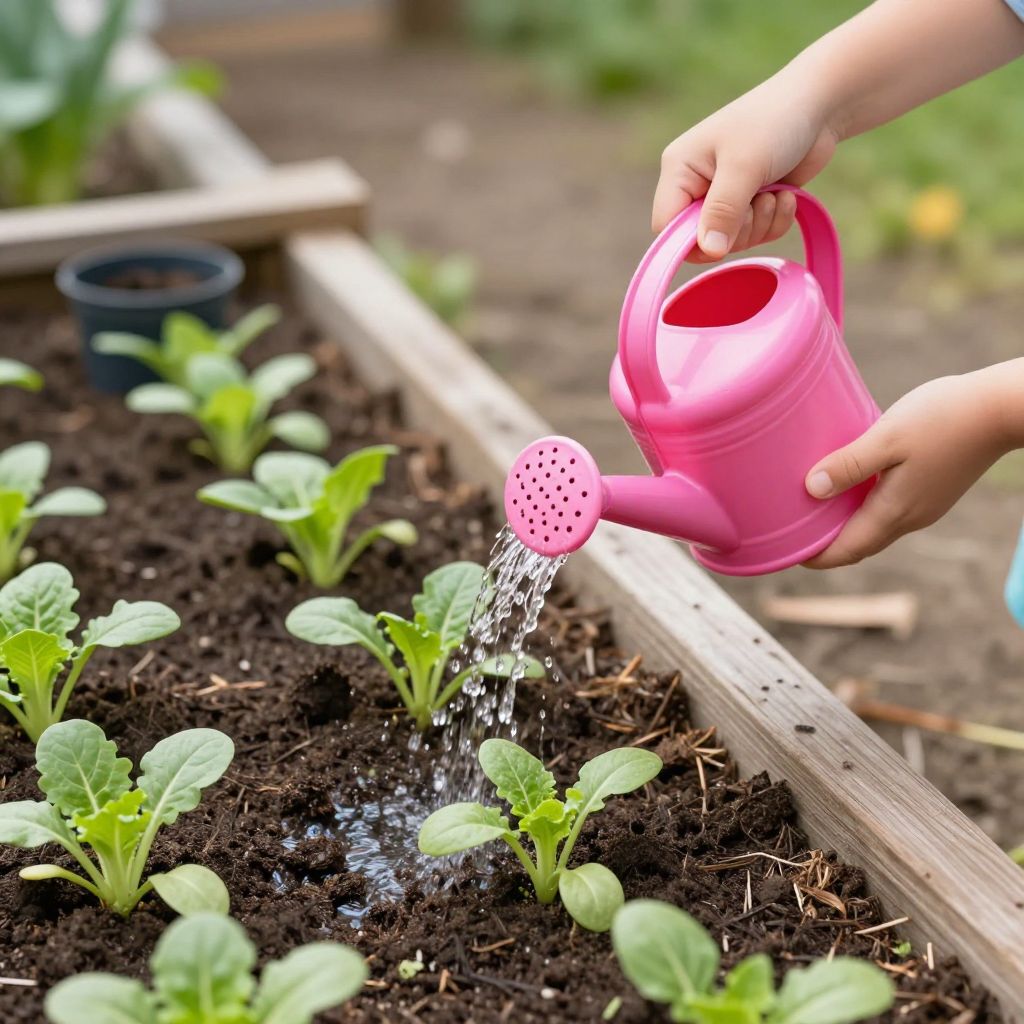
Looking for a kids watering can that actually helps in the garden, not just one that spills everywhere? The right can makes watering safer, easier, and more fun for children while helping plants get the moisture they need.
Used well, a child-sized watering can is a practical gardening tool for raised beds, containers, seedlings, and houseplants. The key is choosing the right size, teaching gentle watering habits, and matching the tool to the plant’s needs and your local conditions.
What is a kids watering can, and how do you use it in the garden?
A kids watering can is a smaller, lighter watering tool designed for children to carry and control more easily. It works best for light watering of pots, seedlings, small beds, and indoor plants, especially when you teach children to water at the soil line rather than blasting leaves and flowers.
Choosing the right kids watering can
The best watering can for children is not just cute; it should be comfortable, balanced, and easy to pour. A can that is too large becomes heavy when full, while one with a poor spout can dump water too fast and wash soil away.
What to look for
- Light weight: Empty weight matters, because children will fill it with water.
- Small capacity: A modest size is easier to control and less tiring to carry.
- Comfortable handle: Two-hand grips or a well-shaped top handle help with balance.
- Gentle spout or rose: A fine sprinkler head is useful for seedlings and delicate plants.
- Durable material: Sturdy plastic is often easier for kids than heavy metal.
If your child is very young, choose a can that is easy to lift when full only partway. A smaller can used more often is usually better than a large one that leads to spills, frustration, or overwatering.
Best uses in the garden
- Watering potted herbs and flowers
- Moistening seed trays and newly planted seedlings
- Helping with raised beds and small vegetable patches
- Watering indoor plants and windowsill gardens
- Teaching children how to check soil moisture before watering
How to teach children to water plants properly
Good watering is about where and how much, not just pouring water around. Show children to aim at the base of the plant, water slowly, and stop when the soil is evenly moist rather than saturated.
Simple watering steps for kids
- Check the soil with a finger about 2 to 5 cm deep, depending on plant size.
- Fill the kids watering can only partway if needed for easier carrying.
- Water at the base of the plant, not from high above.
- Pour slowly so the soil can absorb the water.
- Watch for runoff and stop when water begins to drain through or the soil looks evenly moist.
This is a great chance to teach observation. If the surface looks dry but the soil below is still damp, wait before watering again.
Why gentle watering matters
Fast, heavy watering can compact soil, expose roots, and wash seeds away. Gentle watering helps preserve soil structure, protects seedlings, and reduces splashing that can spread disease on leaves.
Matching watering to plant type
Different plants need different watering habits, so the same kids watering can should be used differently depending on what is growing. Containers usually dry out faster than garden beds, and seedlings need much gentler watering than established plants.
Seedlings and newly planted seeds
Use a fine rose or very light pour. The goal is to keep the top layer evenly moist, not soaked. Seeds can shift or bury too deeply if water hits them too hard.
Vegetables and flowers in beds
Water slowly at the root zone so moisture reaches the soil where roots are growing. In many gardens, deeper, less frequent watering is better than frequent shallow watering, but this depends on soil type and weather.
Potted plants and containers
Containers dry out quickly, especially in warm or windy weather. Check them more often than beds, and water until a little moisture drains from the bottom, then let the excess run away.
Indoor plants
For houseplants, use a small kids watering can with a narrow spout for control. Empty any water that collects in saucers after watering, unless the plant specifically prefers to sit in moisture for a short time.
How much water should you give?
There is no single amount that works for every plant or climate. The right amount depends on soil texture, pot size, plant maturity, temperature, rainfall, wind, and whether the plant is growing in sun or shade.
Use the soil, not the calendar
- Dry, sandy soil usually needs watering more often.
- Clay soil holds water longer but can become waterlogged if overwatered.
- New plantings need closer attention than established plants.
- Hot, windy weather increases water loss.
- Cool, cloudy weather slows drying and may reduce watering needs.
A practical rule is to check soil first, then water only when needed. If the soil feels cool and moist below the surface, wait. If it feels dry at root depth, water thoroughly and slowly.
Seasonal considerations for using a kids watering can
Watering needs change through the year, so a child’s watering routine should change too. In spring, young plants and seedlings often need more frequent attention, while in cooler seasons or rainy periods, overwatering becomes a bigger risk.
Spring
Spring is often a good time to involve children in garden care because new growth is easy to spot. Watch for drying seed trays, newly planted annuals, and transplants that may need regular moisture while roots establish.
Summer
Heat and sun can dry soil quickly. Water early in the day when possible, and encourage children to water the base of plants rather than the foliage, especially during warm weather when wet leaves can stay damp longer.
Autumn
As temperatures drop, many plants use less water. Keep checking containers and any late-season crops, but do not assume every plant needs the same routine as in midsummer.
Winter
Outdoor watering is usually less frequent in cold weather, but indoor plants and protected containers may still need occasional moisture. Avoid keeping soil constantly wet, especially in low light.
Common mistakes with kids watering cans
A child-sized watering can makes gardening easier, but a few common mistakes can still cause problems. Most are easy to fix once you know what to watch for.
Overwatering
Too much water can lead to root stress, yellowing leaves, fungus problems, and soggy soil. If the pot feels heavy for days or the bed stays muddy, pause watering and let the soil dry a bit before checking again.
Watering the leaves instead of the roots
Leaves do not absorb enough water to replace root watering. Aim at the soil unless you are misting a plant that specifically benefits from it, such as certain seedlings in very dry indoor air.
Using too much force
A fast pour can dislodge seedlings and expose roots. If this happens, reduce the fill level in the can or switch to a finer rose attachment.
Ignoring drainage
Plants in pots need drainage holes. Without them, even careful watering can leave roots sitting in excess water. Always check that containers drain freely.
How to make watering part of a child-friendly garden routine
The best way to use a kids watering can is to make watering a simple, repeatable task. Children do well when they know what to look for and have a clear job to complete.
A simple routine
- Look at the plant together.
- Check the soil with a finger.
- Decide whether watering is needed.
- Fill the can only as much as the child can carry safely.
- Water slowly at the base of the plant.
- Put the can away in a dry, easy-to-reach place.
For younger children, give them a small section of the garden or a few pots to care for. That keeps the task manageable and helps them learn responsibility without becoming overwhelmed.
Safety and supervision tips
- Keep paths clear so children do not trip while carrying water.
- Use non-slip shoes if the ground is wet.
- Store the watering can where it will not collect stagnant water.
- Supervise near ponds, buckets, and other deep water sources.
How to care for the watering can itself
A clean, well-kept kids watering can lasts longer and works better. Rinse it out after use so algae, dirt, and mineral buildup do not clog the spout.
Basic maintenance
- Empty leftover water after each use.
- Rinse the can occasionally to remove soil and debris.
- Check the rose or spout for clogs.
- Store it out of direct sun if the material fades or becomes brittle.
If the can develops cracks or leaks, it may still be usable for dry tools or play, but for gardening it is better to replace it with one that pours predictably.
Troubleshooting: when plants still look thirsty
If you are using a kids watering can and plants still look stressed, the issue may not be the can itself. It may be the soil, the pot size, the weather, or the plant’s stage of growth.
Signs you may need to adjust your approach
- Water runs off the surface instead of soaking in: the soil may be compacted or very dry.
- Plants wilt quickly after watering: roots may be stressed, or the plant may need deeper watering.
- Leaves yellow and soil stays wet: you may be watering too often.
- Container plants dry too fast: the pot may be too small or in too much sun and wind.
If soil is hard and water beads on top, water more slowly in several passes so it can absorb. If a pot dries out constantly, move it to a less exposed spot or consider a larger container with more soil volume.
Why a kids watering can is worth using
A good kids watering can helps children take part in gardening in a way that is practical, safe, and age-appropriate. It turns watering into a real gardening skill, not just a chore, while teaching observation, patience, and plant care.
If you want to get started, choose a lightweight can, show your child how to test the soil first, and begin with a few pots or a small garden bed. For more practical gardening help, you may also enjoy reading about container gardening basics and seedling care tips.