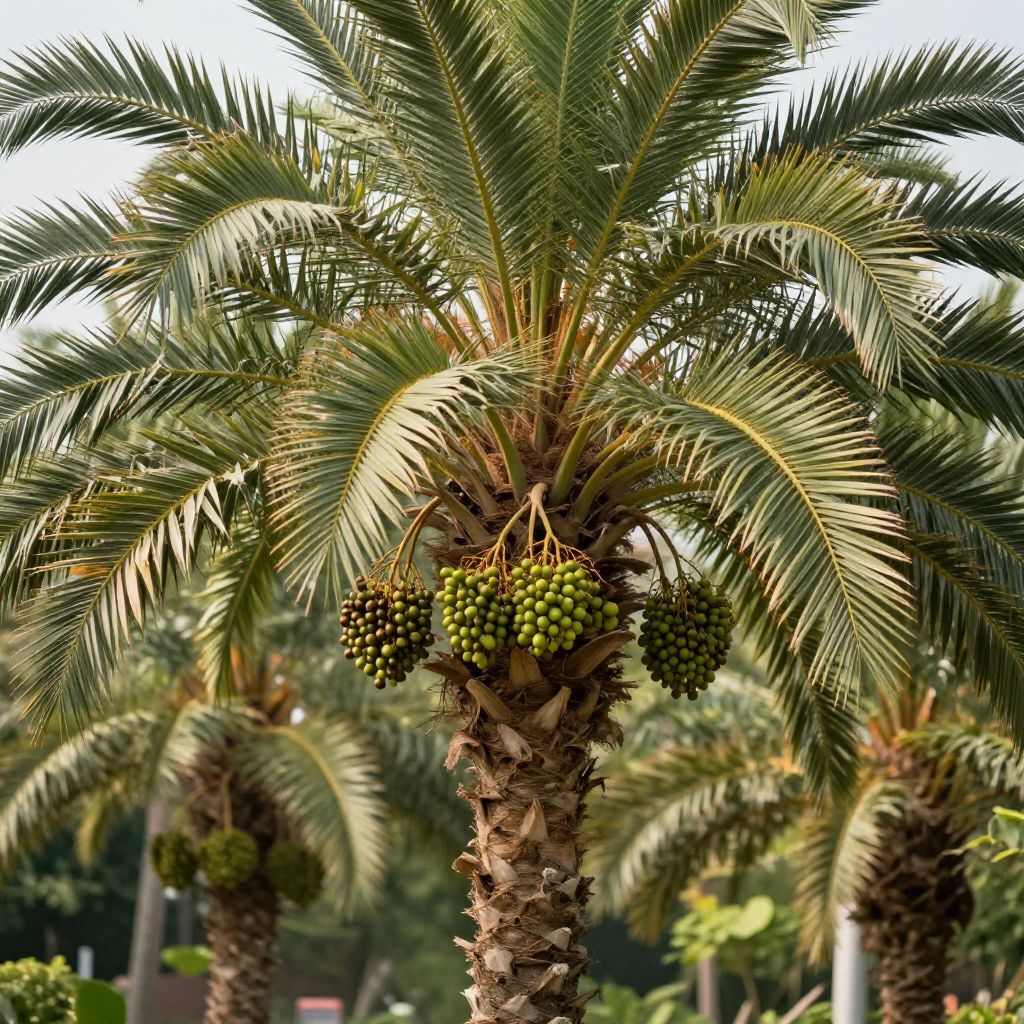
What grows on palm trees depends on the palm itself, the climate, and whether you mean the plant’s natural growth, the fruit it produces, or the things that sometimes grow on it by accident. In most gardens, palms grow fronds, flowers, and fruit; they do not usually host vines or “crops” unless something is wrong.
If you’re looking at a palm and wondering what it is carrying, the answer may be coconuts, dates, berries, or small flower clusters. It could also be moss, algae, scale insects, or epiphytic plants in humid climates. Knowing the difference helps you care for the palm properly and avoid common mistakes.
What grows on palm trees?
Palms naturally produce fronds, flower clusters, and fruit. Depending on the species, that fruit may be edible, ornamental, or messy and inedible. Some palms also collect algae, lichens, or pests on their trunks and crowns, especially in humid or shaded conditions.
Natural growth on palms: fronds, flowers, and fruit
Fronds and new spear growth
The most obvious thing growing on a palm tree is the foliage. Palms grow from a single growing point at the crown, where a tight new leaf called a spear emerges before unfurling into a frond.
Because palms do not branch like broadleaf trees, damage to the crown can be serious. Protect the growing point from pruning cuts, lawn equipment, and cold injury.
Flowers and fruit
Many palms produce flower stalks that emerge from among the fronds. These may later develop into fruit clusters, sometimes large and heavy, sometimes small and decorative.
Examples include:
- Coconut palm (Cocos nucifera) with coconuts
- Date palm (Phoenix dactylifera) with dates
- Queen palm (Syagrus romanzoffiana) with orange fruit clusters
- Sago palm is not a true palm and produces cones, not fruit
Not every palm fruits heavily every year. Flowering and fruiting depend on maturity, species, pollination, weather, and overall plant health.
What else can grow on palm trees?
Epiphytes, moss, algae, and lichens
In warm, wet climates, you may see moss, algae, or lichens on the trunk or old leaf bases. These usually do not feed on the palm directly, but they can indicate persistently damp conditions or low air movement.
Epiphytic plants such as orchids or bromeliads may also grow on palms in tropical landscapes. They use the palm for support, not as a parasite, but they are more common in natural or very humid settings than in ordinary home gardens.
Pests that look like growths
Sometimes what looks like something “growing” on a palm is actually a pest infestation. Scale insects, mealybugs, and whiteflies can appear as bumps, cottony patches, or sticky residue on leaves and stems.
Important: If a palm has sticky leaves, sooty mold, or unusual lumps on the fronds, inspect closely before assuming it is natural growth.
How to tell healthy growth from a problem
Healthy palms have firm, upright fronds, a clean spear at the center, and normal seasonal flowering for the species. Problem signs include yellowing that spreads quickly, a collapsing crown, soft trunk tissue, or blackened growing points.
Use this quick check:
- Healthy: new spear emerging, fronds mostly green, no foul smell
- Possible nutrient issue: older fronds yellowing or spotting in patterns
- Possible water problem: root zone staying soggy or bone-dry for long periods
- Possible pest issue: sticky leaves, webbing, bumps, or cottony clusters
- Possible crown rot: spear pulls out easily, center rots, or the top softens
Growing conditions palms need to produce well
Sunlight
Most palms prefer full sun to bright light, though some species tolerate partial shade. A palm that receives too little light may grow slowly, stretch, or produce weak fronds and sparse flowering.
If you are growing a palm indoors, place it in the brightest spot you have, usually near a south- or west-facing window with filtered light. Rotate the pot occasionally so the plant grows evenly.
Soil and drainage
Palms generally prefer well-drained soil. Heavy, waterlogged ground can lead to root stress and crown decline, especially in cooler weather.
For in-ground planting, improve poor soil with organic matter only if needed to help structure, but do not create a rich, soggy planting hole. The key is drainage. For pots, use a container mix that drains freely and does not stay compacted.
Watering
Water newly planted palms regularly until established, then adjust based on weather, soil type, and species. Many palms like evenly moist soil, but they should not sit in standing water.
Check the soil with your finger before watering. If the top few inches are still moist, wait. If it is dry and the plant is actively growing, water deeply so moisture reaches the root zone.
Mulch and compost
A 2- to 4-inch layer of mulch can help conserve moisture and moderate soil temperature. Keep mulch a few inches away from the trunk so the base does not stay wet.
Compost can improve poor soil, but use it sparingly and mix it into the surrounding area rather than piling it against the trunk. Palms generally do better with steady care than with heavy feeding.
How to care for a palm that is flowering or fruiting
Should you remove fruit?
That depends on your goals. If the fruit is ornamental or edible, leave it in place until it is mature. If it is messy, attracting wildlife, or creating a slip hazard, you can remove the flower stalk or fruit cluster carefully.
Use clean, sharp pruners or a pruning saw for smaller stalks. For large, heavy clusters high in the canopy, hire a qualified arborist rather than climbing or cutting from a ladder.
After flowering
Once a flower stalk has finished and fruit has dropped or been harvested, it may be removed if it is brown and dry. Do not cut green, healthy fronds just because the palm has flowered.
Never remove too many green fronds. Palms rely on their leaves to produce energy, and overpruning weakens the plant.
Common problems that can appear on palm trees
Yellowing fronds
Yellowing can be normal for the oldest fronds, but widespread yellowing may point to poor drainage, nutrient imbalance, or root stress. It is best to look at the whole plant, not just one leaf.
Check whether the yellowing starts on older leaves or newer ones. Older-leaf yellowing often suggests a mobile nutrient issue or natural aging, while new growth problems can indicate more serious crown or root trouble.
Brown tips and leaf scorch
Brown leaf tips may result from dry air, salt exposure, underwatering, or fertilizer buildup. In coastal gardens, salt spray can also contribute.
Flush container palms occasionally with clean water if salts may be accumulating, and avoid overfertilizing. For outdoor palms, improve watering consistency and protect them from reflected heat near pavement or walls.
Scale, mealybugs, and mites
These pests can cluster on fronds and stems, especially on stressed indoor palms. They weaken the plant by feeding on sap and may leave sticky honeydew behind.
Start with physical removal where possible. Wipe small infestations with a damp cloth or use horticultural soap according to the label. Improve air movement and avoid dusty, dry conditions indoors.
Crown rot
Crown rot is one of the most serious palm problems. It often follows injury, prolonged wetness in the crown, or cold damage.
If the central spear is loose, discolored, or foul-smelling, act quickly. Remove standing water from the crown if possible and seek local horticultural advice, because advanced crown rot is difficult to reverse.
Pruning and maintenance tips
What to prune
Remove only dead, fully brown fronds, spent flower stalks, and broken material. Leave green fronds in place unless they are clearly diseased or dangerously obstructive.
Use clean tools and make cuts close to the trunk without cutting into it. Avoid “hurricane cuts,” where too many fronds are removed at once. That weakens the palm and can slow growth.
What not to prune
- Do not cut the top or growing point
- Do not remove green fronds for appearance alone
- Do not tear off fruit stalks by hand if they are heavy
- Do not use climbing spikes on a living palm unless the tree is being removed
Propagation and planting basics
Most home gardeners do not propagate palms from cuttings, because palms usually grow from seed. Seed propagation can be slow and species-specific, and germination often depends on warmth, moisture, and fresh seed.
If you are planting a young palm, choose a site with the right mature size, sunlight, and drainage. A small palm in a nursery pot may eventually become a large landscape plant, so plan for trunk height, canopy spread, and root space.
- Dig a hole only as deep as the root ball and wider than the container.
- Set the palm at the same depth it grew in the pot.
- Backfill with the native soil unless it is severely poor or compacted.
- Water thoroughly to settle the soil.
- Mulch lightly, keeping mulch away from the trunk.
Indoor vs. outdoor palms
Indoor palms
Indoor palms usually grow more slowly and are more prone to dry air, spider mites, and uneven light. They need bright indirect light, well-draining potting mix, and careful watering.
Common indoor types include parlor palm (Chamaedorea elegans), areca palm (Dypsis lutescens), and kentia palm (Howea forsteriana). These are grown mainly for foliage, not fruit.
Outdoor landscape palms
Outdoor palms are more exposed to wind, cold snaps, salt, and soil issues. They may flower and fruit more reliably if they are suited to your climate and planted in the right location.
Choose species that match your local conditions rather than forcing a tropical palm into a marginal climate. A well-sited palm is easier to maintain and less likely to develop stress-related problems.
Quick troubleshooting guide
- Sticky leaves: check for scale or mealybugs
- Brown frond tips: review watering, salts, and fertilizer use
- Soft crown or bad smell: suspect rot and act fast
- Few or no flowers: the palm may be immature, stressed, or in low light
- Fruit drop: may be normal after ripening or a sign of stress if excessive
Conclusion
When you ask what grows on palm trees, the answer is usually fronds, flowers, and fruit, plus occasional moss, algae, or pests that need attention. Identify what you are seeing before you prune or treat anything, then match care to the palm’s light, drainage, and climate needs.
For more practical palm care, you may also want to read about how to prune palms safely and container palm care for indoor and patio growing.