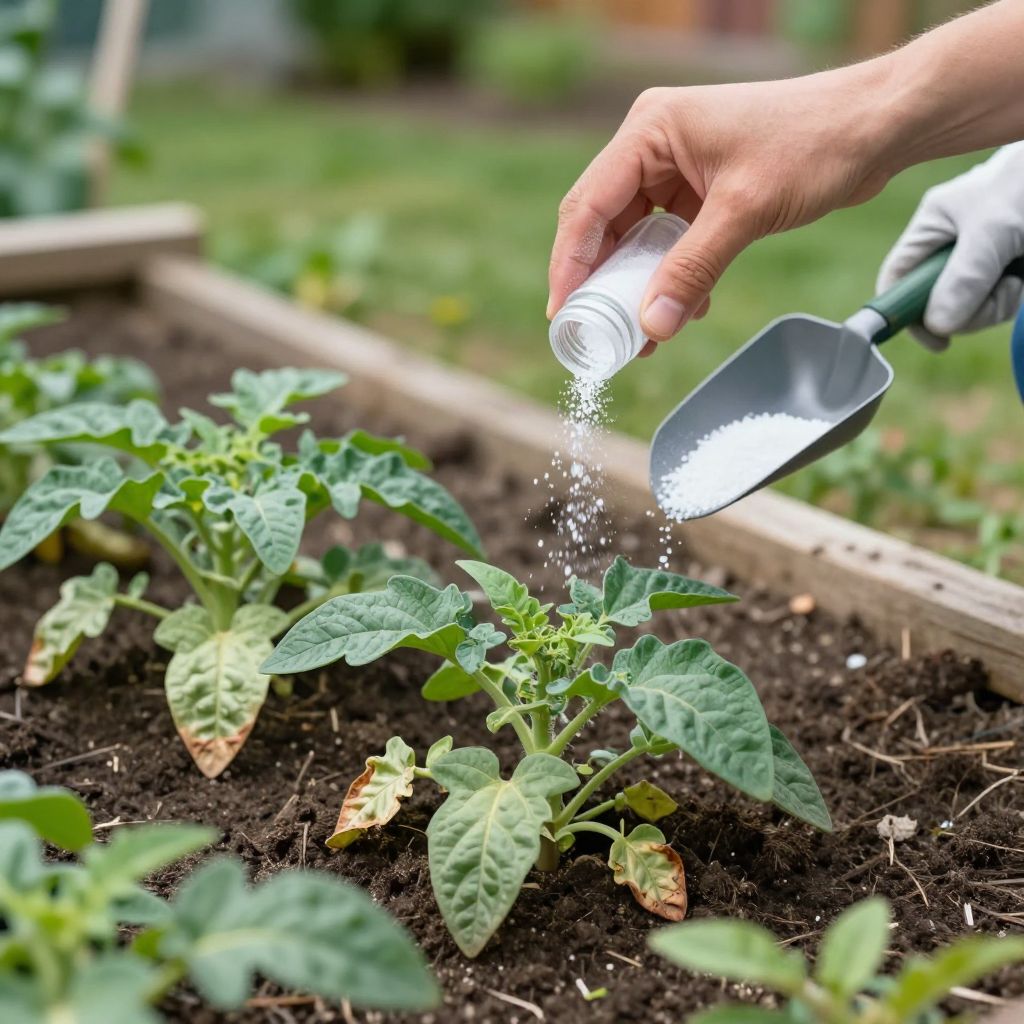
What plants don’t like Epsom salt, and when does it do more harm than good? If you’ve seen magnesium sulfate recommended for everything from tomatoes to roses, it’s easy to assume it helps all plants. In reality, some plants dislike it, and many gardens don’t need it at all.
The key is to use Epsom salt only when a soil test or clear deficiency points to low magnesium or sulfur. For many plants, especially those that prefer lean, acidic, or carefully balanced soil, routine Epsom salt can create more problems than it solves.
What plants don’t like Epsom salt?
Plants that prefer low-nutrient, acidic, or tightly balanced soil often don’t like Epsom salt, including many natives, most succulents, carnivorous plants, and acid-loving shrubs such as blueberries and rhododendrons. It can also be a poor fit for seedlings, container plants, and any plant already getting enough magnesium from the soil or fertilizer.
Why Epsom salt can be a problem
Epsom salt is magnesium sulfate. It does not replace a complete fertilizer, and it is not a cure-all for yellow leaves, poor growth, or blossom issues. If your soil already contains enough magnesium, extra Epsom salt can interfere with nutrient balance rather than improve it.
What it can do in the soil
- Add magnesium, which plants need in small amounts for chlorophyll.
- Add sulfur, another essential nutrient, but usually already present in most garden soils and fertilizers.
- Shift nutrient balance if used repeatedly without testing.
- Increase salt load in containers or dry soils, which can stress roots.
When “more” is not better
Many garden problems are caused by watering issues, compacted soil, poor drainage, root disease, or a lack of nitrogen, iron, or other nutrients. Epsom salt will not fix those problems, and in some cases it can make them harder to diagnose.
Plants that usually don’t benefit from Epsom salt
These plants are not automatically harmed by every small application, but they are among the least likely to need it. If you grow them, avoid using Epsom salt as a routine treatment unless a soil test shows a real deficiency.
1. Blueberries and other acid-loving shrubs
Blueberries, azaleas, rhododendrons, camellias, and gardenias prefer acidic soil with a carefully managed nutrient profile. Epsom salt is not a standard amendment for these plants and can upset the balance if overused.
2. Carnivorous plants
Venus flytraps, sundews, pitcher plants, and similar species are adapted to very low-nutrient conditions. Fertilizer salts, including Epsom salt, can damage their roots and growing medium.
3. Succulents and cacti
Most succulents and cacti do best in fast-draining, low-fertility soil. Extra salts can accumulate in pots and stress roots, especially if the plant is already getting regular feeding.
4. Seedlings and young transplants
Young plants are sensitive to salt buildup. Unless you have a specific deficiency to correct, it’s better to focus on gentle watering, good light, and a light, well-drained potting mix.
5. Native plants adapted to poor soil
Many native wildflowers, prairie plants, and woodland species perform best without extra feeding. They are often adapted to lean soils and can become weak or leggy if overfertilized.
6. Houseplants in containers
Indoor plants often suffer from salt buildup because pots have limited soil volume and drainage may be imperfect. Epsom salt can accumulate over time, especially if you already use fertilizer or hard tap water.
Signs Epsom salt is not the right fix
If a plant has yellow leaves, poor flowering, or slow growth, Epsom salt is only helpful in a narrow set of situations. Look for the actual cause before adding anything to the soil.
Common symptoms that point elsewhere
- Yellowing on new growth often suggests iron issues, not magnesium deficiency.
- Yellowing on older leaves may be nitrogen deficiency, but it can also be normal aging or poor root function.
- Wilting despite wet soil usually points to root rot, compaction, or drainage trouble.
- Leaf scorch or crispy edges can come from salt stress, drought, or fertilizer burn.
- Poor flowering is often caused by too much shade, pruning at the wrong time, or excess nitrogen.
How to tell if magnesium is actually low
A true magnesium deficiency is best confirmed with a soil test. In some plants, older leaves may show interveinal yellowing while veins stay greener. Even then, check pH, drainage, and overall fertility before adding Epsom salt.
How to use Epsom salt safely, if you really need it
If a soil test or a knowledgeable diagnosis shows low magnesium, use Epsom salt sparingly and only for plants that can benefit from it. Apply it as a targeted correction, not a regular habit.
Safer ways to apply it
- Confirm the problem with a soil test or a reliable diagnosis.
- Check your fertilizer to see whether magnesium is already included.
- Use the smallest effective amount recommended for your plant type or test result.
- Water thoroughly after application so salts move into the root zone evenly.
- Reassess before repeating; do not keep adding more if the plant is not improving.
Where to be especially careful
- Containers, because salts build up faster in pots than in garden beds.
- Dry climates, where evaporation concentrates salts near roots.
- Clay soils, which can hold nutrients and salts tightly.
- Plants already fertilized regularly, since they may already have enough magnesium.
Better alternatives for common garden problems
Before reaching for Epsom salt, match the fix to the problem. Most plant issues respond better to soil improvement, proper watering, and balanced feeding than to a magnesium-only amendment.
If the soil is poor
Work in compost to improve structure, drainage, and overall fertility. Compost supports a wider range of nutrients than Epsom salt and is usually a better long-term choice for beds and borders.
If drainage is bad
Raised beds, wider planting holes in heavy soil, and organic matter can help. For potted plants, use a container mix designed for the plant type and make sure pots have drainage holes.
If leaves are yellow
Check watering first. Overwatering can cause yellow leaves just as often as nutrient problems. Then consider light levels, root health, and whether the plant needs a balanced fertilizer rather than magnesium.
If flowering is weak
Look at sun exposure, pruning timing, and fertilizer balance. Too much nitrogen can encourage leafy growth at the expense of blooms, while too little light can reduce flowering in many ornamentals and vegetables.
Plants, soil, and growing conditions that matter most
Whether a plant tolerates Epsom salt depends on more than the species name. Soil type, rainfall, pot size, fertilizer use, and watering habits all influence whether magnesium becomes helpful, unnecessary, or harmful.
Soil type
Sandy soils may leach magnesium more quickly, while clay soils can hold nutrients longer. That means a plant in sandy ground may sometimes need different care than the same plant in a rich loam.
Container vs. in-ground plants
Container plants are more vulnerable to salt buildup because water drains through a limited amount of soil. In-ground plants have more room for nutrients to disperse, but they still should not be treated with Epsom salt without a reason.
Climate and rainfall
In wet climates, nutrients wash through soil faster. In hot, dry climates, salts can concentrate near roots. Adjust your approach to local conditions rather than following a one-size-fits-all routine.
Common mistakes to avoid
- Using Epsom salt on every plant just because it is a popular garden tip.
- Applying it to seedlings without a clear need.
- Using it instead of fertilizer when the plant needs broader nutrition.
- Treating yellow leaves as a magnesium problem without checking watering and light.
- Adding it repeatedly to containers, where buildup happens quickly.
- Skipping a soil test and guessing at the cause of poor growth.
What to do instead this season
If you are unsure whether your plants like Epsom salt, pause before applying anything. Start with the basics: check soil moisture, observe the leaves, inspect the roots if needed, and review the plant’s light and drainage conditions.
Then, if the plant still seems nutrient-starved, use a soil test or a balanced fertilizer suited to the crop. That approach is safer than guessing, and it usually gives you better results than adding magnesium alone.
For more practical help with soil care and plant feeding, you may also want to read about how to improve garden soil with compost and how to choose the right fertilizer for container plants.