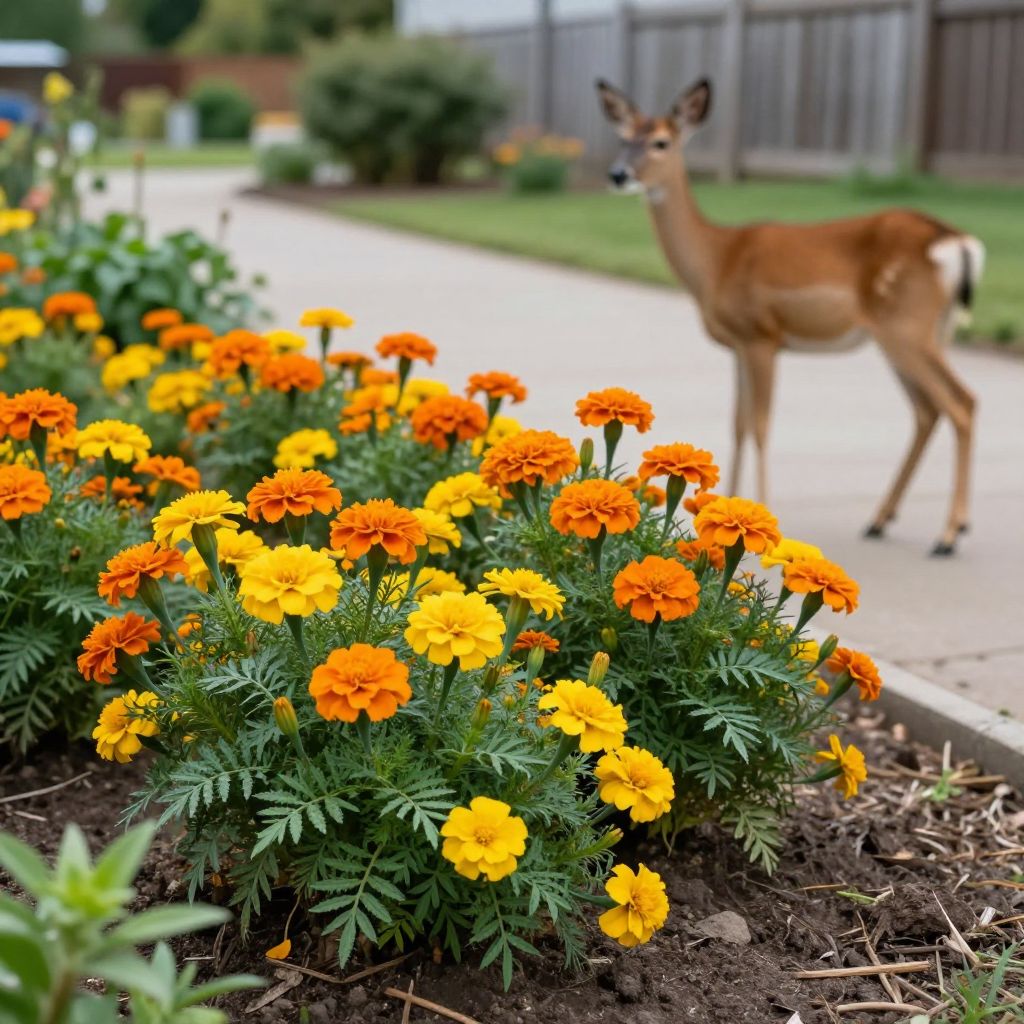
Are marigolds deer resistant? In most gardens, yes—marigolds are among the flowers deer usually avoid. Their strong scent, rough foliage, and bitter taste make them less appealing than many ornamentals, though no plant is completely deer-proof.
If deer are hungry enough, they may still nibble marigolds, especially young plants or flowers planted near heavy deer pressure. The best results come from using marigolds as part of a broader deer-aware planting plan, not as a stand-alone defense.
Are Marigolds Deer Resistant?
Yes, marigolds are generally considered deer resistant, not deer proof. Deer often pass them by because of their pungent smell and slightly coarse texture, but browsing can still happen when food is scarce, deer populations are high, or the plants are newly planted and tender.
Why Deer Usually Leave Marigolds Alone
Deer tend to choose softer, milder, and more nutritious plants first. Marigolds (Tagetes spp.) have traits that make them less attractive in many landscapes.
What makes marigolds less appealing
- Strong scent: The foliage and flowers have a noticeable aroma that many deer dislike.
- Textured leaves: Marigold foliage is not as tender as many favorite deer foods.
- Bitter taste: Deer often prefer plants with sweeter or milder flavors.
- Dense planting effect: A mass of marigolds can be less tempting than a single isolated plant.
That said, deer resistance is always relative. A plant can be “resistant” in one yard and heavily browsed in another depending on local deer pressure, weather, and what else is available to eat.
When Marigolds May Still Get Damaged
Even deer-resistant plants can suffer if conditions push deer to sample almost anything. If you want marigolds to stay intact, it helps to understand when risk is highest.
Higher-risk situations
- New plantings: Freshly transplanted marigolds are softer and more vulnerable.
- Dry spells: During drought, deer may browse plants they would normally ignore.
- Heavy deer traffic: Gardens near woods, fields, or travel corridors often see more damage.
- Winter and early spring: Scarce food can make deer less selective.
- Young seedlings: Tiny plants can be eaten or trampled before they establish.
If you notice repeated nibbling, don’t assume the marigolds are “failing” as a deer-resistant plant. It may simply mean your garden needs stronger protection than scent alone can provide.
How to Plant Marigolds for Better Deer Resistance
Healthy, vigorous marigolds are more likely to survive occasional browsing and recover quickly if lightly damaged. Good planting and care also reduce stress, which can make plants less tempting to wildlife.
Choose the right site
- Full sun: Marigolds perform best with at least 6 hours of direct sun.
- Well-drained soil: They dislike soggy roots and perform poorly in waterlogged beds.
- Open airflow: Good air circulation helps reduce disease, especially in humid climates.
Prepare the soil
Marigolds grow well in average garden soil and do not need rich, heavily amended beds. In fact, overly fertile soil can produce lush foliage with fewer flowers.
- Mix in a modest amount of compost if your soil is poor or compacted.
- Avoid heavy manure or excessive fertilizer unless a soil test shows a real need.
- If drainage is slow, plant in raised beds or mounded rows.
Planting tips
- Set transplants at the same depth they were growing in their pots.
- Space plants so air can move between them; crowding invites disease.
- Water thoroughly after planting to help roots settle in.
- Mulch lightly to conserve moisture, but keep mulch away from stems.
For deer-prone gardens, placing marigolds near the house, patio, or frequently used walkways can help because deer often avoid areas with more human activity.
Best Care Tips for Healthy Marigolds
Strong plants are better able to handle stress, weather changes, and the occasional browse. Marigold care is straightforward, but a few habits make a big difference.
Watering
Water marigolds deeply when the top inch or two of soil feels dry, especially during establishment and hot weather. Once established, they tolerate short dry periods better than many annuals, but they still flower best with steady moisture.
- Water at the base rather than overhead when possible.
- Water early in the day to help foliage dry quickly.
- Use mulch to slow evaporation in hot climates.
Deadheading and pruning
Remove spent flowers regularly to encourage more blooms. If plants become leggy, lightly trim them back to promote fuller growth.
- Pinch young plants to encourage branching.
- Snip faded blooms just above a set of leaves.
- Remove damaged or diseased foliage promptly.
Fertilizing
Use fertilizer sparingly. Too much nitrogen can create leafy growth that is less floriferous and may be more attractive to some pests.
- Compost is often enough for average garden soil.
- If growth is weak, use a balanced fertilizer lightly and according to label directions.
- In containers, nutrients wash out faster, so plants may need occasional feeding.
Can Marigolds Help Deter Deer From Other Plants?
Marigolds are often planted as a companion plant in hopes of deterring deer, but they should not be relied on as a fence replacement. Their scent may help make a bed less appealing in some situations, yet deer can still step over or through marigolds to reach tastier plants.
Use marigolds as one part of a layered strategy:
- Plant them near more vulnerable flowers or vegetables.
- Combine them with other deer-resistant plants.
- Use physical barriers if deer pressure is high.
If you want to protect a prized bed, think of marigolds as a helpful companion, not a guarantee.
Other Deer-Resistant Plants to Pair With Marigolds
Mixing marigolds with other less-preferred plants can improve the overall look of a border while making the planting less inviting to deer. Choose plants suited to your climate and soil rather than relying only on deer resistance.
Commonly deer-resistant companions
- Lavender
- Salvia
- Snapdragons
- Catmint
- Yarrow
- Dusty miller
Even these plants are not completely safe if deer are desperate, but they can help create a less tempting planting scheme.
Common Problems That Can Look Like Deer Damage
Sometimes gardeners blame deer when another issue is actually causing the damage. Correct identification helps you choose the right fix.
How to tell the difference
- Deer browsing: Ragged, torn stems or leaves often higher off the ground; entire tops may disappear.
- Slugs or insects: Small holes, chewing on lower leaves, or nighttime damage.
- Heat stress: Wilting or scorched edges without obvious chewing.
- Root rot: Yellowing, collapse, or stunting in wet soil.
If the damage is low and uneven, insects may be the culprit. If the tops are clipped off cleanly or plants vanish overnight, deer are more likely.
How to Protect Marigolds in Deer-Heavy Areas
If deer regularly visit your yard, marigold resistance alone may not be enough. Use practical defenses to reduce losses.
Effective protection methods
- Fence the area: Physical barriers are the most reliable solution.
- Use repellents: Reapply as directed, especially after rain or new growth.
- Plant densely: Mass plantings can make the bed less inviting.
- Rotate tactics: Deer can become used to one method over time.
- Protect young plants: Small cages or temporary covers help seedlings establish.
For best results, combine methods. A deer-resistant flower plus a barrier or repellent is much more dependable than scent alone.
Growing Marigolds in Containers
Container-grown marigolds are easy to manage and can be moved closer to the house or patio, where deer are less likely to linger. Containers also let you control soil and drainage more precisely.
Container care basics
- Use a pot with drainage holes.
- Choose a quality potting mix, not garden soil.
- Water more often than in-ground plantings because pots dry out faster.
- Place containers where they receive full sun.
In deer-prone areas, containers can be a smart way to enjoy marigolds without putting them directly in the path of browsing wildlife.
Troubleshooting Poor Blooming or Weak Growth
If your marigolds are healthy but not flowering well, the issue is usually cultural rather than deer-related. Fixing growing conditions often improves both bloom quality and resilience.
- Too much shade: Move plants to a sunnier spot.
- Overwatering: Let the soil dry slightly between waterings.
- Overfertilizing: Cut back on high-nitrogen feed.
- Poor spacing: Thin crowded plants for better airflow.
- Old blooms left on: Deadhead regularly to encourage more flowers.
Healthy, blooming marigolds are more attractive in the landscape and better able to recover if deer do sample them.
Conclusion
So, are marigolds deer resistant? Yes, usually—but not completely. Their scent and texture make them a less appealing choice for deer, especially compared with many other annual flowers, yet hungry deer may still browse them.
If you want the best results, grow marigolds in full sun, keep the soil well drained, deadhead often, and protect young plants in high-pressure areas. For more wildlife strategy, you may also want to read about what to feed deer so you can better understand their feeding habits and how they affect your garden.