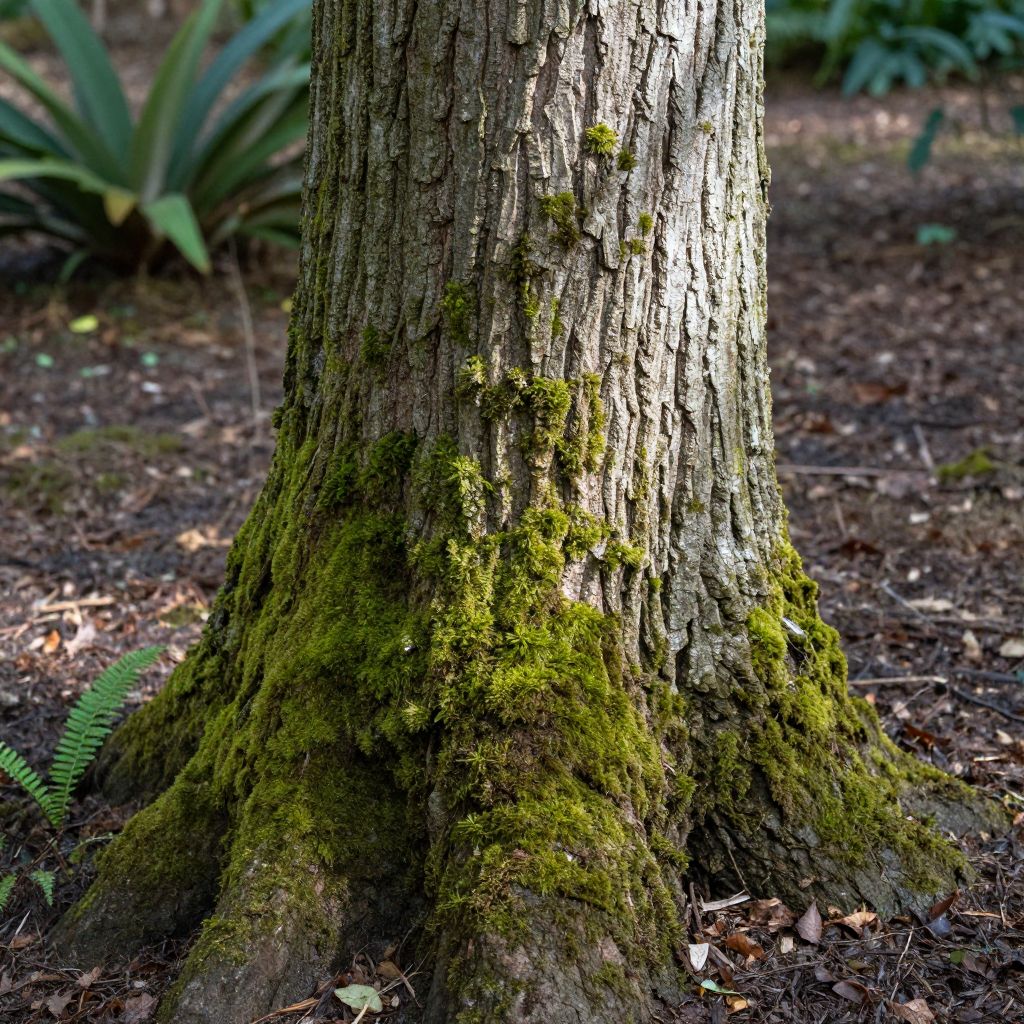
Wondering what side of the tree does moss grow on? It’s a common question, especially if you’re trying to use moss as a natural clue while gardening, hiking, or choosing where to plant. The short answer is that moss does not reliably grow on just one side of every tree.
In the garden, moss growth is usually a sign of shade, moisture, and slower drying conditions rather than a dependable compass direction. If you understand what moss actually needs, you can read your landscape more accurately and avoid making planting or pruning decisions based on a myth.
What side of the tree does moss grow on?
Moss most often grows on the cooler, shadier, and damper side of a tree, but that side depends on your local climate, sun exposure, wind, and surrounding structures. In many places, that means the north side in the Northern Hemisphere, but it can also be the east, west, or even the south side if those areas stay moist and shaded.
Why moss grows where it does
Mosses are small, non-flowering plants that absorb water through their surfaces. They do best where bark stays damp longer, light is filtered, and temperatures are less extreme.
The main conditions moss likes
- Shade or partial shade that slows evaporation
- Consistent moisture from rain, mist, irrigation, or humidity
- Rough bark or textured surfaces that help it cling
- Low disturbance, since moss is easily rubbed off or damaged
Because of these needs, moss often appears where a tree trunk dries slowly. A nearby wall, fence, hedge, dense canopy, or building can change the pattern completely.
Why the “north side” rule is only partly true
In many gardens, the north side of a tree gets less direct sun, so it stays cooler and wetter. That’s why people often notice moss there. But this is only a tendency, not a rule.
If your tree is shaded by a house on the east side, or if afternoon sun bakes the west side, moss may grow somewhere else. In a wet coastal climate, moss may cover nearly the whole trunk. In a dry, sunny area, it may be sparse or absent altogether.
How to read moss on trees in your garden
If you want to use moss as a clue, look at the whole site, not just the trunk. The best indicator is the combination of light, moisture, and airflow around the tree.
Check these factors first
- Sun exposure: Which side gets the most direct sun during the day?
- Shade patterns: Do buildings, fences, or other trees block light on one side?
- Moisture: Does rainwater run down one side or collect near the base?
- Wind: Is one side more exposed and drying faster?
- Bark texture: Rough bark holds moss better than smooth bark.
When you compare these conditions, the moss pattern makes more sense. You are not looking for a compass direction so much as a microclimate.
What moss on a tree can tell you as a gardener
Moss on bark is not usually harmful by itself. In most cases, it is more of a symptom than a problem. It suggests the tree is in a damp, shaded environment, but it does not automatically mean the tree is unhealthy.
When moss is harmless
- The tree has healthy leaves or needles
- Bark is intact and not soft or rotting
- There are no signs of cankers, dieback, or fungal decay
- Moss is thin, patchy, or only on one side
When to investigate further
- The bark is cracking, peeling, or softening
- Branches are dying back
- The tree has poor vigor or sparse foliage
- There is standing water, compacted soil, or poor drainage near the roots
In those cases, the moss is not the problem. It may simply be growing where conditions already favor excess moisture or reduced air movement.
How to tell moss from lichen and algae
Gardeners often confuse moss with lichen or algae. They can look similar from a distance, but they behave differently and mean different things for your tree.
Quick comparison
- Moss: soft, leafy, often green, and usually feels springy
- Lichen: crusty, leafy, or branching, often gray, green, or yellowish
- Algae: slimy or film-like, often green, and more common in persistently wet spots
Moss is the most likely to grow in shaded, damp bark crevices. Lichen is often more tolerant of sun and dryness. Algae usually shows up where moisture lingers and surfaces stay wet.
Should you remove moss from a tree?
Usually, no. Moss rarely harms a healthy tree, and aggressive removal can damage bark. If you scrape or brush too hard, you may injure the outer tissue and create an entry point for pests or disease.
Remove moss only if there is a clear reason
- It is hiding a bark problem you need to inspect
- It is growing on a young tree where you want to check trunk health
- You are correcting a drainage, shade, or airflow issue nearby
- The moss is trapping too much moisture against damaged bark
If you do remove it, do so gently. Use a soft brush or your hand, and never use a wire brush, pressure washer, or harsh scraping tool on live bark.
How to reduce moss growth if it is a problem
If moss is spreading because your tree or garden stays too wet and shaded, the goal is to improve conditions rather than simply scrub the bark clean. That gives you a longer-term fix.
Practical steps to take
- Improve air circulation by thinning crowded shrubs or removing nearby clutter that blocks airflow.
- Check drainage around the tree root zone. Waterlogged soil can keep bark and roots damp for too long.
- Adjust irrigation so sprinklers do not repeatedly wet the trunk.
- Prune carefully to open the canopy if the tree is overly dense, but avoid heavy pruning that stresses the tree.
- Reduce shade where possible by managing nearby plants or structures that create excessive dampness.
These changes matter more than removing the moss itself. If the site remains cool and moist, moss will often return.
What not to do
Some common “fixes” can do more harm than good. Avoid treating moss as if it were a disease.
- Do not apply bleach or strong cleaners to bark
- Do not scrape aggressively with metal tools
- Do not assume moss means the tree is dying
- Do not overprune just to increase sun exposure
- Do not pack mulch tightly against the trunk
Mulch is helpful when used correctly, but it should be kept a few inches away from the trunk so moisture does not stay trapped against the bark.
Seasonal changes that affect moss growth
Moss growth changes through the year. In cool, wet seasons, it may expand quickly. In hot, dry weather, it may dry out and become less visible, though it can often survive and return when moisture comes back.
What to expect by season
- Spring: Often the most active time for moss growth if rain is frequent
- Summer: Moss may thin out on exposed trunks but stay active in shade
- Autumn: Moisture and cooler temperatures can encourage new growth
- Winter: Moss may remain green in mild climates or appear dormant in cold spells
If you are trying to judge tree health, inspect the bark during more than one season. A wet spring can make a healthy tree look mossier than it really is.
Using moss patterns in landscape planning
Once you understand what side of the tree does moss grow on in your garden, you can use that information to improve planting decisions. Moss can help you identify the shadier, moister parts of your yard.
Good uses for this clue
- Choosing shade-tolerant plants for damp areas
- Finding spots where soil may drain slowly
- Locating areas that need better airflow
- Deciding where sun-loving plants may struggle
For example, if one side of a tree consistently stays mossy, that side may also be better suited to ferns, woodland perennials, or other shade-loving plants, depending on your climate and soil.
Simple troubleshooting guide
If you are trying to understand moss on a tree, start with the pattern and then look for the cause.
- Moss only on one side: Check shade, wind, and runoff on that side.
- Moss all around the trunk: The site is likely generally damp and shaded.
- Sudden increase in moss: Look for changes in irrigation, canopy density, or nearby construction.
- Moss with bark damage: Inspect for rot, pests, or disease and consider professional advice if the tree is valuable.
Remember that moss is often a clue, not a diagnosis. The real question is what conditions are making that side of the tree stay wet and shaded.
Conclusion: what to do next
So, what side of the tree does moss grow on? Usually the cooler, shadier, wetter side, but not always the north side. The best approach is to observe your own garden’s light, moisture, and airflow patterns instead of relying on a single rule.
Next time you see moss on a tree, use it as a prompt to inspect the site, not to panic. If you want to learn more about reading your garden’s conditions, you may also enjoy related guides on improving garden drainage and choosing the right plants for shade.