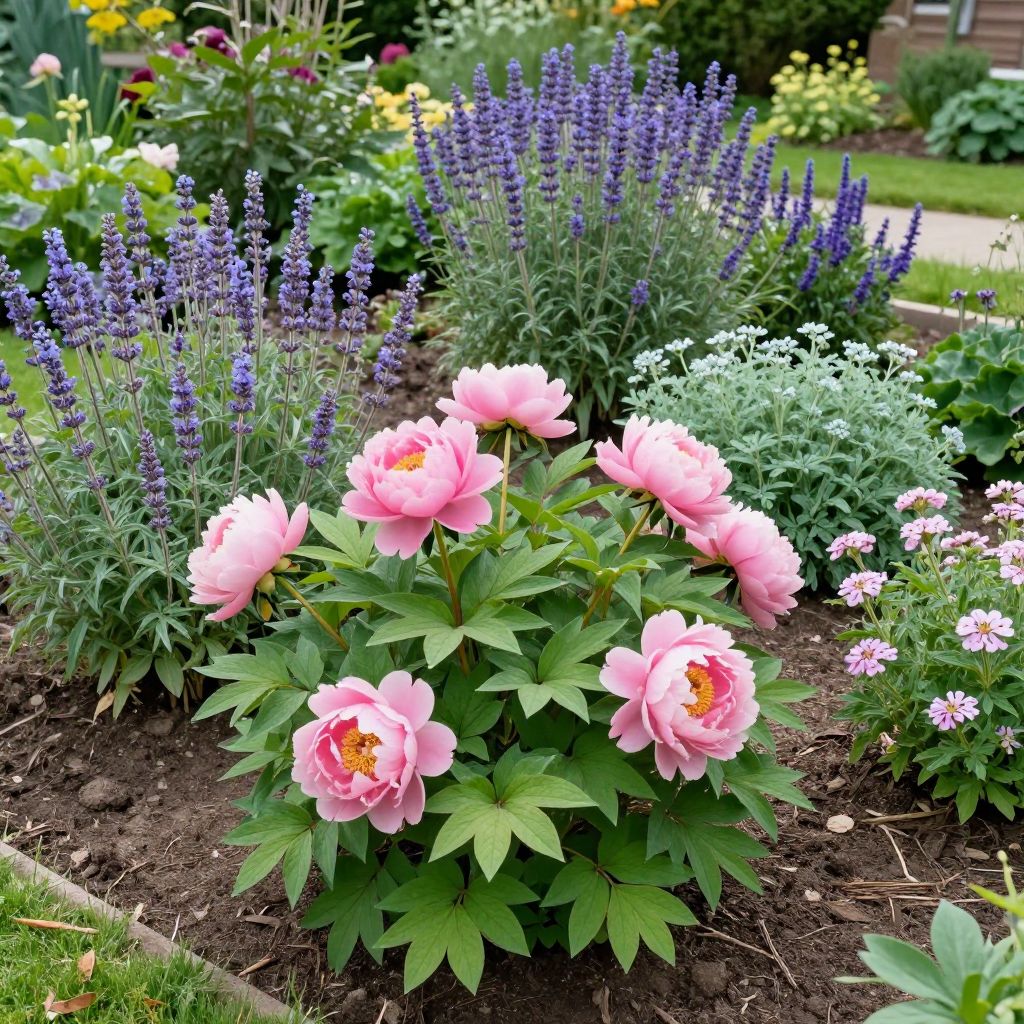
Wondering what to plant with peonies so your border looks full, balanced, and healthy? Peonies are long-lived perennials with big flowers and a fairly short bloom season, so the best companions do more than “look pretty” for a few weeks.
The right plants will support the peonies’ needs for sun, drainage, and airflow while adding color before and after bloom. Good companions also avoid crowding the crown, which helps reduce disease and keeps your peonies flowering well year after year.
What to plant with peonies?
Choose companions that enjoy full sun to light shade, well-drained soil, and enough space to keep peony crowns open to air. The best plant partners are lower-growing perennials, spring bulbs, ornamental grasses, and compact shrubs that won’t shade peonies or compete too aggressively for water.
Best companion plants for peonies
Perennials that bloom before or after peonies
Because peonies flower in a relatively short window, the smartest companions extend the season. Look for plants that either bloom earlier, overlap gently, or take over after peonies fade.
- Catmint (Nepeta) – airy, drought-tolerant, and long-blooming.
- Salvia – upright flower spikes that contrast nicely with peony mounds.
- Lady’s mantle (Alchemilla mollis) – soft foliage and chartreuse flowers that echo peony tones.
- Bearded iris (Iris germanica) – blooms around the same season in many climates and likes similar drainage.
- Daylilies (Hemerocallis) – dependable, easy, and useful for later-season structure.
- Hardy geraniums (Geranium spp.) – low, mounding fillers that help hide peony stems after bloom.
Spring bulbs for early interest
Bulbs are excellent with peonies because they flower before peonies reach full size, then disappear or fade as peony foliage expands. That means less competition later in the season.
- Daffodils (Narcissus) – reliable and deer-resistant in many gardens.
- Tulips (Tulipa) – useful for spring color, especially in cooler climates.
- Alliums – globe-shaped flowers that add height without crowding the peony crown.
- Grape hyacinths (Muscari) – low bulbs that naturalize well at the front of a bed.
Ornamental grasses and structural plants
Peonies look especially good with plants that add movement and texture. Use grasses and upright perennials sparingly so they frame the peony rather than overwhelm it.
- Little bluestem (Schizachyrium scoparium) – a fine-textured native grass for sunny sites.
- Switchgrass (Panicum virgatum) – taller, so place it behind peonies.
- Russian sage (Salvia yangii) – airy blue-purple flowers that pair well with peony pinks and whites.
- Boxwood (Buxus) – useful as a low backdrop in formal gardens if clipped lightly and kept from crowding.
Low fillers for the front of the border
If you want a layered look, choose plants that stay low and won’t cover the peony crown. This is especially helpful because peonies need open air around the base to reduce disease pressure.
- Heuchera – colorful foliage and neat mounds.
- Coreopsis – bright, long-blooming flowers in sunny spots.
- Stonecrop (Hylotelephium) – best in very sunny, well-drained beds.
- Thyme – a good edging plant in dry, sunny areas.
How to choose the right companion plants
Start by matching the plant’s needs to the peony’s growing conditions. Peonies perform best in full sun, fertile but well-drained soil, and a spot where air can move freely around the stems.
- Check sunlight. Most peonies need at least 6 hours of sun. Choose companions that also like bright light.
- Match soil drainage. Avoid plants that prefer wet ground, because peonies dislike soggy crowns.
- Think about mature size. A companion may look tiny at planting time but can crowd peonies later.
- Plan for seasonal overlap. Mix early bulbs, spring bloomers, and summer fillers for a longer display.
- Leave airflow. Good spacing helps prevent botrytis and other fungal problems.
What not to plant with peonies
Some plants look attractive at first but create problems over time. The biggest mistake is placing aggressive, thirsty, or shade-making plants too close to the peony crown.
- Large shrubs or trees that cast too much shade.
- Thirsty plants that need frequent watering and keep the soil too wet.
- Spreading groundcovers that can smother the crown or trap moisture.
- Tall, dense perennials that block airflow and make peonies flop or mildew.
- Invasive spreaders that are hard to remove once established.
If you are unsure, ask one question: will this plant leave the peony crown open and dry enough after rain? If the answer is no, choose something else.
How to plant peonies with companion plants
Good planting design matters as much as the plant choices. Peonies are long-term perennials, so it pays to set them up well from the start.
Spacing and placement
Give peonies room to mature. A common mistake is planting companions too close, then having to divide or move them later when the peony expands.
- Place peonies where they receive full sun and have room to spread.
- Keep low companions at least 18 to 24 inches away from the crown unless they are very small and well-behaved.
- Put taller plants behind peonies, not in front of them.
- Use bulbs between peonies or along the front edge of the bed where foliage will be hidden later.
Soil preparation
Peonies like fertile soil that drains well. Before planting, work in compost if your soil is poor, but avoid overloading the area with rich amendments that hold too much moisture.
- Loosen compacted soil deeply.
- Mix in compost to improve structure, especially in heavy clay or very sandy soil.
- Do not bury the peony crown too deeply; shallow planting is important for flowering.
- Keep mulch light and away from the crown base.
Care tips for peonies and their companions
Watering
Newly planted peonies and companions need regular moisture while they establish, but mature peonies prefer deep, occasional watering rather than constant wetness. Water at the soil level when the top few inches dry out, especially in dry weather.
Try to avoid overhead watering late in the day, since wet foliage can encourage fungal disease. A soaker hose or drip line works well in mixed perennial beds.
Mulching
A thin mulch layer can help conserve moisture and suppress weeds, but keep it modest. Heavy mulch piled against the crown can trap moisture and invite rot.
- Use a light layer of shredded bark, compost, or leaf mold.
- Keep mulch a few inches away from the peony crown.
- Refresh it as needed, especially after heavy rain or wind.
Feeding
Peonies usually do not need heavy feeding if the soil is healthy. Too much nitrogen can produce lush leaves and fewer flowers, and it may make nearby plants floppy as well.
A light top-dressing of compost in spring is often enough in established beds. If your soil is poor, use a balanced approach based on a soil test rather than guessing.
Seasonal design ideas with peonies
Spring
Use bulbs and early perennials to carry the bed until peonies open. Daffodils, tulips, and alliums create a layered spring display without competing heavily once peonies leaf out.
Early summer
As peonies finish, catmint, salvia, hardy geraniums, and daylilies can take over. This keeps the border attractive after the peony bloom is done.
Late summer and fall
For a longer season, add ornamental grasses, stonecrop, or compact shrubs behind or beside the peonies. These plants provide structure after the peony foliage begins to fade.
Common problems and how to fix them
Peonies flop or lean
This usually happens when the stems are top-heavy, the site is too shady, or nearby plants crowd them. Use peony rings or discreet supports early in the season, before stems get tall.
Few flowers
Too much shade, planting too deeply, or excessive nitrogen are common causes. If the peony is healthy but not blooming well, check the planting depth first and then review sun exposure.
Fungal disease
Botrytis and leaf spot are more likely in crowded, damp beds. Improve airflow, remove spent foliage, and avoid overhead watering when possible.
Companions overtake the peony
If a neighboring plant starts to crowd the peony, cut it back, divide it, or move it. Peonies are slow to recover from repeated competition, so act early.
Simple planting combinations that work well
If you want a ready-made plan, these combinations are dependable starting points. Adjust them for your climate, soil, and garden style.
- Classic cottage border: peonies, catmint, lady’s mantle, and alliums.
- Sunny formal bed: peonies, boxwood, tulips, and bearded iris.
- Long-blooming mixed border: peonies, salvia, hardy geraniums, and daylilies.
- Textured naturalistic bed: peonies, little bluestem, coreopsis, and stonecrop.
Conclusion
When deciding what to plant with peonies, choose companions that love sun, drain well, and stay low enough to protect the crown. The best combinations add color before and after bloom without crowding the peony’s space. Start with one or two compatible plants, then build the border gradually for a bed that stays attractive and healthy for years.
If you want more practical planting ideas, you may also enjoy reading about designing perennial borders and choosing the right garden soil amendments.