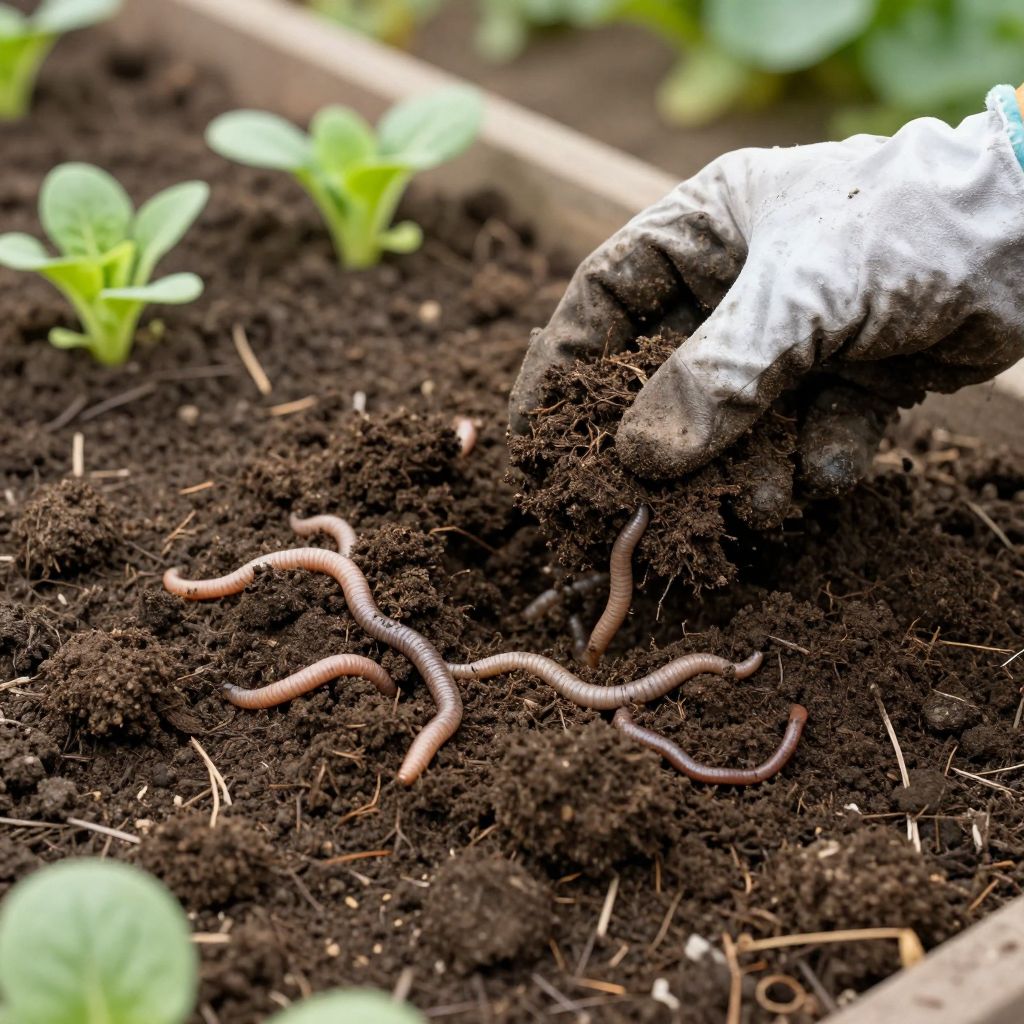
Are worms good for gardens? In most cases, yes—earthworms are one of the best signs of healthy soil. They help break down organic matter, improve soil structure, and create channels that let air and water move more freely through the root zone.
That said, worms are helpful only when the rest of the garden is in balance. Too much disturbance, waterlogged soil, or very dry, compacted ground can limit them, so the goal is to create conditions where worms can thrive and do their work naturally.
Are worms good for gardens?
Yes. Earthworms are beneficial in gardens because they improve soil tilth, help decompose leaves and compost, and leave behind nutrient-rich castings that support plant growth. They are especially valuable in beds with organic matter, where they help roots access oxygen, moisture, and nutrients more easily.
What worms actually do in garden soil
Earthworms are not plant food, but they are excellent soil workers. As they move through the soil, they loosen compacted areas and create small tunnels that improve drainage and root penetration.
How worms improve soil
- They aerate the soil by creating passageways for air and roots.
- They improve drainage in moderately heavy soils by helping water move through more evenly.
- They recycle organic matter such as dead leaves, mulch, and compost.
- They produce castings, which are rich in readily available nutrients and beneficial microbes.
- They support soil structure, helping sandy soil hold together better and clay soil become less dense over time.
In a healthy garden, worms are part of a larger soil food web. They work best when you also maintain mulch, compost, and minimal soil disturbance.
How to encourage worms in your garden
If you want more worms, focus on making the soil welcoming rather than trying to add worms and hope for the best. Worms need moisture, food, oxygen, and shelter.
1. Add organic matter regularly
Compost, shredded leaves, and well-rotted manure provide food for the microorganisms worms feed on. A thin topdressing of compost is often enough to make a difference over time.
2. Keep soil covered
Mulch helps keep the soil cool and moist, which worms prefer. Use organic mulch such as chopped leaves, straw, or bark where appropriate for your plants.
3. Avoid over-tilling
Frequent digging can destroy worm channels and disrupt their habitat. If you need to cultivate, do it lightly and only when necessary.
4. Water deeply but not excessively
Worms need moisture to move, but saturated soil can drive oxygen out of the root zone. Aim for evenly moist soil, not soggy ground.
5. Limit harsh chemicals
Some pesticides and soil treatments can harm worms or reduce the microbes they depend on. Always follow label directions and use the least disruptive option that solves the problem.
When worms are especially beneficial
Worms are useful in almost any garden, but they are especially valuable in beds that need soil improvement. They can make a noticeable difference in vegetable gardens, raised beds, perennial borders, and newly amended planting areas.
Best garden situations for worms
- Vegetable beds with regular compost additions
- Flower borders with leaf mulch
- Raised beds that dry out and compact easily
- Lawns with healthy thatch and organic matter
- New garden beds being built from poor soil
In containers, worms are less common unless the potting mix includes organic material and the container stays consistently moist. Most container gardens rely more on good potting mix and compost than on worm activity.
Signs your garden has a healthy worm population
You do not need to see worms every day to know they are present. Their presence shows up in the condition of the soil itself.
Healthy-soil clues
- Soil feels crumbly rather than hard or sticky
- Water soaks in instead of running off quickly
- You find small castings on the soil surface
- Roots spread well and plants establish steadily
- Compost and mulch break down at a good pace
If you dig in the garden and find several worms in a small area, that usually indicates the soil has enough organic matter and moisture for them to live there comfortably.
Common problems that reduce worm activity
When worms disappear, the garden soil often has a problem that needs attention. The issue may be too much heat, too little moisture, compacted ground, or a lack of organic matter.
Dry soil
Worms dry out quickly and retreat deeper into the soil when the surface becomes too hot or dry. Add mulch and water more deeply during dry spells so the root zone stays usable.
Compacted soil
Heavy foot traffic, repeated tilling, or working soil when it is wet can compact the ground. Compaction makes it harder for worms and roots to move, so use paths, boards, or raised beds where needed.
Waterlogged soil
Too much water can reduce oxygen in the soil and make conditions poor for worms. Improve drainage by avoiding overwatering, loosening surface crusts gently, and adding organic matter over time.
Low organic matter
Soil with little compost or plant residue gives worms less to feed on. Build soil fertility gradually with compost, mulch, and cover crops suited to your climate and season.
Should you buy and add worms to your garden?
Sometimes, but not always. If the soil is already suitable, worms will usually move in on their own. Adding worms without fixing the soil often gives disappointing results.
When adding worms makes sense
- You are starting a compost bin or worm bin
- You are building a new bed with rich organic matter
- Your soil is healthy but worm numbers are low
When it is better to improve conditions first
- The soil is dry, compacted, or very poor
- The bed is exposed and unmulched
- You use frequent pesticide treatments
- The area floods or stays soggy after rain
For most home gardens, the best approach is to feed the soil and let local earthworms colonize naturally. That is usually more reliable than introducing worms into an unsuitable site.
Worms, compost, and raised beds
Worms and compost work especially well together. Compost adds the organic material worms need, and worms help turn that material into stable, plant-friendly soil.
Using worms in raised beds
Raised beds often benefit from worms because they warm up quickly and can be managed with regular compost additions. Keep the bed mulched and avoid letting it dry out completely, especially in hot weather.
Using worms in compost piles
In a traditional compost pile, worms usually move in as the material cools and breaks down. They are most active in the outer edges and finished compost, not in very hot active piles.
If you want worms to help process kitchen scraps directly, a worm bin can be a good option. Use bedding such as shredded paper or coconut coir, and keep the bin moist but not wet.
What not to do if you want healthy worms
Small mistakes can make a big difference in worm activity. Avoid these common problems if you want better soil life.
- Do not leave soil bare for long periods in hot or windy weather.
- Do not overwater beds until they become muddy or stagnant.
- Do not dig or till repeatedly through the same area.
- Do not rely on synthetic inputs alone and ignore soil organic matter.
- Do not use pest controls without checking whether they affect soil organisms.
Healthy worms are usually a result of steady, simple care rather than a special product or one-time treatment.
Practical seasonal care for worm-friendly soil
Your local climate matters. Worms are most active when temperatures are moderate and soil moisture is steady, so adjust your care through the seasons.
In spring
Topdress beds with compost and refresh mulch after the soil begins to warm. Avoid working wet soil, because that can compact it and reduce worm activity.
In summer
Protect the soil from heat with mulch and consistent watering. In very hot climates, worms may move deeper into the soil during the hottest part of the day or season.
In fall
Leave chopped leaves or other organic mulch in place where appropriate. This gives worms a food source and helps protect the soil through winter.
In winter
In colder regions, worm activity slows down. Focus on keeping soil covered and avoid unnecessary disturbance until growth resumes.
Conclusion: build the soil, and the worms will help
Are worms good for gardens? Absolutely—when the soil is healthy enough to support them, they are one of the best natural helpers you can have. Improve organic matter, keep soil covered, and avoid compaction, and you will make your garden more worm-friendly over time.
For more practical soil-building advice, you may also want to read about composting basics for healthier garden soil and how to use mulch to protect plants and improve soil.