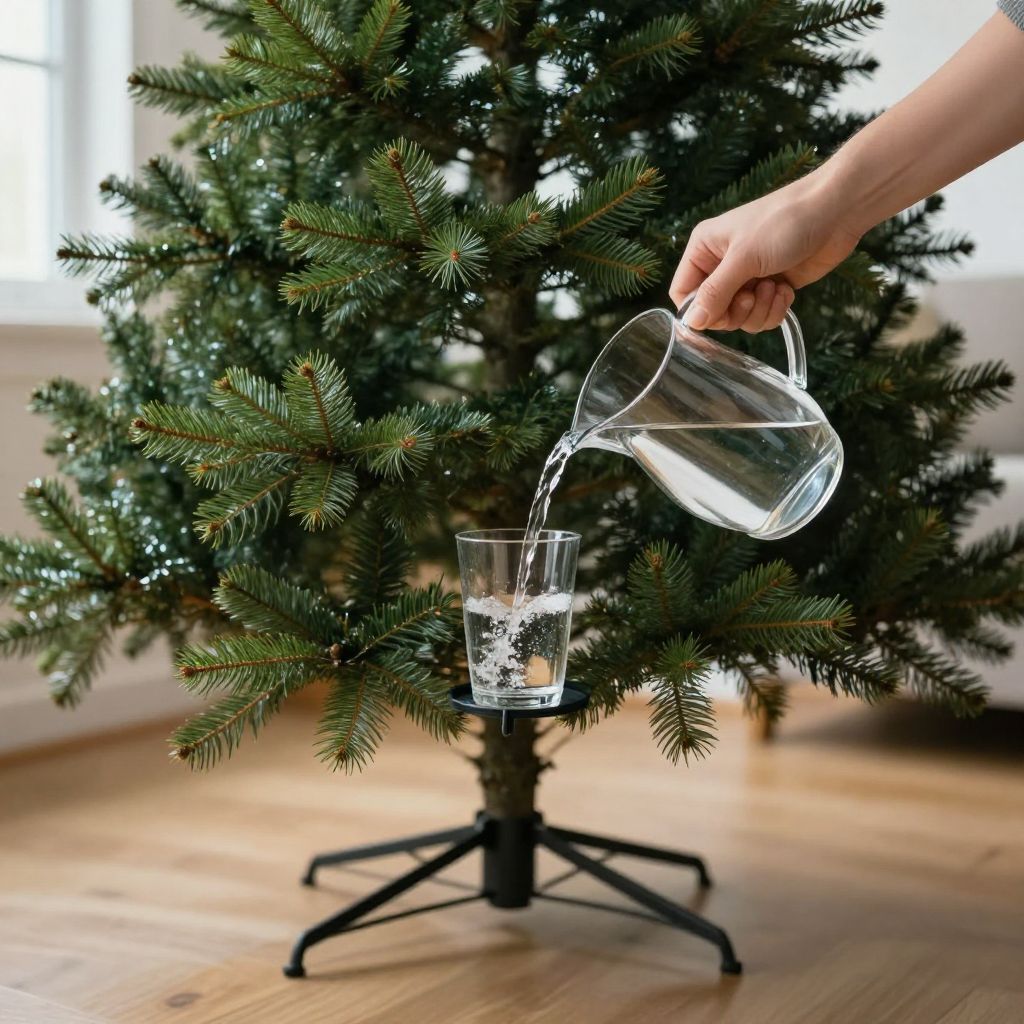
What should you put in Christmas tree water to keep the tree fresh? In most homes, the safest and most effective answer is simple: plain water. A freshly cut Christmas tree absorbs water quickly at first, and clean water is usually all it needs to stay hydrated.
Additives like sugar, aspirin, bleach, or commercial “tree food” rarely improve results and can sometimes make things worse. The real keys are a fresh cut, a clean stand, consistent water levels, and placing the tree away from heat sources.
What to put in Christmas tree water?
Use plain tap water in a clean tree stand. If your water is heavily treated or very hard, you can use filtered water, but additives are usually unnecessary. The most important step is to keep the reservoir full so the cut trunk never dries out and seals over.
Why plain water usually works best
A Christmas tree is still a cut plant, and its needles lose moisture through transpiration. Once the trunk base dries, it can form a seal that slows water uptake. Plain water supports hydration without introducing substances that may clog the cut end or encourage bacterial growth.
Most common evergreens used as Christmas trees, such as firs, spruces, and pines, do not need fertilizer in the stand. They are not actively growing indoors in the way a potted houseplant would be, so “feeding” the water is not helpful.
What not to add
- Sugar or syrup: can feed microbes and make the water go cloudy faster.
- Aspirin: no reliable benefit for cut Christmas trees.
- Bleach: small amounts are sometimes suggested, but it is easy to misuse and can be harmful.
- Commercial preservatives: some may help in specific situations, but many are unnecessary for home use.
- Fertilizer: not useful for a cut tree and may worsen water quality.
How to keep a Christmas tree drinking water
The best care is less about additives and more about timing and maintenance. A tree can take up a surprising amount of water during the first day or two, especially if it is fresh and the room is warm.
- Make a fresh cut across the trunk base before placing the tree in the stand.
- Cut off about 1/2 inch to 1 inch of wood to reopen the water-conducting tissue.
- Place the tree in water immediately after cutting.
- Use a stand that holds enough water for the trunk size.
- Check the water level daily, and more often during the first week.
If the water level drops below the cut end even once, the trunk may begin to seal and absorb less water. That is one of the most common reasons a tree dries out early.
How much water does a tree need?
Needs vary with tree size, species, temperature, and indoor humidity. A larger tree in a warm room may use much more water than a smaller tree in a cool room. The practical rule is to top up the stand whenever the level gets low, rather than waiting for a fixed schedule.
Best water and stand conditions for a fresh tree
Clean water and a good stand matter more than any additive. A stable stand should fit the trunk snugly and hold enough water to cover the cut base by several inches.
- Use a clean stand to reduce bacteria and debris.
- Rinse the stand before use if it has been stored dirty or dusty.
- Keep the tree away from radiators, vents, fireplaces, and direct sun.
- Choose a cooler spot in the room if possible.
Warm, dry air increases water loss from the needles. That means a tree near a heat source may dry out faster even if the stand is filled regularly.
Should you use tap water, filtered water, or distilled water?
In most cases, tap water is fine. If your local water is safe for household use, it is usually suitable for a cut tree. If your tap water is extremely hard, heavily chlorinated, or has an unusual odor, filtered water can be a reasonable alternative.
Distilled water is not necessary for most homes. The tree’s main need is consistent hydration, not special water chemistry. If you are unsure, use the water you would normally use for houseplants or cut flowers and focus on keeping it clean and topped up.
When water quality might matter
- If your tap water is visibly cloudy or contaminated.
- If the stand develops a strong smell quickly despite regular refilling.
- If you live where water is very hard and mineral buildup is common.
Common mistakes that shorten tree life
Most Christmas tree problems come from drying out, not from the wrong additive. A few simple mistakes can shorten freshness by days or even weeks.
- Waiting too long after cutting before putting the tree in water.
- Letting the stand run dry, even briefly.
- Setting the tree near heat, sunlight, or a fireplace.
- Using a stand that is too small for the trunk.
- Adding sugar, fertilizer, or other unnecessary ingredients.
If the tree seems to stop taking up water, the cut end may have sealed. In that case, recutting the trunk base and returning it to fresh water can help, provided the tree is still fresh enough to recover.
Troubleshooting a tree that is drying out
If needles are dropping early or the water level barely changes, check the basics first. Many “tree water” problems are really stand, placement, or timing problems.
What to check first
- Is the trunk base still submerged?
- Was the tree cut recently enough to absorb water well?
- Is the room unusually warm or dry?
- Is the tree too close to a vent, heater, or fireplace?
- Does the stand fit the trunk securely?
If the tree is still fresh, recut the trunk and refill the stand immediately. If the tree has been dry for a long time, it may not recover fully, so prevention is more effective than rescue.
Fresh tree care indoors versus outdoor display
Indoor trees dry faster because heated air pulls moisture from the needles. Outdoor displays, porches, or unheated spaces usually reduce water loss, but the tree still needs a water source if it is cut and displayed for any length of time.
If you are displaying a tree outdoors in freezing weather, the water in the stand may freeze. In that case, the tree’s freshness depends more on cool temperatures and less on active water uptake. For indoor trees, however, a filled stand is essential.
How to choose a fresh tree before you even get home
A fresher tree starts with better water uptake from day one. When buying or cutting a tree, look for signs that it will drink well once you bring it indoors.
- Needles should feel flexible, not brittle.
- A branch should bend rather than snap easily.
- The trunk cut should look fresh, not sealed or dry.
- The tree should have a pleasant evergreen scent.
If you buy a tree early, store it in a cool, shaded place and keep the cut end in water if possible until it is ready to be brought inside. The less time it spends drying out, the better it will perform in the stand.
Simple Christmas tree water checklist
- Use plain water.
- Make a fresh trunk cut before setting the tree up.
- Keep the stand full at all times.
- Place the tree away from heat and direct sun.
- Skip sugar, aspirin, bleach, and fertilizer.
For most homes, the answer to what to put in Christmas tree water is straightforward: nothing extra. Focus on a fresh cut, clean water, and steady moisture, and your tree has the best chance of staying attractive through the season. If you want more seasonal plant care advice, look for practical guides on keeping cut greenery fresh indoors and choosing the right stand for a live-cut tree.