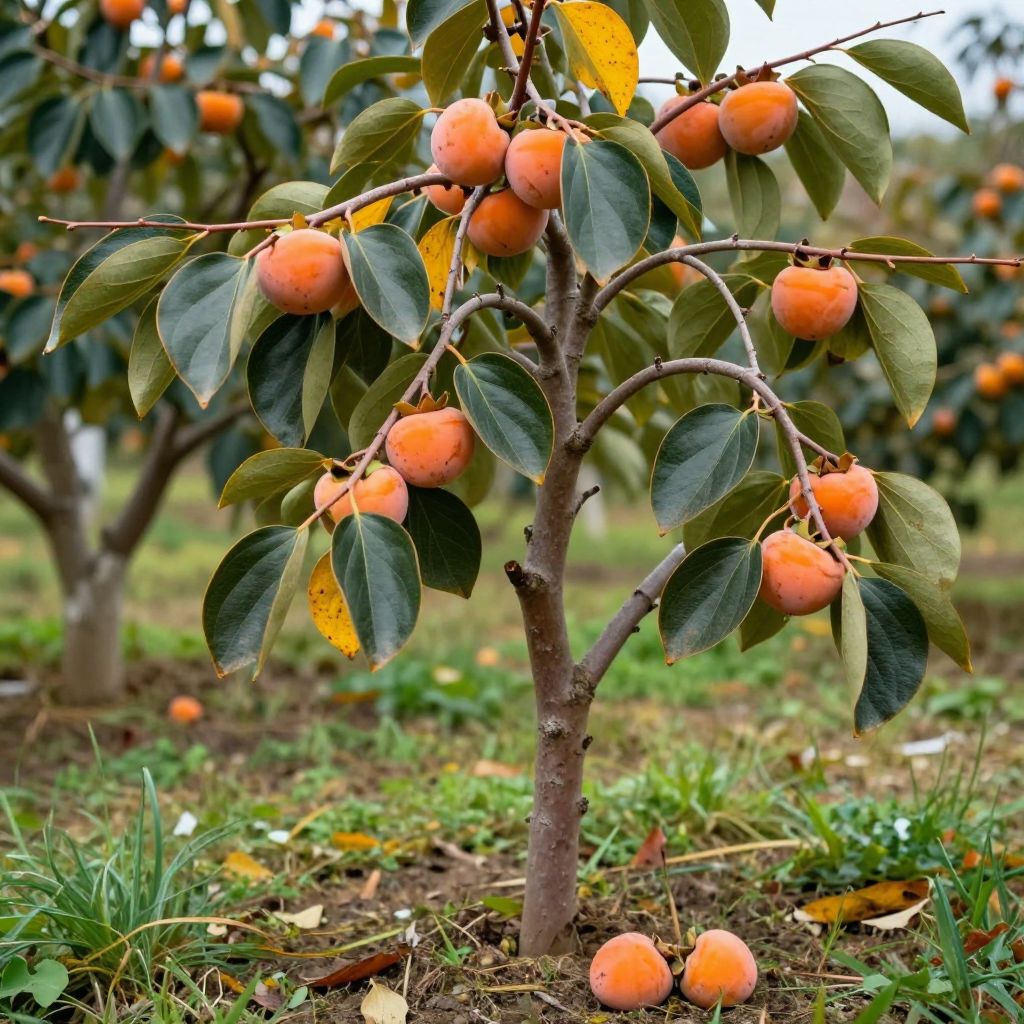
Wondering when are persimmons in season and how to tell when they’re ready to pick? Timing matters, because persimmons can be disappointing if harvested too early, but excellent when picked at the right stage.
The exact season depends on the type of persimmon, your climate, and the weather that year. If you grow your own tree, learning how fruit ripens, when leaves drop, and how to harvest gently will help you get the best flavor and avoid waste.
When are persimmons in season?
Persimmons are typically in season from mid-fall through early winter, with harvest often starting in October or November and sometimes stretching into December or later in mild climates. The exact timing depends on whether you grow astringent or non-astringent types, local temperatures, and how long the fruit takes to fully color and soften on the tree.
Understanding persimmon ripening
Persimmons do not all ripen the same way. Some are meant to be eaten only when very soft, while others can be enjoyed while still firm. Knowing which type you have is the key to deciding when to harvest.
Astringent vs. non-astringent types
- Astringent persimmons are usually harvested when fully colored but still firm, then allowed to soften off the tree or on the counter.
- Non-astringent persimmons can often be eaten while still firm, though flavor improves as they fully color and soften slightly.
- Many home gardeners grow Asian persimmons, especially Diospyros kaki, but local climate and cultivar choice strongly affect ripening time.
If you are not sure what type you planted, taste is the best guide. Astringent fruit tastes unpleasantly dry and puckering until fully ripe, while non-astringent fruit can be crisp or firm and still sweet.
What seasonal changes to watch for
- Fruit color shifts from green to orange, red-orange, or deep orange depending on cultivar.
- Leaves begin to yellow and fall in autumn.
- The fruit may soften slightly, especially after cool nights.
- Birds, squirrels, and deer may increase pressure as fruit sweetens.
How to tell persimmons are ready to harvest
Harvest timing is best judged by a combination of color, firmness, and ease of picking. Do not rely on calendar dates alone, because weather and site conditions can move ripening earlier or later by weeks.
Signs to look for
- Full varietal color: the fruit should have reached its mature orange or reddish-orange color.
- Glossy skin: many ripe fruits look smoother and more translucent.
- Easy stem release: ripe fruit often comes away with a gentle twist or clip.
- Softening: astringent fruit should soften significantly before eating.
- Natural drop: some cultivars begin dropping ripe fruit, which can signal readiness.
Be careful not to confuse color with ripeness alone. A persimmon can look beautiful and still be too firm or, in the case of astringent types, still unpleasant to eat.
Simple harvest test
- Pick one fruit that looks fully colored.
- Let it sit at room temperature for a day or two if it is meant to soften.
- Check flavor and texture before harvesting the rest.
- If the fruit is still harsh, wait longer and recheck in several days.
Seasonal timing by climate
Persimmon season shifts with your local weather. In warmer regions, fruit may ripen earlier and hang on the tree longer, while in cooler areas the harvest window may be shorter and more vulnerable to frost.
Warm climates
In mild climates, persimmons often ripen later in fall and may remain on the tree into early winter. Fruit can hold well after leaf drop, but birds and storm damage become more likely as the season progresses.
Cooler climates
In cooler regions, fruit may need to be harvested before hard freezes. If a frost is forecast and the fruit is nearly ready, it is usually better to pick it slightly early than risk damage.
Microclimates in the garden
- South-facing walls can speed ripening.
- Low spots may stay colder and delay harvest.
- Windy sites can dry fruit and increase drop.
- Protected urban gardens often ripen fruit earlier than exposed rural sites.
Growing conditions that affect harvest season
Healthy trees ripen fruit more reliably. If your persimmon is slow to mature or produces poor-quality fruit, the problem may be growing conditions rather than the season itself.
Sunlight and heat
Persimmons need full sun for the best fruiting. More sun usually means better color development and more dependable ripening, while shaded trees may produce fruit that stays bland or slow to mature.
Soil and drainage
Well-drained soil is important. Waterlogged roots can weaken the tree, reduce fruit quality, and increase disease problems. A loamy soil amended with compost is often ideal, but avoid overworking heavy clay into a soggy planting hole.
Watering during fruit development
Young trees need regular moisture while establishing roots, and mature trees benefit from deep watering during dry spells. Irregular watering can contribute to fruit drop or uneven ripening, especially in hot weather.
Mulch helps conserve moisture and moderate soil temperature. Keep mulch a few inches away from the trunk so the bark stays dry.
How to harvest persimmons safely
Persimmons bruise easily when handled roughly. A clean harvest protects the fruit and reduces the chance of rot during storage or ripening.
- Pick fruit in the cool part of the day if possible.
- Use hand pruners or snips for stubborn stems.
- Support the fruit as you cut to avoid tearing the skin.
- Place fruit gently in a shallow container, not a deep bucket.
- Sort out damaged, split, or bird-pecked fruit right away.
Do not pull hard on the fruit. A torn stem or bruised shoulder can shorten storage life and speed decay.
What to do if fruit is not ripening
If your persimmons are still hard when the season should be ending, the issue is often cool weather, too much shade, or an immature tree. Some trees simply need more time before they can ripen a full crop.
Common reasons for delayed ripening
- The tree is young and not yet fully established.
- It receives less than full sun.
- There are too many fruits competing for energy.
- The season has been unusually cool or cloudy.
- The cultivar naturally ripens later than expected.
Practical fixes
- Thin excessive fruit early in the season on heavily loaded trees.
- Prune lightly in the dormant season to improve light penetration.
- Avoid overfertilizing with nitrogen, which can push leafy growth at the expense of fruit quality.
- Be patient with young trees; productivity improves as roots and canopy mature.
Storing and finishing the harvest
Once picked, persimmons can continue to soften indoors. This is especially useful for astringent fruit that was harvested while still firm but fully colored.
Counter ripening
Place fruit in a single layer at room temperature out of direct sun. Check them regularly, because they can go from firm to very soft fairly quickly.
Cold storage
If you need to slow ripening, refrigerate fruit only after it has reached the stage you want. Cold storage can help preserve quality, but very unripe fruit may not improve much once chilled.
Remove any fruit with splits, mold, or soft spots before storing the rest. One damaged persimmon can spoil nearby fruit faster than you expect.
Pruning and maintenance for better future seasons
Good harvest timing starts with good tree care. Persimmons generally need only moderate pruning, but a little maintenance helps light reach the canopy and supports more even ripening.
Best pruning approach
- Prune during dormancy, after leaf drop and before spring growth begins.
- Remove dead, crossing, or crowded branches first.
- Open the canopy enough for air and light to move through it.
- Avoid heavy pruning that triggers excessive leafy growth.
Pest and disease watch
Birds are one of the most common harvest-season problems. Netting can help, but it must be installed carefully to avoid trapping wildlife. Squirrels, scale insects, and occasional fungal issues may also affect fruit quality or tree vigor.
- Bird damage: harvest promptly when fruit is ready and consider protective netting.
- Fruit rot: pick damaged fruit quickly and improve airflow through pruning.
- Scale or sap-sucking pests: monitor leaves and stems regularly, especially on stressed trees.
Quick checklist for persimmon season
- Know whether your tree is astringent or non-astringent.
- Watch for full color, not just size.
- Check fruit firmness and stem release.
- Harvest before hard frost if your climate turns cold early.
- Handle fruit gently to prevent bruising.
- Improve next year’s crop with sun, drainage, and light pruning.
Conclusion
When are persimmons in season? For most gardens, the answer is fall into early winter, but the best harvest date depends on your tree, your climate, and the fruit’s ripeness stage. Check color, firmness, and flavor rather than relying on the calendar alone, and pick carefully for the best results.
If you want to improve next year’s harvest, focus on sun exposure, drainage, and light dormant pruning, then keep an eye on your tree as autumn approaches. For more seasonal fruit-growing guidance, you may also find related gardening reading helpful on fruit tree pruning basics and how to improve soil drainage in the garden.