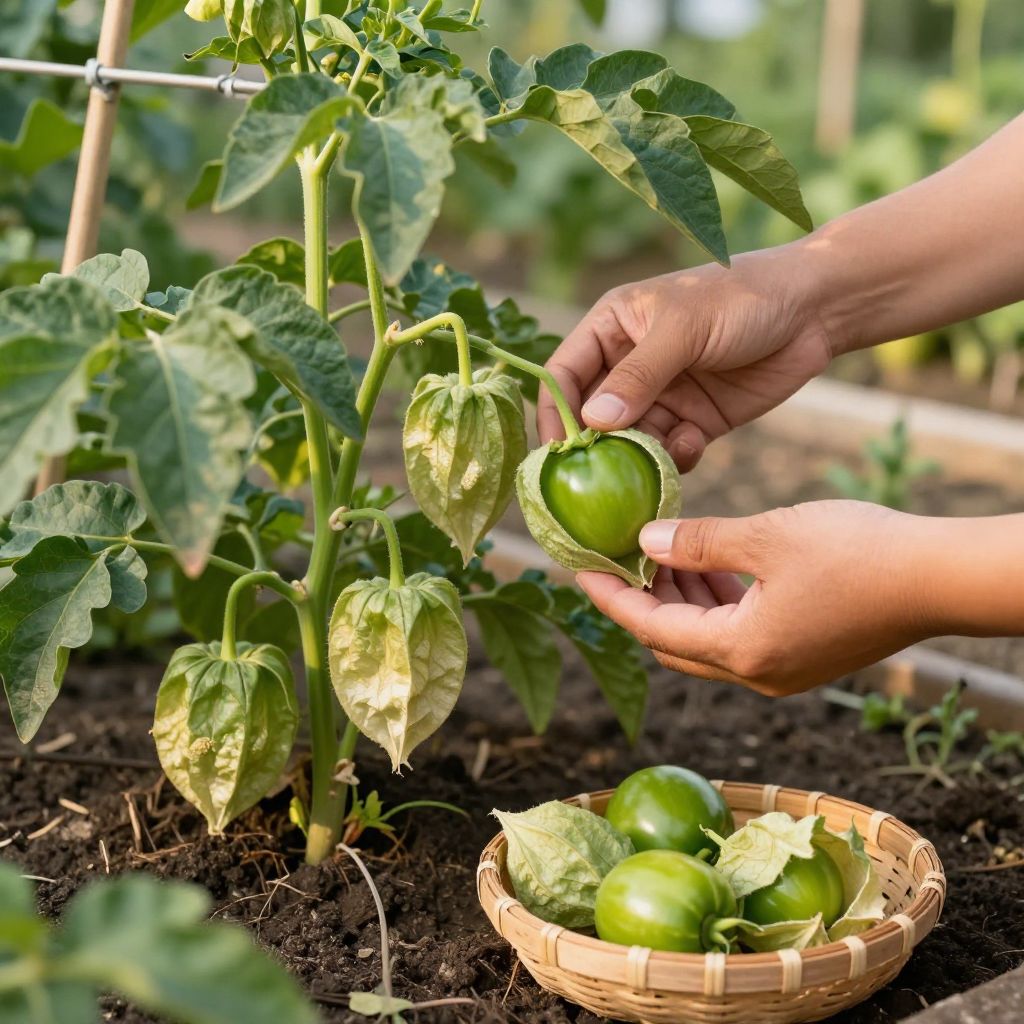
Wondering when to harvest tomatillos? The best time is when the fruit has filled out the husk and the husk starts to split, dry, or turn papery, usually while the tomatillo is still firm and green. If you wait too long, fruits can become softer and less flavorful, so checking plants every few days matters.
Tomatillos are easy to miss because the husk hides the fruit, but the signs of ripeness are clear once you know what to look for. A few simple checks will help you pick at the right stage for the best texture, flavor, and storage life.
When to harvest tomatillos?
Harvest tomatillos when the fruit has completely filled the husk and the husk begins to split open or dry at the seam. The fruit should feel firm, usually about 1 to 2 inches across depending on variety, and still be green or greenish-yellow. Pick regularly, because ripe fruits can drop or overmature quickly.
How to tell tomatillos are ready
Tomatillos do not ripen in the same way as tomatoes. They are ready based on size, firmness, and husk condition rather than color alone.
Signs of harvest readiness
- The husk is full and tight around the fruit.
- The husk starts to split or peel back at the bottom or along the seam.
- The fruit feels firm, not soft or mushy.
- The fruit has reached its mature size for the variety.
- The skin is usually green, though some types may show a slight yellow tint when fully mature.
Signs you waited too long
- The husk becomes dry, brown, and papery.
- The fruit softens noticeably.
- The tomatillo falls from the plant on its own.
- The flavor becomes duller or overly tart in a less pleasant way.
What happens if you harvest tomatillos too early?
Very young tomatillos are edible, but they are usually smaller, tarter, and less developed. If you harvest too early, the fruit may taste sharper and have less flesh. For the best balance of flavor and texture, wait until the husk is full and beginning to split.
That said, if frost, pests, or storms are coming, it is better to pick slightly early than lose the crop. Tomatillos will still be usable if they have reached a decent size.
How often should you check plants?
Once fruits begin filling their husks, check plants every 2 to 3 days. Tomatillos can mature quickly in warm weather, especially on vigorous plants with plenty of sun and water.
Frequent checking also helps you harvest before fruits drop to the ground. A fallen tomatillo is not always spoiled, but it may be bruised, dirty, or more likely to attract pests.
How to harvest tomatillos correctly
Use clean hands or small pruners to remove the fruit without damaging the plant. The stems can be a little tough, so a gentle twist may not always be enough.
- Hold the stem or fruit gently.
- Cut the stem just above the husk with clean scissors or pruners, or twist carefully if it comes away easily.
- Place fruits in a basket or shallow container to avoid bruising.
- Sort out damaged, split, or pest-damaged fruits as you pick.
Do not yank tomatillos off the plant. Pulling can break stems, damage nearby blossoms, and reduce future harvests.
Should you remove the husk?
You can leave the husk on until you are ready to use or store the fruit. The husk helps protect tomatillos after harvest, but it should be removed before eating or processing.
If the husk is sticky or dirty, peel it off and rinse the fruit under cool water. Tomatillos often have a natural sticky film on the skin, which washes off easily.
Best harvest stage for flavor and use
The ideal harvest stage depends on what you want from the fruit. Most gardeners prefer tomatillos when they are firm and fully sized, because that is when they have the brightest flavor and best texture.
For fresh use
Pick tomatillos when they are firm, green, and just starting to split from the husk. These fruits tend to have a lively, tangy flavor.
For storage
Harvest fruits that are mature but still firm. Avoid soft or damaged fruits, since they do not store as well.
For seed saving
If you are saving seed, let a few fruits fully mature on healthy plants. Keep in mind that tomatillos cross-pollinate easily, so seed may not come true unless you isolate plants or control pollination.
What if the plant is loaded with fruit?
Tomatillo plants can produce heavily once they get going, especially if you have more than one plant for pollination. A plant with many fruits may need staking or caging because the branches can bend under the weight.
In that case, harvest gradually rather than all at once. Picking regularly encourages you to notice new ripe fruits and keeps the plant from becoming overloaded.
Growing conditions that affect harvest timing
Harvest timing depends partly on weather, soil, and plant health. Warm, sunny conditions speed up fruit development, while cool nights can slow it down.
Sunlight
Tomatillos grow best in full sun, which helps them flower and set fruit well. In partial shade, plants may still grow, but harvests often come later and may be smaller.
Watering
Even moisture supports steady fruit development. Irregular watering can lead to stressed plants, smaller fruits, or blossom drop. Water deeply when the top layer of soil starts to dry, but avoid soggy soil.
Soil and drainage
Tomatillos prefer fertile, well-drained soil. Heavy, waterlogged soil can slow growth and increase disease risk, which may delay harvest.
Pollination
Tomatillos usually need at least two plants for good fruit set because they are not reliably self-pollinating. If fruits are slow to form, poor pollination may be part of the problem rather than the season alone.
Common problems that affect harvest time
Sometimes the issue is not ripeness but plant stress. If your tomatillos are taking a long time to mature, check for these common causes.
- Poor pollination: Flowers open but fruits do not develop well.
- Too much shade: Plants grow leafy but fruit slowly.
- Overfertilizing with nitrogen: Produces lots of leaves and fewer fruits.
- Drought stress: Can reduce fruit size and delay ripening.
- Pests or disease: Damage to leaves and stems weakens the plant.
Pests and diseases to watch for
Tomatillos can face the same issues as other nightshade crops, including aphids, hornworms, flea beetles, and fungal leaf spots. Healthy, unstressed plants usually recover better and continue producing longer.
If pests are heavy, remove damaged foliage, water at soil level, and inspect plants often. Good airflow and clean garden beds also help reduce disease pressure.
Can you harvest tomatillos after frost?
Light frost may damage foliage and slow ripening, but fruits can sometimes still be harvested if they remain firm and intact. If a hard frost is forecast, pick any fruits that are close to ready, even if the husks have not fully split yet.
After frost, sort carefully. Discard fruit that is soft, water-soaked, or showing decay.
How to store harvested tomatillos
Freshly harvested tomatillos keep best when stored dry and cool. Leave the husk on until you are ready to use them, or remove it if you want to inspect the fruit closely for damage.
- Store in a cool pantry or refrigerator.
- Keep them dry to reduce mold.
- Use damaged fruits first.
- Check stored fruit every few days for soft spots.
Tomatillos generally store better than many ripe vegetables if they are harvested at the right stage and handled gently.
Quick harvest checklist
- Fruit has filled the husk.
- Husk is splitting or drying at the seam.
- Fruit feels firm and full-sized.
- Plant is checked every few days during peak season.
- Fruit is cut or twisted off gently, not pulled.
Conclusion
The best answer to when to harvest tomatillos is simple: pick them when the fruit fills the husk and the husk begins to split, while the fruit is still firm. Check plants often, harvest gently, and store the fruits dry and cool so you can enjoy the best flavor and texture from your crop.
If you want to improve next season’s harvest, it also helps to review basic care for growing tomatillos and compare notes with common vegetable garden pests and diseases.