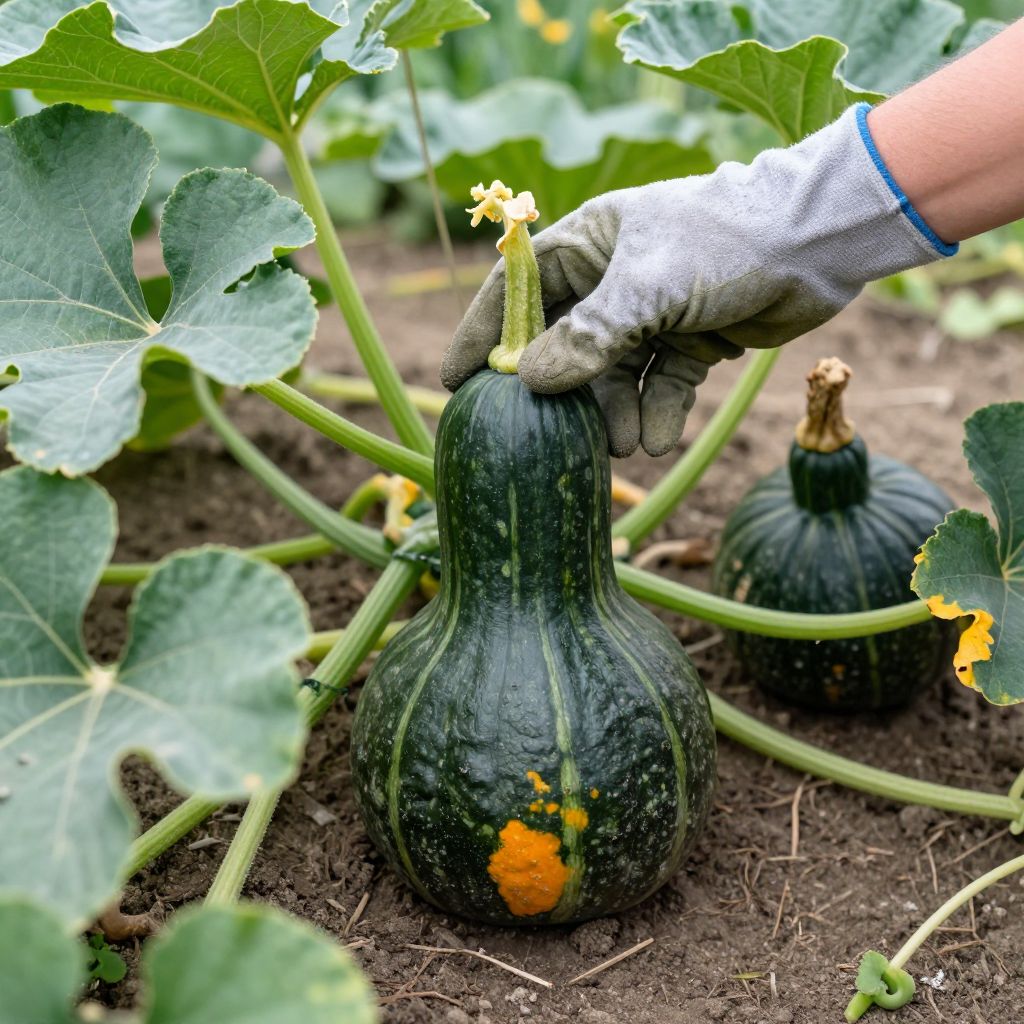
Wondering when to pick acorn squash so it tastes sweet and stores well? The best time is usually when the fruit has fully matured on the vine, not just when it looks dark green. Harvest too early and the flesh can be watery; wait too long and frost or rot can spoil it.
The good news is that acorn squash gives clear ripeness clues. With a few simple checks, you can harvest at the right stage and avoid guessing.
When to Pick Acorn Squash?
Pick acorn squash when the rind is hard, the skin has turned deep green, dark orange, or a mature color for the variety, and the stem is dry and corky. Most fruits are ready about 80 to 100 days after planting, but the safest test is whether your thumbnail cannot easily pierce the skin.
How to Tell Acorn Squash Is Ready
Acorn squash does not always ripen by calendar alone. Weather, planting time, variety, and plant stress all affect maturity, so use several signs together.
Ripeness signs to look for
- Hard rind: Press your thumbnail into the skin. If it resists and feels tough, the squash is close to ready.
- Mature color: Many acorn squash varieties turn deep green, while some develop orange or tan patches as they ripen.
- Dull skin: Shiny skin often means the fruit is still immature.
- Dry stem: The stem should look corky and dry, not green and tender.
- Full size for the variety: Acorn squash is usually harvested when fruits are 4 to 7 inches across, depending on cultivar.
What not to rely on alone
- Size alone: A large squash can still be immature if the rind is soft.
- Days since flowering: Helpful, but weather and growing conditions can speed up or slow down ripening.
- Color alone: Some varieties stay greener than others even when ready.
Seasonal Timing: What Month Should You Harvest?
In many gardens, acorn squash is ready in late summer through fall. If you planted in spring, harvest often begins from August to October, but your local climate matters more than the calendar. In cooler regions, watch for the first frost and harvest before cold damage threatens the fruit.
How climate affects harvest time
- Warm, long seasons: Plants may produce mature fruit later into fall.
- Short seasons: Fruits may need to be harvested as soon as they mature, sometimes before all vines finish producing.
- Cool nights and frost risk: Even a light frost can damage the rind and shorten storage life.
If frost is expected and the squash is nearly mature, it is usually better to harvest slightly early than to leave it out and lose the crop.
How to Harvest Acorn Squash the Right Way
Use clean pruners, garden shears, or a sharp knife to cut the stem, leaving 1 to 2 inches attached to the fruit. Do not twist or yank the squash from the vine, because a broken stem can invite rot and reduce storage life.
- Choose a dry day if possible.
- Inspect the fruit for hard skin and mature color.
- Cut the stem cleanly, leaving a short stem stub.
- Handle the squash gently to avoid bruising.
- Set it in a shaded, dry place while you finish harvesting.
Never carry acorn squash by the stem. A snapped stem can create an entry point for disease and spoilage.
Can You Pick Acorn Squash Early?
You can harvest acorn squash a little early if frost, pests, or disease are threatening the plant, but flavor and storage quality may be reduced. Immature squash usually has softer skin, less sweetness, and a shorter shelf life. If you must pick early, use it sooner rather than trying to store it for months.
Signs it was picked too soon
- Skin is easy to dent with a fingernail
- Fruit feels light for its size
- Stem is still green and soft
- Flesh tastes bland or watery after cutting
Some gardeners let nearly mature squash sit in a warm, dry place for a week or two to improve skin firmness, but this does not fully replace vine ripening.
What If the Vine Is Dying Before the Squash Is Ready?
Vines can decline from powdery mildew, squash bugs, vine borers, heat stress, or cold weather. If the plant is failing but the fruit is close to mature, leave the squash on the vine as long as the fruit is safe and the weather allows. If the vine is collapsing, harvest the fruit and cure it indoors.
Common causes of early vine decline
- Powdery mildew: White coating on leaves that weakens the plant
- Squash bugs: They suck sap and can cause wilting
- Squash vine borers: Larvae damage stems and interrupt water flow
- Drought stress: Inconsistent watering can weaken fruit development
- Cold nights: Growth slows sharply as temperatures drop
If disease or insects are common in your garden, inspect vines regularly during the growing season so you can protect the crop before harvest time.
How to Cure Acorn Squash After Picking
Curing helps the skin harden and can improve storage life. Place harvested squash in a warm, dry, well-ventilated space for about 7 to 14 days. Ideal curing conditions are around 80 to 85°F if you can provide them, but avoid direct sun and damp areas.
Simple curing steps
- Wipe off excess soil, but do not wash the squash unless necessary.
- Keep fruits in a single layer if possible.
- Turn them gently every few days for even drying.
- Check for soft spots or injuries before storage.
Not all acorn squash stores equally long. Even with good curing, many types are best used within a few weeks to a couple of months, so check your harvest often.
How Growing Conditions Affect Harvest Timing
Healthy plants usually produce better-quality squash that matures more evenly. Acorn squash does best in full sun, fertile soil, and steady moisture, especially while vines are growing and fruits are sizing up.
Helpful growing conditions
- Sunlight: At least 6 to 8 hours of direct sun daily
- Soil: Rich, well-drained soil with plenty of compost
- Watering: Deep, even watering, especially during flowering and fruit fill
- Mulch: Helps conserve moisture and reduce soil splash on leaves
Uneven watering can cause poor fruit development, while overly wet soil can encourage root problems. Good drainage matters as much as fertility.
Should you prune or thin the vines?
Light pruning can help improve airflow in crowded plantings, but avoid over-pruning. The leaves feed the developing squash, so removing too much foliage can slow ripening. If several fruits are forming and the season is short, some gardeners limit the number of fruits per plant so the remaining squash can mature more fully.
Common Harvest Mistakes to Avoid
- Picking too soon: This is the most common mistake and leads to bland flesh and poor storage.
- Waiting for perfect color only: Some varieties never change dramatically.
- Leaving fruit on the ground after frost: Cold injury can shorten shelf life fast.
- Damaging the stem: A broken stem increases rot risk.
- Storing bruised squash: Even small wounds can spread decay in storage.
If you are unsure, harvest one squash and test it. A mature acorn squash should have firm flesh, a hard rind, and a richer, nuttier flavor than an immature one.
Quick Checklist for Harvest Day
- Skin is hard and dull, not shiny
- Fruit has reached mature size for the variety
- Stem is dry and corky
- Frost is not imminent, or you are harvesting early to protect the crop
- Cut fruit cleanly with a short stem attached
Conclusion
When to pick acorn squash comes down to maturity, not just the date on the calendar. Check for a hard rind, mature color, and a dry stem, then harvest before frost or disease can damage the fruit. If you want the best flavor and storage life, cure your squash after picking and use it regularly to monitor quality.
If you’re planning your next harvest, it may also help to read more about how to grow winter squash successfully and common vegetable garden pests and how to manage them.