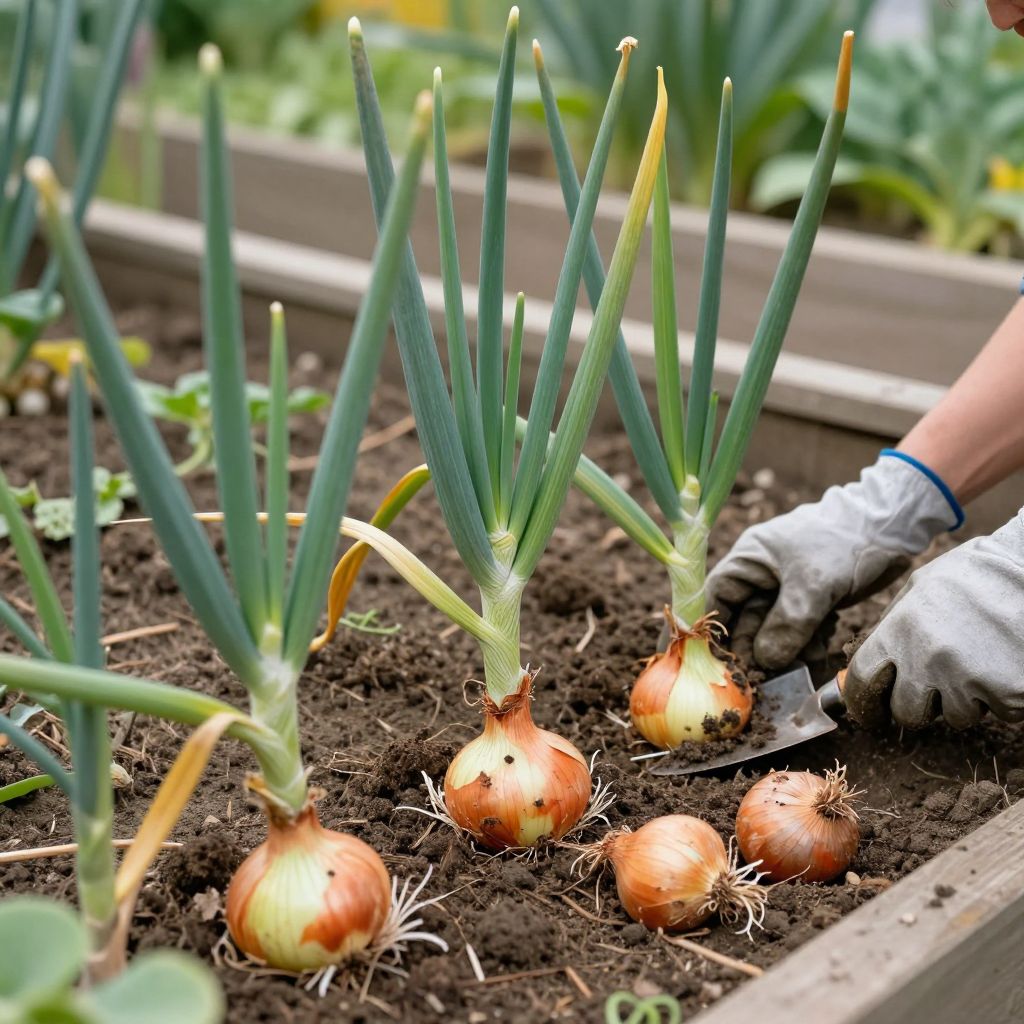
Wondering when to pick onions so they store well and taste their best? The right harvest time depends on the onion type, your climate, and how the tops are behaving in the garden. Pick too early and the bulbs may be small and short-lived; wait too long and they can split, rot, or lose storage quality.
The good news is that onions give clear signals when they’re ready. Once you know what to look for, you can harvest at the right stage, cure them properly, and keep them in good condition for weeks or months.
When to pick onions?
Pick onions when the tops naturally begin to yellow, soften, and fall over, and the bulbs have reached a usable size. For bulb onions, harvest most varieties when about half to three-quarters of the tops have bent down on their own. For green onions, harvest much earlier, while the stems are still tender and before bulb formation becomes the main goal.
How to tell onions are ready to harvest
Onions rarely ripen all at once, so check them individually rather than harvesting the whole row on one day. The most reliable signs are above ground and easy to spot once you know them.
Key ripeness signals
- Top growth weakens and the neck softens.
- The green tops start to yellow and flop over.
- The bulb feels firm and has reached a good size for the variety.
- The outer skin begins to dry and papery layers form.
If the tops are still upright and thick green, the bulb is usually still actively growing. If the tops have collapsed but the neck is still very thick and juicy, the onions may need a little more time before lifting.
Different onions, different harvest stages
- Bulb onions: harvested for fully formed bulbs and cured for storage.
- Green onions or scallions: harvested young for tender stems, often before a true bulb forms.
- Bunching onions: can be cut young or left a bit longer depending on the variety and your use.
Because varieties differ, seed packets and plant labels can help, but the plant’s appearance in your own garden is still the best guide.
Seasonal timing: what month should you harvest?
There is no single calendar date for when to pick onions. In many gardens, bulb onions are ready in mid to late summer, but your timing depends on when you planted, your local day length, and how warm the season has been. Cooler regions often harvest later than warmer ones.
Instead of relying on the month, watch plant maturity. If your onions were planted in spring, begin checking them once the bulbs start swelling and the tops begin to decline. In mild climates or overwintered plantings, harvest may come earlier than expected.
Climate and planting time matter
- Cool climates: onions may size up slowly and need a longer season.
- Warm climates: growth may speed up, but heat can also trigger earlier top decline.
- Short-season areas: choose varieties suited to your day length and growing season.
If your onions are still small when the tops begin to fall, check whether the variety is appropriate for your region or whether crowding, poor soil, or drought slowed growth.
How to harvest onions correctly
Harvesting onions is simple, but handling them gently helps prevent bruising and rot. A damaged bulb may not store well, even if it looked perfect in the ground.
- Choose a dry day if possible.
- Loosen the soil with a garden fork or trowel, being careful not to spear the bulbs.
- Lift onions by the base or gently work them free from the soil.
- Shake off loose dirt, but do not wash them if you plan to store them.
- Lay them in a single layer to dry or cure.
If the soil is compacted, a fork inserted a few inches away from the bulb can help lift without tearing the skin. Never yank hard on the tops, because that can snap the neck and reduce storage life.
Should you bend the tops over?
It’s better to let the tops fall naturally. Bending them over by hand was once common advice, but it can interrupt bulb development and invite disease through the neck. If the tops are already flopping naturally, the onion is likely nearing harvest on its own.
Curing onions after harvest
Curing is the drying period that helps onions develop papery skins and a sealed neck. This step is especially important if you want to store them for more than a short time.
Place harvested onions in a warm, dry, airy spot out of direct rain. Good airflow is essential. You can use a slatted rack, mesh tray, or hang them in bundles if the tops are still strong enough.
How long to cure
- Small onions may dry in about 1 to 2 weeks.
- Larger bulbs often need 2 to 4 weeks.
They are ready when the necks are fully dry and tight, and the outer skins are papery. If the neck still feels soft or the skin rubs off too easily, give them more time.
Signs curing is complete
- The tops are dry and shriveled.
- The neck is closed and no longer juicy.
- The outer layers are papery and rustle when handled.
Trim roots and tops after curing, leaving a short neck if you are storing the bulbs. Handle them gently so you do not peel away too many protective layers.
What happens if you pick onions too early or too late?
Timing affects both flavor and storage. Picking too early usually gives you smaller bulbs with thinner skins. Picking too late can lead to split bulbs, thick necks, and lower storage quality.
If you harvest too early
- Bulbs may be undersized.
- Outer skins may not dry properly.
- Storage life is often shorter.
Early-harvested onions can still be useful fresh, especially if you use them soon after picking. They are not ruined, but they may not keep as long as fully matured bulbs.
If you harvest too late
- Bulbs may split or start to rot in wet weather.
- Outer skins can become damaged or missing.
- Storage quality usually declines.
Once a mature onion sits too long in damp soil, it can begin to deteriorate. If rain is forecast and the tops are already down, it’s often wiser to harvest than to wait for a “perfect” moment.
Growing conditions that affect harvest timing
Good harvest timing starts long before lifting the bulbs. Strong growth during the season helps onions size up evenly and finish on time.
Sunlight
Onions need full sun for best bulb development. In partial shade, they may produce more top growth and smaller bulbs, which can delay the point at which they are ready to pick.
Soil and drainage
Loose, fertile, well-drained soil supports steady bulb expansion. Heavy, waterlogged soil can slow growth and increase rot risk near harvest. If your soil is clay-heavy, raised beds or added organic matter can improve drainage over time.
Watering
Onions need even moisture during active growth, but overly wet soil near harvest can cause problems. As bulbs mature, reduce watering gradually if conditions are dry and the tops are beginning to fall. Avoid sudden drought stress earlier in the season, since that can limit bulb size.
Spacing and competition
Overcrowded onions may stay small and mature unevenly. Good spacing helps bulbs size up properly and makes it easier to judge when each one is ready.
Common onion harvest problems and fixes
When onions don’t seem ready on schedule, the issue is often cultural rather than seasonal. A few common problems can delay harvest or reduce quality.
- Small bulbs: often caused by poor soil, crowding, shade, or insufficient moisture during growth.
- Thick green tops with no bulbing: may indicate the wrong variety for your day length or planting too late.
- Soft necks or rot: usually linked to wet soil, poor airflow, or delayed harvest after maturity.
- Split bulbs: often from irregular watering or leaving mature onions in the ground too long.
If your onions are underperforming, note what happened during the season so you can adjust next year. Onion harvest timing is easier when the plants have had steady, healthy growth from the start.
How to store onions after picking
Proper storage begins with proper harvesting and curing. Only store bulbs that are fully dry, unbruised, and free of soft spots or disease.
Best storage conditions
- Cool, dry, and dark
- Good air circulation
- Not packed tightly together
Mesh bags, crates, or braided bundles work well because they allow airflow. Avoid sealed plastic bags, which trap moisture and encourage rot.
Which onions store best?
Generally, fully matured bulb onions with dry necks and intact skins store better than soft-necked or freshly harvested onions. Sweet onions often have shorter storage life than pungent storage types, so use them sooner unless your variety is known to keep well.
When to pick onions for green onions versus bulbs
Not every onion should be left in the ground until the tops fall. If you are growing scallions or using onions as greens, harvest earlier and more often.
- Green onions: pull when stems are pencil-thin or when they reach the size you prefer.
- Bulb onions: wait for bulbing and natural top decline.
For a mixed planting, you can thin by harvesting a few young onions early, then leave the rest to mature into bulbs. This is a practical way to get two harvest stages from the same bed.
Conclusion: the simplest rule for when to pick onions
Watch the tops, not the calendar. When the foliage yellows, softens, and falls over naturally, your bulb onions are usually ready to harvest. Lift them carefully, cure them in a dry airy place, and store only the healthiest bulbs. If you’re unsure, check a few plants now and compare bulb size with top decline.
For more practical garden timing and harvest advice, you may also want to read related guides on onion growing and vegetable harvest care.