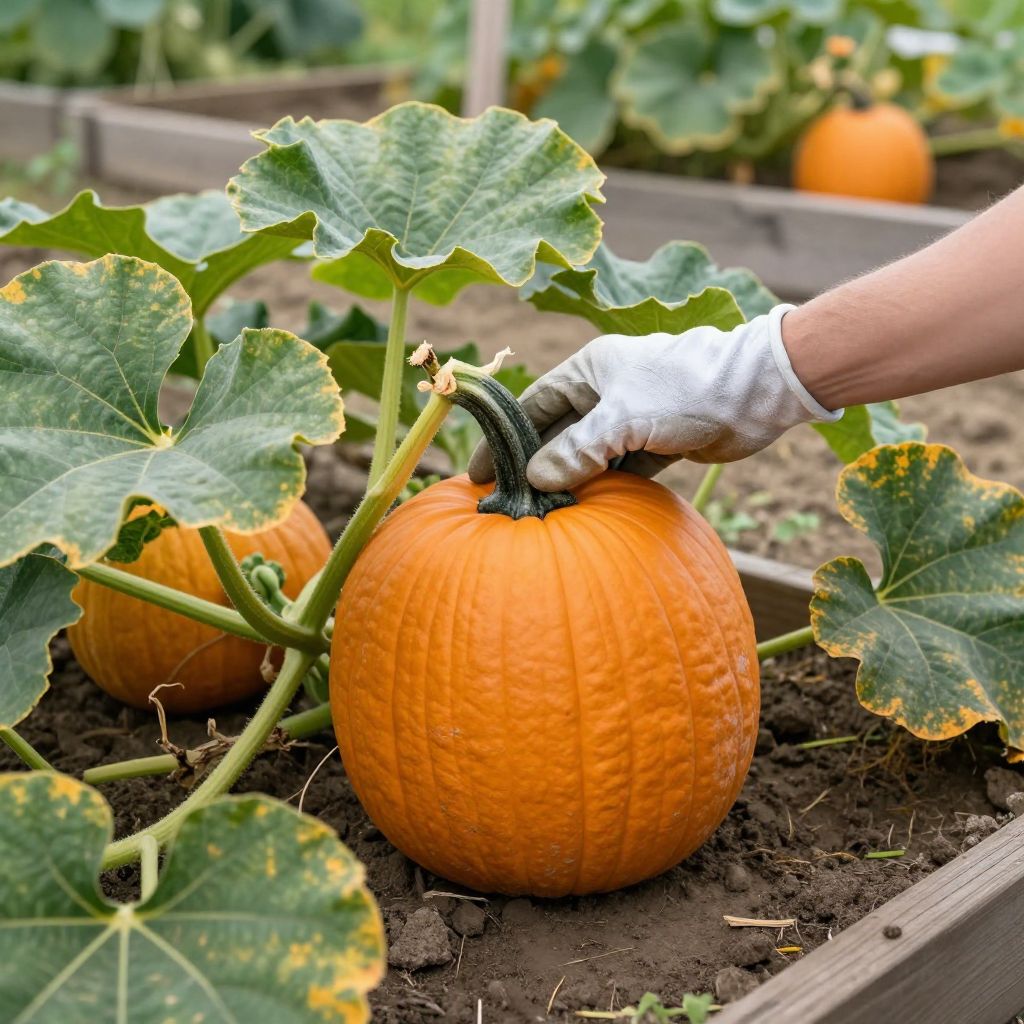
Wondering when to pick pumpkins so they’re fully colored, long-lasting, and not too soft? The right harvest time depends on variety, weather, and how you plan to use them, but there are reliable signs you can check in the garden.
Pick too early and pumpkins may stay pale or store poorly. Wait too long and frost, rot, or pests can damage the fruit. Here’s how to tell when pumpkins are ready, how to harvest them cleanly, and how to cure them for better storage.
When to pick pumpkins?
Pick pumpkins when they have reached full mature color, the rind is hard enough that you cannot easily dent it with a fingernail, and the vine is beginning to decline. Most pumpkins are ready in late summer to fall, usually about 90 to 120 days after planting, depending on the variety and your climate.
How to tell a pumpkin is ripe
There is no single calendar date that works everywhere. Instead, use several ripeness clues together, because weather and variety can shift timing by weeks.
Look for these harvest signs
- Deep, even color for the variety you planted, whether orange, white, or another mature shade.
- Hard rind that resists scratching with a thumbnail.
- Dried, corky stem that has turned brown or tan.
- Vine dieback or yellowing leaves near the plant’s end of season.
- Full size and shape typical of the cultivar.
A pumpkin can be large but still immature if the skin is soft or the stem is still green and flexible. For storage, rind firmness matters more than size alone.
The thumbnail test
Press your thumbnail gently into the rind. If it punctures easily, the pumpkin is not fully mature. If it resists pressure and feels tough, that is a strong sign it is ready to harvest.
Check the stem and vine
A mature pumpkin often has a stem that looks dry and woody, not bright green. The vine may begin to yellow, but do not wait so long that the fruit is exposed to frost or prolonged wet weather.
Seasonal timing: what to expect by climate
In cooler regions, pumpkins often mature in early to mid-fall. In warmer climates, they may ripen earlier or continue producing later into the season if plants stay healthy.
Use the seed packet or plant tag as your starting point
Most pumpkin varieties list a “days to maturity” range. Count forward from sowing, then watch the fruit closely during the final two weeks. This is more reliable than using a fixed harvest month.
Adjust for local weather
- In short-season areas, choose earlier-maturing varieties and monitor fruit closely as nights cool.
- In hot climates, pumpkins may continue growing longer, but intense heat can stress vines and reduce quality.
- In wet autumns, harvest as soon as pumpkins are mature enough to avoid rot and slug damage.
If frost is forecast and pumpkins are nearly ready, harvest them early rather than risk damage. Light frost can injure foliage, and hard frost can ruin the fruit.
How to harvest pumpkins correctly
Harvesting is simple, but a clean cut and careful handling help pumpkins store much better. Bruises, stem breaks, and skin cuts shorten shelf life.
- Choose a dry day if possible.
- Use clean, sharp pruners, loppers, or a knife.
- Cut the stem, leaving 2 to 4 inches attached to the pumpkin.
- Lift the fruit gently by supporting the bottom, not by the stem.
- Place pumpkins in a single layer where they will not be bumped or stacked.
Never carry a pumpkin by the stem alone. A broken stem creates an entry point for rot and can reduce storage life significantly.
Handle vines carefully
If the vine is still partly green, avoid dragging the fruit through the patch. Tugging can tear the stem or bruise the rind. If you need to move the pumpkin far, slide it onto a tarp or carry it with both hands.
What if the pumpkin is almost ready but not quite there?
If frost is still a few days away and the pumpkin is close to mature, you may be able to let it finish ripening in place. However, once the rind is hard and the color is mostly developed, it is usually safer to harvest than to gamble on weather.
Can pumpkins ripen off the vine?
They can finish curing and improve in storage, but they do not truly ripen much after harvest the way some fruits do. A pumpkin picked too early may stay pale, have less flavor, and store poorly. That is why checking maturity on the vine is so important.
Curing pumpkins for better storage
Curing helps the rind toughen and minor surface wounds dry over. This step is especially useful if you want pumpkins to last through the fall season or into winter.
Basic curing conditions
- Keep pumpkins in a warm, dry, well-ventilated place.
- Aim for about 80 to 85°F if possible, though normal warm indoor conditions can still help.
- Let air circulate around each fruit.
- Turn them gently if one side is resting on a damp surface.
Do not cure pumpkins in direct hot sun for long periods, and do not leave them in wet grass or on cold concrete. Moisture and chilling can encourage decay.
How long to cure
Many pumpkins benefit from about 7 to 14 days of curing, though the exact time depends on weather and the condition of the fruit. After curing, move them to a cool, dry storage area.
Common mistakes when deciding when to pick pumpkins
Picking by color alone
Some pumpkins turn orange before they are fully mature, while others stay green or pale until late. Color is helpful, but it should never be your only clue.
Waiting too long for a perfect look
Overripe pumpkins can soften, split, or rot on the vine, especially in damp weather. Once the rind is hard and the stem is drying, it is usually time to harvest.
Harvesting after heavy rain
Wet fruit is more likely to bruise and may be harder to cure. If possible, wait until the pumpkin and vine surface have dried before cutting.
Breaking the stem
A stemless pumpkin usually stores poorly. Cut carefully and leave a short stem attached whenever possible.
Problems that can affect harvest timing
Pests and disease
Powdery mildew, vine borers, squash bugs, and rot can force an earlier harvest. If the vines are collapsing before the fruit is fully colored, check whether the pumpkins themselves have reached hard-rind maturity.
Sunscald and ground contact
Fruit sitting on wet soil may develop soft spots or discoloration. If you notice this, harvest sooner if the pumpkin is mature enough, or place developing fruit on a board, straw, or another dry surface earlier in the season.
Uneven ripening
Pumpkins sometimes ripen unevenly on one side if they have been shaded by leaves or pressed against the soil. Rotate fruit carefully only if the vine allows it, and avoid forcing it loose from the plant.
Storing pumpkins after harvest
Once cured, store pumpkins in a cool, dry place with good airflow. A basement, pantry, or sheltered porch can work if temperatures stay cool but not freezing.
- Keep pumpkins off damp floors.
- Avoid stacking them.
- Check weekly for soft spots or mold.
- Use damaged pumpkins first.
For best storage, keep pumpkins away from apples and other produce that gives off ethylene gas, which can speed aging.
Quick harvest checklist
- The pumpkin has reached mature size for its variety.
- The rind is hard and resists a thumbnail test.
- The stem is dry or corky, not soft and green.
- The color looks fully developed.
- Weather is turning cool, wet, or frosty.
If most of these points are true, it is time to pick. When in doubt, harvest a mature-looking pumpkin before a hard frost rather than leaving it vulnerable in the garden.
For more seasonal garden guidance, you may also want to read related articles on how to cure winter squash for storage and best ways to protect vegetables from frost.