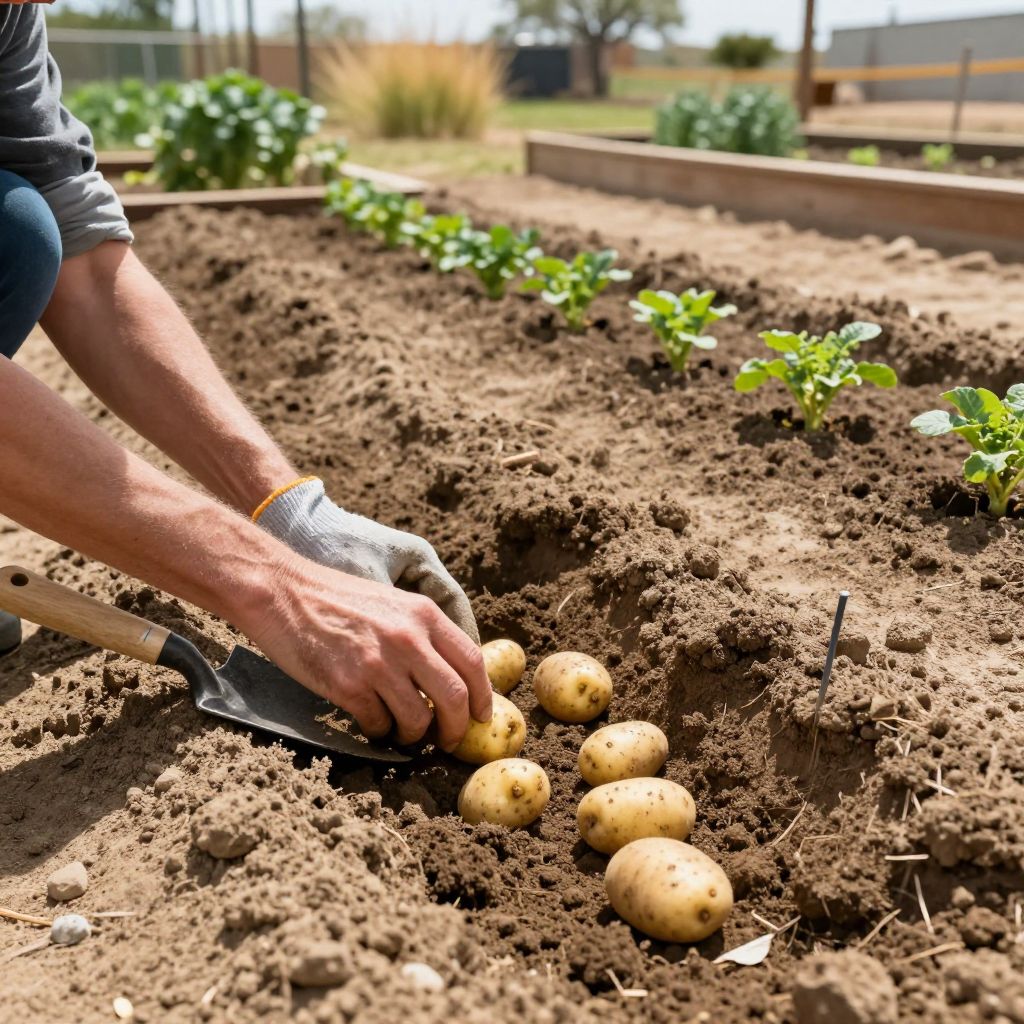
Wondering when to plant potatoes in Texas? The short answer is that most Texas gardeners plant potatoes in late winter to early spring, once the soil can be worked and before hot weather arrives. In much of the state, that means January through March, with the exact timing shifting by region and local frost patterns.
Potatoes need cool weather to get established and to form good tubers. Plant too early in cold, soggy soil and seed pieces may rot; plant too late and summer heat can cut yields fast. The best planting window depends on where you live in Texas and how quickly your soil warms up.
When to plant potatoes in Texas?
In Texas, plant potatoes as soon as the soil is workable and daytime temperatures are staying cool, usually from late January through February in South Texas and from February through early March in Central and North Texas. Aim to get them in the ground about 2 to 4 weeks before your average last frost date, while avoiding frozen or waterlogged soil.
Best planting window by Texas region
Texas is large enough that planting dates vary a lot. Use your local frost date and soil conditions as your guide, not the calendar alone.
South Texas
In warmer areas, potatoes are often planted in January or very early February. The goal is to let plants grow and tubers size up before spring heat becomes intense.
Central Texas
Many gardeners plant from mid-February through early March. If your soil is still cold or saturated after winter rain, wait a few days rather than forcing the planting.
North Texas
In cooler parts of the state, late February through March is often safer. Planting too early can expose sprouting seed potatoes to hard freezes, especially in open gardens.
West Texas and higher elevations
Shorter springs and cooler nights can push planting later, but the same rule applies: plant early enough for tuber development before heat arrives, yet not so early that frost damages emerging shoots.
How to tell if your soil is ready
Potatoes do best in loose, well-drained soil that is cool but not cold. A simple test is to grab a handful of soil: if it forms a sticky ball, it is too wet to plant. If it crumbles easily and is workable, you are closer to the right time.
- Soil temperature: Potatoes generally sprout best in cool soil, often around 45 to 55°F at planting time.
- Drainage: Avoid planting in soggy ground, which encourages rot.
- Texture: Loose soil helps tubers expand without becoming misshapen.
If your garden stays wet after rain, consider raised beds or mounded rows. In Texas clay soils, this often makes a bigger difference than changing the planting date by a week or two.
Choosing seed potatoes and preparing them
Use certified seed potatoes rather than grocery-store potatoes whenever possible. Seed potatoes are less likely to carry diseases and usually sprout more reliably.
Should you cut seed potatoes?
If the seed potatoes are large, you can cut them into pieces with at least one or two healthy eyes per piece. Let the cut surfaces dry for a day or two before planting so they are less likely to rot.
- Choose firm, healthy tubers with no soft spots.
- Let sprouted seed pieces “chit” in a bright, cool place if you want quicker emergence.
- Plant small whole potatoes if they are already about egg-sized or smaller.
How to plant potatoes for Texas conditions
Potatoes are usually planted in rows, raised beds, or trenches. The main goal is to give them loose soil, consistent moisture, and room to hill up as stems grow.
- Work compost into the bed before planting, but avoid fresh manure.
- Dig a shallow trench or set seed potatoes about 3 to 4 inches deep.
- Space seed pieces about 10 to 12 inches apart.
- Leave rows about 2 to 3 feet apart for easier hilling and airflow.
- Cover lightly with soil and water in well.
As shoots grow, add soil around the stems in stages. This process, called hilling, helps protect developing tubers from sunlight and can improve yield.
Why hilling matters
Exposed potatoes turn green in the sun and can become bitter or unsafe to eat. Hilling also gives the plant more room to form tubers below the soil surface.
Sun, water, and soil needs
Potatoes need full sun for strong growth, which usually means at least 6 hours of direct light each day. In Texas, morning sun with some protection from the harshest afternoon heat can be helpful later in the season.
Watering the right way
Keep soil evenly moist, especially during sprouting and tuber formation. Irregular watering can lead to misshapen potatoes, cracking, or reduced yields.
- Water deeply rather than giving frequent light sprinkles.
- Let the top layer of soil dry slightly between waterings, but do not let plants wilt repeatedly.
- Reduce overhead watering if possible to help limit fungal disease.
Mulch can help conserve moisture and moderate soil temperature, which is especially useful in Texas as spring warms up.
Fertilizer and compost tips
Potatoes are moderate feeders, but too much nitrogen can produce lush tops and fewer tubers. Compost is usually the safest soil amendment for home gardens.
- Mix compost into the bed before planting to improve soil structure.
- Use a balanced fertilizer only if your soil is poor or a soil test suggests it.
- Avoid heavy fresh manure, which can increase disease risk and encourage too much leafy growth.
If your plants look healthy but are making lots of leaves and few tubers, excess nitrogen may be part of the problem.
Common Texas potato problems and how to avoid them
Texas gardeners often face a short cool season, spring storms, and a fast jump into heat. Those conditions can bring a few common potato problems.
Frost damage
Young potato shoots can be nipped by a late freeze. If frost is forecast after emergence, cover plants with frost cloth or loose mulch overnight, then uncover them the next day.
Rot in wet soil
Seed pieces can rot if planted in cold, saturated ground. Improve drainage, wait for drier weather, or plant in raised beds.
Early heat stress
Once temperatures climb, plants may slow down or stop sizing tubers. This is why early planting is so important in Texas.
Insect and disease pressure
Watch for common pests such as aphids and Colorado potato beetles where they occur. Good spacing, crop rotation, and removing diseased foliage help reduce problems.
- Rotate potatoes away from tomatoes, peppers, and eggplant when possible.
- Remove volunteer potato plants from previous seasons.
- Inspect leaves regularly for chewing insects or spotting.
When to harvest potatoes
Harvest timing depends on whether you want new potatoes or full-sized storage potatoes. New potatoes can be dug when plants are flowering or shortly after, while mature potatoes are usually harvested after the tops yellow and die back.
For storage potatoes, wait until the vines have died down and the skins have set. Handle tubers gently to avoid bruising, and let them dry in a shaded, airy place before storing.
Quick planting checklist for Texas gardeners
- Plant in late winter to early spring, based on your region.
- Choose certified seed potatoes.
- Use loose, well-drained soil rich in compost.
- Plant 3 to 4 inches deep and space 10 to 12 inches apart.
- Hill soil around stems as plants grow.
- Keep moisture steady and watch for heat, frost, and rot.
Final thoughts
If you are deciding when to plant potatoes in Texas, start with your local frost date and soil conditions, then plant as early as safely possible in late winter or early spring. The earlier you can give potatoes cool growing weather, the better your chances of a strong harvest.
For more seasonal garden planning, you may also want to read about growing potatoes in containers and basic potato plant care.