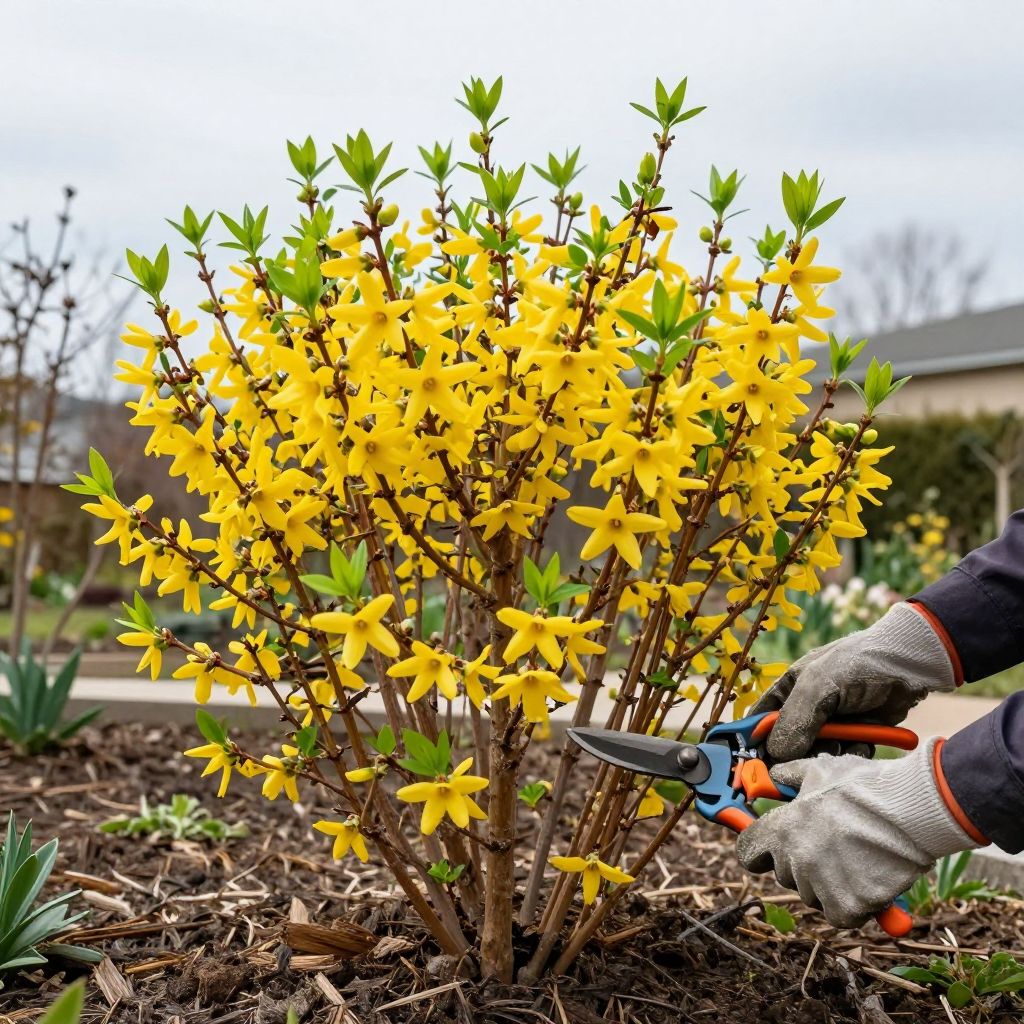
Wondering when to prune forsythia so you don’t lose next spring’s flowers? The short answer is to prune right after blooming, not in fall or winter. Forsythia sets its flower buds on old wood, so late pruning usually means fewer blooms the following year.
With the right timing and a few simple cuts, you can keep forsythia full, tidy, and flowering well. The goal is to remove only what’s needed, encourage new growth, and avoid overcutting the stems that carry next season’s buds.
When To Prune Forsythia?
Prune forsythia immediately after it finishes flowering, usually in spring. This gives the shrub time to produce new growth that will form next year’s flower buds. Avoid pruning in late summer, fall, or winter unless you are removing dead, damaged, or diseased wood.
Why Timing Matters for Forsythia
Forsythia blooms on old wood, meaning the flower buds are formed on stems that grew the previous season. If you cut those stems off before bloom, you remove the buds along with them.
That’s why pruning at the wrong time often leads to a shrub that looks healthy but flowers poorly. The plant may still grow vigorously, but the display will be reduced.
Best seasonal window
- Best time: right after flowering ends in spring
- Okay any time: remove dead, broken, or diseased branches
- Avoid: heavy pruning in winter or early spring before bloom
How To Prune Forsythia Step by Step
For most home gardens, forsythia only needs light shaping or selective thinning. You do not need to shear it into a tight hedge unless that is the look you want and you are willing to maintain it regularly.
- Wait until flowering is finished. Prune once the yellow blooms fade and petals drop.
- Remove dead or damaged stems first. Cut them back to healthy wood or all the way to the base if needed.
- Thin out older canes. Take out about one-third of the oldest stems at ground level to encourage fresh growth.
- Shorten overly long shoots. Cut back long, arching stems to a side branch or to a point that keeps the shrub balanced.
- Step back and assess shape. Aim for an open, natural form rather than a flat, clipped outline.
How much to remove
For routine maintenance, remove only a modest amount. If the shrub is overgrown, you can renovate it more heavily, but do that gradually over two or three years so you don’t sacrifice all the flowering wood at once.
What Kind of Pruning Does Forsythia Need?
Forsythia responds well to different pruning styles, depending on how you use it in the landscape. A shrub grown as a specimen needs different care than one planted as a hedge or screen.
1. Light shaping
This is the simplest approach. After bloom, trim back wayward stems and remove a few older canes to keep the shrub looking full and natural.
2. Renewal pruning
If the shrub has become crowded or woody, remove the oldest stems at the base each year. This encourages younger stems that flower better and helps keep the plant vigorous.
3. Hard renovation
If a forsythia is severely overgrown, you can cut it back hard, but expect reduced bloom the following season. A safer method is to remove one-third of the oldest stems each year until the shrub is refreshed.
Tools You’ll Need
Use clean, sharp tools so cuts heal quickly and the shrub is less likely to suffer tearing or disease entry.
- Hand pruners for stems up to about pencil thickness
- Loppers for thicker canes
- Pruning saw for very old or woody stems
- Gloves to protect your hands from scratches
Disinfect tools if you’re removing diseased wood or moving between shrubs that show problems. Clean cuts are especially important on older, dense shrubs.
Common Mistakes To Avoid
Most pruning problems with forsythia come from cutting at the wrong time or cutting too much at once. A little restraint goes a long way.
- Pruning before bloom: this removes flower buds and reduces spring color
- Shearing repeatedly: constant clipping can create a dense outer shell with few flowers inside
- Leaving only old stems: older wood flowers less well over time
- Cutting everything back at once: severe pruning can delay bloom and make the shrub look bare
- Ignoring dead wood: dead stems waste energy and crowd the plant
How To Rejuvenate an Overgrown Forsythia
If your forsythia has become leggy, tangled, or mostly flowers at the top, it may need renewal pruning. This is best done after bloom and repeated over several seasons.
Gradual renewal method
- Each spring after flowering, remove up to one-third of the oldest stems at ground level.
- Choose the thickest, least productive canes first.
- Keep the younger, healthier stems that are producing the best growth.
- Repeat for two or three years until the shrub is more balanced.
This method preserves some bloom each year while steadily improving the plant’s structure.
When hard pruning makes sense
Hard pruning may be useful if the shrub is badly neglected or blocking a path, window, or structure. Even then, it is usually better to reduce it in stages rather than cut the whole shrub to the ground unless you are prepared for a season or two of sparse flowering.
Aftercare Following Pruning
Forsythia is generally low-maintenance, but a little care after pruning helps it recover and grow well.
- Water deeply if the soil is dry, especially during the first few weeks after pruning.
- Apply compost around the base if your soil is poor, but keep it away from the stems.
- Mulch lightly to conserve moisture and suppress weeds.
- Watch for new shoots and remove any broken or awkward growth later if needed.
In most gardens, forsythia does not need heavy fertilizing. Healthy soil, decent drainage, and enough sun usually matter more than feeding.
Growing Conditions That Affect Pruning Results
Pruning works best when the shrub is growing in a suitable site. Forsythia flowers most freely in full sun, though it can tolerate partial shade. In deeper shade, it may grow more loosely and bloom less heavily.
Well-drained soil is important. Forsythia can handle a range of soil types, but soggy ground can weaken roots and reduce vigor. If your soil stays wet, improve drainage before expecting strong growth and flowering.
Signs the shrub may need site improvement, not just pruning
- Poor bloom even after proper pruning
- Thin, weak stems
- Yellowing leaves unrelated to seasonal change
- Slow growth in a shaded or crowded spot
Pests and Diseases to Watch For
Forsythia is usually trouble-free, but stressed shrubs can develop problems. Pruning can help air circulation, which reduces disease risk.
- Cane dieback: remove affected stems back to healthy wood
- Leaf spots: improve airflow and avoid wetting foliage unnecessarily
- Root stress from poor drainage: correct soggy soil conditions
If you see repeated dieback, check the shrub’s location, soil moisture, and overall vigor. Pruning alone won’t solve a site problem.
Can You Prune Forsythia in Summer or Fall?
You can remove damaged or dead stems at almost any time, but major pruning in summer or fall is not ideal. By then, the shrub is often already setting the buds for next spring’s flowers.
If you missed the post-bloom window, it’s usually better to wait until after the next flowering period unless the plant needs immediate corrective pruning for safety or health.
Quick Pruning Checklist
- Prune right after flowering
- Remove dead, damaged, and crossing stems
- Thin out a few old canes at the base
- Keep the shrub open and natural-looking
- Avoid heavy pruning before bloom
Conclusion
If you remember one thing about when to prune forsythia, make it this: prune right after the flowers fade. That timing protects next year’s buds and keeps the shrub vigorous, tidy, and full of bloom. If your shrub is overgrown, start with a few old stems this season and continue gradually next year.
For more shrub-care guidance, you may also want to read about how to prune spring-flowering shrubs and basic pruning tools and techniques for home gardens.