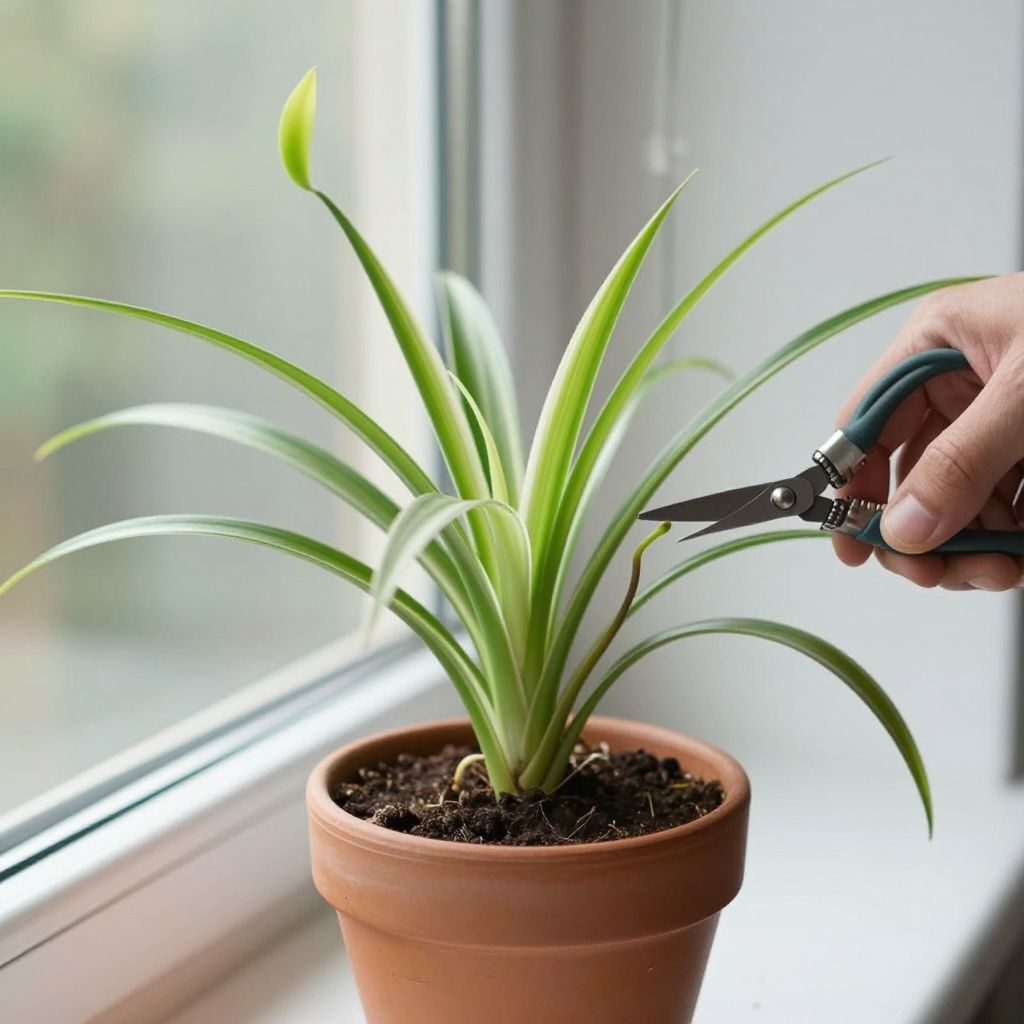
Wondering where to cut spider plant babies so you can propagate them without harming the mother plant? The good news is that spider plant pups are easy to remove once they have formed a small rosette and, ideally, a few roots of their own. The best cut is usually made on the thin stem connecting the baby to the runner, not into the baby’s crown.
With a clean snip and a little aftercare, you can root spider plant babies in water or potting mix and keep the parent plant healthy. The key is choosing the right stage, making a precise cut, and giving the new plantlets bright indirect light and evenly moist conditions while they establish.
Where to cut spider plant babies?
Cut spider plant babies on the slender runner stem, usually 1 to 2 inches away from the baby’s base, so you do not damage the crown or roots. If the baby already has roots, you can cut it free and pot it up right away. If it has no roots, leave a little stem attached for easier handling.
How to tell when a spider plant baby is ready
Not every pup is ready to be removed at the same time. The best candidates are the ones that have developed a small cluster of leaves and, ideally, visible nub-like roots or short white roots emerging from the base.
Signs a baby is ready
- The rosette is at least a few inches across.
- You can see small roots starting at the base.
- The baby looks firm and healthy, not limp or pale.
- The runner has lengthened enough that you can work without crowding the mother plant.
Signs to wait a little longer
- The baby is tiny and has only a few leaves.
- There are no roots yet and the plantlet looks weak.
- The mother plant is stressed, recently repotted, or recovering from pests.
If you remove babies too early, they can dry out quickly or struggle to root. Waiting until they are more developed usually gives you a stronger start.
Best place to make the cut
The safest place to cut spider plant babies is on the thin runner stem between the baby and the parent plant. Make your cut just below the baby, leaving a short stub of runner attached to the plantlet if possible. Avoid cutting into the baby’s central growth point, where new leaves emerge.
What the runner is
Spider plants, Chlorophytum comosum, send out long arching stems called runners or stolons. The babies form at the ends of these stems, and each baby can become a new plant.
How close to cut
- If the baby has roots: cut 1/2 to 1 inch below the base, or as close as you can without nicking the crown.
- If the baby has no roots: leave 1 to 2 inches of runner attached to make handling easier.
- If the runner is tangled: untwist it gently before cutting so you do not tear the plantlet.
A clean cut matters more than a perfect-looking one. Use sharp scissors, pruning snips, or a small knife cleaned with rubbing alcohol to reduce crushing and lower the chance of rot.
Step-by-step: how to remove spider plant babies
- Choose a healthy baby that is large enough to handle.
- Inspect the base for roots and check that the mother plant is not under stress.
- Clean your cutting tool with alcohol or soap and water.
- Support the baby gently with one hand.
- Snip the runner 1 to 2 inches from the baby’s base, or as close as practical without damaging the crown.
- Place the baby in water or directly into moist potting mix.
If several babies are attached to one runner, you can remove them one at a time. This is often easier than trying to cut the whole stem at once, especially if the babies are at different stages.
Should you root spider plant babies in water or soil?
Both methods work. Water rooting lets you watch the roots develop, while soil rooting reduces transplant shock because the baby starts in its final medium. Choose the method that fits your comfort level and the baby’s condition.
Water rooting
Set the base of the baby in a small glass or jar with just the bottom portion touching water. Keep the leaves above the waterline. Change the water every few days to keep it fresh.
- Best for beginners who want to monitor root growth.
- Works well for babies with little or no roots.
- Move to potting mix once roots are 1 to 2 inches long.
Soil rooting
Plant the baby in a small pot with a light, well-draining houseplant mix. Keep the soil evenly moist, not soggy, until new growth shows it has settled in.
- Best if the baby already has roots.
- Reduces the need to transition from water to soil later.
- Helps avoid overly long, fragile water roots.
A small pot is usually enough at first. Spider plants prefer to be slightly snug rather than overpotted, and a container that is too large can stay wet too long.
What kind of potting mix and container should you use?
Use a loose, airy potting mix that drains well. A standard indoor potting blend is usually fine, especially if it contains perlite, bark, or another ingredient that improves drainage. Choose a pot with drainage holes so excess water can escape.
Good container choices
- 2- to 4-inch nursery pots for small babies
- Shallow starter pots for rooted pups
- Small terracotta or plastic pots with drainage holes
Why drainage matters
Spider plant babies are prone to rot if they sit in wet soil. Good drainage helps the roots get oxygen and keeps the base from staying constantly damp.
How to care for newly cut spider plant babies
Freshly cut babies need stable conditions while they root. Bright, indirect light is ideal, and temperatures typical of a comfortable indoor room usually work well. Avoid direct hot sun, which can scorch tender leaves and dry the cutting too quickly.
- Light: Bright, indirect light near a window is best.
- Water: Keep the medium lightly moist, not waterlogged.
- Humidity: Average indoor humidity is usually fine, but very dry air may slow rooting.
- Temperature: Protect from cold drafts and heat blasts from vents.
If you are rooting in soil, check moisture with your finger rather than watering on a fixed schedule. The top layer can dry slightly, but the root zone should not become bone dry for long.
Common mistakes to avoid
Most problems with spider plant babies come from cutting too early, using poor drainage, or overwatering after potting. A careful start prevents most of the usual setbacks.
1. Cutting into the crown
The crown is the center of the baby where new leaves emerge. If you cut too close or crush it, the plantlet may stall or rot. Always cut on the runner, not through the base of the baby.
2. Potting into a huge container
A large pot holds too much moisture for a small cutting. Start small and repot later when roots fill the container.
3. Keeping the mix soggy
Wet soil is the fastest way to lose a newly cut spider plant baby. Water enough to keep the mix evenly moist, then let excess drain away.
4. Leaving babies attached too long
Very long runners can become tangled, and babies may pull on the mother plant. Once the pup is ready, remove it cleanly so both plants can grow better.
How to keep the mother spider plant healthy after cutting babies
Removing a few pups usually does not harm a healthy spider plant. In fact, pruning off some babies can help the parent plant redirect energy into fuller foliage. Still, the mother plant benefits from sensible care after propagation.
- Return it to bright, indirect light.
- Water when the top layer of soil begins to dry.
- Trim any damaged or yellowing leaves.
- Check that the pot is not rootbound if growth has slowed.
If the parent plant is producing many babies but looking tired, it may need repotting, fresher potting mix, or a little more light rather than more frequent watering.
Troubleshooting spider plant babies that fail to root
If a baby wilts after cutting, do not panic. A little droop is normal during the first day or two, especially if it was removed from a long runner. The key is to correct the conditions before the cutting dries out or rots.
If the baby wilts
- Move it out of direct sun.
- Check that the roots or base are not drying out.
- Keep the soil lightly moist, not saturated.
- Trim any mushy tissue if rot has started.
If the base turns brown or soft
That usually means excess moisture or damage from cutting too close. Remove the affected tissue with a clean tool if possible, then restart with a healthier baby.
If roots are slow to appear
Patience helps. Rooting can take longer in cooler rooms, low light, or during the plant’s slower growth period. Keep conditions steady and avoid frequent disturbance.
Can you leave spider plant babies attached?
Yes. You do not have to cut every baby right away. Some gardeners leave the pups attached for a fuller hanging display, especially if the mother plant is healthy and the runners are attractive. Just be aware that very heavy runners can pull on the plant and make the pot look crowded.
If you want a cascading look, you can let a few babies stay attached while removing the rest for propagation. That gives you both a decorative plant and new starts.
Quick checklist for cutting spider plant babies
- Choose a baby with a healthy rosette and, ideally, roots.
- Use clean, sharp scissors or snips.
- Cut the runner, not the baby’s crown.
- Leave a short stub if that makes handling easier.
- Root in water or a small pot with well-draining mix.
- Keep in bright, indirect light and lightly moist conditions.
Once you know where to cut spider plant babies, propagation becomes simple and reliable. Start with one healthy pup, make a clean cut on the runner, and give it gentle aftercare. If you want more houseplant reading, you may also enjoy how to propagate houseplants and choosing the best indoor plant soil.