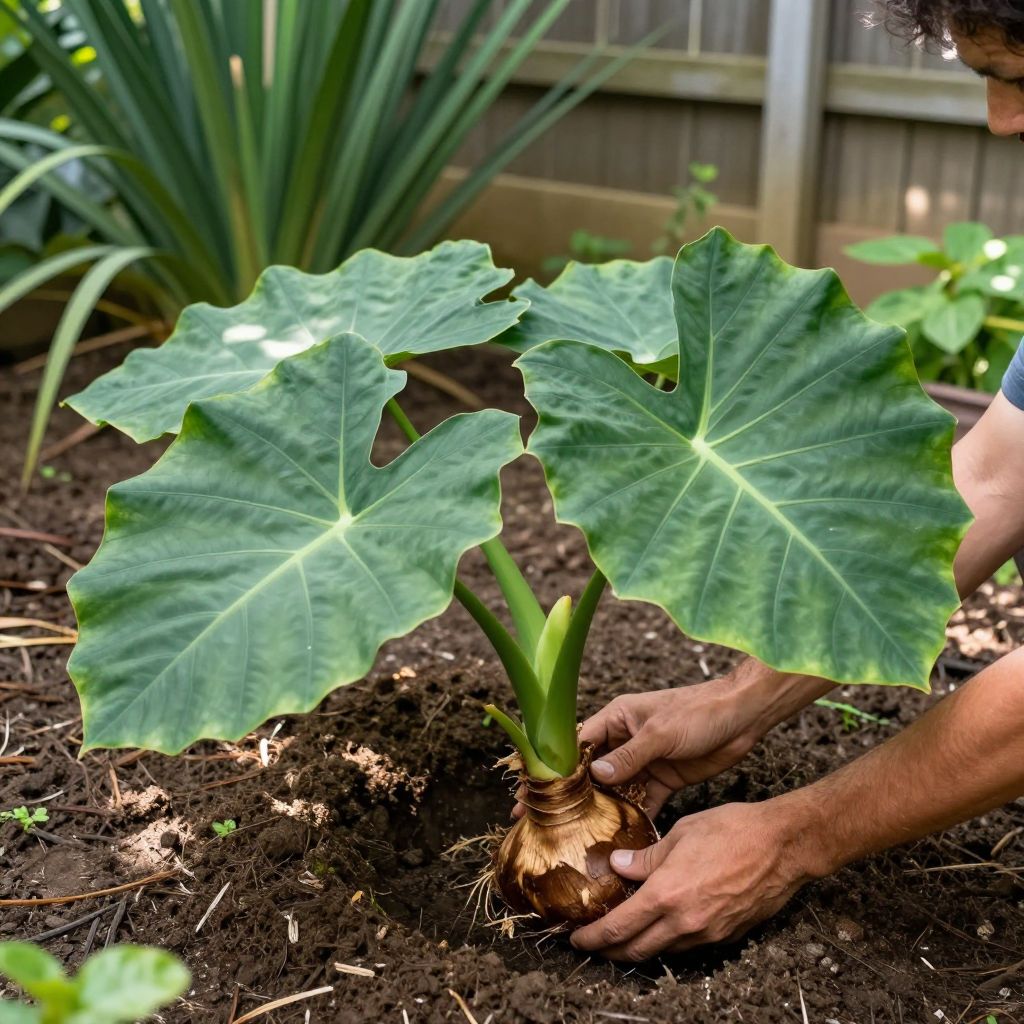
Where should you plant elephant ears so they grow big, healthy, and dramatic instead of limp or scorched? The best spot depends on whether you’re growing them in the ground or in containers, but the goal is always the same: warm conditions, rich soil, steady moisture, and protection from harsh wind.
Elephant ears, usually grown from tubers or corms, are tropical-looking foliage plants that reward the right location with huge leaves and fast growth. Choose the site carefully, and you’ll spend less time troubleshooting yellowing, stunting, or leaf burn later.
Where to plant elephant ears?
Plant elephant ears in a warm, sheltered location with moist, fertile, well-drained soil and the right amount of light for your climate. In cooler regions, they usually do best in morning sun and afternoon shade; in hotter areas, they can take more sun if the soil stays evenly moist.
Best locations for elephant ears
Elephant ears are versatile, but they are not carefree. The best planting spot supports rapid leafy growth without exposing the plant to stress from cold, drought, or wind.
1. Part shade to filtered sun
For many gardeners, this is the safest choice. A site with bright light and some protection from intense afternoon sun helps leaves stay large and attractive.
Good options include:
- Morning sun with afternoon shade
- Dappled light under open trees
- Bright spots beside fences, patios, or buildings that soften wind
If you live in a cooler climate, elephant ears may accept more sun. In hot, dry climates, too much direct sun can scorch the leaves unless moisture is consistently available.
2. Rich, moisture-retentive soil
Elephant ears grow best in soil that holds moisture but does not stay soggy. Think loose, compost-amended garden soil rather than hard clay or very sandy ground.
Before planting, work in a generous amount of compost or well-rotted organic matter. This improves both water retention and drainage, which is especially important for tubers and young roots.
3. Sheltered from strong wind
The leaves are large, broad, and easily shredded by wind. A protected location near a wall, hedge, fence, or other planting can reduce damage and keep the plant looking fuller.
Avoid exposed corners of the yard where wind dries the soil quickly and tears the foliage. Even if the plant survives, the leaves may look ragged.
4. Near water features or consistently damp areas
Elephant ears often perform well near ponds, rain gardens, or low-lying spots that stay evenly moist but not flooded. These locations can mimic the humid conditions they prefer.
That said, standing water is still a problem. If the area stays saturated for long periods, the tubers may rot.
How much sun do elephant ears need?
Sun needs vary by type and climate, but a practical rule is this: the hotter and drier your region, the more shade elephant ears usually need. In cooler or more humid areas, they can handle more direct sun.
Use this simple guide
- Cooler climates: morning sun and afternoon shade often works well
- Moderate climates: bright filtered light or half-day sun is often ideal
- Hot climates: light shade or protection from the afternoon sun helps prevent leaf scorch
If leaves look pale, weak, or stretched, the plant may need more light. If they brown at the edges or droop during the hottest part of the day, the site may be too sunny or too dry.
Soil and drainage requirements
Good soil is one of the biggest factors in success. Elephant ears like moisture, but they do not like sitting in heavy, airless soil for long periods.
What to aim for
- Rich, organic soil with plenty of compost
- Even moisture throughout the growing season
- Drainage that prevents water from pooling around the roots
If your soil is clay-heavy, improve it with compost and consider planting in a raised bed or slightly mounded area. If your soil is very sandy, add organic matter to help it hold water longer.
For containers, use a high-quality potting mix that drains well but does not dry out too fast. Pots should have drainage holes, and larger containers usually perform better because they hold moisture more evenly.
Where not to plant elephant ears
Some locations make elephant ears struggle from the start. Avoiding poor sites is just as important as choosing a good one.
Skip these spots
- Dry, exposed areas with constant wind
- Hot, reflective locations next to pavement or walls that radiate heat
- Low spots that stay waterlogged after rain
- Dense shade with little indirect light
- Soil that is compacted, rocky, or extremely poor
Elephant ears can tolerate some stress, but they look best when they are not forced to fight their environment.
How to plant elephant ears in the right spot
Once you’ve chosen the best location, planting correctly gives the tuber or young plant a strong start. The exact method depends on whether you’re planting in the ground or in a container.
In the ground
- Loosen the soil to a depth of about 8 to 12 inches.
- Mix in compost or other organic matter.
- Set the tuber or plant in a spot with the crown at the proper depth for its size.
- Backfill gently and water thoroughly.
- Mulch lightly to help conserve moisture, keeping mulch away from the crown.
Mulch is helpful in warm weather because it slows moisture loss and keeps the root zone more comfortable.
In containers
- Choose a pot with drainage holes and enough room for root growth.
- Fill it with a moisture-retentive potting mix.
- Plant at the correct depth and water well.
- Place the container where it gets bright light but is protected from harsh afternoon sun if needed.
Containers dry out faster than garden beds, so they usually need closer attention. They’re a smart choice if your soil is poor or your climate is too cool for a long in-ground season.
Seasonal considerations for planting
Elephant ears are sensitive to cold, so timing matters. In most climates, plant outdoors only after frost danger has passed and the soil has warmed.
Cool climates
If your growing season is short, start tubers indoors or in pots to get a head start. Move them outside only when nights are reliably mild.
Warm climates
You may be able to plant earlier, but avoid cold, wet soil. Warmth helps roots establish faster and reduces rot risk.
If you overwinter elephant ears in your region, remember that location matters every year. A plant in a sheltered bed may survive better than one in an exposed, dry border.
Watering after planting
Elephant ears need steady moisture, especially while they are establishing. The soil should feel consistently damp, not bone dry and not swampy.
Watering tips that help
- Water deeply so moisture reaches the root zone
- Check soil with your finger before watering again
- Increase watering during hot, windy weather
- Reduce watering if the soil stays wet after rain
Wilting does not always mean the plant needs more water. In intense heat, leaves may droop temporarily even when the soil is moist. Check the soil before adding more water.
Common problems caused by the wrong location
Many elephant ear issues are really site issues. If the plant looks weak, the location may be the real problem.
Yellowing leaves
Yellow leaves can result from poor drainage, too much water, too little light, or nutrient-poor soil. Start by checking moisture and sunlight before assuming it needs fertilizer.
Leaf scorch
Brown, crispy edges often mean too much direct sun, too much heat, or not enough water. Move container plants if possible, or improve shade and watering in the garden.
Slow growth
Slow growth usually points to cool soil, low fertility, too much shade, or cramped roots. Elephant ears are heavy feeders when conditions are right, but they still need a good site first.
Rotting tubers or crowns
Rot is usually linked to soggy soil or cold, wet planting conditions. If your garden stays wet, raised beds or containers may be a better choice.
Can elephant ears grow indoors?
Yes, they can grow indoors if you have enough light and humidity, but they are usually easier outdoors in the growing season. Indoors, place them near a bright window with indirect light and keep the soil evenly moist.
Indoor plants often need more attention to humidity and light than outdoor plants. Rotate containers occasionally so the plant grows evenly instead of leaning toward the window.
Maintenance after planting
Once elephant ears are established, the main job is keeping the plant comfortable. That usually means water, occasional feeding, and removing damaged leaves when needed.
Simple maintenance checklist
- Keep the soil evenly moist
- Feed lightly during active growth if your soil is poor
- Remove yellow or badly damaged leaves
- Watch for slugs, snails, and chewing insects
- Check for disease if foliage develops spots or soft rot
Healthy location choices reduce pest and disease pressure. A stressed plant is more likely to attract problems or recover slowly from them.
Final placement tips for the best results
If you remember only a few things, make them these: choose a warm spot, protect the plant from wind, and keep the soil rich and evenly moist. Those three factors do more for elephant ears than almost anything else.
Before planting, walk your garden and look for the place that offers bright light without harsh afternoon exposure, good drainage without drying out too fast, and enough shelter to keep the leaves intact. For more help planning a successful tropical-style planting area, you may also want to read how to improve garden soil with compost and container gardening basics for large foliage plants.