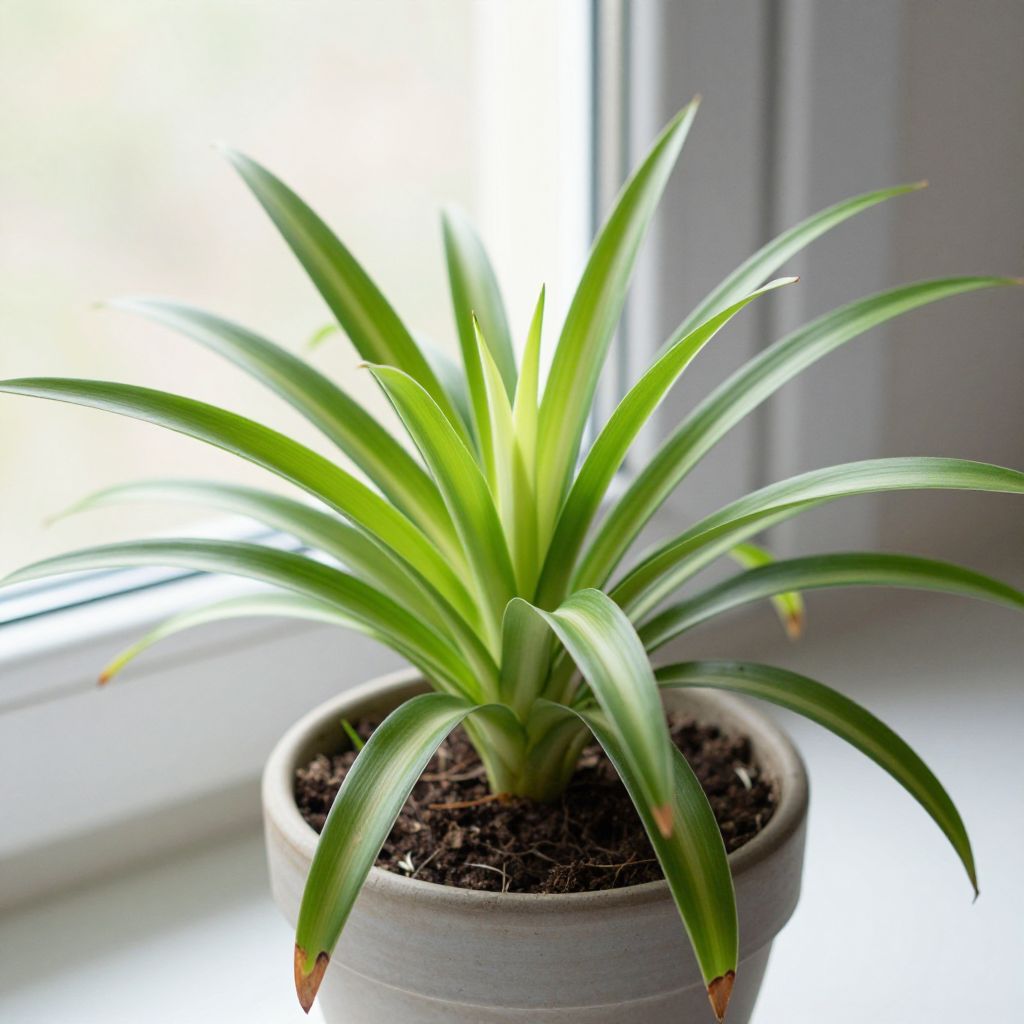
Why does my spider plant have brown tips? In most cases, it’s a sign of stress from water quality, watering habits, low humidity, too much fertilizer, or excess sun rather than a serious disease. The good news is that spider plants (Chlorophytum comosum) are usually easy to correct once you identify the cause.
Brown tips won’t usually kill the plant, but they do tell you something in its growing conditions needs adjusting. With a few simple changes, you can stop the damage, improve new growth, and keep your spider plant looking full and healthy.
Why does my spider plant have brown tips?
Spider plant brown tips are most often caused by mineral buildup from tap water or fertilizer, inconsistent watering, dry indoor air, or direct sun. Less commonly, root stress, cold drafts, or pests can contribute. The key is to check the whole plant care routine, not just one symptom, before trimming anything away.
Common causes of brown tips on spider plants
1. Tap water minerals and fluoride
Spider plants are sensitive to salts and certain minerals, especially fluoride and chlorine in some tap water. Over time, these can build up in the potting mix and show up as crispy brown tips.
If your water is hard or heavily treated, try using filtered water, rainwater, or distilled water for a few weeks and see whether new leaves stay cleaner. This is one of the most common reasons people ask, “Why does my spider plant have brown tips?”
2. Fertilizer buildup
Too much fertilizer can burn the roots or leave excess salts in the soil, which often appears as brown leaf tips. Spider plants need only light feeding during active growth, and they usually do better with less fertilizer than more.
If you have been feeding regularly, flush the pot with plenty of plain water until it drains freely from the bottom. Then pause fertilizing for a while and resume only with a diluted houseplant fertilizer if the plant is actively growing.
3. Inconsistent watering
Spider plants dislike extremes. Letting the pot dry out too much and then soaking it heavily can stress the roots and lead to brown tips and patchy leaf damage.
Check the soil with your finger. Water when the top 1 to 2 inches feel dry, but before the plant becomes limp or the pot dries out completely. The exact timing depends on light, temperature, pot size, and season.
4. Low humidity indoors
Dry indoor air, especially in heated homes during winter, can cause leaf tips to dry out. Spider plants tolerate average household humidity, but very dry air can still leave the tips brown and crisp.
If your home is especially dry, group plants together, use a pebble tray, or place the spider plant in a naturally more humid room such as a kitchen or bathroom with bright indirect light.
5. Too much direct sun
Spider plants prefer bright, indirect light. Harsh direct sunlight, especially through a hot window, can scorch the leaf tips and edges.
If the plant sits in a south- or west-facing window, move it a few feet back or filter the light with a sheer curtain. Bright light is good; intense midday sun is not.
6. Poor drainage or root stress
When a spider plant stays in soggy soil, the roots can become stressed or begin to rot. Damaged roots cannot move water properly, and the leaves may respond with brown tips, yellowing, or limp growth.
Make sure the container has drainage holes and that the potting mix is loose and airy. A standard houseplant mix with added perlite often works well for indoor spider plants.
7. Old leaves and normal aging
Sometimes the oldest leaves naturally develop brown tips as they age, especially if the plant has been through a few care changes. This is more common on older, crowded plants or plants that have been neglected for a while.
In that case, the issue may be minor. Focus on new growth: if the newest leaves are healthy, the plant is usually doing fine.
8. Pests or physical damage
Spider mites, mealybugs, and scale can weaken the plant, while bumps, rubbing against walls, or frequent handling can damage leaf tips. These problems are less common than watering or mineral issues, but they are worth checking.
Look closely at the undersides of leaves and where the foliage emerges from the crown. Fine webbing, sticky residue, cottony clusters, or tiny raised bumps may indicate pests.
How to fix brown tips on a spider plant
Step-by-step troubleshooting
- Check the soil moisture. If the mix is bone dry or soggy, correct that first.
- Review your water source. If possible, switch to filtered, rain, or distilled water for a few weeks.
- Pause fertilizer. If you’ve been feeding often, stop temporarily and flush the pot.
- Move the plant to bright, indirect light. Avoid hot direct sun.
- Inspect roots and drainage. Repot if the soil stays wet too long or smells sour.
- Check for pests. Treat any infestation before it spreads.
What to do about the brown tips already there
Brown tips do not turn green again, so you can trim them for appearance. Use clean scissors and follow the natural shape of the leaf, cutting only the dead brown section or a narrow point at the tip.
Leave a tiny margin of brown if possible. Cutting into healthy green tissue can create a fresh brown edge, especially if the plant is still under stress.
How to prevent brown tips from coming back
Water correctly for your conditions
There is no perfect universal schedule for spider plants. A plant in bright light and warm air may need water more often than one in cooler, lower light conditions.
Use the pot weight and soil feel as your guide. Water thoroughly, then let excess drain away completely. Never leave the pot sitting in water.
Use the right potting mix
A well-draining mix helps prevent root stress and salt buildup. If the soil is dense or compacted, repot into fresh mix that holds some moisture but still drains freely.
Choose a container only slightly larger than the root ball unless the plant is badly rootbound. Oversized pots can stay wet too long.
Feed lightly
Spider plants do not need heavy fertilizing. Too much plant food often causes more problems than it solves.
If you fertilize, use a diluted houseplant fertilizer during active growth only, and skip feeding when the plant is stressed, recently repotted, or growing slowly in winter.
Watch seasonal changes
Spider plants often need less water in winter because light levels are lower and growth slows. Indoor heating can dry the air, though, so the plant may still need occasional attention to humidity and water quality.
In brighter spring and summer conditions, growth usually speeds up, and the plant may produce more runners. Adjust care as the season changes instead of sticking to a rigid routine.
When brown tips mean something more serious
Brown tips alone are usually cosmetic. But if you also notice widespread yellowing, mushy roots, a foul smell from the soil, severe wilting, or many leaves collapsing, the problem may be root rot or another major care issue.
In that case, unpot the plant and inspect the roots. Healthy roots should be firm and pale, while rotten roots are dark, soft, and may break apart easily. Trim damaged roots, repot in fresh mix, and reduce watering.
Quick spider plant care checklist
- Use bright, indirect light.
- Water when the top 1 to 2 inches of soil are dry.
- Make sure the pot drains well.
- Reduce fertilizer if tips keep browning.
- Consider filtered, rain, or distilled water.
- Increase humidity if your home is very dry.
- Trim brown tips with clean scissors.
- Check for pests if damage spreads beyond the tips.
Conclusion
If you’re wondering why your spider plant has brown tips, start with water quality, watering habits, and light exposure. Those are the most common causes, and they’re usually easy to fix. Make one change at a time, watch for healthier new leaves, and trim the damaged tips only after the plant’s conditions improve.
If you want to keep improving your indoor plant care, it can also help to read more about repotting houseplants and choosing the right potting mix for better drainage and healthier roots.