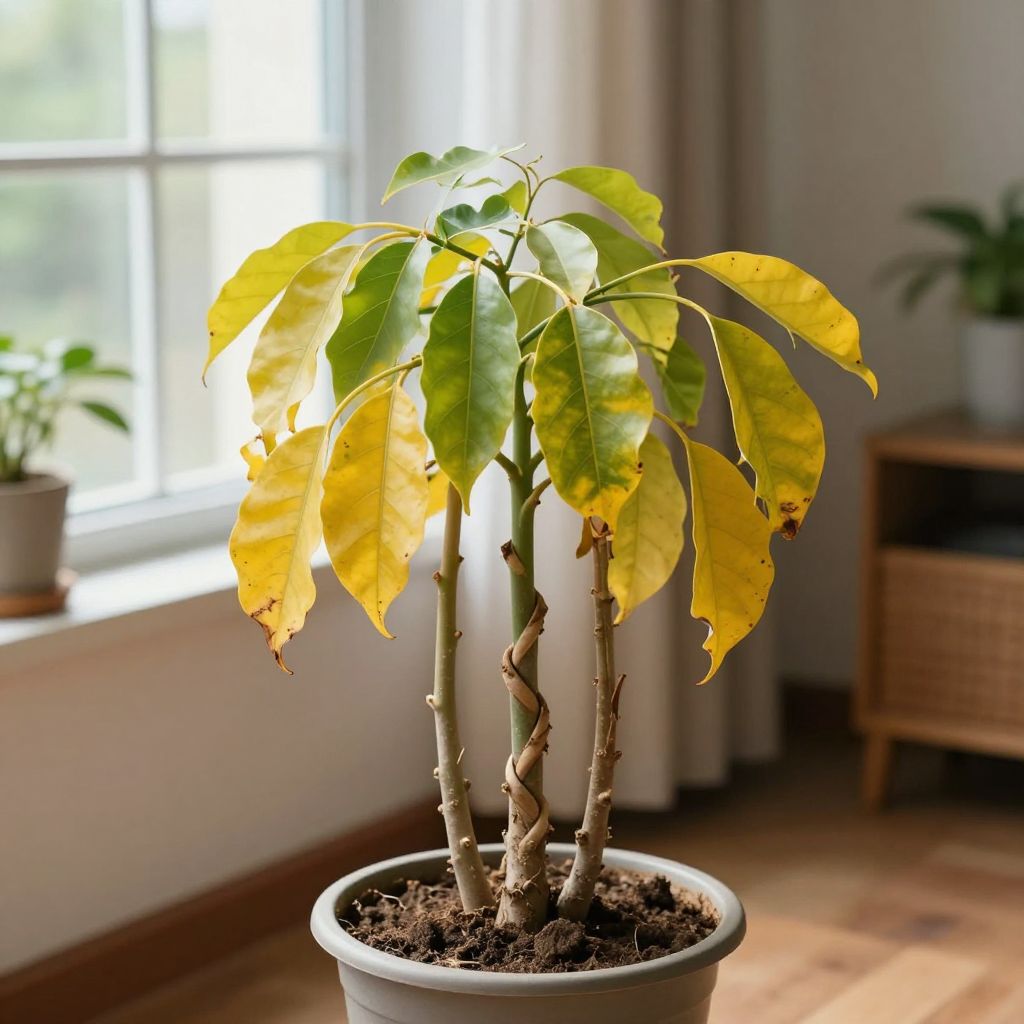
Why is my money tree dying? In most cases, a money tree (Pachira aquatica) declines because its roots are staying too wet, it is getting too little light, or it has been stressed by sudden changes. The good news is that many money trees can recover if you diagnose the problem early and correct the growing conditions.
Start by checking the soil, pot, and leaves before you water again. Money trees are forgiving, but they do best when their roots can breathe, the light is bright but indirect, and the plant is not forced to sit in soggy compost for long periods.
Why Is My Money Tree Dying?
A money tree usually declines from overwatering, poor drainage, low light, or root damage. Yellow leaves, soft stems, leaf drop, and a sour smell from the pot often point to wet roots, while pale growth, stretching, and slow decline usually mean the plant needs more light and better overall care.
How to Tell What Your Money Tree Needs
Before changing anything, look at the symptoms closely. Money trees often show different signs depending on whether the problem is water, light, temperature, pests, or root health.
Common symptoms and what they often mean
- Yellowing leaves — often too much water, but can also be low light or nutrient stress.
- Brown, crispy leaf edges — usually dry air, underwatering, or salt buildup from fertilizer or hard water.
- Soft, mushy trunk or stems — a serious sign of rot from excess moisture.
- Leaf drop — stress from moving the plant, drafts, low light, or watering mistakes.
- Wilting even when soil is wet — roots may be damaged and unable to take up water.
- Sticky leaves, webbing, or speckling — possible pests such as spider mites, scale, or mealybugs.
Watering Problems: The Most Common Cause
Money trees dislike constantly wet soil. If the potting mix stays damp for too long, the roots can suffocate and rot, which is one of the fastest ways to lose the plant.
Signs you are overwatering
- The top of the soil stays wet for days.
- Leaves turn yellow and drop, especially lower leaves.
- The pot feels heavy long after watering.
- The base of the plant feels soft or unstable.
- You notice a musty or sour smell from the soil.
How to fix overwatering
- Stop watering until the top 2 to 3 inches of soil are dry.
- Check that the pot has a drainage hole.
- Empty any saucer or cachepot after watering.
- If the soil is dense or stays wet too long, repot into a freer-draining mix.
- Trim away any black, mushy roots if you repot.
Do not “rescue” a wet money tree by watering more often. Let the root zone dry a little between waterings, then water thoroughly and allow excess water to drain away.
Signs you are underwatering
- Leaves curl, crisp, or dry at the edges.
- The soil pulls away from the sides of the pot.
- The plant looks limp and thirsty, and the pot feels very light.
- New growth stalls or drops before opening fully.
To correct underwatering, water slowly until it runs from the drainage hole, then wait until the upper layer of soil dries before watering again. In warm, bright conditions, this may be more frequent than in winter, but the plant should never sit in water.
Is the Potting Mix and Drainage the Real Problem?
Even a careful watering routine can fail if the soil is too heavy. Money trees grow best in a loose, well-aerated mix that drains well but still holds some moisture.
What a good mix should do
- Drain quickly after watering.
- Hold enough moisture for a few days, not weeks.
- Allow air to reach the roots.
If your plant is in compacted, muddy, or peat-heavy soil, repot it into a container with drainage holes and a lighter mix suited to houseplants. Adding coarse material such as perlite or orchid bark can improve airflow and reduce the risk of rot.
Repotting tips
- Choose a pot only slightly larger than the root ball.
- Use fresh mix rather than reusing soggy old soil.
- Handle the roots gently; damaged roots slow recovery.
- After repotting, water once and then let the plant settle.
Light Issues That Can Make a Money Tree Decline
Money trees prefer bright, indirect light. Too little light weakens the plant over time, while harsh direct sun can scorch leaves and dry the plant too quickly.
Too little light
In low light, money trees often grow leggy, lose lower leaves, and become more vulnerable to overwatering because the soil dries more slowly.
Too much direct sun
Strong sun through a hot window can cause pale patches, brown scorch marks, and leaf curl. This is especially common if a plant is moved suddenly from a shaded spot to intense light.
How to improve light conditions
- Place the plant near a bright window with filtered light.
- Rotate the pot every couple of weeks so growth stays even.
- Move it gradually if you need to increase light exposure.
- Use a sheer curtain if the sun is too strong.
If you are growing a money tree outdoors in a warm climate, keep it in a sheltered spot with bright shade and protection from hot afternoon sun, wind, and cold snaps.
Temperature, Humidity, and Draft Stress
Money trees are tropical plants, so sudden temperature swings can cause stress. Cold drafts, heat vents, and very dry indoor air often trigger leaf drop or brown edges.
What to avoid
- Cold windowsills in winter.
- Air conditioning vents or heater blasts.
- Frequent moves between very different indoor conditions.
- Dry rooms with low humidity for long periods.
Keep the plant in a stable spot with moderate indoor temperatures and away from direct airflow. If your home is very dry, grouping plants together or using a humidity tray can help, but avoid misting so heavily that the foliage stays wet for long periods.
Pests and Diseases That Mimic “Dying”
Sometimes a money tree looks unhealthy because pests are feeding on it or root problems are already underway. Catching these early can make the difference between recovery and decline.
Common pests
- Spider mites — fine webbing, stippled leaves, dusty appearance.
- Mealybugs — white cottony clusters in leaf joints and stems.
- Scale — small brown bumps on stems and undersides of leaves.
What to do
- Isolate the plant from others.
- Inspect leaf undersides and stem joints carefully.
- Wipe visible pests off with a damp cloth or cotton swab.
- Rinse the plant gently if needed, avoiding waterlogged soil.
- Repeat treatment regularly until you stop seeing new pests.
If leaves are dropping and the stem base is soft, check for root rot rather than assuming pests are the only issue. A plant with damaged roots often cannot support healthy foliage, even if pest pressure is low.
Should You Fertilize a Struggling Money Tree?
Fertilizer can help a healthy money tree grow, but it will not fix rot, poor light, or a bad potting mix. In fact, feeding a stressed plant too soon can make the problem worse.
When fertilizer helps
- The plant is actively growing.
- Leaves are generally healthy but growth is slow.
- The soil and watering routine are already correct.
When to hold off
- The plant is dropping leaves rapidly.
- The soil is wet or smells sour.
- Roots are damaged or the plant has just been repotted.
- The plant is in low light and barely growing.
If you do fertilize, use a balanced houseplant fertilizer according to the label and only during the active growing season for your plant’s conditions. In winter or during recovery, it is usually better to focus on light, drainage, and watering first.
Pruning and Recovery Care
Pruning can help a money tree redirect energy into healthy growth, but it should be done carefully. Remove dead, yellow, or badly damaged leaves and stems, and avoid heavy pruning on a plant that is already severely stressed.
Simple recovery steps
- Remove dead leaves and clearly rotten stems.
- Check the roots if the plant is not improving.
- Repot only if the soil is staying wet or roots are damaged.
- Place the plant in bright, indirect light.
- Water only when the top layer of soil has dried.
Recovery may take several weeks. New healthy growth is the best sign that your changes are working, even if some older leaves do not return.
How to Prevent Money Tree Problems in the Future
Once your plant is stable, the goal is to keep conditions consistent. Money trees usually fail because care changes too abruptly or the roots are kept under stress for too long.
Best prevention habits
- Use a pot with drainage holes.
- Check soil moisture before watering.
- Keep the plant in bright, indirect light.
- Avoid moving it from one extreme environment to another.
- Inspect for pests every couple of weeks.
- Repot only when the plant is rootbound or the mix has broken down.
Also watch for seasonal changes. A money tree may need less water in cooler, darker months and more frequent checks during warm, bright periods. The plant’s needs change with light, temperature, and growth rate.
Quick Troubleshooting Checklist
If you want the fastest path to an answer, use this checklist:
- Yellow leaves + wet soil = likely overwatering or poor drainage.
- Brown crispy edges + dry soil = likely underwatering or low humidity.
- Leggy growth + pale leaves = likely too little light.
- Sticky leaves or webbing = likely pests.
- Soft trunk or foul-smelling soil = likely root rot.
If more than one issue is present, treat the root cause first. For example, a plant with both pests and soggy soil needs drainage corrected before any feeding or heavy pruning.
Conclusion
If you are wondering why your money tree is dying, start with the roots, the light, and the soil. Most problems come from too much water, poor drainage, or low light, and those are often fixable if you act early. Check the pot, adjust the care, and give the plant time to recover.
For more practical houseplant help, you may also want to read about how to repot indoor plants without shocking them and common houseplant pest control methods.