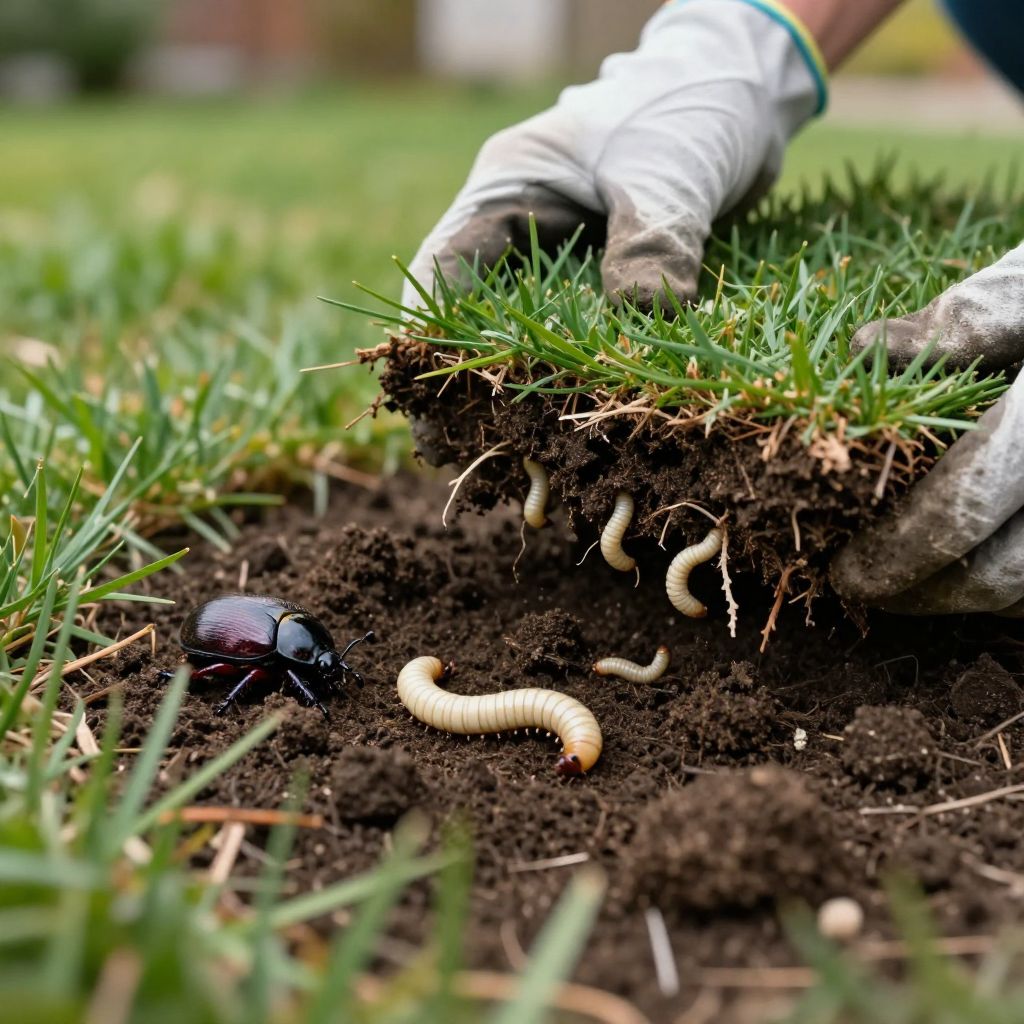
What do grub worms turn into? If you’ve found plump white “grubs” in your lawn or garden soil, you’re usually looking at the larval stage of beetles. In many home gardens, the culprits are Japanese beetles, June beetles, or chafer beetles, and those grubs eventually emerge as adult beetles.
That matters because the best control depends on the insect’s life cycle. If you know what grub worms become, you can time your lawn care, soil management, and pest control more effectively and avoid treating at the wrong stage.
What do grub worms turn into?
Grub worms turn into adult beetles. The exact beetle depends on the species, but common garden grubs are the immature stage of scarab beetles such as Japanese beetles, June beetles, and masked chafers. They live in soil, feed on roots, and later pupate before emerging as flying adults.
How the grub life cycle works in your garden
Most grub problems start when adult beetles lay eggs in turf or loose soil. The eggs hatch into larvae, and those larvae feed underground for weeks or months before pupating. After pupation, they become adult beetles that may feed on leaves, flowers, or fruit.
Typical stages
- Egg: laid in soil, often in lawns or garden beds.
- Larva: the white, C-shaped grub that feeds on roots and organic matter.
- Pupa: a resting stage in the soil where the insect changes form.
- Adult beetle: emerges above ground and may feed, mate, and lay eggs.
The timing varies by species and climate, so you should not assume every grub follows the same schedule. In cooler regions, development is slower; in warmer areas, it may move faster or overlap across seasons.
Why it matters to gardeners
Knowing what grub worms turn into helps you decide whether the real problem is in the soil or in the air. Grubs damage roots below ground, while adult beetles often damage foliage above ground. If you only treat the lawn after adults appear, you may have already missed the easiest control window.
Common garden damage from grubs
- Patchy, thinning turf that lifts easily like a carpet
- Brown areas that do not recover with watering
- Increased bird, skunk, raccoon, or armadillo digging as they hunt grubs
- Weakened roots on young ornamentals or vegetable transplants in heavily infested soil
Common damage from adult beetles
- Chewed leaves with a skeletonized look
- Holes in petals or soft fruit
- Reduced plant vigor if feeding is heavy and repeated
How to tell if you have grubs in the soil
Not every white larva is a harmful grub, so identification matters. True beetle grubs are usually creamy white with a brown head, six legs near the front, and a curved, C-shaped body. They are often found in the top few inches of soil or in turf roots.
Simple check for lawn grubs
- Cut a small flap of turf in a problem area.
- Peel it back and inspect the root zone.
- Look for several grubs per square foot, not just one or two.
- Check whether roots are short, sparse, or easily pulled apart.
A few grubs in healthy soil are normal. The concern is when you see enough feeding to cause visible damage or when the turf lifts with little resistance.
What adult beetles do after they emerge
Once grubs pupate and become adults, they leave the soil and begin a new cycle. Many adult beetles feed on leaves, flowers, or fruit, then mate and lay eggs in suitable soil. That is why a grub problem in one season can become a beetle problem in the next.
Examples of common garden beetles that start as grubs
- Japanese beetle (Popillia japonica): adults feed on many ornamentals, roses, grapes, and some fruit crops.
- June beetles (Phyllophaga spp. and related scarabs): adults are often attracted to lights; larvae can feed on roots.
- Masked chafers and other scarab beetles: larvae may injure turf roots and nearby plantings.
Not every grub in your yard is one of these species, but the general pattern is the same: larva in the soil, adult beetle above ground.
Best ways to manage grubs in lawns and garden beds
Successful grub management starts with timing, soil health, and realistic expectations. If you wait until turf is badly damaged, recovery takes longer. If you act early, you can often reduce damage without overusing controls.
1. Improve lawn and soil conditions
Healthy turf tolerates some root feeding better than stressed turf. Deep, infrequent watering when needed, proper mowing height, and avoiding compacted soil can help grass recover more quickly.
- Keep mower blades sharp to reduce stress on grass.
- Water deeply only when the soil begins to dry, not on a fixed calendar.
- Aerate compacted lawns if water runs off or roots are shallow.
- Avoid heavy nitrogen applications that push weak, lush growth.
2. Scout at the right time
Check problem spots when grubs are actively feeding near the surface, often in late summer or early fall in many regions. Local species and weather can shift this timing, so watch your lawn rather than relying only on the calendar.
3. Use biological controls carefully
Some gardeners use beneficial nematodes or other biological options against grubs. These can work best when soil moisture, temperature, and grub stage are favorable. They are not instant fixes, and results vary with local conditions.
Follow label directions exactly for any product you use, and choose a control that matches the pest species and your season. A treatment that works on young grubs may do little once they are older or already pupating.
4. Remove heavily damaged turf if needed
If a section of lawn is badly destroyed, patching or reseeding may be more practical than waiting for it to recover on its own. Remove loose dead turf, check the soil for remaining grubs, and then repair the area with seed or sod appropriate for your climate.
How to reduce future grub problems
Prevention is often easier than rescue. Because adult beetles lay eggs in suitable soil, you can make your garden less attractive to them by keeping turf healthy and avoiding overly moist, thatchy conditions that favor egg laying and larval survival.
Practical prevention tips
- Maintain good drainage so soil does not stay soggy for long periods.
- Limit thatch buildup in lawns.
- Keep garden beds mulched, but do not pile mulch against stems.
- Inspect new sod or soil if you are starting a lawn renovation.
- Watch for adult beetles on nearby plants and note when they appear.
If adult beetles are numerous, hand-picking from valued plants in the early morning can help reduce feeding and egg laying. For larger outbreaks, combine monitoring with the most appropriate control for your area.
Common mistakes to avoid
Many gardeners waste time or damage plants by treating the wrong issue. A grub problem is underground first, so leaf sprays alone will not solve it. Likewise, not every white larva needs treatment, and unnecessary applications can disrupt beneficial soil life.
- Misidentifying the pest: some larvae are harmless decomposers.
- Treating too late: once grubs pupate, soil treatments are far less effective.
- Ignoring soil moisture: dry, compacted soil stresses grass and makes damage worse.
- Overwatering after damage: this can encourage shallow roots and other problems.
- Assuming one fix works everywhere: climate, grass type, and beetle species all matter.
When to call in extra help
If large areas of turf are dying, if you keep finding many grubs year after year, or if the damage is spreading into valuable landscape beds, it may be worth consulting a local extension service or garden center familiar with regional pests. They can help identify the species and suggest timing that fits your area.
For home gardeners, the key takeaway is simple: grub worms turn into beetles, and that life cycle explains both the root damage below ground and the adult feeding above ground. If you want to stay ahead of the problem, inspect damaged spots early, keep your lawn healthy, and match any control to the grub stage you actually have.
If you want to keep building your pest-management know-how, look for more practical guidance on Japanese beetles and other common lawn pests through reliable local extension resources.