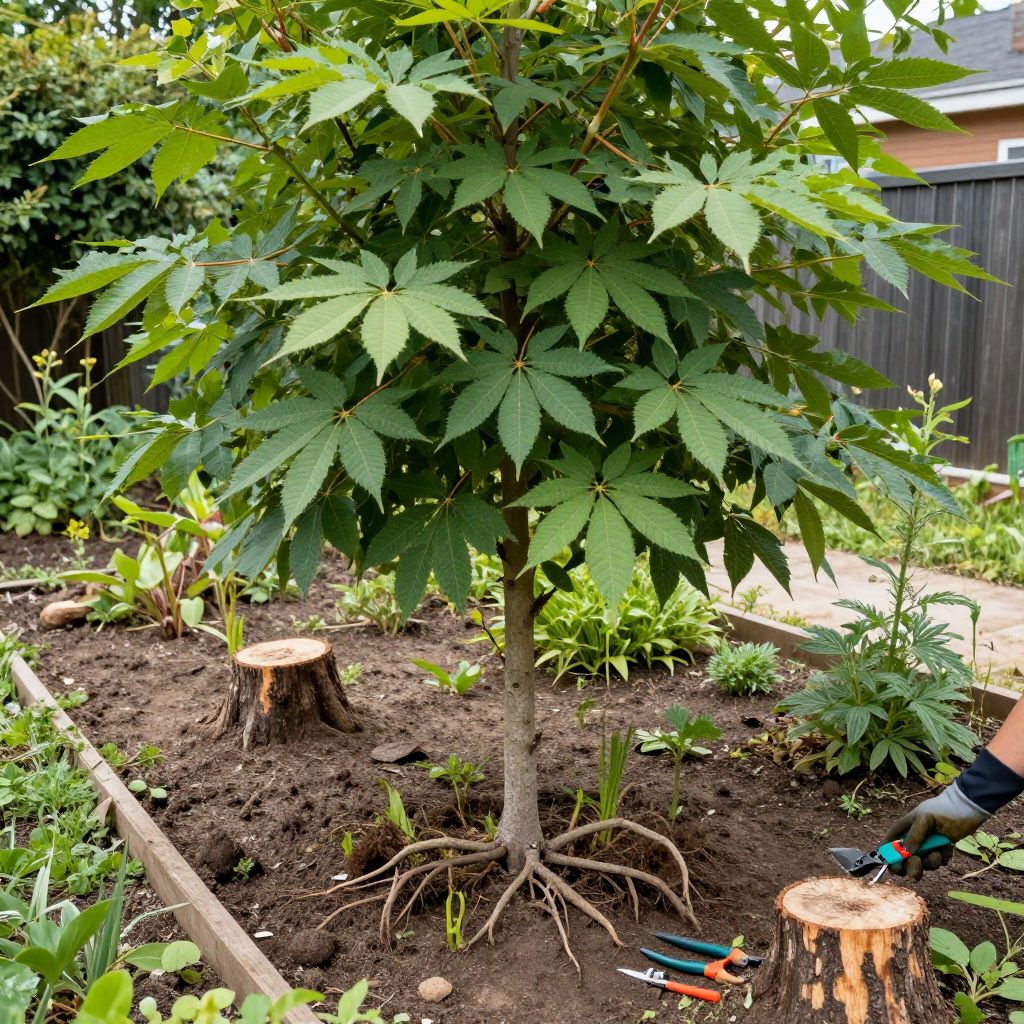
Why is the tree of heaven a problem? If you’ve found Ailanthus altissima growing in your yard, the short answer is that it spreads fast, damages nearby areas, and is very hard to remove once established. It can outcompete desirable plants, send up root sprouts, and create ongoing maintenance headaches.
Understanding what makes it troublesome helps you choose the right control method. The good news is that with persistence and the right timing, you can reduce it and stop it from taking over your landscape.
Why is the tree of heaven a problem?
Tree of heaven is a problem because it grows aggressively from seed and roots, tolerates poor conditions, and quickly forms dense stands that crowd out other plants. It also produces many root suckers after cutting, so simple pruning often makes the infestation worse unless you use a long-term removal plan.
What makes tree of heaven so invasive?
Tree of heaven is a fast-growing deciduous tree that thrives in disturbed soil, roadside edges, vacant lots, and neglected corners of gardens. It is especially troublesome because it can establish in places where many other trees struggle, then spread outward from the original trunk.
Common traits that help it spread
- Rapid growth: young trees can gain height quickly and shade out smaller plants.
- Abundant seed production: mature trees produce winged seeds that travel on wind.
- Root suckering: cutting the trunk often triggers multiple new shoots from the roots.
- Adaptability: it tolerates compacted soil, drought, pollution, and low fertility.
- Allelopathic tendencies: it can suppress nearby plants, making it harder for desirable vegetation to compete.
How tree of heaven affects your garden
In a home landscape, tree of heaven can become a long-term management problem rather than a one-time removal job. It may seem harmless at first, but its roots and seedlings can spread into beds, fence lines, hedges, and even cracks near foundations or hardscaping.
Typical garden problems
- Shading out vegetables, ornamentals, and young trees.
- Sending up suckers in lawns, borders, and mulched beds.
- Creating a thicket that is difficult to mow or dig out.
- Competing for water and nutrients with nearby plants.
- Making maintenance more difficult by repeatedly regrowing after cutting.
If you are trying to build a tidy, low-maintenance garden, this tree works against that goal. It is not a good choice for small yards, wildlife-friendly borders, or mixed plantings where you want slower, better-behaved trees.
How to identify tree of heaven before you remove it
Correct identification matters because several other trees and shrubs can look similar when young. Tree of heaven has long compound leaves with many leaflets, and the leaflets often have a distinctive unpleasant smell when crushed. Mature trees may also show clusters of twisted, winged seed structures.
Look for these signs
- Leaves are compound, often with many leaflets arranged along a central stem.
- Leaflets are usually smooth-edged except for small glandular teeth near the base.
- Young bark is relatively smooth; older bark becomes rougher with age.
- Broken twigs and crushed leaves may have a strong, unpleasant odor.
- New shoots often appear around the base or some distance from the trunk.
If you are unsure, compare the plant carefully before cutting. Misidentification can lead to removing a useful native tree or leaving the invasive one in place.
Why cutting it down alone usually fails
Many gardeners discover that tree of heaven returns after being cut, sometimes more vigorously than before. That happens because the root system stores energy and responds to injury by producing new shoots. A single cut may reduce the top growth, but it does not solve the underlying problem.
Common mistakes to avoid
- Repeatedly mowing or trimming without treating the roots.
- Leaving stump pieces and root fragments in place without follow-up.
- Digging only the visible trunk and ignoring suckers farther out.
- Letting a cut tree resprout for several seasons.
- Composting seed heads or root pieces where they may survive and spread.
For many homeowners, the biggest frustration is that the tree can keep returning from roots outside the original hole. That is why a removal plan should include follow-up monitoring for at least one growing season, and often longer.
Best ways to control tree of heaven
The most effective control method depends on the size of the tree, how many stems you have, and whether it is growing near desirable plants. In most cases, the goal is not just to cut it down, but to exhaust the root system and prevent resprouting.
1. Remove seedlings and small saplings early
Young plants are much easier to manage than mature trees. Pull or dig them when the soil is moist, making sure to remove as much root as possible. If you catch them early, you can avoid the need for more intensive control later.
2. Cut and monitor repeatedly if the plant is small
For small stems, cutting may be part of the strategy, but it must be followed by regular checks. New shoots should be removed promptly before they rebuild energy reserves. This approach works best when the infestation is limited and you can stay consistent.
3. Use stump treatment for larger trees
For established trees, a cut stump approach is often more practical than digging. After cutting the trunk, the stump is typically treated immediately according to the product label and local regulations, so the roots are less likely to resprout. This is especially useful where full excavation is not realistic.
4. Dig out root suckers where possible
Root suckers can appear several feet from the main trunk. Remove them as soon as you notice them, but understand that digging every connected root is rarely practical in a mature infestation. Ongoing suppression is usually necessary.
5. Replant the area with competitive, appropriate plants
Once the tree is under control, replanting helps prevent reinvasion. Dense shrubs, groundcovers, or mulch combined with healthy plantings can reduce open space where seedlings would otherwise establish.
Step-by-step removal plan for homeowners
If you want a practical approach, start with a clear plan and follow it through the season. The exact method should match the size of the tree and your comfort level with tools and treatment products.
- Identify the tree correctly. Confirm it is tree of heaven before cutting.
- Assess the size and spread. Check for nearby suckers, seedlings, and competing plants.
- Choose a control method. Small plants may be dug; larger trees often need stump-based control.
- Cut carefully. Use clean, sharp tools and wear eye protection and gloves.
- Prevent regrowth. Monitor the stump and surrounding area for new shoots.
- Remove suckers promptly. Cut or dig them before they strengthen.
- Replant or mulch. Fill the space with desirable plants or a thick mulch layer to reduce bare soil.
Do not rush the follow-up. The tree’s ability to resprout is one of the main reasons it becomes such a persistent problem in gardens and along property edges.
When to call a professional
Some infestations are too large, too close to structures, or too intertwined with other plants to handle safely on your own. A professional arborist or invasive plant specialist can help if the tree is tall, leaning, growing near power lines, or sending up many suckers across a wide area.
Professional help is worth considering if:
- The tree is large and difficult to cut safely.
- Roots are spreading into neighboring properties.
- You need to protect valuable ornamentals or trees nearby.
- The infestation keeps returning despite repeated removal attempts.
In some areas, local rules may also affect how invasive trees can be removed or disposed of. It is worth checking local guidance before you begin.
How to prevent tree of heaven from coming back
Prevention is mostly about vigilance. Even after removal, seeds from nearby trees or hidden root pieces can produce new growth, so regular inspection is essential.
Good prevention habits
- Inspect fence lines, hedges, and unused corners of the yard each season.
- Pull seedlings while they are small and the soil is soft.
- Keep mulch in place, but do not let it hide established suckers.
- Fill open ground with desirable plants rather than leaving bare patches.
- Watch for regrowth after storms, mowing, or pruning.
If you are replacing it with another tree, choose one suited to your soil, sun exposure, and available space. A well-matched tree will be easier to maintain and far less likely to become a future problem.
Conclusion: take action before it spreads
Why is the tree of heaven a problem? Because it is aggressive, persistent, and difficult to remove once it settles in. The best response is early identification, a removal method that addresses the roots, and regular follow-up to catch new shoots before they take hold.
If you are dealing with an invasive tree in your yard, you may also find it helpful to read about managing invasive plants in the home landscape and pruning young trees safely and correctly.