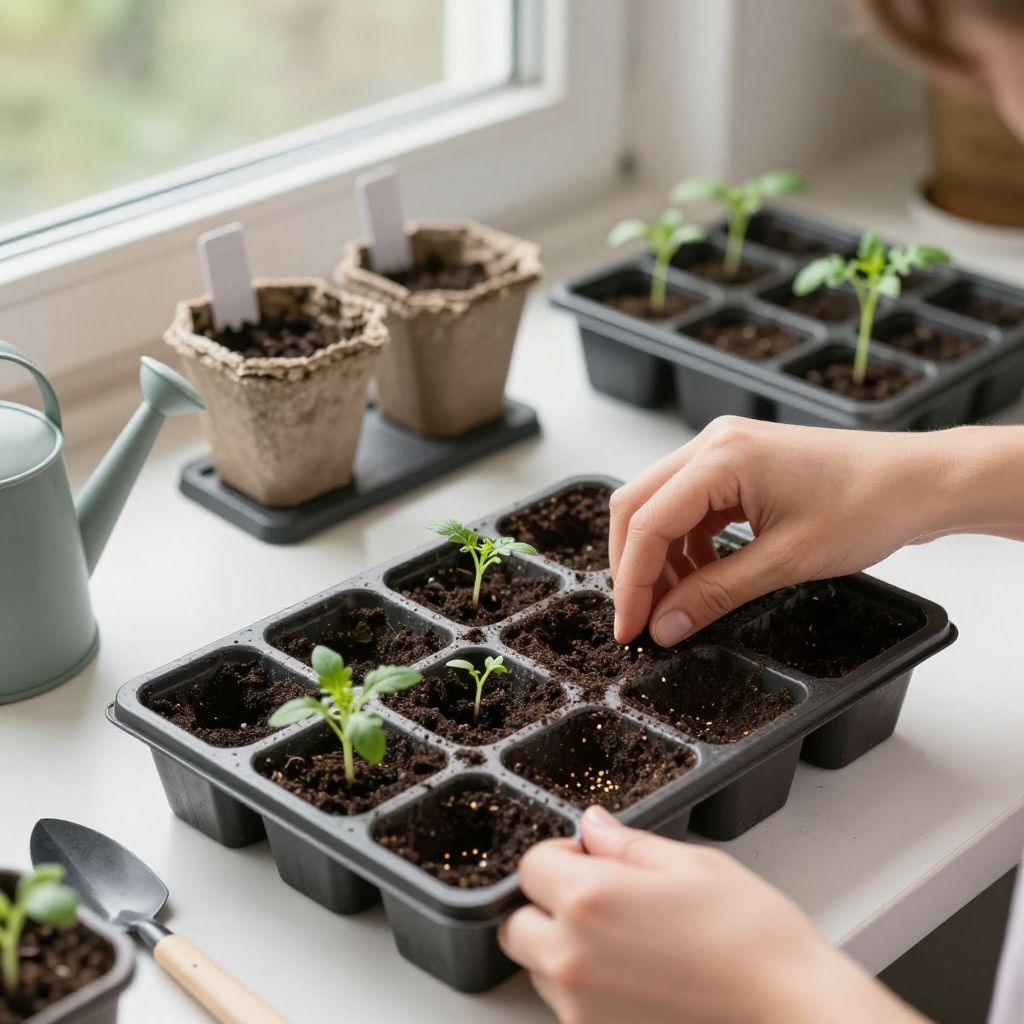
Wondering when to plant tomato seeds indoors so your seedlings are strong, not spindly? The timing matters because tomatoes need a head start before outdoor planting, but starting too early can leave you with overgrown plants that struggle to transplant well.
The best time is usually 6 to 8 weeks before your local last expected spring frost date. That gives tomato seedlings enough time to grow sturdy indoors without becoming rootbound, while still being young enough to adapt smoothly to the garden.
When to plant tomato seeds indoors?
Start tomato seeds indoors 6 to 8 weeks before your average last frost date. In warm climates with long growing seasons, you may start a little later; in cool regions or if you use a short-season variety, timing may shift slightly. The goal is to transplant seedlings outdoors when nights are warming and danger of frost has passed.
How to time tomato seed starting for your climate
Your local frost date is the most useful guide, but it is not the only factor. Soil temperature, nighttime lows, and how fast your seedlings grow indoors all affect the best sowing window.
Use your last frost date as the starting point
- Average last frost date: Count back 6 to 8 weeks for indoor sowing.
- Cool spring areas: Start closer to 8 weeks before frost if outdoor planting is usually delayed.
- Warm climates: Start later if spring arrives early and the garden warms quickly.
If you do not know your frost date, check a local extension service or reliable regional gardening calendar. Local conditions matter more than a generic date on a seed packet.
Think about when seedlings can actually go outside
Tomato seedlings are ready for transplanting when they are 6 to 10 inches tall, have several sets of true leaves, and can handle outdoor conditions after hardening off. If your indoor setup is weak or your outdoor weather stays cool, you may need to adjust your sowing date slightly.
What happens if you start tomato seeds too early or too late?
Starting too early often creates tall, weak seedlings that outgrow their containers before the garden is ready. Starting too late can leave you with small plants that flower and fruit later, reducing your harvest window.
Signs you started too early
- Seedlings are leggy and stretched toward the light
- Roots circle tightly in small pots
- Plants begin flowering indoors before transplanting
- Stems flop over even with support
Signs you started too late
- Seedlings are still very small when outdoor planting time arrives
- Plants have only a few true leaves by transplanting time
- Fruit set is delayed well into the season
Tomatoes can recover from a slightly imperfect start, but the healthiest transplants usually come from seeds started in the right window and grown under strong light.
How to start tomato seeds indoors the right way
Good timing helps, but good technique matters just as much. Tomato seeds germinate quickly in warm conditions and grow best with bright light, even moisture, and clean containers.
Step-by-step indoor sowing
- Fill clean seed trays or small pots with a fine seed-starting mix.
- Moisten the mix so it is damp, not soggy.
- Plant seeds about 1/4 inch deep.
- Cover lightly with mix and label the variety and sowing date.
- Keep the containers warm, ideally around 70 to 80°F for germination.
- Move seedlings to bright light as soon as they emerge.
Tomato seeds usually sprout in about 5 to 10 days when conditions are warm and consistent. Cooler temperatures slow germination and can make seedlings uneven.
Light is critical for healthy seedlings
Tomato seedlings need very bright light to stay compact. A sunny windowsill is often not enough, especially in late winter or early spring.
- Use a grow light or fluorescent setup placed a few inches above the seedlings.
- Keep lights on for about 14 to 16 hours a day.
- Raise the light as plants grow, but keep it close enough to prevent stretching.
Best indoor growing conditions for tomato seedlings
Once seeds sprout, the goal shifts from germination to steady, balanced growth. Warmth, airflow, and correct watering help prevent common seedling problems like damping off and weak stems.
Soil and containers
Use a sterile seed-starting mix rather than garden soil. Garden soil is often too dense indoors and may carry pests or disease.
- Choose containers with drainage holes.
- Use a light, airy mix designed for seedlings.
- Pot up seedlings into larger containers if roots fill the first cells before transplant time.
Watering indoors
Keep the mix evenly moist, but never waterlog it. Overwatering is one of the most common mistakes when starting tomato seeds indoors.
- Water when the surface begins to dry slightly.
- Water from the bottom when possible to reduce disturbance.
- Empty excess water so roots do not sit in it.
Air movement and temperature
Gentle airflow helps seedlings develop stronger stems and reduces disease risk. A small fan on low speed can help if it is not blowing directly at the plants.
After germination, slightly cooler temperatures can help prevent excessive stretching. Avoid placing seedlings too close to heat sources once they have sprouted.
How to harden off tomato seedlings before planting outdoors
Indoor-grown tomatoes need a gradual transition to outdoor light, wind, and temperature swings. Hardening off is essential, even if the seedlings look strong indoors.
Hardening off schedule
- Start with 1 to 2 hours outdoors in a shaded, sheltered spot.
- Increase outdoor time a little each day over 7 to 10 days.
- Gradually introduce more sun and wind.
- Bring plants in at night if temperatures drop too low.
Do not rush this step. Sudden exposure to full sun can scorch leaves, and chilly nights can stall growth or damage tender plants.
When are tomato seedlings ready to transplant?
Tomato seedlings are usually ready when they are sturdy, not thin; have several true leaves; and can be handled without bending over. They should also be close to the outdoor planting window, not weeks ahead of it.
Good transplant-ready traits
- 6 to 10 inches tall, depending on variety and growing conditions
- Strong green stems
- Multiple sets of true leaves
- Roots that hold the potting mix together, but are not badly tangled
If seedlings are getting too large before the garden is ready, move them into bigger pots, lower the temperature slightly, and give them excellent light. You can also plant them deeper when transplanting outdoors, since tomatoes root along buried stems.
Common mistakes to avoid when starting tomato seeds indoors
Most tomato seed-starting problems come from timing or light issues, not from the seeds themselves. Avoiding a few common mistakes can make a big difference.
- Starting too early: Leads to leggy, overgrown seedlings.
- Using poor light: Causes stretching and weak stems.
- Overwatering: Can cause damping off and root problems.
- Skipping hardening off: Makes transplant shock more likely.
- Planting outdoors too soon: Cold nights can stunt growth or kill seedlings.
Problems you may see and how to fix them
Even careful gardeners run into a few issues when starting tomato seeds indoors. The good news is that many are easy to correct early.
Leggy seedlings
Leggy seedlings usually mean the light is too weak or too far away. Move the light closer, increase daily light hours, and avoid overly warm indoor temperatures after germination.
Yellowing leaves
Yellowing can happen from overwatering, poor drainage, or nutrient-poor conditions in old potting mix. First check moisture levels and drainage before adding fertilizer.
Seedlings falling over at the base
This can be a sign of damping off, a disease encouraged by wet, crowded conditions. Use clean containers, sterile mix, and better airflow, and avoid keeping the surface constantly wet.
Can you sow tomato seeds directly outdoors?
In many climates, direct sowing tomatoes outdoors is risky because the season may not be long enough for fruit to mature. Indoor starting gives you a stronger head start and better control over early growth.
If you live in a very warm region with a long frost-free season, direct sowing may be possible, but indoor sowing is still the more reliable method for most home gardeners.
Final planting tip for better tomato harvests
For the best results, count backward from your last frost date, start tomato seeds indoors 6 to 8 weeks ahead, and give seedlings strong light from day one. Then harden them off slowly and transplant only when outdoor conditions are reliably warm.
If you want to plan the rest of your vegetable garden, you may also find it helpful to read about how to harden off seedlings before transplanting and how to choose the best potting mix for seedlings.