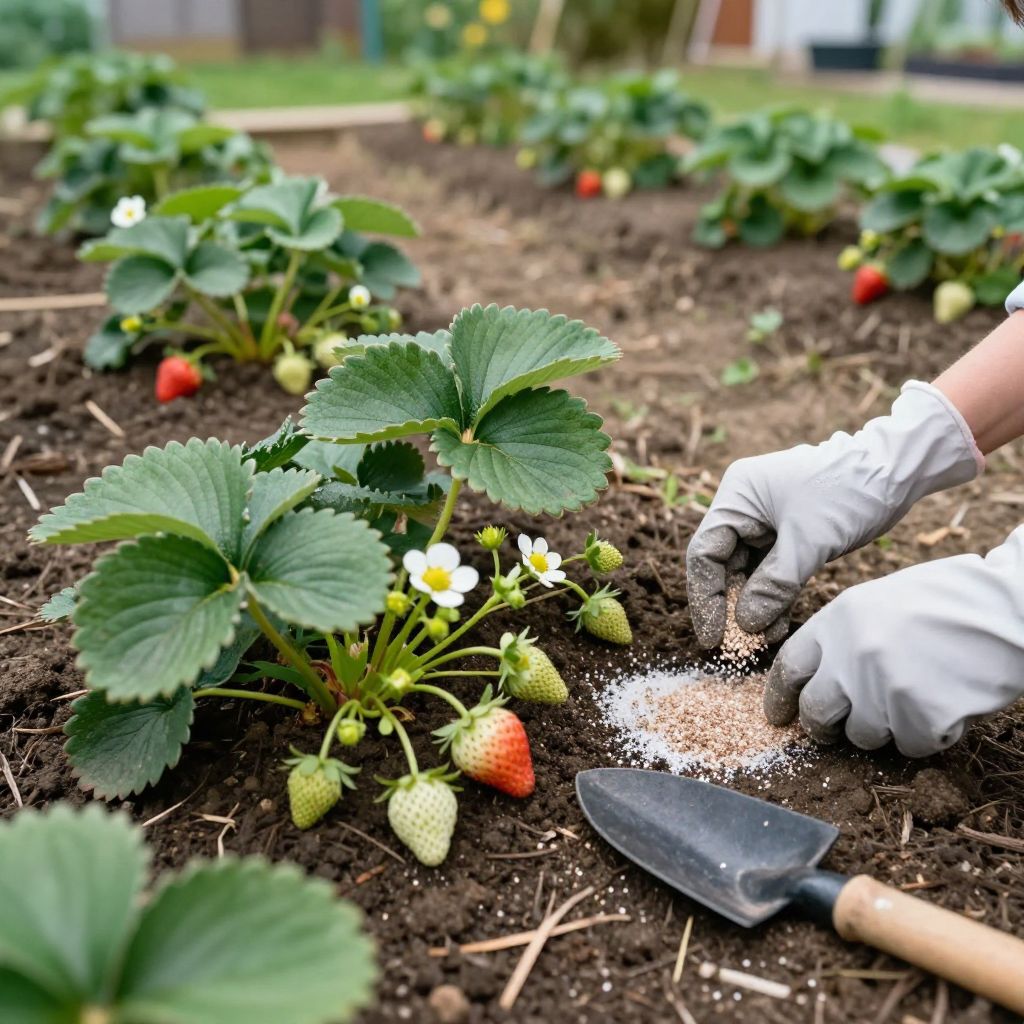
Wondering when to fertilize strawberries for the best harvest? Timing matters because strawberry plants respond differently in spring, after planting, and after harvest. Feed at the right moments and you can support healthy leaves, stronger roots, and better fruiting without pushing too much soft growth.
The short answer is to fertilize strawberries when they begin active growth in spring, lightly after the first harvest or main fruiting flush, and again only if your soil needs it. Avoid heavy feeding late in the season, because too much nitrogen can reduce berries and make plants more prone to disease.
When to fertilize strawberries?
Fertilize strawberries in early spring as new growth starts, then lightly after harvest if plants are still actively growing. Newly planted strawberries usually need only compost or a mild starter feeding, while established plants benefit from a balanced, low-to-moderate fertilizer based on soil condition and plant vigor.
Why timing matters for strawberry fertilizer
Strawberries are perennial plants that need enough nutrition to build crowns, roots, and leaves before they set fruit. If you feed too early in cold soil, roots may not use the nutrients well. If you feed too late, you may encourage leafy growth instead of berries.
The goal is steady growth, not a quick burst of lush foliage. Too much fertilizer, especially nitrogen, can lead to lots of leaves, fewer flowers, softer fruit, and more pest and disease pressure.
Best times to fertilize strawberries through the season
1. Early spring
Apply fertilizer when the plants start growing again and new leaves appear. This is usually the most important feeding of the year for established outdoor strawberries.
- Wait until the soil is workable and the plants are showing fresh growth.
- Rake away winter mulch gradually so the crown can warm up.
- Use a balanced fertilizer or a compost top-dressing if your soil is already fertile.
If your plants look pale, slow, or weak after winter, spring feeding can help them recover. If they are already very vigorous and the soil is rich, a lighter application may be enough.
2. At planting time
When planting new strawberries, improve the bed with compost and well-drained soil rather than relying on strong fertilizer. A gentle starter feeding can help, but avoid overdoing it in the planting hole.
- Mix in mature compost before planting.
- Keep fertilizer away from direct root contact.
- Water well after planting to settle the soil.
New plants need time to establish roots. Heavy feeding at planting can stress young crowns and cause weak, leafy growth instead of strong establishment.
3. After the main harvest
In many gardens, a light feeding after the main fruiting period helps plants rebuild energy for next year’s crop. This is especially useful for June-bearing strawberries after harvest is finished.
- Remove old or damaged leaves if needed.
- Feed lightly if the plants are still active and not drought-stressed.
- Water afterward so nutrients move into the root zone.
For everbearing or day-neutral strawberries, use a lighter approach and watch plant response. These types can keep flowering and fruiting over a longer season, so they usually do better with smaller, more careful feedings.
4. Late season: usually avoid feeding
Late summer and fall are not usually the time for strong fertilizer applications in outdoor strawberry beds. At this stage, you want plants to harden off, not produce tender new growth that may be damaged by cold.
If your soil is poor, a small compost top-dressing is safer than a high-nitrogen feed. In cold climates, late fertilizing can reduce winter hardiness.
How to fertilize strawberries step by step
- Check the plant stage. Fertilize only when plants are actively growing, not when they are dry, dormant, or stressed.
- Clear the bed. Remove weeds, dead leaves, and debris so nutrients go to the strawberries, not competitors.
- Choose a gentle product. A balanced fertilizer, compost, or a berry-specific feed is usually better than a high-nitrogen lawn fertilizer.
- Apply around the plant, not on the crown. Spread it in the root zone and keep it off the center of the plant to reduce burn.
- Water it in. Moist soil helps the nutrients reach the roots and lowers the risk of fertilizer damage.
If you grow strawberries in containers, fertilize more cautiously because pots lose nutrients faster than garden soil. Container plants often need lighter, more frequent feeding than in-ground plants, especially during active fruiting.
What kind of fertilizer is best for strawberries?
Strawberries generally do best with a fertilizer that supports fruiting without forcing excessive leafy growth. A balanced formula or one slightly higher in potassium than nitrogen is often a good fit, depending on your soil test and plant condition.
Good options for home gardeners
- Compost for slow, gentle feeding and better soil structure.
- Balanced granular fertilizer for established beds that need a boost.
- Liquid feed for container strawberries or a quick correction during active growth.
Soil testing is the best way to know whether you need extra nutrients at all. If your soil is already rich in organic matter, you may only need compost and careful mulching rather than regular fertilizer.
Soil, drainage, and sunlight affect fertilizer results
Fertilizer works best when strawberries are planted in well-drained soil with plenty of sun. In poor drainage, roots struggle to absorb nutrients, and in shade the plants may grow leaves without producing many berries.
- Sunlight: Aim for full sun for best flowering and fruiting.
- Drainage: Strawberries dislike soggy soil and crown rot is more likely in wet beds.
- Soil texture: Loose, fertile soil helps roots spread and use nutrients efficiently.
If your soil stays wet, improve drainage before adding more fertilizer. Feeding a stressed plant will not fix waterlogged roots.
Common fertilizing mistakes to avoid
- Feeding too late in the season and encouraging tender growth before cold weather.
- Using too much nitrogen, which can reduce flowering and fruit quality.
- Fertilizing dry plants without watering first or afterward.
- Putting fertilizer against the crown, which can burn the plant.
- Ignoring soil condition and fertilizing when the real problem is poor drainage or low sunlight.
Another common mistake is overfeeding young plants. Newly planted strawberries usually need time to settle in, and too much fertilizer can make them top-heavy before the roots are ready.
How to tell if your strawberries need fertilizer
Strawberries may need feeding if growth is weak, leaves look pale, or fruiting is poor despite good sunlight and watering. But nutrient problems can look similar to drought, disease, or root stress, so check the whole plant before adding fertilizer.
Signs that point to a feeding issue
- Slow spring growth after the plants should be waking up.
- Pale leaves without obvious pest damage.
- Small plants that have not been renovated or fed in a long time.
- Reduced flowering in an otherwise healthy bed.
If the bed is crowded, weedy, or poorly drained, fix those issues first. Fertilizer works best as part of good overall care, not as a stand-alone cure.
Pruning, mulching, and maintenance after fertilizing
After feeding strawberries, keep the bed tidy and lightly mulched so moisture stays even and fruit stays cleaner. Remove old leaves if they are diseased or damaged, but avoid stripping the plant too aggressively while it is actively growing.
- Use straw or another light mulch to keep berries off the soil.
- Water deeply during dry spells rather than giving frequent shallow sprinklings.
- Watch for slugs, snails, and gray mold in damp conditions.
Good maintenance helps fertilizer do its job. Healthy, unstressed plants use nutrients more efficiently and are less likely to produce soft, disease-prone growth.
Special notes for different strawberry types
June-bearing strawberries
These usually get the clearest fertilizer schedule: one feeding in early spring and, in many gardens, a light post-harvest feeding. They benefit from renovation and cleanup after fruiting.
Everbearing and day-neutral strawberries
These may fruit over a longer period, so use smaller feedings and watch plant response carefully. Too much fertilizer can push leaves at the expense of flowers and fruit.
Container-grown strawberries
Because containers dry out and leach nutrients faster, potted strawberries often need closer attention. Use a mild feed and monitor the plant more often than you would in a garden bed.
Conclusion: the simplest fertilizing plan
For most home gardens, the best answer to when to fertilize strawberries is: feed in early spring, lightly after harvest if needed, and avoid strong late-season fertilizing. Start with compost, keep the soil well drained, and adjust based on plant growth and your local climate.
If you want to grow strawberries in a different setting too, you may also find this guide helpful: can you grow strawberries indoors.