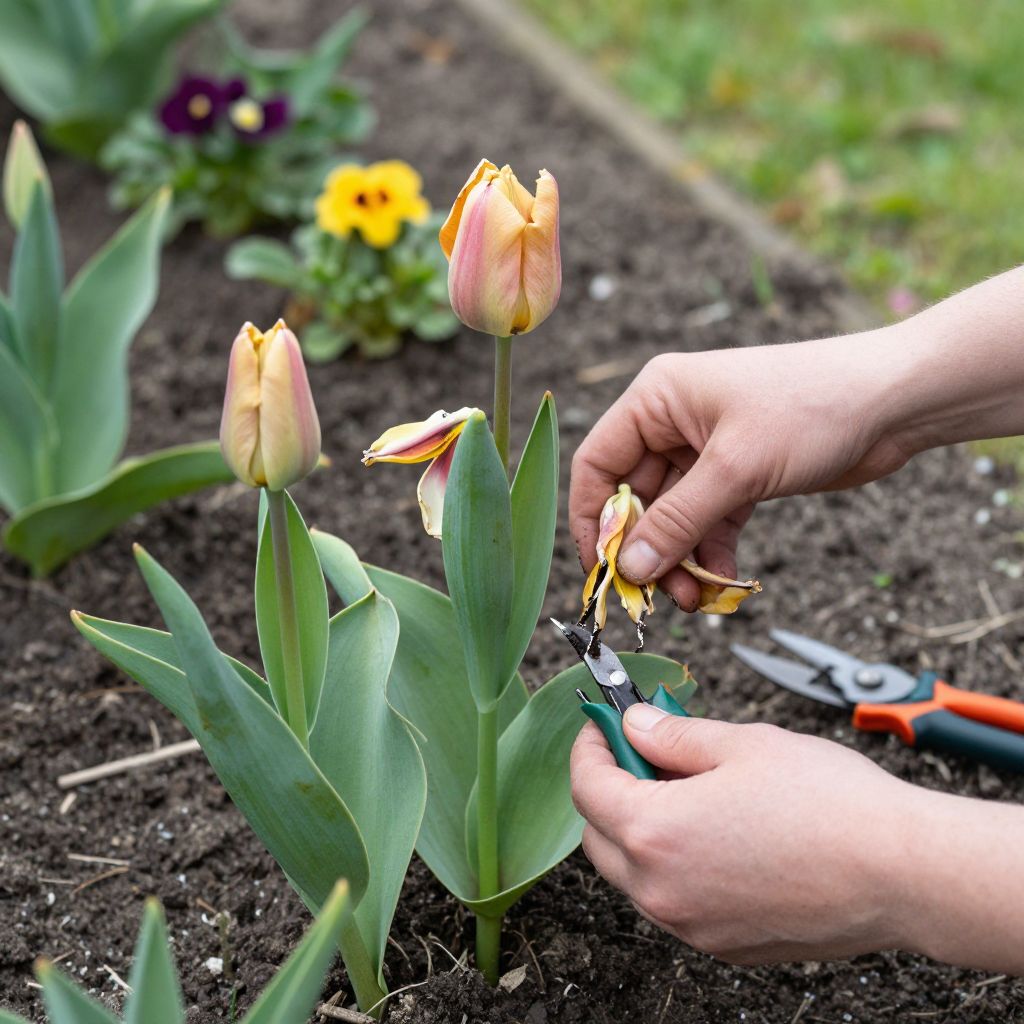
What should you do with tulips after they bloom? The short answer is to let the foliage stay on the plant until it yellows naturally, then remove it once it has finished feeding the bulb. That post-bloom care helps tulips store energy for next year’s flowers.
You can also deadhead spent blooms, manage watering, and decide whether to lift, divide, or leave bulbs in the ground depending on your climate and garden conditions. The goal is to protect the bulb while the leaves are still working.
What to do with tulips after they bloom?
After tulips bloom, remove the faded flower heads, but keep the leaves intact until they turn yellow and begin to dry down naturally. Water lightly if conditions are dry, avoid cutting the foliage early, and let the bulb rebuild energy for next spring’s display.
Why post-bloom care matters
Tulips are spring bulbs that bloom using energy stored in the bulb from the previous year. After flowering, the leaves continue photosynthesis and replenish that stored energy.
If you cut the foliage too soon, the bulb may weaken and produce smaller flowers or none at all the following year. This is especially important for tulips grown in beds, borders, and containers where the bulbs rely entirely on your care.
Deadhead the spent flowers first
Once the petals drop or the flower starts to look ragged, snip off the flower head just below the bloom. This prevents the plant from putting energy into seed production.
- Use clean scissors, pruners, or pinch the bloom off by hand.
- Remove only the flower and seed pod, not the leaves.
- Dispose of spent blooms if disease is present.
Deadheading helps the bulb conserve energy, but it does not replace the need to keep the foliage growing.
How long should you leave tulip leaves on?
Leave tulip leaves in place until they turn yellow, limp, and begin to dry naturally. In many gardens this takes several weeks after flowering, but the exact timing depends on weather, sunlight, soil moisture, and the tulip variety.
Do not tie the leaves into knots or braid them. That reduces the leaf surface available for photosynthesis and can weaken the bulb.
What the leaves are doing
- Capturing sunlight to recharge the bulb
- Building food reserves for next year’s bloom
- Supporting bulb growth underground
When the leaves are fully yellow or brown and pull away easily, you can remove them at the base.
Watering after tulips bloom
Tulips do not need heavy watering after flowering, but they should not be left to dry out completely if the soil is very dry. A bulb that is still rebuilding energy benefits from moderate moisture in well-drained soil.
In rainy climates, extra watering is usually unnecessary. In dry spring weather, water deeply only when the top few inches of soil have dried out.
Good watering habits
- Water at the soil level, not over the leaves.
- Avoid soggy soil, which can rot bulbs.
- In containers, check moisture more often because pots dry out faster.
If your tulips are in a pot, make sure the container drains freely. Standing water is one of the fastest ways to lose bulbs after bloom.
Should you fertilize tulips after flowering?
Light feeding can help if your soil is poor, but tulips generally do best when bulbs were planted in well-prepared soil to begin with. A balanced bulb fertilizer or compost applied around the plant after bloom may help, depending on your soil and local conditions.
Do not overfeed with high-nitrogen fertilizer. Too much nitrogen can encourage leafy growth at the expense of bulb strength and future flowers.
Practical feeding tips
- Top-dress with a thin layer of compost if your soil needs organic matter.
- Work fertilizer into the soil surface only if the product directions allow it.
- Keep fertilizer away from direct contact with the bulb crown.
Can you cut back tulips after they bloom?
Only the flower stem should be cut back right after blooming, and even then only if you are removing the spent bloom. The leaves should stay until they fade naturally.
If the plant looks untidy, resist the urge to trim the foliage early. Instead, plant tulips among later-emerging perennials so the surrounding plants can hide the yellowing leaves as the season progresses.
Best way to tidy the bed
- Deadhead the flower as soon as it fades.
- Leave the stem and leaves in place.
- Allow neighboring plants to grow up and conceal the foliage.
- Remove the leaves only after they yellow and collapse.
What to do with tulips in containers after bloom
Container-grown tulips need the same post-bloom care as garden tulips, but they are more vulnerable to drying out or overheating. Keep the pot in bright light while the foliage is still green, and water only enough to keep the soil lightly moist.
Once the leaves yellow, you can stop watering and let the pot dry down. After that, many gardeners lift the bulbs and store them, or replant them in the garden depending on the bulb type and local climate.
Container troubleshooting
- Leaves yellow too quickly: The pot may be too hot or too dry.
- Bulbs rot: Drainage is poor or the pot sat in water.
- Weak bloom next year: The bulb may not have recharged enough energy.
Should you dig up tulip bulbs after they bloom?
Whether to lift tulip bulbs depends on your climate, soil, and the kind of tulips you grow. In some gardens, tulips can stay in the ground and return well for a few years. In others, especially with hot summers or heavy clay soil, lifting bulbs after foliage dies back may improve results.
If you do dig them, wait until the leaves have fully yellowed. Dig too early and the bulb may not have stored enough energy for next season.
When lifting bulbs makes sense
- Your soil stays wet in summer
- Rodents or pests disturb bulbs
- Flowering has declined noticeably
- You want to replant the area for summer annuals
How to lift and store bulbs
- Wait until foliage fades naturally.
- Loosen the soil carefully with a fork or spade.
- Lift the bulbs without cutting or bruising them.
- Brush off excess soil and let them dry in a cool, airy place.
- Store only firm, healthy bulbs in a dry, ventilated container.
Discard bulbs that are soft, moldy, or badly damaged.
Can you propagate tulips after they bloom?
Tulips can multiply over time by producing offsets, but many garden tulips are slow to increase compared with other bulbs. After the foliage dies back, you may find small daughter bulbs attached to the parent bulb when lifting them.
Separate offsets gently and replant them if they are large enough to survive on their own. Tiny offsets may need a season or two to build strength before they bloom.
Common problems after tulips bloom
1. Foliage removed too early
This is the most common mistake. If you cut the leaves while they are still green, the bulb often weakens and may not bloom well next year.
2. Bulbs rotting in wet soil
Tulips need drainage. Heavy clay or waterlogged beds can cause bulbs to rot after bloom, especially if spring rains continue.
3. Pests and disease
Watch for aphids on stems and viral problems such as streaked or distorted flowers. If a plant looks unusually mottled or weak, remove it rather than composting it if disease is suspected.
4. Poor bloom the following year
Weak flowering can happen if the bulb was stressed by shade, crowding, poor drainage, or early leaf removal. Tulips usually perform best in full sun or light shade with loose, fertile, well-drained soil.
How to improve next year’s tulip display
Good tulip care after bloom is only part of the picture. The planting site matters just as much.
- Choose a sunny spot with at least several hours of direct light.
- Plant bulbs in well-drained soil enriched with compost.
- Avoid low spots where water collects.
- Let foliage die back naturally every year.
- Mark bulb locations if you plan to add summer plants later.
If your tulips fade quickly after a year or two, the site may be too warm, too wet, or too shaded for long-term performance.
Quick post-bloom tulip checklist
- Deadhead spent flowers.
- Leave the leaves until they yellow.
- Water only if the soil is drying out.
- Keep bulbs in well-drained conditions.
- Lift bulbs only after foliage dies back, if needed.
- Replant or store bulbs according to your climate and garden plan.
With tulips, the most important thing you can do after bloom is simple: protect the foliage until it has finished feeding the bulb. If you want more dependable flowers next spring, start by deadheading now and then let the leaves do their job.
If you’re planning your spring bulb care, you may also want to read about how to plant spring bulbs and container gardening tips for stronger blooms next season.