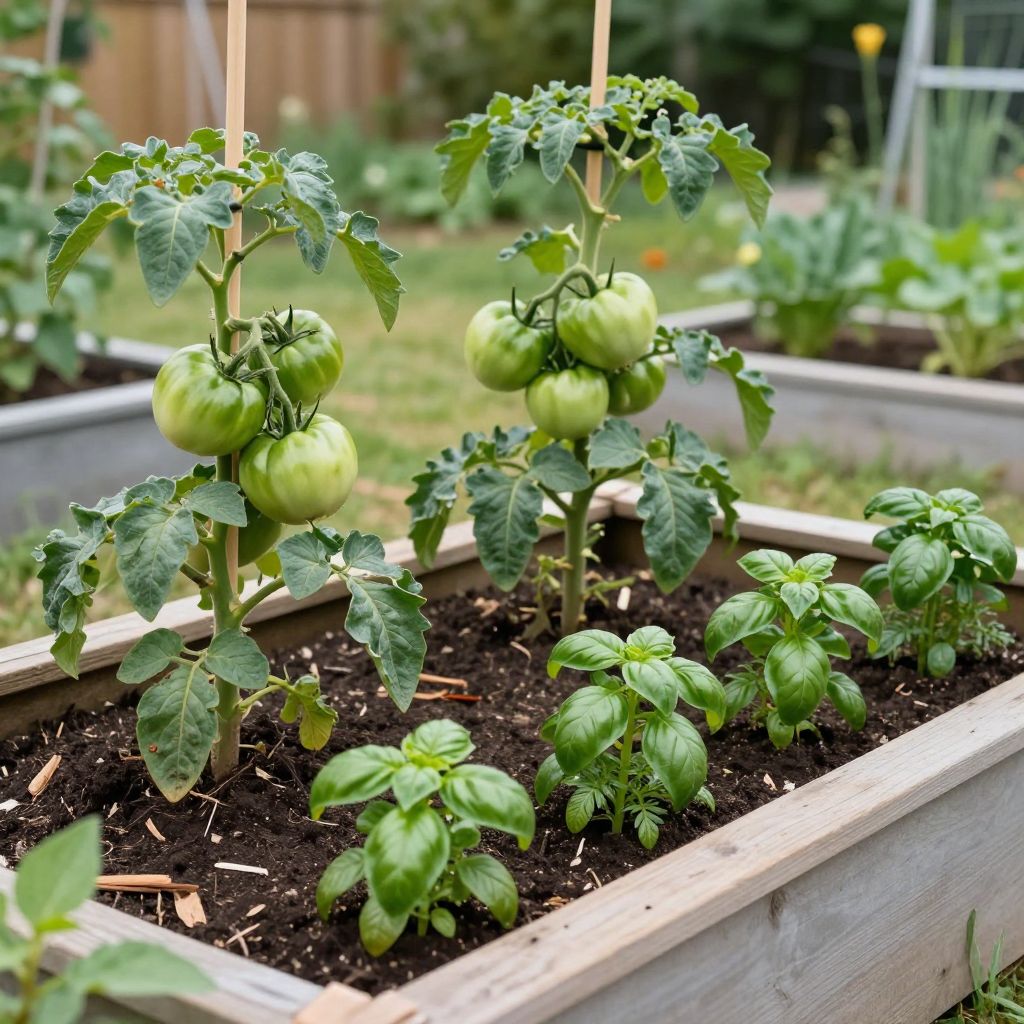
Wondering what to plant next to tomatoes so they grow better and take up less trouble in the garden? The best companion plants help with space, pollinators, pest pressure, or soil cover without competing too heavily with tomatoes.
Choose neighbors that enjoy similar sun and moisture, stay reasonably compact, and won’t crowd the tomato roots or block airflow. Good companions can make your tomato bed more productive, but the wrong plants can increase disease, shade the crop, or compete for water and nutrients.
What to plant next to tomatoes?
Plant basil, marigolds, onions, garlic, chives, lettuce, spinach, carrots, and nasturtiums next to tomatoes. These companions can fit well around tomato roots, attract beneficial insects, or act as useful understory plants. Give tomatoes enough space, keep airflow open, and avoid overcrowding with heavy feeders or tall, sprawling crops.
Best companion plants for tomatoes
Herbs that fit well in tomato beds
Herbs are some of the easiest and most useful companions for tomatoes because many stay compact and do not compete aggressively.
- Basil – A classic pairing for a reason. It grows well in similar conditions and fits neatly near tomato stems if you leave enough room.
- Chives – Their clumping habit makes them easy to tuck along bed edges or between tomato plants.
- Parsley – Useful as a low-growing companion, especially where you want to fill space without shading fruit.
- Oregano – Best near the edge of the bed, where it can spread without crowding tomatoes.
Herbs work best when planted where they still get good light but do not force you to squeeze tomatoes too tightly together.
Vegetables that can share space
Some vegetables are good neighbors because they mature quickly or grow low to the ground.
- Lettuce – A shallow-rooted crop that can grow beneath taller tomato plants early in the season.
- Spinach – Another cool-season leafy green that can use the space before tomatoes fully fill out.
- Carrots – Their narrow root system makes them a practical companion in loose soil.
- Radishes – Fast-growing and useful as a short-term filler crop.
- Onions and garlic – Often used around tomatoes because they take up little surface space and fit well at bed edges.
These crops are especially helpful in spring or early summer when tomato plants are still small and the bed has open soil around them.
Flowers that support the garden
Flowers do more than add color. Some help attract beneficial insects or make it easier to manage pests and pollination.
- Marigolds – Popular in vegetable gardens and easy to place around the perimeter of tomato beds.
- Nasturtiums – Can act as a trap crop for some pests and spill attractively over bed edges or containers.
- Calendula – A good pollinator-friendly flower that can fit into mixed plantings.
Flowers should complement tomatoes rather than crowd them. Keep them close enough to be useful, but not so close that they reduce airflow around the foliage.
What not to plant next to tomatoes
Some plants are poor neighbors because they compete too heavily, share disease problems, or create too much shade and congestion. Avoid placing large, sprawling crops right beside tomatoes, especially if your garden already has limited space.
- Potatoes – They share several diseases with tomatoes, including blight issues, so keeping them separate is a smart precaution.
- Fennel – Often considered a poor companion for many garden plants because it can inhibit nearby growth.
- Very large brassicas – Cabbage, broccoli, and similar crops can crowd tomatoes and compete for resources if planted too close.
- Heavy vining crops – Squash or cucumbers can sprawl into tomato space unless you have a very large, well-managed bed.
If you are short on room, think in terms of airflow, root space, and sunlight. Tomatoes perform best when neighboring plants do not create a dense jungle around the stems.
How to arrange companion plants around tomatoes
Use the edges and gaps wisely
The best place for companions is often the border of the bed or the open spaces between young tomato plants. As tomatoes grow, they will need more room than they seem to at planting time.
- Plant tomatoes first and give them proper spacing for their growth habit.
- Place low-growing companions at the bed edges or between tomato plants only if they will fit without crowding.
- Keep taller companions on the north side in the Northern Hemisphere, so they do not shade the tomatoes.
- Leave pathways or access points so you can prune, tie, water, and harvest easily.
A common mistake is planting too many companions at once. A bed that looks full in May can become overcrowded by midsummer.
Container growing: keep it simple
If you grow tomatoes in pots, choose only one or two small companions, or none at all. Container tomatoes already need room for roots, consistent moisture, and regular feeding.
- Good container options: basil, chives, small marigolds, or a few lettuce plants early in the season.
- Avoid: large herbs, aggressive spreaders, or anything that steals root space from the tomato.
In pots, the tomato is usually the main crop. Companions should be decorative or functional, not competitive.
Soil, sunlight, and watering for mixed plantings
Tomatoes and their companions do best in full sun and fertile, well-drained soil. Most companion plants listed here also prefer at least 6 hours of direct sunlight, though leafy greens can tolerate a bit more shade once summer heat arrives.
Soil preparation
Work in compost before planting to improve soil structure and moisture retention. Tomatoes appreciate rich soil, and many companion plants benefit from the same foundation.
- Use loose, well-drained soil so roots can spread easily.
- Add compost to improve fertility without making the soil soggy.
- Avoid fresh, high-nitrogen amendments that can push too much leafy growth at the expense of fruit.
Watering concerns with companions
Tomatoes generally prefer deep, even watering, and many companion plants do too. The challenge is avoiding wet foliage and saturated soil, which can encourage disease.
- Water at the base rather than overhead when possible.
- Mulch lightly to conserve moisture and reduce weeds.
- Check the soil before watering; let the top layer dry slightly if conditions are cool or humid.
If your companions are drought-tolerant herbs like oregano, place them where they will not force you to overwater the tomato root zone.
How companion plants can help with pests and disease
Companion planting is not a magic shield, but it can support a healthier tomato bed when used sensibly. The main benefits are better biodiversity, easier habitat for beneficial insects, and more efficient use of space.
Helpful effects to expect
- Pollinator support – Flowers can bring more beneficial insects into the garden.
- Habitat diversity – A mixed bed can be less inviting to certain pests than a monoculture.
- Ground cover – Low plants can help shade soil and reduce weed pressure.
What companions cannot do
Companion plants will not replace basic tomato care. They do not cure blight, stop hornworms by themselves, or fix poor spacing. You still need to prune, inspect, water correctly, and remove diseased leaves when necessary.
If you see yellowing leaves, spots, or wilting, check the tomato first. The companion planting plan should support plant health, not distract from it.
Practical planting tips for success
Start with the tomato’s needs, then fit companions around it. That approach keeps the bed productive and easier to manage all season.
- Allow enough spacing for mature tomato size, not just transplant size.
- Keep lower leaves off the soil to improve airflow and reduce disease risk.
- Use stakes, cages, or trellises so tomatoes grow upright instead of sprawling into neighbors.
- Thin or harvest quick crops like lettuce and radishes before tomatoes shade them out.
- Remove any companion plant that begins crowding the tomato or trapping moisture around the base.
Pruning is especially important in mixed beds. A well-supported tomato plant leaves more usable room for companions and dries faster after rain or watering.
Common mistakes to avoid
Most problems with companion planting happen when gardeners try to fit too much into one space. Tomatoes need room to breathe.
- Overcrowding – Too many plants close together leads to poor airflow and more disease pressure.
- Planting tall companions on the wrong side – They can shade tomatoes and reduce fruiting.
- Mixing in disease-prone relatives – Potatoes are the biggest example to keep away.
- Ignoring mature size – A small transplant can become a large, sprawling plant in a matter of weeks.
- Letting weeds compete – Weeds can be just as disruptive as poor companion choices.
If your garden is small, fewer companions are usually better than too many. A simple, well-spaced planting often outperforms a crowded, complicated one.
Simple companion planting combinations to try
If you want an easy starting point, use combinations that are attractive, practical, and low risk.
- Tomatoes + basil + marigolds – A classic bed that balances herbs and flowers.
- Tomatoes + lettuce + chives – Good for spring planting and efficient use of low space.
- Tomatoes + carrots + onions – A tidy, compact mix for a well-prepared bed.
- Tomatoes + nasturtiums – Useful where you want a flowering border and a bit of pest distraction.
Choose one combination and observe how it performs in your own climate and soil. Local conditions matter more than any general rule.
Conclusion
When deciding what to plant next to tomatoes, start with compact herbs, quick vegetables, and manageable flowers that won’t crowd the bed. Keep the tomatoes well spaced, maintain airflow, and choose companions that fit your sun, soil, and watering conditions. If you want to plan your next planting step, sketch your bed layout before you dig and place the tallest plants first.
For more practical garden planning, you may also find it helpful to read about tomato companion planting ideas and seasonal planting guides.