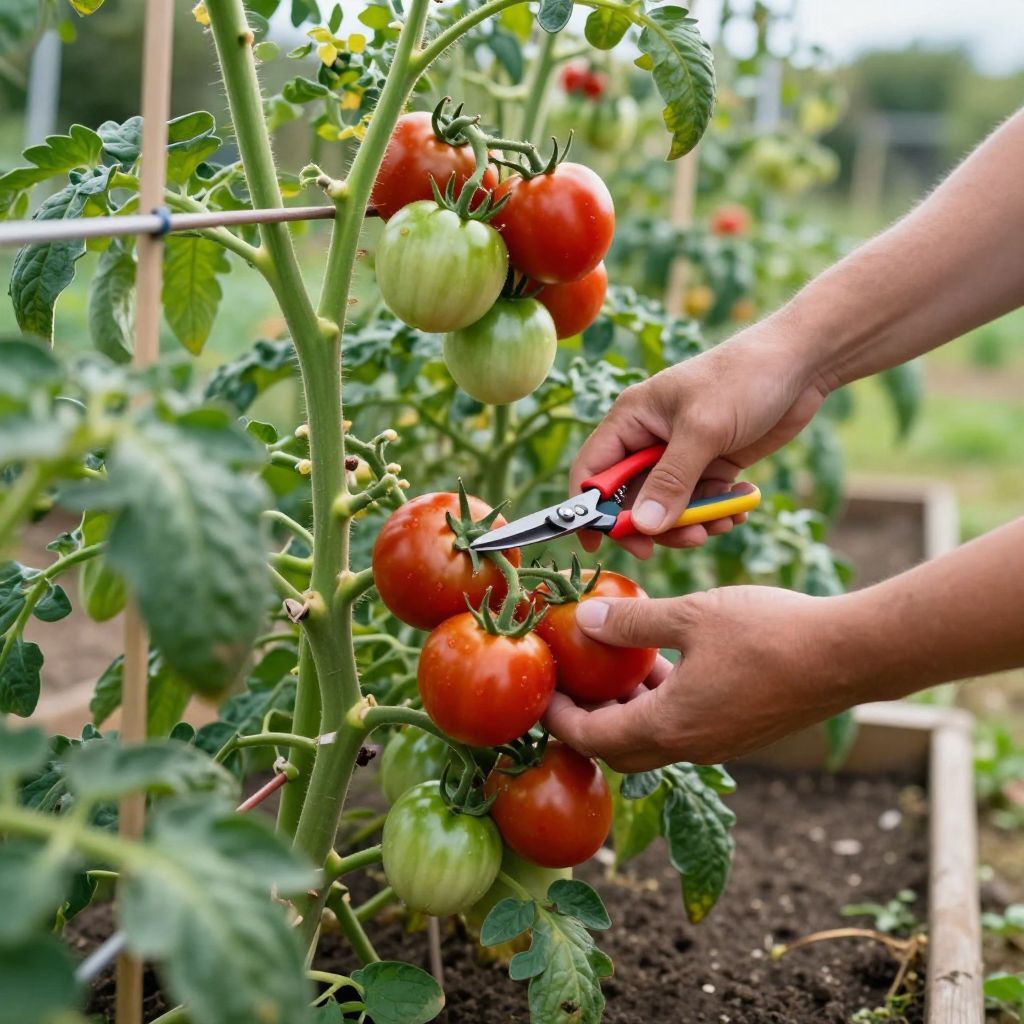
Wondering when to harvest tomatoes so they taste their best and don’t split or rot on the vine? The right picking time depends on variety, weather, and how ripe you want them to be. In general, tomatoes are ready when they have full color, a slight give when gently squeezed, and detach easily from the stem.
Pick too early and the flavor may be flat; wait too long and you risk cracking, pests, birds, or spoilage. The good news is that tomatoes can continue ripening after harvest, so you have some flexibility once the fruit reaches the mature-green or turning stage.
When to harvest tomatoes?
Harvest tomatoes when they have reached their mature color for the variety, feel slightly soft but not mushy, and come away from the vine with a gentle twist. For best flavor, pick fully colored fruit at peak ripeness; for longer keeping or to beat bad weather, harvest at the turning stage and finish ripening indoors.
How to tell tomatoes are ready to pick
Tomatoes do not all ripen at exactly the same time, so use a few signs together rather than color alone. Different varieties can be red, pink, yellow, orange, purple, striped, or nearly black when ripe.
Look for these ripeness cues
- Color change: The fruit has developed its mature color and no longer looks glossy green.
- Skin texture: The skin becomes slightly duller as ripening progresses.
- Firmness: The tomato gives a little under gentle pressure, but is not soft or wrinkled.
- Stem separation: A ripe tomato usually detaches with a light twist or snip.
- Size and shape: It has reached the expected size for that variety.
If you are unsure, check the “shoulder” near the stem. Many tomatoes are ready when the color has spread evenly from the bottom upward and the green near the stem has faded or softened in tone.
Stages of ripeness you can use
- Mature green: Full size, but still green. Good for indoor ripening if frost is coming.
- Breaker: The first blush of yellow, pink, or red appears on less than 10% of the fruit.
- Turning: Around 10–30% of the surface has changed color.
- Pink/light red: Mostly colored and close to ready.
- Fully ripe: Entire fruit has reached its mature color and flavor peak.
Should you harvest tomatoes fully ripe or early?
That depends on your goal. If you want the best flavor, harvest at full ripeness. If you want to reduce losses from cracking, pests, or sudden cold, pick at the turning or breaker stage and let the fruit finish ripening indoors.
Pick fully ripe when:
- You plan to eat the tomatoes soon.
- The weather is stable and warm.
- You want the richest flavor and aroma.
Pick earlier when:
- Frost is forecast or nights are turning cold.
- Heavy rain may cause splitting.
- Birds, squirrels, or insects are damaging fruit.
- You need to reduce pressure on a heavily loaded plant.
Tomatoes ripen best on the vine, but they can still develop color and decent flavor after picking if they were already mature. Very green, immature fruit usually will not taste as good because it has not finished developing.
How to harvest tomatoes correctly
Use clean hands or pruners and handle the fruit gently. Bruising shortens storage life and can lead to soft spots, especially in warm weather.
- Check the plant in the cool part of the day if possible.
- Support the fruit with one hand.
- Twist gently or cut the stem above the tomato with clean snips.
- Place fruit in a shallow container, not a deep bucket.
- Sort out damaged or cracked tomatoes first and use those soon.
Do not pull hard on the vine. This can break stems, damage nearby fruit, and disturb the plant’s remaining cluster. A small pair of pruners is often the safest tool, especially for heavy clusters or truss-bearing varieties.
How weather affects tomato harvest timing
Local weather matters as much as color. Hot spells, cool nights, rain, and early frost all change when you should pick.
Hot weather
In very hot conditions, fruit may ripen quickly but can also develop uneven color or soften too fast. Harvest more often so overripe tomatoes do not split or attract pests.
Rainy weather
After heavy rain, tomatoes may absorb water quickly and crack. If rain is coming and fruit is already turning, it is often wise to pick it a little early rather than risk splitting.
Cool weather and frost
Tomatoes slow down when temperatures drop. If nights are consistently cool or frost is expected, harvest any mature-green, breaker, or turning fruit before the cold damages it.
Tomatoes exposed to frost can become soft and lose quality quickly, even if they do not look badly damaged at first. If frost has already touched the plants, pick all usable fruit right away and sort carefully.
How to ripen tomatoes after harvest
If you pick tomatoes early, you can still ripen them indoors. This works best for fruit that is mature green, breaker, or turning.
Best indoor ripening conditions
- Keep tomatoes at room temperature, ideally out of direct sun.
- Use a dry, well-ventilated spot.
- Check fruit every day or two for softening or spoilage.
- Keep them in a single layer if possible.
Many gardeners place tomatoes in a paper bag or shallow box to help them ripen more evenly. Adding a ripe banana or apple can speed ripening because of ethylene gas, but this is optional and should be monitored closely so the fruit does not over-ripen too quickly.
What not to do
- Do not refrigerate unripe tomatoes if you want the best flavor.
- Do not leave harvested fruit in a hot car or sunny windowsill.
- Do not store bruised tomatoes with clean, unblemished ones.
Once tomatoes are fully ripe, you can refrigerate them briefly if needed, but cold storage can dull flavor and change texture. For the best eating quality, use ripe fruit soon after harvest.
Common mistakes when deciding when to harvest tomatoes
Even experienced gardeners sometimes pick too early or wait too long. A few simple checks can help you avoid the most common problems.
Picking too early
Immature tomatoes may soften indoors, but they often lack sweetness and depth. If the fruit is still hard, small, and deep green with no color break, it is usually not ready.
Waiting too long
Overripe tomatoes can become soft, mealy, or split on the vine. They are also more likely to be damaged by insects, birds, and fungal problems.
Ignoring variety differences
Not all tomatoes ripen to bright red. Some heirloom and specialty types stay yellow, orange, purple, green-striped, or nearly black when ripe. Learn the expected mature color for your variety before deciding harvest time.
Harvesting after rain without checking
Wet fruit can hide cracks or soft spots. Inspect each tomato carefully before storing it with the rest of your harvest.
How to keep plants productive while harvesting
Regular picking encourages many tomato plants to keep setting and ripening fruit. As clusters mature, remove ripe tomatoes promptly so the plant can direct energy to the remaining fruit.
- Harvest often during peak season, sometimes every 1–3 days in warm weather.
- Remove cracked, diseased, or damaged fruit right away.
- Keep plants supported with stakes, cages, or ties so fruit stays off the ground.
- Watch for leaf disease and prune only as needed for airflow, not heavily all at once.
If lower leaves are touching the soil or showing disease, trim them carefully to reduce splash and improve air movement. Good support and clean harvests help keep fruit cleaner and easier to pick.
Troubleshooting tomato harvest problems
Sometimes the fruit looks almost ready but still seems stubborn. The cause is often environmental rather than a problem with your picking method.
Fruit stays green for a long time
Cool temperatures, shade, too much nitrogen, or a very heavy crop can slow ripening. Make sure the plant gets full sun, and keep harvesting mature fruit so the plant is not overloaded.
Fruit ripens unevenly
Uneven ripening can happen in intense heat, with sunscald, or when the plant is stressed. Provide consistent watering and avoid stripping too many leaves, since foliage helps protect fruit from harsh sun.
Shoulders stay green
Some varieties naturally show green shoulders. In other cases, high heat or nutrient imbalance may contribute. If the fruit is otherwise ripe and flavorful, it is usually fine to harvest.
Soft spots or splitting
These are often caused by irregular watering, rain after dry weather, or overripe fruit left too long. Harvest promptly and keep soil moisture as even as possible.
Simple harvest checklist
- Fruit has reached its mature color for the variety.
- Tomato feels slightly soft, not hard or mushy.
- It detaches easily with a twist or snip.
- Weather is favorable, or you are picking early to avoid damage.
- You have a plan to use, store, or ripen the fruit properly.
Conclusion
The best time to harvest tomatoes is when they have full mature color, a slight give, and easy stem separation. If bad weather or pests are on the way, pick at the breaker or turning stage and let the fruit finish ripening indoors. Check your plants often, harvest gently, and you will get better flavor and fewer losses.
For more practical tomato growing help, you may also want to read about staking and supporting plants, or how to manage common tomato pests and diseases in the garden.