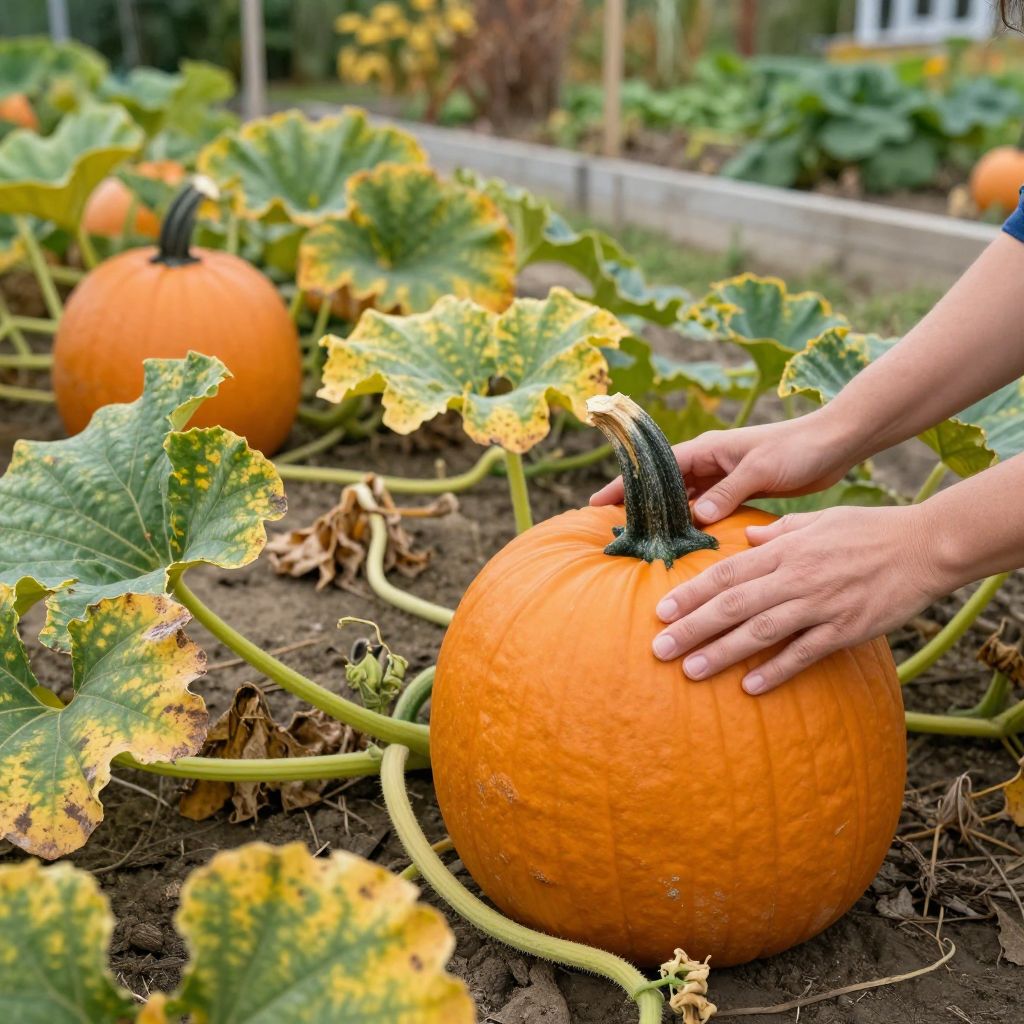
Wondering when are pumpkins ready to harvest? The answer is usually when the fruit has reached full color, the rind is hard enough that you can’t easily dent it with a fingernail, and the vine is starting to decline. Timing varies by variety and weather, so it’s best to check the plant and the pumpkin itself rather than relying on the calendar alone.
Harvesting at the right stage helps pumpkins store longer, taste better if you plan to cook them, and avoid rot or frost damage. Below, you’ll find the most reliable signs to look for, plus practical harvesting and curing tips that work in real gardens.
When are pumpkins ready to harvest?
Most pumpkins are ready when the skin is fully colored, the rind feels hard, and the stem begins to dry and cork over. A ripe pumpkin usually resists a fingernail test, sounds hollow when tapped, and has a mature, woody stem. Harvest before hard frost, but after the fruit has fully matured on the vine.
How to tell if a pumpkin is ripe
Use several signs together. No single clue is perfect, especially if your season has been unusually cool, wet, or short.
1. Check the color
The pumpkin should have reached its mature color for that variety, whether that’s deep orange, pale tan, white, or another finished shade. If you still see green patches on a variety that should ripen orange, it likely needs more time.
2. Test the rind
Press a fingernail into the skin. A mature pumpkin has a firm rind that resists puncture. If your nail easily leaves a mark, the fruit is still maturing.
3. Look at the stem
A ripe pumpkin usually has a dry, corky stem. It may start to turn brown and feel tough. Do not carry pumpkins by the stem; even a mature stem can snap, shortening storage life.
4. Tap for a hollow sound
Gently tap the pumpkin. A ripe one often sounds hollow or dull rather than soft and spongy. This is a helpful clue, but it works best when combined with the other signs.
5. Watch the vine
As pumpkins mature, the vine often begins to yellow and die back naturally. That said, vines can decline early from disease or stress, so don’t assume fruit is ready just because the plant looks tired.
Typical harvest timing by variety and climate
Harvest time depends on the pumpkin type, your growing season, and local weather. Small pie pumpkins often mature sooner than large carving types, but always check the seed packet or plant label for the expected days to maturity.
- Early varieties may be ready in late summer to early fall.
- Midseason varieties often mature in early to mid fall.
- Large storage or carving pumpkins may need the longest season and warm weather to finish ripening.
If your area has a short growing season, start with faster-maturing varieties and give plants the warmest, sunniest spot you have. In cooler climates, pumpkins may need protection from early frost or extra time under row cover when young.
What if the vine is dying but the pumpkin is still green?
This is common. The vine may be affected by powdery mildew, squash vine borers, drought stress, or early cold weather. If the pumpkin is nearly full size but still pale or green, it may continue to ripen a little after harvest, but it won’t improve much once removed too early.
To judge whether to pick it now or wait:
- Wait if the rind is still soft and the stem is green and flexible.
- Harvest if frost is forecast and the pumpkin is already close to mature.
- Leave it on the vine longer if the fruit is still expanding and the weather remains warm.
Once a hard frost hits, unprotected fruit can be damaged quickly. If frost is coming and the pumpkin is close to ready, it’s usually better to harvest and cure it indoors than risk losing it in the garden.
How to harvest pumpkins correctly
Use clean, sharp pruners or a knife. Cut the stem rather than pulling the pumpkin off the vine, and leave several inches of stem attached if possible.
- Choose a dry day if you can.
- Inspect the pumpkin for soft spots, cracks, or insect damage.
- Cut the stem cleanly, leaving 2 to 4 inches attached.
- Handle the fruit gently and avoid dropping it.
- Set it on a dry surface out of direct rain while you move it.
Never twist or yank pumpkins from the vine. A torn stem can invite rot and shorten storage life.
Curing pumpkins for better storage
Curing helps toughen the rind and heal small surface scratches. It is especially useful if you want pumpkins to last through fall or into winter.
Place harvested pumpkins in a warm, dry, well-ventilated spot out of direct rain. A sheltered porch, shed, or garage can work if temperatures stay mild and there is good airflow. Avoid damp basements or sealed spaces with poor ventilation.
- Keep pumpkins off wet ground.
- Turn them carefully every few days so all sides dry evenly.
- Do not stack them.
- Remove any fruit with deep cuts or soft areas, since it may not store well.
After curing, store pumpkins in a cool, dry place with gentle airflow. Check them regularly and use any that show softening or mold first.
Common mistakes to avoid
Many storage problems start at harvest. A few simple mistakes can shorten the life of your pumpkins dramatically.
- Harvesting too early before the rind hardens.
- Picking after frost damage when fruit has already been injured.
- Breaking off the stem instead of cutting it cleanly.
- Washing pumpkins and storing them wet, which encourages rot.
- Leaving fruit on cold, damp soil for long periods.
If you notice minor dirt or debris, brush it off gently with a dry cloth. Only wash pumpkins if you plan to use them soon, and dry them thoroughly afterward.
Problems that can affect ripening
Even healthy vines can struggle to finish fruit if conditions are poor. Understanding the cause helps you decide whether to wait, harvest, or adjust your care next season.
Too much shade
Pumpkins need full sun to ripen properly. In partial shade, fruit may stay pale, grow slowly, or fail to develop a hard rind.
Irregular watering
Long dry spells followed by heavy watering can stress vines and affect fruit development. Water deeply and consistently during active growth, especially while fruit is sizing up, but avoid soggy soil.
Poor drainage
Wet soil can weaken roots and invite disease. If your garden holds water after rain, plant pumpkins in raised beds, hills, or amended soil with better drainage next season.
Disease pressure
Powdery mildew, downy mildew, and other leaf diseases can reduce the plant’s ability to feed the fruit. If foliage declines early, focus on whether the pumpkin itself has reached maturity rather than waiting for the vine to look perfect.
Can pumpkins ripen off the vine?
Sometimes, but only a little. A pumpkin that is nearly mature may finish hardening slightly after harvest, especially if it already has good color and a firm rind. However, a very immature green pumpkin usually won’t develop the same quality as one ripened on the vine.
If you must pick early because of frost or disease, cure the fruit well and store it carefully. That gives you the best chance of decent keeping quality.
Quick harvest checklist
- The pumpkin has reached its mature color.
- The rind is hard and resists a fingernail.
- The stem looks dry, woody, and corky.
- The vine is beginning to decline naturally.
- No hard frost is imminent, or you’ve decided to harvest ahead of it.
Conclusion
The best way to know when are pumpkins ready to harvest is to check the fruit, not just the calendar. Look for full color, a hard rind, and a drying stem, then cut the pumpkin cleanly and cure it in a dry, airy place. If you want to plan better for next season, review your variety choice, sun exposure, and soil drainage before planting again.
If you’re growing more fall crops, you may also want to read about how to tell when winter squash is ready to pick and simple ways to cure and store garden harvests.