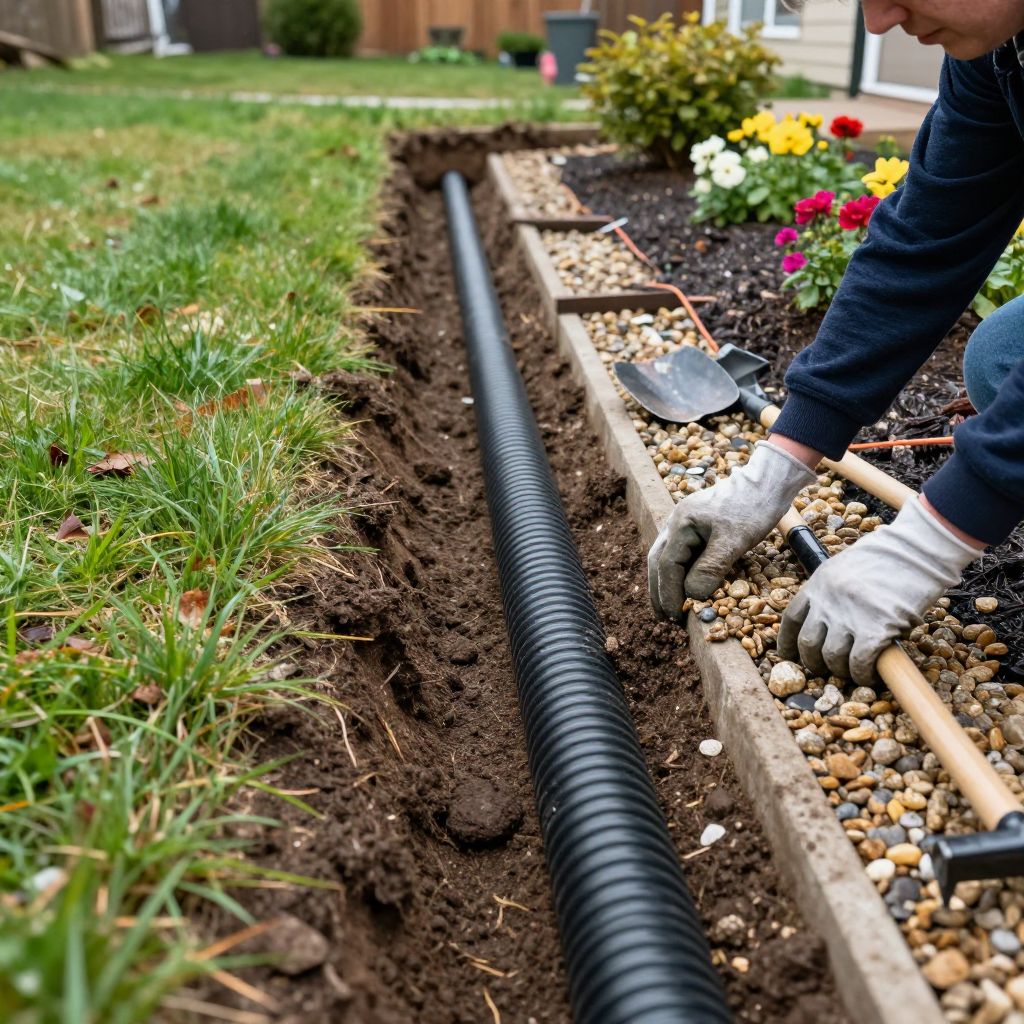
Got a soggy lawn, puddles after rain, or a garden bed that stays wet for days? Yard drainage problems are common, but many of them can be improved with simple do-it-yourself fixes before you spend money on major work.
The key is to find out where water is coming from, where it is trapped, and how to move it safely away from plants, structures, and walkways. With the right drainage solution, you can protect roots, reduce mud, and make your yard easier to maintain.
What are the best yard drainage solutions you can do yourself?
The best DIY yard drainage solutions are grading the soil to direct runoff, adding shallow swales, extending downspouts, improving compacted soil, and installing a small French drain or dry well where needed. Start with the simplest fix that matches the problem, because many drainage issues come from surface runoff rather than a need for a deep underground system.
First, figure out why your yard stays wet
Before you dig anything, watch your yard during and after rain. The cause of poor drainage determines the right fix.
Common drainage problems
- Low spots where water collects and sits.
- Compacted soil that slows infiltration, especially in high-traffic areas.
- Downspouts dumping roof water next to the foundation or into garden beds.
- Poor grading that slopes toward the house instead of away from it.
- Heavy clay soil that drains slowly even when the yard is properly shaped.
If water disappears quickly in one part of the yard but lingers in another, you may only need a targeted fix. If the whole area stays wet, you may need to improve soil structure and surface flow together.
A simple drainage test
- Dig a hole about 12 inches deep and 12 inches wide in the problem area.
- Fill it with water and let it drain once to wet the soil.
- Refill it and time how long it takes to empty.
If water still remains after several hours, drainage is poor. Very slow drainage often means you need a combination of grading, soil improvement, and a channel for excess water.
Do yourself yard drainage solutions that work
1. Regrade small problem areas
For shallow puddles near patios, paths, or the house, regrading is often the most effective DIY fix. The goal is to create a gentle slope that moves water away from structures and toward a safe outlet.
A common target is a slope of about 1 to 2 percent, which means roughly 1 to 2 inches of drop per 10 feet. That is enough to move water without creating erosion.
Use topsoil or a topsoil-compost blend to build up low spots. Work in layers, compacting lightly as you go so the soil does not settle too much later.
2. Install a shallow swale
A swale is a shallow, grassed channel that carries runoff across the yard and away from trouble spots. It is useful when water flows from one part of the property to another and needs a controlled path.
Keep swales broad and shallow rather than narrow and deep. Planting turf or moisture-tolerant groundcovers in the swale helps hold soil in place and slows water enough to reduce erosion.
3. Extend downspouts away from the house
Roof runoff can overwhelm garden beds and create muddy foundation areas. A simple downspout extension is one of the easiest yard drainage solutions do yourself.
- Attach a rigid or flexible extension to carry water several feet away from the house.
- Direct water into a lawn area, swale, rain garden, or drain outlet where allowed.
- Make sure the extension does not create a new puddle at the end.
If the soil near the house is already saturated, even a short extension may help a lot. For larger roofs or steep slopes, you may need to route water farther away or into a more formal drainage feature.
4. Aerate and loosen compacted soil
When soil is packed tight, water cannot move through the pore spaces. Core aeration can help lawns, while garden beds may benefit from careful loosening and organic matter.
- For lawns, use a core aerator rather than a spike tool when possible.
- For beds, mix in compost to improve structure over time.
- Avoid working wet clay soil, which can make compaction worse.
Improving soil structure is slower than building a drain, but it is often the best long-term solution for planted areas.
5. Build a French drain for recurring wet spots
A French drain is a trench filled with gravel and a perforated pipe that collects and moves water away from a problem area. It is useful where surface fixes are not enough, such as persistent wet strips or runoff along a slope.
For a DIY project, keep the design simple. The trench should slope consistently toward the outlet, and the pipe should have a proper exit point where water can discharge safely.
Important: A French drain is not a cure-all. If the outlet is too high, clogged, or poorly placed, the system will not work well.
6. Create a rain garden in a suitable spot
A rain garden is a planted depression that temporarily holds runoff and lets it soak in. It works best where water naturally collects but does not stay flooded for long periods.
Choose plants that tolerate occasional wet feet and also handle drier periods once established. Native plants are often a good choice because they are adapted to local rainfall patterns and soil conditions.
Do not place a rain garden too close to a foundation or in a spot that stays waterlogged for days. It should capture runoff, not become a permanent pond unless that is your goal.
How to choose the right fix for your yard
Match the solution to the scale of the problem. The simplest fix that solves the issue is usually the best one to start with.
Use this quick guide
- Puddles near downspouts: extend the downspout or redirect runoff.
- Shallow low spots: regrade with topsoil.
- Water moving across the yard: add a swale.
- Compacted lawn areas: aerate and improve soil.
- Persistent wet strip or slope runoff: consider a French drain.
- Runoff you want to capture and use: build a rain garden.
If you are unsure, start by observing where water enters and exits the yard. Many homeowners solve most of the problem with grading and downspout changes alone.
Step-by-step DIY drainage project basics
Most drainage projects go better when you plan before you dig. A little preparation helps you avoid buried utilities, poor slope, and water that simply moves to a new bad spot.
- Map the problem area. Mark puddles, runoff paths, and the lowest points after rain.
- Check the slope. Use a level, string line, or laser level if available.
- Identify the outlet. Water must have a place to go, such as a lawn area, drainage ditch, or approved discharge point.
- Call before you dig. Always check for buried utilities before trenching.
- Choose the least invasive fix. Start with grading, extensions, or soil improvement before installing pipe.
- Test the result. After the first rain, see whether water moves as intended and adjust if needed.
Soil, mulch, and planting choices that help drainage
Drainage is not only about pipes and trenches. The way you build and plant the soil also affects how water moves through the yard.
Improve soil without making it too rich or too loose
Compost helps open heavy soil and supports healthy roots, but too much can create a soft surface that settles unevenly. Blend it into the top layer of garden beds rather than piling it on top.
For clay-heavy areas, repeated additions of organic matter over time work better than one large amendment. Avoid adding sand to clay unless you understand the soil mix, because the wrong ratio can make drainage worse.
Choose plants that fit the moisture level
Plants that dislike wet feet may fail in poorly drained areas, even if they look healthy at first. Match the plant to the site instead of forcing a dry-soil plant into a soggy bed.
- Use moisture-tolerant plants in low spots or rain gardens.
- Use drought-tolerant plants on raised areas or berms.
- Raise planting beds if you want to grow in a wet part of the yard.
Raised beds can be a practical solution when native soil is too wet for vegetables, herbs, or ornamentals that need better drainage.
Common mistakes to avoid
Drainage projects often fail because of small errors that send water in the wrong direction or block it from moving at all.
- Ignoring the outlet: every drainage system needs a safe place for water to go.
- Making the slope too steep: fast water can erode soil and wash mulch away.
- Digging before checking utilities: this is a safety issue, not just a gardening one.
- Fixing only the symptom: a puddle may be caused by roof runoff, compaction, or grading, not just a low spot.
- Working wet soil: this can compact it further and make drainage worse.
Seasonal timing and maintenance tips
The best time to do drainage work depends on your climate and soil moisture. In many regions, drier weather makes grading and trenching easier, while wetter months are best for seeing where water actually moves.
Once your fix is in place, check it after major rain events. Clear leaves, silt, and mulch from swales, grates, and downspout outlets so water can keep moving.
Ongoing maintenance checklist
- Inspect downspout extensions after storms.
- Rake debris out of swales and shallow channels.
- Watch for settling in newly graded areas and top up as needed.
- Check planted drainage areas for erosion or bare soil.
- Keep gutters clean so less water overflows into the yard.
When to call a professional
Many drainage problems are manageable on your own, but some situations need expert help. If water is entering the basement, affecting a retaining wall, flooding repeatedly, or crossing property lines, professional grading or drainage design may be the safer choice.
You should also get help if the yard has a steep slope, a complex outlet issue, or clay soil that stays saturated for long periods. In those cases, a poorly planned DIY fix can create bigger problems.
Conclusion
For most homeowners, the best yard drainage solutions do yourself start with observation, then move to simple fixes like regrading, downspout extensions, and soil improvement. If the problem is more persistent, a swale, rain garden, or French drain may be the next step.
Pick one area, test the water flow after rain, and make the smallest effective change first. If you want to keep improving your landscape, related reading on rain garden planting and maintenance and how to improve heavy clay soil can help you build a healthier, better-drained yard.