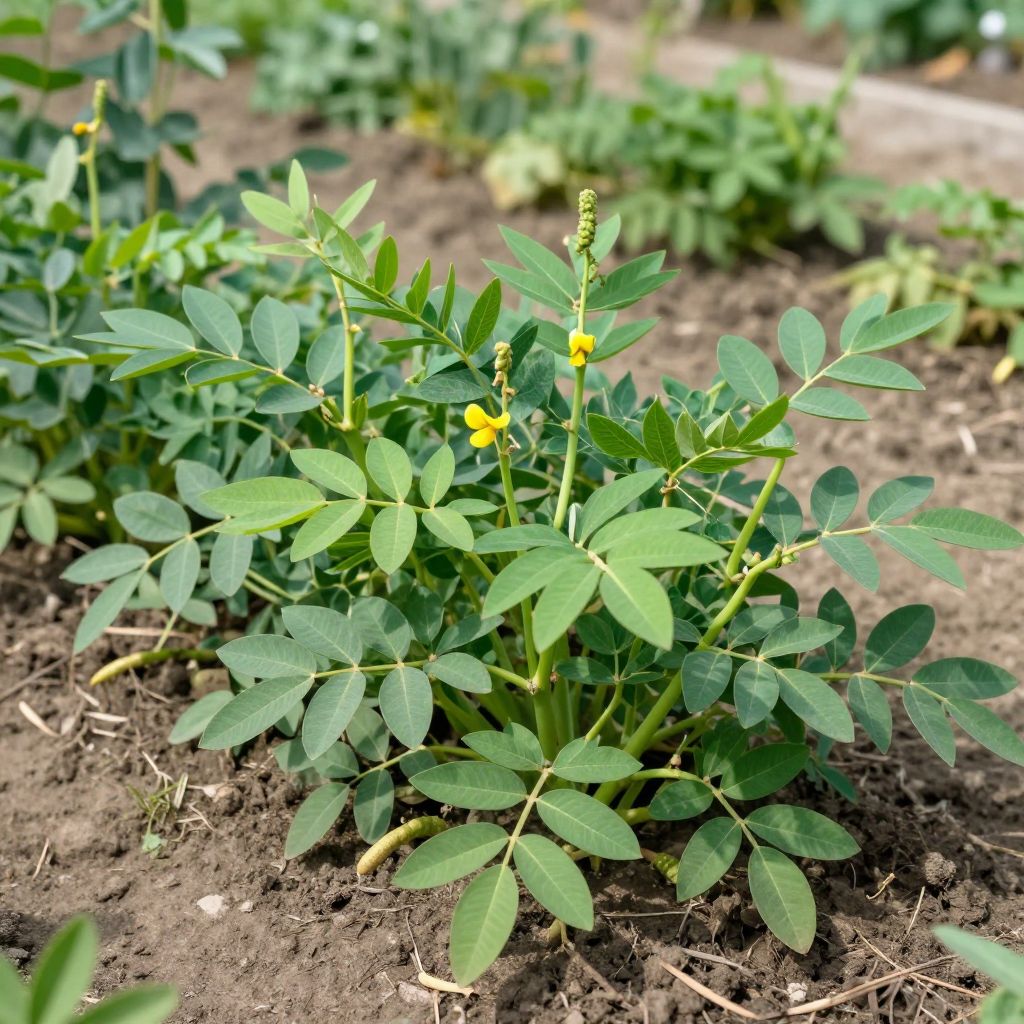
What do peanut plants look like? If you’ve never grown them before, they can surprise you: peanuts are low, bushy plants with bright green leaves and small yellow flowers. The real peanut pods form underground after the flowers are pollinated, so the plant looks ordinary above ground while the crop develops below the soil.
That unusual growth habit is part of what makes peanuts fun to grow. With the right warmth, loose soil, and enough time, you can raise them in a home garden and harvest your own peanuts at the end of the season.
What do peanut plants look like?
Peanut plants (Arachis hypogaea) are compact, warm-season legumes with oval leaflets, small yellow pea-like flowers, and trailing or upright stems depending on the type. They usually grow about 12 to 24 inches tall, then send “pegs” into the soil after flowering, where the peanut pods develop underground.
How to identify peanut plants at each stage
Seedling stage
Young peanut seedlings emerge with paired leaves and a soft, green stem. At first glance, they may look like other garden legumes, but the leaves quickly become more distinctive as the plant matures.
Vegetative growth
As the plant fills out, you’ll notice:
- Four oval leaflets arranged in pairs
- Low, spreading growth that can form a small mound
- Thin stems that may lie close to the ground
- A dense, leafy appearance in warm weather
Healthy peanut plants are usually bright to medium green. Pale leaves can signal poor nutrition, cold soil, or watering issues.
Flowering stage
Peanut flowers are small, yellow, and short-lived. They appear above ground, often near the lower part of the plant. Each flower opens for only a short time, which is normal.
After pollination, the flower stalk bends downward and pushes into the soil. This is the “peg,” and it is one of the most important clues that you are growing peanuts successfully.
Pod development
Unlike beans or peas, the edible pods form underground. If you gently dig near the plant later in the season, you may see tan, wrinkled pods attached to the pegs. Inside are the familiar peanut kernels.
What peanuts need to grow well
Peanuts grow best in warm weather, full sun, and loose, well-drained soil. They need a long frost-free season, because the plant must flower, peg, and mature underground before harvest.
- Sunlight: Full sun for most of the day
- Soil: Loose, sandy, or sandy loam soil is ideal
- Drainage: Excellent drainage is essential
- Temperature: Warm soil and air, with no frost
- Space: Room for the plant to spread and for soil to be mounded around the base
If your soil is heavy clay, compacted, or stays wet after rain, peanuts may struggle. In that case, raised beds or amended garden rows are usually a better choice than planting directly into dense ground.
How to plant peanuts
Start with raw, untreated seed peanuts
Use planting peanuts from a garden supplier or raw, unsalted peanuts that have not been roasted or chemically treated. Store-bought roasted peanuts will not sprout.
Plant in warm soil
Wait until your soil is reliably warm before planting. Peanuts germinate poorly in cold ground, and early planting often leads to rot or weak seedlings. In cooler climates, starting too early is a common mistake.
Basic planting steps
- Choose a sunny site with loose, workable soil.
- Remove rocks and break up clods so pods can develop easily underground.
- Mix in compost if your soil is poor, but avoid overdoing nitrogen-rich amendments.
- Plant seed peanuts at the depth recommended for your seed type or local conditions, usually about 1 to 2 inches deep.
- Space plants so they have room to spread and form pods.
- Water gently after planting to settle the soil.
Because climate varies so much, your planting window should be based on local frost dates and soil temperature rather than a calendar date. In short-season areas, peanuts may not have enough time to mature outdoors.
Soil, compost, and drainage for peanut plants
Peanuts are one of the few garden crops that prefer soil that is easy to dig through. Loose soil helps the pegs enter the ground and gives pods room to expand.
Best soil conditions
- Light, friable texture
- Moderate fertility
- Neutral to slightly acidic pH is generally suitable
- No standing water after rain or irrigation
Compost can improve poor soil structure, but use it thoughtfully. Too much rich organic matter or high-nitrogen fertilizer can encourage leafy growth at the expense of pod production.
If your soil is dense, work in compost well ahead of planting and consider a raised bed. Raised beds warm faster and drain better, which often improves peanut growth.
Watering and care through the season
Peanut plants like steady moisture, but they do not tolerate soggy soil. The goal is even watering, especially while the plant is flowering and forming pods.
Watering tips
- Water deeply when the top layer of soil begins to dry.
- Avoid frequent light sprinkling, which encourages shallow roots.
- Reduce watering if the soil stays wet after rain.
- Keep moisture more consistent during flowering and pegging.
Mulch can help conserve moisture, but keep it light and loose so pegs can still enter the soil. A thick, compact mulch layer may interfere with pod formation.
Feeding peanuts
Peanuts are legumes, so they can work with soil bacteria that help them use nitrogen. That means they usually do not need heavy nitrogen feeding. If growth is weak, a soil test is often more helpful than adding more fertilizer at random.
Common problems when growing peanuts
Few flowers or no pods
If the plant looks healthy but produces few peanuts, the issue is often one of these:
- Not enough heat or a season that is too short
- Too much nitrogen, causing leafy growth instead of pods
- Soil that is too hard for pegs to enter
- Poor pollination or stress during flowering
Yellowing leaves
Yellow leaves can mean overwatering, poor drainage, nutrient imbalance, or cold conditions. Check the soil first. If it feels wet and heavy, improve drainage before adding more water or fertilizer.
Wilting or stunted growth
Wilting in hot weather can happen even when the soil is moist if roots are stressed. Compacted soil, root damage, and disease can all contribute. Make sure the plant is not sitting in water and that the root zone is loose enough for healthy growth.
Pests and diseases
Peanuts can be affected by common garden pests and fungal problems, especially in humid or wet conditions. Good spacing, clean cultivation, and avoiding overhead watering late in the day can reduce trouble.
Watch for leaves with spots, moldy growth, or sudden decline. Remove badly affected plants if disease spreads quickly, and avoid planting peanuts in the same spot year after year.
When and how to harvest peanuts
Harvest timing depends on the variety, weather, and how long the plants have been growing. Peanuts are ready when the plant begins to yellow and the pods inside the soil have filled out.
Signs peanuts may be ready
- Leaves start to yellow naturally
- Plants look less vigorous late in the season
- Pods feel firm and well filled when gently dug up
- The inside of a pod shows mature kernels rather than tiny undeveloped seeds
To check maturity, carefully dig around one plant and inspect a few pods. If they are underdeveloped, give the crop more time and recheck later.
Harvesting steps
- Loosen the soil around the plant with a garden fork or spade.
- Lift the whole plant gently so the pods stay attached.
- Shake off loose soil.
- Hang or spread the plants in a warm, airy place to dry.
- Remove the pods once they are dry enough to store.
Freshly harvested peanuts need drying before storage. If they are stored while damp, they can mold.
Can you grow peanut plants in containers?
Yes, but containers need to be large enough and deep enough for pod development. A wide container is usually better than a narrow one, because the plant spreads and the pods form in the soil below.
Use a loose potting mix with good drainage, and avoid packing the soil tightly. Container-grown peanuts dry out faster than garden plants, so check moisture often, especially in hot weather.
Practical mistakes to avoid
- Planting in cold soil
- Using roasted or treated peanuts as seed
- Choosing heavy, waterlogged soil
- Overfertilizing with nitrogen
- Letting weeds crowd young plants
- Harvesting too early
Weeds are especially important to control early, because young peanut plants can be slow to compete. Keep the planting area clean while avoiding deep cultivation that could disturb roots and developing pegs.
Conclusion
If you were wondering what peanut plants look like, remember this: they are low, leafy legumes with small yellow flowers above ground and pods that develop below ground. Give them warmth, loose soil, full sun, and steady but not excessive moisture, and they can be a rewarding crop to grow.
For more practical vegetable-growing help, you may also want to read about how to grow beans in the home garden and raising crops in raised beds for better drainage.