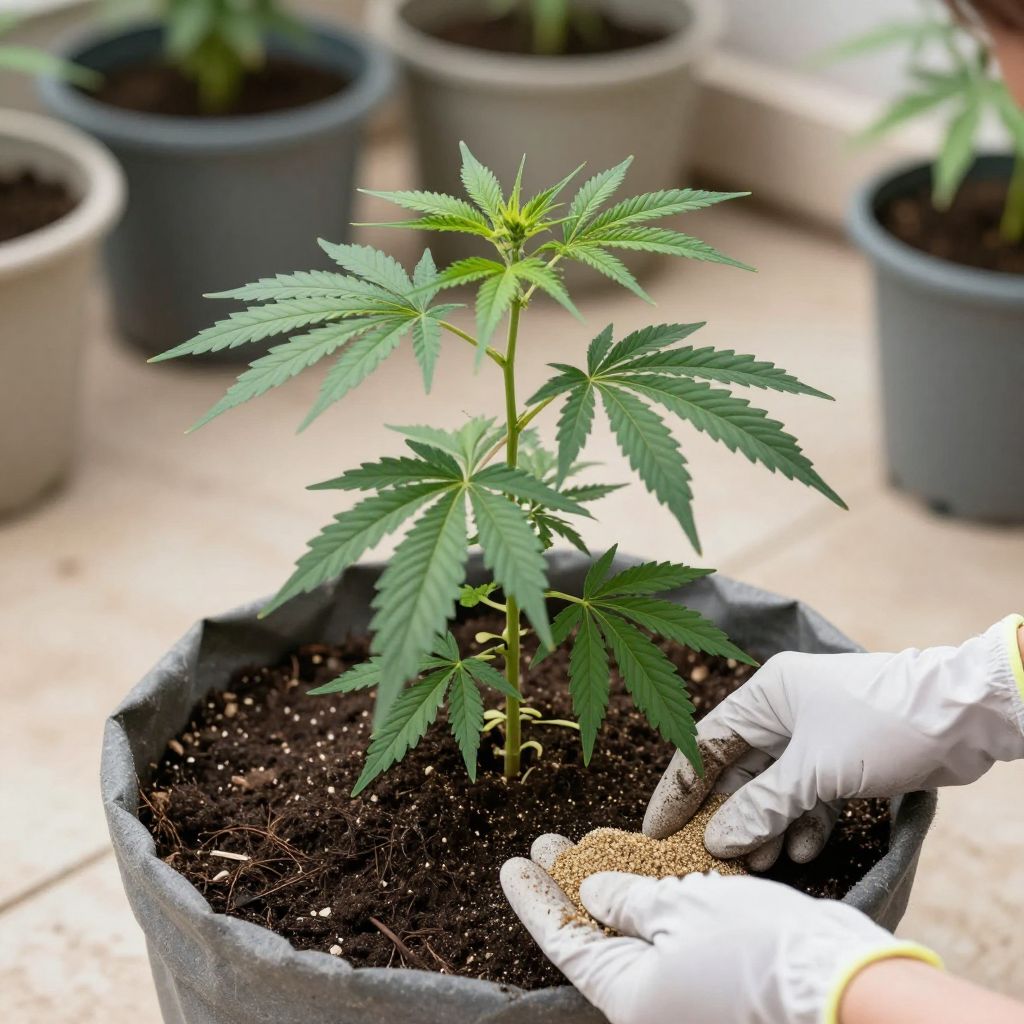
What is the best fertilizer for marijuanas plants? The short answer is: the best fertilizer is one that matches the plant’s growth stage, soil, and growing environment. Young plants usually need gentler nutrition, while actively growing plants often need a balanced feed with more nitrogen, and flowering plants need less nitrogen and more phosphorus and potassium.
For home gardeners, the safest approach is to start with a quality, complete fertilizer and adjust based on plant color, growth rate, and the condition of your soil or potting mix. Overfeeding causes more problems than underfeeding, so the “best” fertilizer is usually the one you can apply carefully and consistently.
What Is The Best Fertilizer For Marijuanas Plants?
The best fertilizer for marijuanas plants is a complete, well-balanced fertilizer that changes with the plant’s stage of growth. In vegetative growth, choose a formula with relatively higher nitrogen; in flowering, shift to lower nitrogen and more phosphorus and potassium. Organic compost, worm castings, and quality soil can also provide steady nutrition without the risk of heavy feeding.
Understanding What the Plant Needs at Each Stage
Marijuanas plants do not use the same nutrients in the same amounts throughout their life cycle. Their needs change as they move from root development to leafy growth and then to flowering.
Vegetative growth
During leafy growth, plants typically need more nitrogen to support strong stems and healthy foliage. A fertilizer labeled for vegetative growth or “grow” nutrition is often appropriate if you are growing in containers or enriched soil.
Flowering
As flowering begins, reduce nitrogen and support bloom development with a fertilizer that supplies more phosphorus and potassium. Too much nitrogen at this stage can encourage leafy growth at the expense of flowers and may make the plant more prone to stress.
Seedlings and young plants
Seedlings and very young plants need very little fertilizer. In many cases, a lightly amended potting mix or compost-rich soil is enough at first. Strong fertilizer too early can burn tender roots and slow growth.
Choosing the Right Fertilizer Type
There is no single perfect product for every garden. The best fertilizer depends on whether you grow in soil, containers, or a soilless mix, and whether you prefer organic or synthetic inputs.
Complete fertilizers
A complete fertilizer contains nitrogen, phosphorus, and potassium, often listed as N-P-K on the label. For most home growers, this is the easiest place to start because it gives you a clear nutrient base.
- Higher nitrogen supports leafy growth.
- Higher phosphorus and potassium support flowering and overall plant strength.
- Moderate, balanced formulas are often safest for beginners.
Organic fertilizers
Organic options such as compost, worm castings, fish emulsion, kelp meal, and bat guano can improve soil structure while feeding plants more gradually. These are especially useful if you want to build living soil and reduce the risk of nutrient burn.
Synthetic fertilizers
Synthetic fertilizers act faster and can be easier to measure, which may help if a plant shows a clear deficiency. They also require more caution, because excess salts can build up in containers and damage roots if you feed too heavily.
How to Match Fertilizer to Your Growing Setup
Your growing medium matters as much as the fertilizer itself. Soil, containers, and soilless mixes all behave differently, and each one changes how often you should feed.
In-ground soil
If you are growing in garden soil, start with compost and a soil test if possible. Healthy soil often needs less fertilizer than container plants because it holds nutrients longer and supports beneficial microbes.
Container plants
Potted plants usually need more frequent feeding because watering washes nutrients out of the container over time. Use a high-quality potting mix with good drainage, then feed lightly and adjust based on growth.
Soilless or hydroponic systems
Soilless mixes and hydroponic setups demand more precise feeding because the medium contains little to no natural nutrition. In these systems, use a fertilizer made for the specific setup and follow the product instructions carefully, since nutrient concentration matters more here.
Signs You Are Using the Wrong Fertilizer
Plants often show clear warning signs before serious damage occurs. Learning to read those signs helps you correct problems early instead of guessing.
- Pale, yellowing older leaves may suggest low nitrogen.
- Slow growth and weak stems can point to poor nutrition or poor light.
- Dark green, overly leafy growth may mean too much nitrogen.
- Brown leaf tips or edges often signal fertilizer burn or salt buildup.
- Weak flowering can happen when the plant stays on a vegetative fertilizer too long.
These symptoms can also come from watering problems, poor drainage, root stress, or incorrect pH, so do not assume fertilizer is the only issue.
How to Fertilize Safely
The best feeding plan is usually conservative. It is easier to add a little more nutrition than to fix overfertilized roots.
- Start with a healthy potting mix or amended soil before planting.
- Read the fertilizer label and use the lowest recommended rate first.
- Feed only when the plant is actively growing and able to use nutrients.
- Water thoroughly when needed so nutrients move evenly through the root zone.
- Watch new growth for one to two weeks before increasing strength.
Never fertilize dry, wilted plants heavily. First check watering, root health, and drainage. A stressed plant may not be able to process fertilizer well.
Feeding frequency
There is no universal schedule that fits every climate or setup. Feed based on plant response, container size, soil quality, and how quickly the medium dries out. In rich soil, you may fertilize less often; in containers or soilless mixes, you may need to feed more regularly but at lower strength.
Soil pH, Drainage, and Watering Matter Too
Even the best fertilizer will not work well if roots cannot absorb it. Nutrient uptake depends on healthy roots, proper moisture, and suitable pH.
Drainage
Use containers with drainage holes and a loose, airy potting mix. Waterlogged soil blocks oxygen from the roots and can make plants look nutrient-deficient even when fertilizer is present.
pH
If pH is too high or too low, nutrients may be present but unavailable to the plant. A simple soil or runoff test can help you correct the problem before adding more fertilizer.
Watering
Water deeply, then allow the top layer of soil to dry slightly before watering again, depending on the plant’s stage, pot size, and weather. Constantly soggy soil is a common reason plants struggle after feeding.
Organic Amendments That Help Long-Term
If you want steadier growth and fewer feeding mistakes, build fertility into the soil rather than relying only on liquid fertilizer. This is especially helpful for outdoor beds and larger containers.
- Compost improves soil texture and adds slow-release nutrients.
- Worm castings provide gentle nutrition and support soil biology.
- Well-aged manure can enrich garden beds if it is fully composted.
- Mulch helps regulate moisture and protects soil life.
These amendments do not replace all fertilizer needs, but they reduce the chance of sudden nutrient swings and help roots grow more evenly.
Common Fertilizer Mistakes to Avoid
Many problems come from trying to push growth too hard. A steady, moderate approach usually produces healthier plants than aggressive feeding.
- Using a strong fertilizer on seedlings.
- Applying bloom fertilizer too early.
- Ignoring drainage and pH.
- Mixing several fertilizers at full strength.
- Feeding a stressed plant without checking for pests or root problems.
If leaves curl, burn, or darken after feeding, pause fertilizer use and flush the container with clean water if appropriate for your growing system. Then let the plant recover before resuming at a lower strength.
Pests, Diseases, and Nutrient Stress
Sometimes what looks like a fertilizer problem is actually pest damage or disease. Check the undersides of leaves, stems, and the root zone before changing your feeding plan.
Look for these issues
- Aphids, spider mites, or thrips on leaves and stems.
- Powdery mildew or leaf spotting in humid conditions.
- Root rot in overly wet soil.
- Compacted soil that prevents roots from spreading.
Healthy, well-fed plants still need good airflow, clean tools, and careful watering. Fertilizer supports growth, but it does not solve every garden problem.
Simple Fertilizer Strategy for Beginners
If you are unsure where to start, keep it simple. Use a quality potting mix or amended soil, choose a complete fertilizer, and feed lightly based on the plant’s stage.
- Begin with a balanced base soil or compost-rich mix.
- Use a gentle vegetative fertilizer during leafy growth.
- Switch to a flowering formula when buds begin to form.
- Watch the plant closely and reduce feeding if leaf tips burn.
- Adjust for indoor or outdoor conditions, since light, temperature, and watering all affect nutrient use.
Conclusion
The best fertilizer for marijuanas plants is not one single product, but the right nutrition at the right time. Start with healthy soil, feed lightly, and match the fertilizer to the plant’s growth stage so you avoid burn and support steady development. If you want better results, test your soil, inspect your watering habits, and make one small adjustment at a time.
For more practical plant care tips, you may also find useful guidance in a general container gardening guide or a soil and compost basics article if you are building a stronger growing mix.