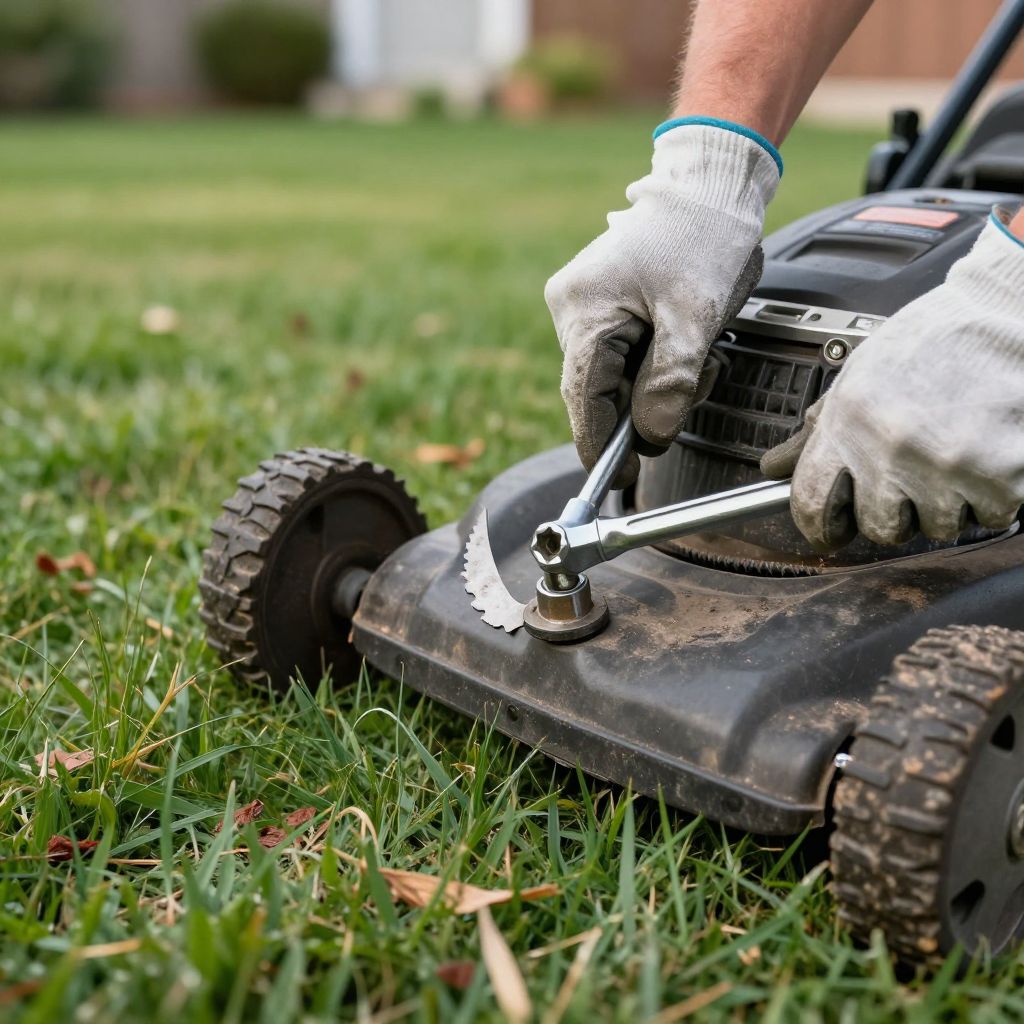
If you’re asking, “Are mower blades reverse thread?” you’re probably trying to remove a blade for sharpening, replacement, or cleaning. The short answer is: sometimes, but not always. Many mower blades use a standard right-hand thread, but some mowers or blade bolts are designed differently, so you should confirm your model before forcing anything.
Getting the direction wrong can strip threads, damage the spindle, or make a simple maintenance job much harder than it needs to be. The safest approach is to identify your mower type, check the manual, and use the proper removal method for your machine.
Are mower blades reverse thread?
Most mower blade bolts loosen by turning counterclockwise, just like a normal bolt, but some equipment uses reverse-threaded fasteners or blade adapters. The blade itself usually isn’t threaded; the bolt or nut is. Always verify your mower’s manual or look for directional markings before applying force.
How to tell which way your mower blade bolt loosens
Before you reach for a breaker bar, take a minute to identify the fastener. That small step can save you from broken parts and an unsafe repair.
Check the owner’s manual first
The manual is the most reliable source because blade fasteners vary by brand and model. If you no longer have the paper copy, search the model number on the mower deck or frame and look up the parts diagram.
Look for directional arrows or labels
Some mower decks, blade adapters, and flywheel nuts are marked with arrows or “loosen” directions. If you see a stamped arrow, follow it rather than assuming the thread direction.
Inspect the bolt head and hardware
On many walk-behind and riding mowers, the blade is held by a central bolt, washer, and adapter. The blade may spin freely, but the bolt is what matters. If the hardware looks factory-original, compare it with the parts diagram to confirm whether it is standard or reverse thread.
Why some mower blades or bolts are reverse threaded
Reverse-threaded fasteners are used on some machines to help prevent loosening from vibration or rotation. This is more common in certain engine components than on the blade itself, but mower designs differ enough that you should never assume every bolt follows the same rule.
Common places you may encounter reverse threads
- Some blade adapter assemblies on specific mower models
- Engine shaft or flywheel nuts on certain small engines
- Older or specialty equipment with nonstandard hardware
How to remove a mower blade safely
Whether the bolt is standard or reverse threaded, safety matters more than speed. A mower blade is sharp enough to cut skin even when it looks dull.
- Disconnect the spark plug wire on gas mowers, or remove the battery on electric models.
- Tip the mower only as recommended by the manufacturer to avoid fuel or oil issues.
- Wear sturdy gloves and eye protection.
- Block the blade with a wood block or use a blade holder to keep it from turning.
- Use the correct socket or wrench so you do not round off the bolt head.
- Apply steady pressure rather than jerking the wrench.
Which way should you turn?
If the bolt is standard thread, loosen it by turning counterclockwise. If it is reverse thread, loosen it by turning clockwise. If the bolt will not budge, stop and verify the thread direction before applying more force.
Signs you may be turning the wrong way
When a mower blade bolt seems frozen, it is easy to assume you need more muscle. In reality, you may just be tightening it further.
- The wrench gets tighter instead of loosening the bolt.
- The deck flexes but the fastener does not move.
- You see a bolt that appears to be tightening into a threaded adapter rather than a simple nut.
- The parts diagram shows a left-hand thread symbol or reverse-thread notation.
If you are unsure, stop and confirm. Forcing the wrong direction can snap the bolt, damage the spindle, or make future blade changes much harder.
What to do if the mower blade bolt is stuck
A stuck blade bolt is common, especially after wet mowing, long storage, or years without maintenance. The fix should be methodical, not aggressive.
Try these troubleshooting steps
- Use a penetrating oil on the threads if the fastener is exposed and the mower design allows it.
- Let the oil sit for a while before trying again.
- Use a longer wrench or breaker bar for more leverage, keeping the socket fully seated.
- Hold the blade securely so the spindle does not absorb the force.
- Tap the wrench handle lightly to help break corrosion, if appropriate for the hardware.
If the bolt still will not move, a shop or small-engine technician may be the best option. That is especially true if the bolt head is beginning to round off or the spindle housing is cracking.
How often should you check or replace mower blades?
Blade care depends on how often you mow and what you cut. Thick grass, sandy soil, sticks, and rocky edges dull blades faster than a clean, level lawn.
Inspect blades during regular maintenance
- Check for nicks, bends, and cracks.
- Look for uneven wear or a blade that is no longer balanced.
- Sharpen the blade when it starts tearing grass instead of cutting cleanly.
- Replace the blade if it is bent, deeply cracked, or excessively worn.
A sharp blade gives a cleaner cut, which helps the lawn recover faster and reduces stress on turf. A dull blade can leave ragged tips that turn brown and make the lawn look unhealthy.
Blade maintenance tips that help your lawn
Good mower maintenance is part of good lawn care. A well-kept blade supports healthier turf, cleaner edges, and fewer disease problems after mowing.
Keep the underside of the deck clean
Grass buildup under the deck can affect airflow and cutting quality. Clean the deck when the mower is off and safely secured, especially after mowing damp grass.
Sharpen without overheating the metal
If you sharpen blades yourself, remove only enough metal to restore the edge. Overgrinding can shorten blade life and unbalance the blade.
Balance the blade after sharpening
An unbalanced blade can cause vibration, extra wear, and noisy operation. A simple blade balancer or a hanging test can help you spot uneven weight before reinstalling it.
Common mistakes to avoid
Most mower blade problems come from rushed maintenance. Avoid these errors to protect both you and the machine.
- Skipping the manual and guessing the thread direction.
- Working on the mower without disconnecting power or spark plug wire.
- Using the wrong size socket or wrench.
- Hitting the blade or bolt with uncontrolled force.
- Reinstalling a damaged or bent blade.
- Ignoring vibration after reassembly.
When to call for help
Some repairs are simple enough for a homeowner, but not every stuck blade bolt should become a weekend battle. If the bolt is seized, the spindle is damaged, or you cannot identify the thread direction, a small-engine repair shop can usually solve it faster and more safely.
For related mower care, you may also want to read about what kind of oil a lawn mower takes so your blade maintenance and engine maintenance stay in sync.
Next time you remove a mower blade, check the manual first, confirm the fastener type, and loosen it in the correct direction before applying extra force. That simple habit protects your mower, your blade, and your hands.