What size is a garden hose fitting? If you’ve ever bought a hose, sprinkler, or nozzle that almost fit but leaked anyway, you’re not alone. Hose fittings are one of the most common sources of watering frustration in the garden.
The good news is that once you know the standard sizes and how to measure them, choosing the right connector is simple. A few quick checks can save water, prevent leaks, and help your irrigation tools work properly.
What size is a garden hose fitting?
The most common garden hose fitting in the United States is 3/4-inch GHT (garden hose thread), which is the standard size for most hoses, faucets, sprinklers, and nozzles. The actual outside diameter and thread style matter, so don’t rely only on the label if a fitting seems loose or incompatible.
How to identify the right hose fitting size
Before replacing a hose end or buying an adapter, check both the thread size and the thread type. Garden hose fittings often look similar, but a small mismatch can cause leaks or cross-threading.
Common garden hose fitting sizes
- 3/4-inch GHT — the standard garden hose size in many homes and gardens.
- 5/8-inch hose — often refers to the hose diameter, not the fitting size.
- 1/2-inch fittings — more common in drip irrigation or specialty systems than in standard hose connections.
- Male and female ends — hoses usually have one of each, and they must match correctly to connect.
Why the label can be confusing
Hose packaging may list the hose diameter, length, and fitting type separately. A hose described as 5/8-inch can still use the standard 3/4-inch GHT fitting at the end. That’s why the number on the hose itself does not always tell you the connector size.
How to measure a garden hose fitting correctly
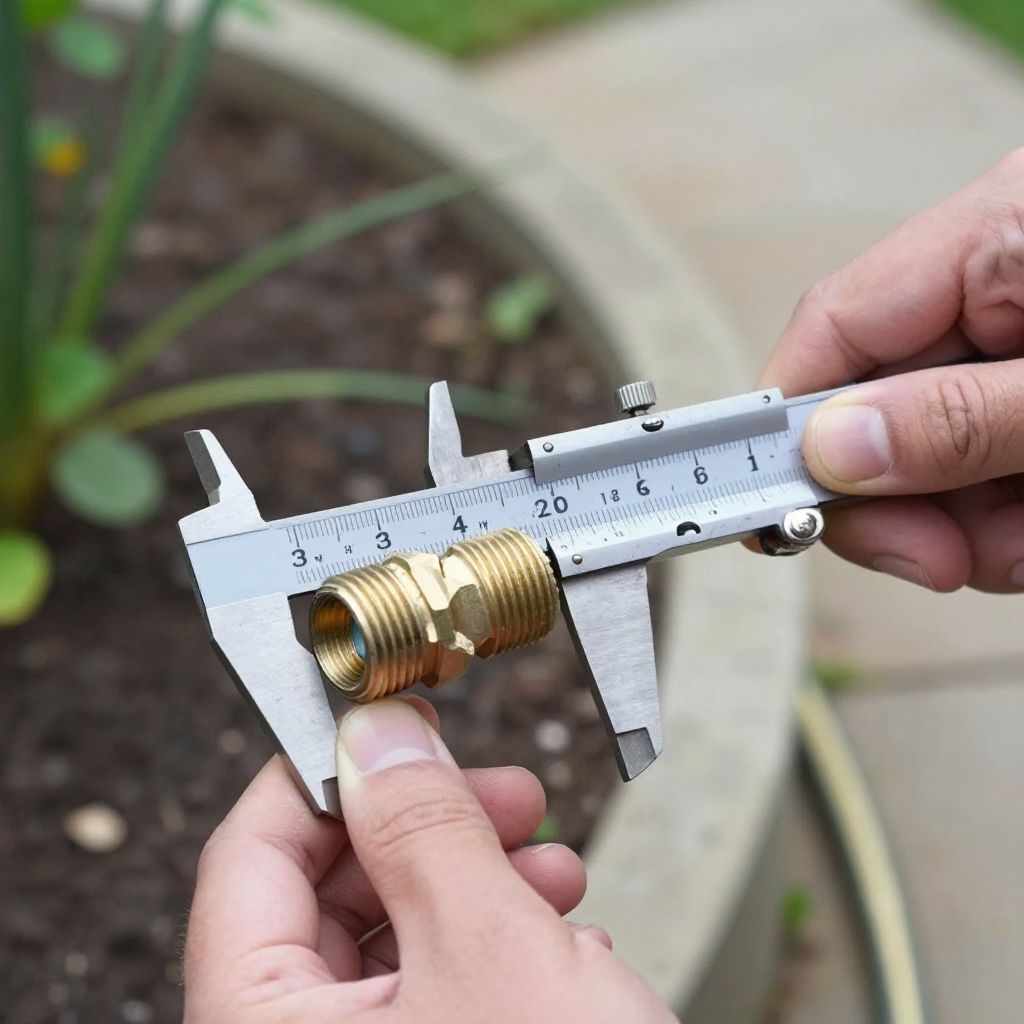
If you are unsure what size you have, use a ruler or tape measure and compare the fitting to a known standard. Measuring the outside diameter of the threads is usually the easiest way to confirm whether it is standard garden hose thread.
- Look at the end of the hose, faucet, or attachment.
- Measure the widest outside part of the threaded fitting.
- Check whether the connector is male or female.
- Compare it to a standard 3/4-inch GHT fitting if possible.
- If the fitting has fine threads or a tapered shape, it may be a plumbing thread rather than a garden hose thread.
Important: garden hose threads are usually straight, not tapered. If the fitting tightens by wedging into place like pipe thread, it may not be a standard hose connection.
Male vs. female hose fittings: what you need to know
Knowing the size is only half the job. You also need to know whether the fitting is male or female so the parts can join properly without leaking.
Male fitting
A male fitting has threads on the outside. On a typical hose, one end is often male so it can screw into a faucet or another hose end.
Female fitting
A female fitting has threads on the inside. This end usually connects to the faucet or to a male fitting on another hose or accessory.
Quick connection check
- Female hose end to male faucet or accessory
- Male hose end to female nozzle, splitter, or another hose
- Gasket inside the female fitting helps stop leaks
Garden hose fitting types you may encounter
Most home gardeners use standard threaded fittings, but you may also run into quick-connect systems, threaded adapters, or irrigation parts. These are useful, but they must match the rest of your watering setup.
Standard threaded fittings
These screw together by hand and are the most common choice for hoses, nozzles, sprinklers, and outdoor spigots.
Quick-connect fittings
These let you snap tools on and off faster. They are convenient for gardeners who switch often between a nozzle, sprinkler, and watering wand.
Adapters and reducers
Adapters help connect different thread types or sizes. They are useful when you have older equipment, specialty irrigation parts, or a hose that does not match your faucet exactly.
How to avoid leaks at the hose connection
A fitting can be the correct size and still leak if the washer is missing, the threads are damaged, or the connection is overtightened. Small maintenance habits make a big difference.
- Check that the rubber washer is present inside the female fitting.
- Replace cracked or flattened washers.
- Hand-tighten first, then give a small extra turn if needed.
- Do not use pliers unless the fitting is damaged and you are replacing it.
- Inspect threads for dirt, wear, or cross-threading.
If water sprays from the connection, the washer is often the first thing to inspect. If the leak continues, the threads may be worn or the fitting may not match the thread type.
Choosing the right fitting for your garden task
The best fitting depends on what you are watering. A simple hose for beds and containers has different needs than a larger setup for lawns, shrubs, or drip irrigation.
For container gardens and raised beds
A standard hose with a shutoff nozzle is usually enough. Look for a fitting that connects securely and lets you control flow easily, especially if you water delicate seedlings or shallow-rooted plants.
For lawns and larger borders
You may want a hose with durable brass fittings and a sprinkler that matches the same thread size. Brass often holds up well to repeated use and seasonal connection changes.
For drip irrigation
Drip systems often need adapters from standard hose thread to tubing or manifold parts. Check the package carefully, because drip components may use different sizes than outdoor hose accessories.
Common mistakes when buying hose fittings
Most fitting problems come from assuming all hoses and accessories use the same connection style. A few simple checks can prevent wasted time and returns.
- Confusing hose diameter with fitting size — a 5/8-inch hose can still use 3/4-inch fittings.
- Buying the wrong thread type — garden hose thread is not the same as pipe thread.
- Ignoring the washer — a missing washer often causes leaks.
- Cross-threading — forcing a fitting can damage both parts.
- Mixing incompatible brands without checking — some quick-connect systems are brand-specific.
Seasonal care for hose fittings
Hose fittings last longer when you treat them as part of regular garden maintenance. Heat, sun, freezing temperatures, and rough handling can all shorten their lifespan.
During the growing season
Keep fittings clean and store hoses out of harsh sun when possible. UV exposure and constant pressure can wear down plastic parts faster than you might expect.
Before winter
Drain hoses fully and disconnect accessories before freezing weather arrives. Water left inside fittings can expand, crack the connector, or damage washers.
At the start of spring
Inspect each connection before regular watering begins. Replace washers, test for leaks, and make sure the fittings still turn smoothly by hand.
When to replace a hose fitting
Sometimes a fitting is too worn to repair. Replacing it is usually easier than dealing with repeated leaks or weak connections during peak watering season.
Consider replacement if you notice:
- Cracked plastic or bent metal
- Stripped or flattened threads
- Repeated leaks after washer replacement
- Corrosion that makes the fitting hard to tighten
- A connector that slips off or will not seat properly
If you replace the end of a hose, cut the hose cleanly and use a hose repair fitting that matches the hose diameter. A snug, properly installed repair can extend the life of the hose for another season or more.
Practical troubleshooting tips
If your hose still does not fit, work through the problem step by step instead of forcing the connection. A careful check usually reveals the issue quickly.
- Confirm whether the fitting is male or female.
- Measure the thread diameter.
- Check for a washer inside the female end.
- Look for thread damage or debris.
- Compare the connector to a standard 3/4-inch GHT fitting.
- Use an adapter only if the thread type truly differs.
If the fitting seems close but not quite right, stop and verify the thread type. Forcing a nearly compatible connector can ruin both parts and create a harder problem later.
Final takeaways for gardeners
In most gardens, the answer to what size is a garden hose fitting is 3/4-inch GHT, but the safest approach is to check the thread size, thread type, and whether the fitting is male or female. That small bit of attention helps you avoid leaks and connect watering tools with confidence.
Before your next watering session, inspect one hose end and one accessory in your garden. If you want to keep improving your watering setup, you may also find it helpful to read more about garden hose care and maintenance and drip irrigation basics for home gardens.