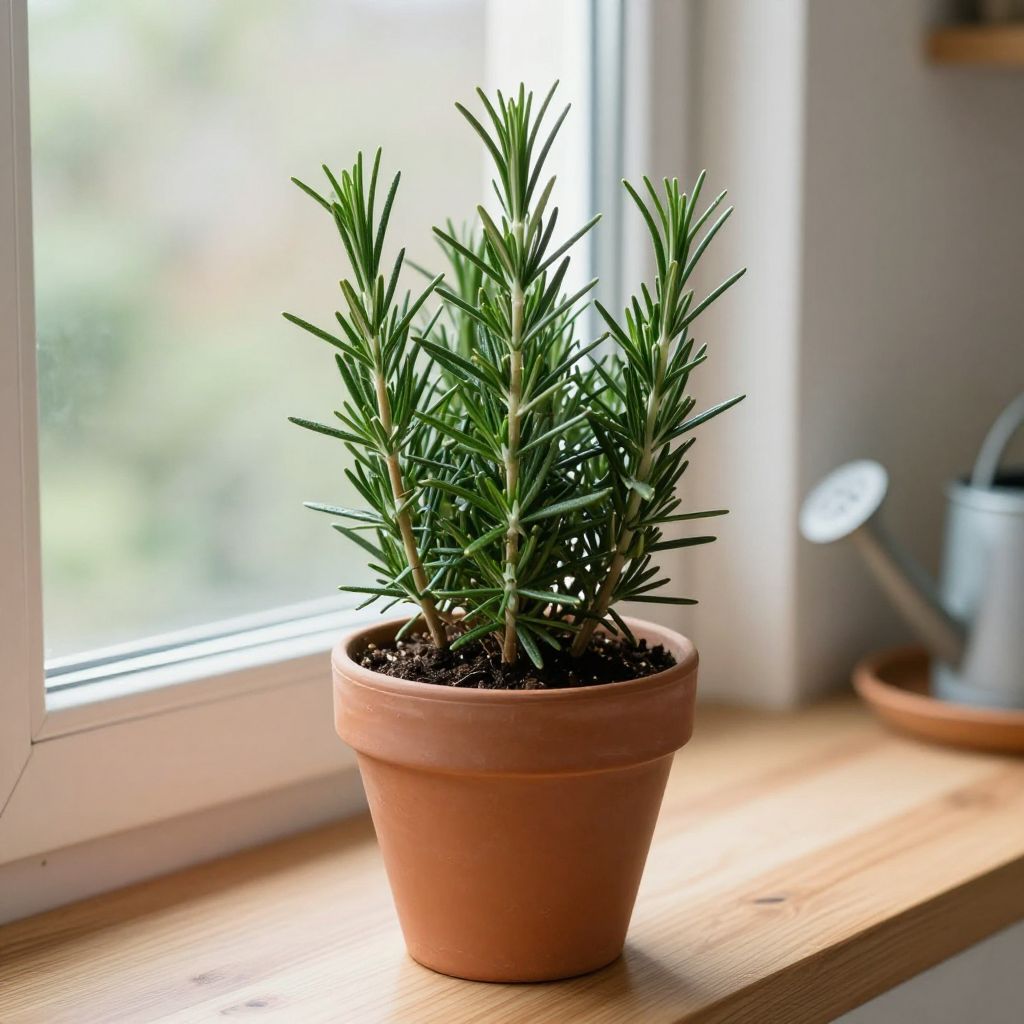
Can you grow rosemary indoors? Yes, you can—if you give it the right light, drainage, and airflow. Rosemary is a Mediterranean herb, so it prefers bright sun, lean soil, and careful watering rather than the rich, constantly damp conditions many houseplants get.
Indoor rosemary can be rewarding, but it is also one of the herbs most likely to struggle indoors when light is weak or the pot stays wet. With the right setup, though, you can keep Rosmarinus officinalis healthy on a sunny windowsill or under grow lights for months or even years.
Can you grow rosemary indoors?
Yes, rosemary can grow indoors if it gets very bright light, fast-draining soil, and infrequent but thorough watering. The biggest indoor challenges are insufficient sun, poor drainage, and low air movement. If you can meet those needs, rosemary can stay compact, fragrant, and productive year-round.
What rosemary needs indoors
Think of rosemary as a small woody shrub, not a soft herb. Indoors, it performs best when you mimic its native conditions as closely as possible.
Light
Rosemary needs at least 6 hours of direct sun daily, and more is better. A south-facing window is usually best in the Northern Hemisphere, with east- or west-facing windows as backup if they are very bright.
If your home does not provide strong natural light, use a full-spectrum grow light placed close enough to prevent stretching. Weak light is one of the main reasons indoor rosemary becomes leggy, pale, and weak.
Temperature
Rosemary likes cool-to-mild indoor temperatures, roughly the range most people find comfortable during the day. It dislikes hot, stagnant rooms and sudden temperature swings near heaters, radiators, or drafty doors.
Nighttime temperatures that are a little cooler than daytime temperatures can help the plant stay compact. Avoid placing it directly above heating vents or in a kitchen corner that gets frequent heat blasts.
Air circulation
Good airflow matters because rosemary is prone to fungal problems when the air is still and the soil stays damp. A room with gentle circulation is ideal, but avoid blasting the plant with hot, dry air from a vent.
Best pot and soil for indoor rosemary
Choose a pot with drainage holes and a gritty, fast-draining mix. Rosemary roots need oxygen, and soggy soil quickly leads to root rot.
Pot selection
- Use a container with at least one drainage hole.
- Terracotta is often helpful because it dries faster than plastic.
- Pick a pot only slightly larger than the root ball; oversized pots hold too much moisture.
Soil mix
A quality potting mix amended for drainage works well. You can improve standard indoor potting soil by adding coarse sand, perlite, or fine bark to create a lighter texture.
A good rosemary mix should drain quickly after watering but still hold enough moisture for the roots to absorb. If the soil feels dense or stays wet for days, it is too heavy.
What to avoid
- Do not use garden soil indoors; it compacts too easily.
- Do not let the pot sit in a saucer full of water.
- Do not bury the stem too deeply when repotting.
How to plant rosemary indoors
You can start rosemary indoors from a nursery plant or from cuttings. Starting with a healthy young plant is usually easier than growing from seed, since rosemary seeds can be slow and inconsistent.
- Fill a clean pot with a well-draining mix.
- Remove the plant gently and loosen circling roots if needed.
- Set the root ball at the same depth it was growing before.
- Backfill lightly and water once to settle the soil.
- Place the pot in the brightest location you have.
If you are repotting a store-bought rosemary plant, inspect the roots first. Many grocery-store herbs are crowded into small pots and may need a slightly larger container with fresher soil.
Watering indoor rosemary correctly
Overwatering is the most common reason indoor rosemary fails. The plant prefers to dry slightly between waterings, and it is far safer to water a little less often than to keep the soil constantly moist.
How to tell when to water
Check the soil with your finger. Water only when the top 1 to 2 inches feel dry, and the pot feels noticeably lighter than it did after watering.
When you do water, water deeply until excess drains from the bottom. Then empty the saucer so the roots are never sitting in runoff.
Signs of too much water
- Yellowing lower leaves
- Soft, drooping stems despite wet soil
- Musty smell from the pot
- Leaf drop and root rot
Signs of too little water
- Leaves curling or drying at the tips
- Soil pulling away from the pot edge
- Stems becoming brittle
Dryness is usually easier to correct than rot. If the plant has been underwatered, soak the pot thoroughly and then return to a more regular check-and-water routine based on the soil, not the calendar.
Feeding rosemary indoors
Rosemary does not need heavy feeding. Too much fertilizer can create soft, weak growth with less flavor and fragrance.
Use a light hand with a balanced houseplant fertilizer or a mild herb fertilizer during active growth only, and reduce or pause feeding in winter if growth slows. If the plant already looks healthy and the soil is fresh, you may not need to fertilize often at all.
Tip: If rosemary is growing quickly but looks floppy or pale, the problem is often too little light, not too little fertilizer.
Pruning and harvesting indoor rosemary
Regular trimming helps rosemary stay bushy and prevents it from becoming tall and woody. Harvesting is also the easiest way to encourage fresh side growth.
How to prune
- Pinch or snip soft tips to shape the plant.
- Remove dead, dry, or crossing stems.
- Cut just above a leaf node to encourage branching.
- Avoid cutting far back into leafless old wood, which may not resprout well.
How much to harvest
Take small amounts at a time rather than stripping the plant. A good rule is to harvest from several stems instead of removing a large portion from one spot.
Frequent light harvests are better than one severe cutback. If your plant is young or recovering from stress, limit pruning until you see strong new growth.
Common indoor rosemary problems and fixes
Most indoor rosemary problems come from light, water, or airflow issues. The good news is that many of them are fixable if you catch them early.
Leggy growth
Leggy rosemary usually means the plant needs more light. Move it to a brighter window or add grow lights, then prune lightly to encourage branching.
Yellow leaves
Yellowing often points to overwatering, poor drainage, or root stress. Let the soil dry more between waterings and check that the pot drains freely.
Leaf drop
Rosemary may drop leaves after a sudden change in light, temperature, or watering routine. Keep conditions steady, and avoid moving it repeatedly between indoors and outdoors.
Brown tips
Brown tips can come from underwatering, very dry indoor air, or salt buildup from fertilizer. Flush the pot occasionally with plain water if you suspect excess fertilizer salts, and make sure the plant is not drying out completely.
Pests and diseases to watch for
Indoor rosemary can attract common houseplant pests, especially when the air is dry and the plant is stressed.
- Spider mites: fine webbing, stippled leaves, and dull foliage.
- Aphids: clustered soft-bodied insects on tender growth.
- Whiteflies: tiny flying insects that rise when the plant is disturbed.
Inspect the undersides of leaves regularly. If you spot pests, isolate the plant and wash the foliage gently with water, then repeat as needed. Severe infestations may require a targeted insecticidal soap used according to the label.
Root rot is the most serious disease issue indoors. It is usually caused by wet soil, so prevention is mostly about drainage and restraint with watering.
Can you move rosemary outdoors and back inside?
Yes, rosemary can spend time outdoors in warm weather and come back inside before cold conditions arrive, but transitions should be gradual. Sudden changes in light and temperature can shock the plant.
When moving it outside, start with a few hours of morning sun or bright shade and increase exposure over several days. Before bringing it back in, inspect for pests and trim away any damaged growth.
Propagation and replacing an aging plant
Indoor rosemary can become woody and less productive over time. Propagating a fresh plant from cuttings is a smart way to keep a healthy backup.
Take a 3- to 6-inch stem cutting from soft, healthy growth, remove the lower leaves, and place it in a moist, well-draining medium. Keep it warm and bright, but out of harsh direct sun until roots form.
If an older plant becomes sparse, woody, or consistently declines despite good care, it may simply be time to start a new one. Rosemary is long-lived under the right conditions, but not every plant stays vigorous indoors forever.
Simple indoor rosemary care checklist
- Give it the brightest light you have.
- Use a pot with drainage holes.
- Choose a fast-draining soil mix.
- Water only when the top layer dries.
- Keep air moving gently around the plant.
- Prune lightly to keep it compact.
- Watch for pests and root rot early.
Conclusion
So, can you grow rosemary indoors? Absolutely—but success depends on treating it like the sun-loving shrub it is, not like a moisture-loving houseplant. If you provide strong light, sharp drainage, and careful watering, your rosemary has a good chance of thriving indoors.
Start by checking your brightest window, upgrading the pot if needed, and adjusting how often you water. If you enjoy growing herbs indoors, you may also want to read about growing strawberries indoors for another practical container-growing project.