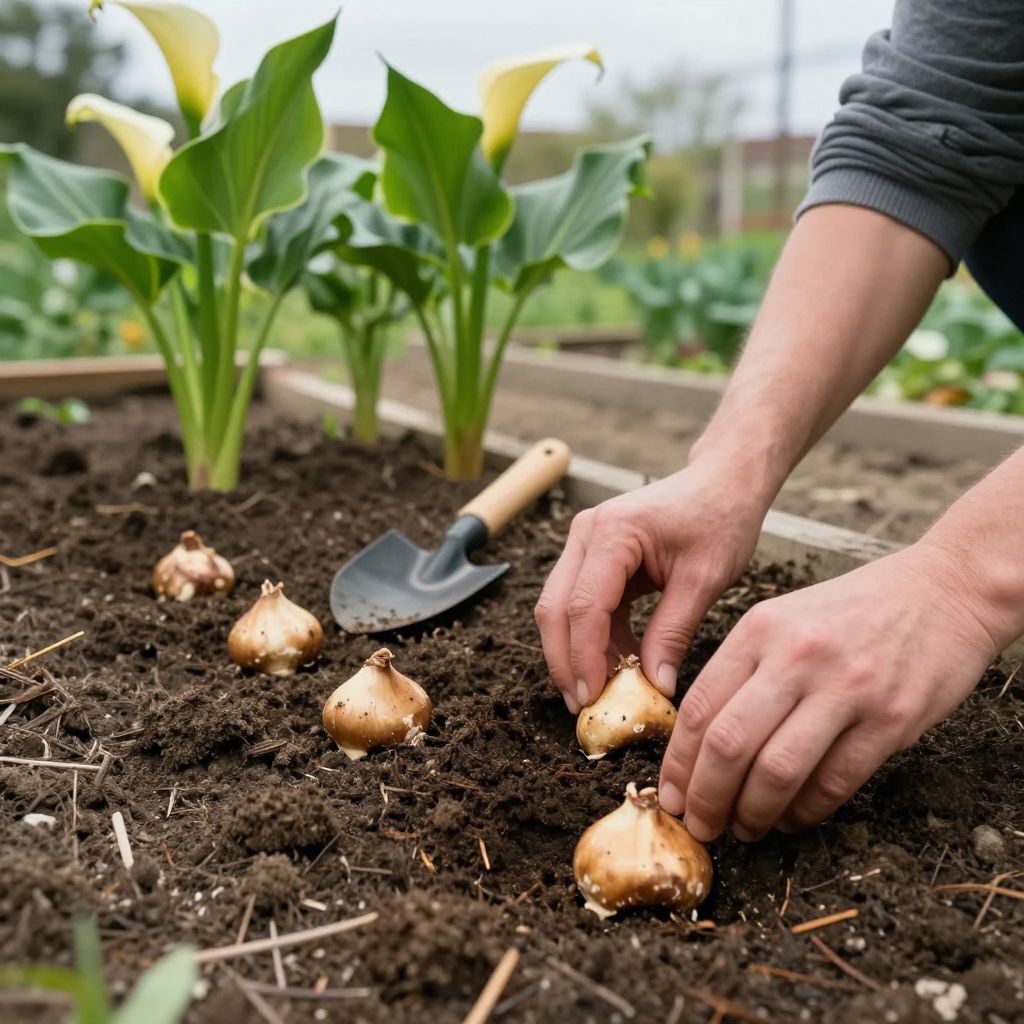
Wondering when to plant calla lily bulbs for the best flowers and healthiest growth? The short answer depends on your climate and whether you’re planting outdoors or starting them in pots. Calla lilies are tender plants, so timing matters: plant them after frost danger has passed, or start them indoors earlier if you want a head start.
With the right timing, well-drained soil, and steady moisture, calla lilies can produce elegant blooms and attractive foliage through the warm season. Here’s how to choose the best planting window and avoid the most common mistakes.
When to plant calla lily bulbs?
Plant calla lily bulbs, often called rhizomes, outdoors in spring after the last frost when soil has warmed and nights are reliably mild. In colder climates, start them in pots indoors 4–6 weeks before your last frost date, then move them outside once temperatures stay consistently above freezing.
Understanding calla lilies before you plant
Calla lilies are not true lilies. Most garden callas are Zantedeschia, and they grow from thick rhizomes rather than true bulbs. That matters because rhizomes rot easily in cold, soggy soil, so planting time and drainage are especially important.
These plants are warm-season growers. They perform best when soil is workable, frost risk has passed, and the planting site offers enough moisture without staying waterlogged.
Why timing matters so much
- Cold soil slows sprouting and increases the chance of rot.
- Late frost can damage new shoots or kill tender growth.
- Warm conditions encourage faster rooting and stronger blooms.
Best planting time by climate and setting
Because local weather varies, use your frost date and soil conditions rather than a fixed calendar date. If you garden in a mild climate, you may plant earlier. If your spring stays cool or wet, wait a little longer for better results.
Outdoors in the ground
Plant calla lily rhizomes in spring after the last frost date. A good rule is to wait until the soil has warmed and can be worked easily, with no risk of hard frost in the forecast. In many regions, that means mid- to late spring.
In containers
Containers warm up faster than garden soil, so you can often plant a little earlier indoors or in a protected spot. Still, avoid exposing potted callas to freezing nights. If you move pots outside, harden them off gradually over 7–10 days.
In warm-winter regions
If you live where winters are mild and the soil does not freeze, you may plant calla lily rhizomes in fall or early spring depending on local conditions. Even in warm areas, drainage is still critical, especially during rainy periods.
How to plant calla lily bulbs the right way
Planting calla lilies is straightforward, but a few details make a big difference. The rhizomes need loose soil, moderate depth, and enough moisture to start growing without sitting in wet ground.
- Choose a site with morning sun and afternoon shade, or bright filtered light.
- Prepare soil that drains well and has been loosened to a depth of about 8–10 inches.
- Mix in compost if your soil is poor or compacted.
- Set rhizomes about 2–4 inches deep, with growing points facing upward.
- Space them about 12–18 inches apart, depending on the variety and the look you want.
- Water thoroughly after planting to settle the soil, then keep it evenly moist.
If you are unsure which side is up, look for visible buds or eyes. Planting the rhizome upside down can delay sprouting, though the plant may still eventually grow.
Soil, drainage, and compost needs
Calla lilies prefer rich, moist soil that drains well. They do not like heavy clay that stays wet for long periods. If your garden soil is dense, improve it before planting rather than trying to “fix” drainage with extra water later.
Ideal soil conditions
- Loose, fertile soil
- Consistent moisture without standing water
- Neutral to slightly acidic conditions are often suitable
- Organic matter worked into the top layer
Compost is one of the best amendments for calla lilies. It improves soil structure, helps hold moisture, and supports healthy root growth. Avoid fresh manure or overly rich amendments that can burn tender growth or create overly soft foliage.
Sunlight and temperature requirements
Calla lilies bloom best with bright light, but too much hot afternoon sun can stress them. In cooler climates, they can take more direct sun. In hotter regions, partial shade usually produces better foliage and longer-lasting flowers.
Light guidance
- Cooler climates: full sun to light afternoon shade
- Hot climates: morning sun with afternoon shade
- Indoor pots: a very bright window or grow light
These plants also dislike cold. If a late frost is expected after planting, cover young plants or move containers to shelter. Even a brief freeze can set them back significantly.
Watering after planting
Calla lilies like steady moisture, especially while they are sprouting and growing leaves. The goal is evenly moist soil, not soggy conditions. Let the top layer dry slightly between waterings, but do not allow the rhizomes to dry out completely.
Water deeply after planting and continue to monitor soil moisture as temperatures rise. In containers, check more often because pots dry out faster than garden beds. Good drainage is just as important as regular watering.
Common watering mistakes
- Planting in a low spot where water collects
- Watering lightly and frequently instead of soaking deeply
- Letting pots sit in saucers of standing water
- Allowing the soil to dry out for long periods during active growth
Should you start calla lilies indoors?
Starting calla lilies indoors can help you get an earlier display, especially in short-season climates. Use pots with drainage holes and a loose potting mix. Start them 4–6 weeks before your last frost date, then transplant carefully once outdoor conditions are warm enough.
When moving indoor-started plants outside, harden them off gradually. Begin with a few hours of sheltered outdoor light, then increase exposure over several days. This reduces shock from wind, sun, and temperature swings.
How to care for calla lilies after planting
Once planted, calla lilies need simple but consistent care. They grow best when you keep the soil evenly moist, remove spent flowers, and watch for signs of stress or pests.
Basic maintenance
- Keep the planting area weed-free so roots do not compete for moisture.
- Remove faded flowers to keep the plant tidy.
- Trim yellowing leaves only after they have faded naturally.
- Feed lightly if needed with a balanced fertilizer, following the product label.
Avoid overfeeding. Too much fertilizer can lead to lush leaves and fewer flowers. If your soil is already rich with compost, you may need very little additional feeding.
Problems to watch for
Most calla lily problems come from poor drainage, cold weather, or stress from inconsistent watering. Catching issues early makes them easier to correct.
Rot and poor sprouting
If rhizomes fail to sprout, the planting site may be too cold or too wet. Dig one up carefully if it has not emerged after a reasonable period and check whether it feels soft or mushy. Rot usually means the soil stayed too wet.
Leaf yellowing
Yellow leaves can signal overwatering, poor drainage, or natural aging later in the season. If the plant is still actively growing, check the soil first before assuming it needs more fertilizer.
Pests
Calla lilies may occasionally attract aphids, slugs, or snails. Inspect leaves regularly, especially in damp weather. Hand-picking slugs, using barriers, and rinsing aphids off with water can help in small gardens.
Can you overwinter calla lilies?
In colder climates, calla lily rhizomes are usually lifted and stored for winter. Wait until the foliage yellows after the growing season, then dig them carefully, let them dry briefly, and store them in a cool, dry, frost-free place.
In mild climates, they may remain in the ground if drainage is good and winters are not severe. Even then, a layer of mulch can help protect the planting area from temperature swings.
Propagation and dividing rhizomes
Calla lilies often form clumps over time. You can divide mature rhizomes when they are dormant or just before planting in spring, as long as each division has at least one healthy growing point.
Use a clean, sharp knife or garden tool to separate the rhizomes. Let cut surfaces dry briefly before replanting to reduce the risk of rot.
Best uses in the garden
Calla lilies work well in borders, containers, and moist garden areas where drainage is still reliable. Their upright leaves and elegant flowers make them useful as focal points or as part of a mixed planting.
- Container displays near patios and entryways
- Mixed beds with other warm-season flowers
- Cut flower gardens
- Bright, sheltered spots with morning sun
Final planting tips to remember
If you want the best results, focus on three things: plant after frost, use well-drained soil, and keep moisture steady without overwatering. Those basics matter more than exact calendar dates. When in doubt, wait for warmer soil rather than rushing planting into cold, wet ground.
Before you plant, check your local frost date, choose a bright but protected site, and prepare the soil with compost if needed. For more seasonal planting guidance, you may also find related gardening articles on bulbs, container planting, and spring flower care helpful.