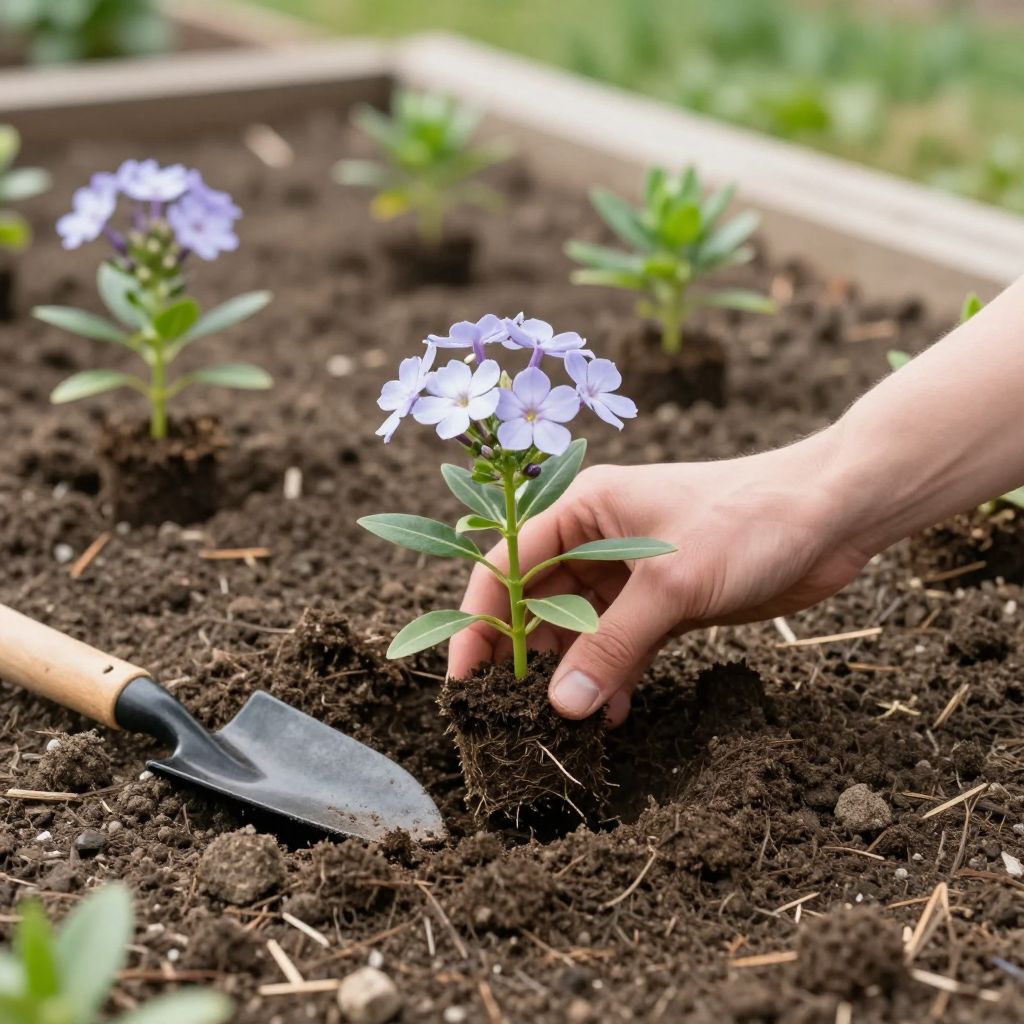
Wondering when to plant phlox so it establishes well and flowers strongly? The best planting time depends on the type of phlox, your climate, and whether you are planting bare-root, container-grown, or dividing an existing clump. In general, spring and early fall are the safest windows for most garden phlox, with cooler weather helping roots settle in before heat or hard frost.
Phlox is a reliable perennial for borders, cottage gardens, and pollinator-friendly spaces, but timing matters. Plant it when soil is workable and temperatures are moderate, and you’ll give it the best chance to root deeply, resist stress, and bloom more heavily in future seasons.
When to plant phlox?
Plant phlox in spring after the last hard frost or in early fall about 6 to 8 weeks before the ground freezes. Spring planting suits colder climates and bare-root plants, while fall planting works well where autumn stays mild. Avoid planting during summer heat unless you can water consistently and protect new roots.
Best planting time by type of phlox
Garden phlox (Phlox paniculata)
Garden phlox is the tall, summer-blooming perennial most gardeners mean when they ask about planting phlox. It establishes best in spring or early fall, when temperatures are cooler and soil moisture is more reliable.
- Spring: best for cold-winter regions and new plants that need a full season to settle in.
- Early fall: best in mild climates with a long cool-down period.
- Summer: possible for container-grown plants, but only with careful watering and mulching.
Creeping phlox (Phlox subulata)
Creeping phlox is a low, spring-blooming groundcover. It can be planted in spring or early fall, but it especially appreciates good drainage and a chance to root in before extreme heat.
Annual phlox
Annual phlox is usually planted in spring after frost danger passes. Since it completes its life cycle in one season, timing is less about overwintering and more about avoiding cold damage to young plants.
How climate affects planting time
Your local climate matters more than the calendar. In cooler regions, spring planting is often safer because roots can grow before winter. In warmer regions, fall planting may be better because autumn weather is gentler and gives phlox time to establish before summer heat returns.
If you live where summers are hot and dry, avoid planting during peak heat unless you can keep the soil evenly moist. In areas with very early frosts, plant earlier in fall than you might think so roots have time to form.
Use soil temperature and conditions as your guide
Rather than relying only on dates, look for these signs:
- Soil is workable and not waterlogged.
- Daytime temperatures are mild, not extreme.
- Nights are cool enough to reduce transplant stress.
- The plant can receive regular water while roots establish.
Where phlox grows best
Phlox performs best in full sun to light shade, depending on the species and your climate. In hotter regions, a little afternoon shade can help flowers last longer and reduce mildew pressure. Good air circulation is especially important for taller garden phlox.
Soil should be fertile, loose, and well-drained. Phlox dislikes soggy roots, so heavy clay should be improved before planting with compost and, if needed, a bit of coarse organic matter to open the soil structure.
Ideal soil conditions
- Rich in organic matter
- Moist but not waterlogged
- Well-drained
- Neutral to slightly acidic is generally suitable
How to plant phlox step by step
Whether you are planting in a border, bed, or container, the goal is the same: reduce transplant shock and encourage strong roots.
- Choose the right spot. Pick a site with the right light and drainage for your phlox type.
- Prepare the soil. Work in compost before planting to improve texture and fertility.
- Dig a wide hole. Make it wider than the root ball so roots can spread easily.
- Set the plant at the right depth. The crown should sit level with the surrounding soil, not buried too deeply.
- Backfill gently. Firm the soil lightly to remove air pockets without compacting it.
- Water deeply. Soak the root zone right after planting.
- Mulch lightly. Add 2 to 3 inches of mulch, keeping it away from the crown.
Planting bare-root phlox
Bare-root plants should be planted as soon as possible after purchase, usually in early spring or early fall. Soak roots briefly if needed, spread them out in the hole, and keep them from drying out while you work.
Planting container-grown phlox
Container plants can be planted a little more flexibly, but they still establish best in cool weather. Loosen circling roots before planting so they grow outward instead of staying trapped in the pot shape.
Watering after planting
Newly planted phlox needs steady moisture while roots form. Water deeply after planting, then keep the soil evenly moist for the first several weeks. The soil should not stay soggy, but it also should not dry out completely.
After establishment, most phlox prefers regular watering during dry spells rather than constant shallow watering. Deep, less frequent watering encourages stronger roots and helps plants handle heat better.
Signs of watering trouble
- Wilting despite moist soil: roots may be stressed or poorly established.
- Yellowing lower leaves: can signal overwatering or poor drainage.
- Powdery mildew: often worsens when plants are crowded, dry at the roots, and humid aboveground.
Spacing, pruning, and maintenance
Good spacing helps prevent disease and keeps phlox looking full without becoming crowded. Tall garden phlox generally needs room for air movement, while creeping phlox spreads outward and should be planted where it has space to knit together.
Deadheading spent flowers can tidy the plant and may encourage a longer display on some varieties. In late season, you can cut back tired stems after flowering or leave some seed heads if you want wildlife value and winter interest.
When to divide phlox
Established clumps can often be divided in early spring or early fall, when temperatures are cooler. Divide only healthy, vigorous plants, and replant divisions promptly so roots do not dry out.
Common problems when planting phlox
Powdery mildew
This is one of the most common issues with garden phlox. It appears as a white, dusty coating on leaves, often later in the season. To reduce it, plant in full sun or light shade, space plants well, water at the base, and avoid overcrowding.
Poor flowering
If phlox grows leafy but blooms weakly, the plant may be getting too much shade, too much nitrogen, or too little sun. Move it to a brighter site if needed, and avoid overfeeding with high-nitrogen fertilizer.
Weak establishment
New plants that struggle often were planted too late, too deeply, or in poorly drained soil. Recheck the crown depth and drainage, and mulch lightly rather than burying the plant.
Tips for stronger blooms next season
Phlox often improves after its first season once roots are established. You can help it along by focusing on the basics:
- Plant at the right time for your climate.
- Give it enough sun.
- Improve soil with compost before planting.
- Water deeply during establishment.
- Leave enough space for air circulation.
- Remove spent stems and debris to reduce disease carryover.
If you are growing tall phlox, consider staking only when needed rather than tying plants up too tightly from the start. A plant with good light and moderate fertility often stands better on its own.
Quick answer: the best time to plant phlox
The safest time to plant phlox is usually spring after frost or early fall before the ground freezes. Choose the season that gives your plant the longest stretch of mild weather, with moist soil and moderate temperatures for root growth. That timing matters more than any fixed date.
For more practical flower-bed guidance, you may also want to read about perennial border planting tips and how to improve garden soil with compost.