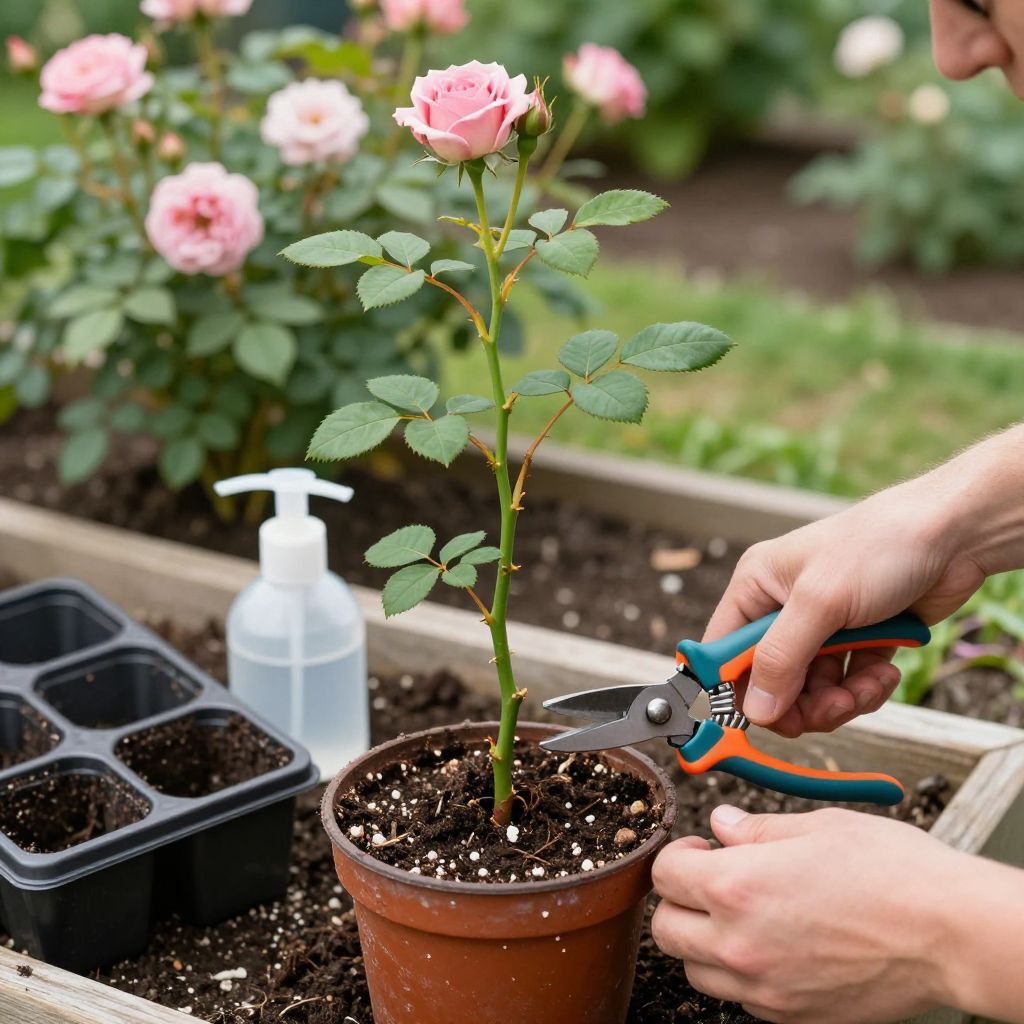
Can you propagate roses? Yes, you can—and home gardeners do it successfully from cuttings, layering, and sometimes division of root suckers, depending on the rose type. The easiest method for most people is taking semi-ripe or hardwood cuttings from healthy stems and giving them warm, bright, sheltered conditions.
Success depends on using clean tools, healthy parent plants, and steady moisture without waterlogging. Roses are adaptable, but they root best when you match the method to the season, the plant’s growth stage, and your local climate.
Can you propagate roses?
Yes. Roses can be propagated from stem cuttings, layering, and in some cases by separating rooted suckers. Cuttings are the most common home method because they are simple, inexpensive, and let you clone a favorite rose, though not every cutting will root and some cultivars are easier than others.
How rose propagation works
Propagation means creating a new plant from part of an existing one. With roses, you are usually encouraging a stem to form roots before it can grow on its own.
The key is to keep the cutting alive long enough to root. That means reducing stress, limiting water loss, and providing a free-draining medium with gentle warmth and bright, indirect light.
Best rose types for propagation
- Old garden roses and many shrub roses often root more readily than some modern hybrid teas.
- Climbing and rambling roses can be propagated by layering because their long canes are easy to bend to the soil.
- Rooted suckers may appear on own-root roses, which can sometimes be separated and replanted.
If the rose is grafted, the new plant may not behave exactly like the top growth unless you propagate from the named variety’s own stems. For that reason, cuttings are usually the best choice when you want a true copy of the parent plant.
When to propagate roses
The best timing depends on the method and your climate. In general, take cuttings when stems are firm enough to handle but not old and woody, often in late spring through late summer for semi-ripe cuttings, or in late autumn and winter for hardwood cuttings in milder regions.
Layering can often be done during the growing season when canes are flexible. In colder climates, it is usually safer to root cuttings in a protected spot or indoors, then plant them out after they have established.
Signs a stem is ready
- It is healthy and disease-free.
- The stem is not flowering heavily at the tip.
- It feels firm, not soft or brittle.
- The growth is neither too tender nor fully exhausted and woody.
How to propagate roses from cuttings
Stem cuttings are the most practical method for most gardeners. Take several cuttings at once, because not all will root, and use more than one stem if you want a better chance of success.
What you need
- Sharp, clean pruners or a knife
- A small pot or tray with drainage holes
- Free-draining propagation mix, such as a blend of potting mix and perlite or coarse sand
- Optional rooting hormone
- A clear cover, humidity dome, or plastic bag with ventilation
Step-by-step cutting method
- Select a healthy stem about pencil-thickness with several leaf nodes.
- Cut a 6 to 8 inch section, making the lower cut just below a node.
- Remove the flower, buds, and most leaves, leaving one or two small leaves near the top.
- If the stem is very leafy, reduce leaf area to limit moisture loss.
- Dip the lower end in rooting hormone if you choose to use it.
- Insert the cutting into moist propagation mix so at least one node is buried.
- Firm the mix gently and water lightly.
- Cover loosely to hold humidity, but allow some airflow to reduce rot.
Keep the mix evenly moist, not soggy. A cutting that sits in wet soil is more likely to rot than root, especially in cool weather.
Where to place cuttings
Set the pot in bright, indirect light with protection from hot afternoon sun, wind, and heavy rain. A sheltered porch, bright windowsill, or cold frame can work well if temperatures are suitable for your area.
Roots may take several weeks to form. Resist the urge to tug on the cutting too often, because that can damage new roots before they are established.
Can you propagate roses by layering?
Yes. Layering is a reliable method for roses with long, flexible canes. You bend a stem down to the soil, wound or nick it lightly at a node, and bury part of it while keeping the tip above ground. The buried section can form roots while still attached to the parent plant.
Simple layering steps
- Choose a low, healthy cane that reaches the ground easily.
- Remove leaves from the section that will be buried.
- Make a shallow wound or scrape at a node if needed to encourage rooting.
- Pin the stem into a small trench and cover the buried portion with soil or compost.
- Hold it in place with a landscape pin, bent wire, or a small stone.
- Keep the area moist until roots form.
Once the layered section has rooted well, sever it from the parent plant and transplant it carefully. This method is often slower than cuttings, but it can be more forgiving for beginners.
Can you propagate roses from suckers?
Sometimes. If a rose grows on its own roots, you may see new shoots coming up from the base or nearby soil. These suckers can sometimes be separated and replanted, but be sure they are actually from the rose you want and not from a grafted rootstock sending up unwanted growth.
For grafted roses, shoots from below the graft union usually belong to the rootstock and should be removed rather than saved. If you are unsure, look for the swollen graft point near the base of the plant.
Best soil and growing conditions for rooted roses
Newly rooted roses prefer a loose, well-drained growing medium with enough organic matter to hold moisture without becoming heavy. In the garden, roses generally do best in fertile soil that drains well and is improved with compost.
Ideal conditions to aim for
- Sunlight: At least 6 hours of direct sun is ideal for most roses outdoors.
- Soil: Rich, well-drained soil with added compost.
- Airflow: Good circulation helps reduce fungal disease.
- Moisture: Even moisture, especially while roots are forming.
If your soil is heavy clay, improve drainage with compost and consider raised beds or mounded planting. If your soil is very sandy, add organic matter to help it hold moisture and nutrients.
How to care for young propagated roses
Once a cutting roots, it still needs gentle care. Move it gradually into stronger light and larger containers or the garden only when the roots are well developed and the plant is actively growing.
Aftercare checklist
- Keep the soil lightly moist, not saturated.
- Protect young plants from harsh midday sun and strong wind at first.
- Pinch out weak or flower buds early so the plant focuses on roots and stems.
- Pot up into a larger container when roots fill the starter pot.
- Harden off indoor-started plants before moving them outside.
Do not rush fertilizer. A young cutting with few roots can be damaged by strong feeding. Wait until you see clear new growth and a stronger root system, then feed lightly according to the needs of your rose and local soil conditions.
Common problems and how to fix them
Cuttings wilt quickly
This usually means the cutting is losing moisture faster than it can replace it. Reduce leaf area, increase humidity slightly, and keep the cutting out of direct sun and drying wind.
Stems turn black or mushy
That is often rot, usually caused by too much moisture, poor drainage, or contaminated tools. Start again with fresh mix, cleaner tools, and better airflow.
No roots after several weeks
Some rose cuttings are slow. If the stem is still green and firm, it may simply need more time. If it has dried out or browned, take a fresh cutting from a healthier stem.
Leaves yellow or drop
Some leaf loss is normal on cuttings, but excessive yellowing can signal overwatering, low light, or poor air circulation. Adjust one factor at a time so you do not stress the plant further.
Pests and diseases to watch for
Roses are prone to a few common issues, and young propagated plants can be especially vulnerable because they are still establishing. Watch for aphids, spider mites, black spot, powdery mildew, and botrytis in damp, crowded conditions.
Simple prevention tips
- Use clean tools and clean pots.
- Remove fallen leaves and spent flowers.
- Water at the base rather than wetting foliage when possible.
- Space plants so air can move around them.
- Inspect new growth regularly for pests.
If you notice disease on the parent plant, avoid using it for propagation. Healthy starting material gives you a much better chance of success.
Should you propagate roses indoors or outdoors?
Both can work. Indoors or in a protected space, you can control moisture and temperature more easily, which helps in cold or windy climates. Outdoors, layering and some cuttings may root naturally if conditions are mild and sheltered.
Choose the method that fits your season. If your area has harsh winters, start cuttings in pots and protect them. If you have a long, mild growing season, layering outdoors may be the simplest route.
Practical mistakes to avoid
- Taking cuttings from weak, diseased, or flowering-stressed stems.
- Using heavy soil that stays wet too long.
- Letting cuttings dry out in hot sun or wind.
- Overwatering until the cutting rots.
- Transplanting too early before roots are established.
- Forgetting that grafted roses can send up rootstock shoots.
Conclusion
Yes, you can propagate roses, and the most reliable home methods are stem cuttings and layering. Start with a healthy parent plant, use a free-draining mix, keep conditions warm and sheltered, and be patient while roots form. If you want, take a few cuttings this season and compare the results so you can learn what works best in your garden.
For more practical rose care, you may also want to read about pruning roses for healthy growth and improving garden soil with compost.