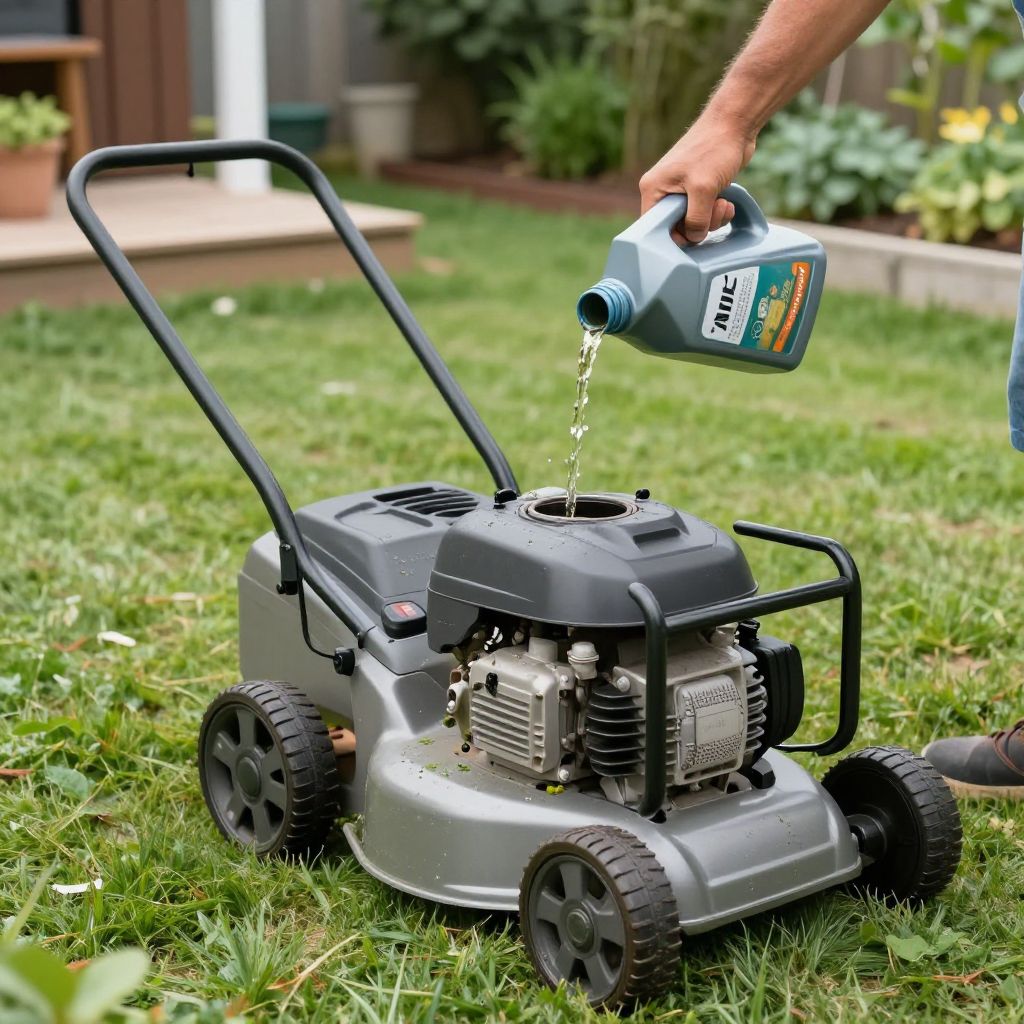
What kind of oil do you put in a lawn mower? The short answer is: use the oil grade listed in your mower’s owner’s manual, because the right choice depends on the engine type, temperature, and whether your mower is a 4-stroke or 2-stroke model. For most modern walk-behind mowers, that usually means a detergent motor oil such as SAE 30, 10W-30, or 5W-30.
Choosing the correct oil is one of the simplest ways to protect your mower engine, improve starting, and reduce wear. If you use the wrong oil, or the wrong amount, you can cause hard starting, smoking, poor lubrication, or even engine damage.
What kind of oil do you put in a lawn mower?
Most lawn mowers use 4-stroke engine oil, not car oil additives or 2-stroke mix. Common choices are SAE 30 for warm weather, or 10W-30 and 5W-30 for cooler conditions. Always check the manual first, because the correct oil depends on the engine brand, outdoor temperature, and mower design.
Know your mower type before you buy oil
Not all mowers use oil the same way. The biggest mistake gardeners make is assuming every mower takes the same product.
4-stroke lawn mowers
Most push mowers, self-propelled mowers, and many riding mowers have a separate oil sump. These engines use standard small-engine oil and do not need gasoline mixed with oil.
2-stroke lawn mowers
Some older or specialty equipment uses a 2-stroke engine. These require oil mixed with fuel in a specific ratio, usually stated by the manufacturer. If you have a 2-stroke mower, do not pour oil into a crankcase that is not designed for it.
Battery and electric mowers
Cordless and corded electric mowers do not use engine oil. If your mower has a battery, blade, deck, and motor but no gas engine, you do not add oil unless the manual describes a separate maintenance point.
Which oil grades are commonly used in lawn mowers?
The best oil is the one recommended by the engine maker, but these are the most common options you’ll see for small gas mowers:
- SAE 30 — a common choice for warmer weather and many air-cooled mower engines.
- 10W-30 — useful when temperatures vary through the season.
- 5W-30 — often better for cooler starts and spring or fall use.
- Synthetic 5W-30 — a good option if the manual allows it, especially for broader temperature swings.
Many small engines are air-cooled, so they run hotter than car engines. That is why the manual matters: some mowers prefer straight-weight oil, while others do well with multi-viscosity oil.
What about car oil?
Some car oils can work if they meet the manufacturer’s specifications, but not every automotive oil is ideal for a lawn mower. Small engines often benefit from oil designed for air-cooled equipment because it handles heat and engine load more appropriately.
How temperature affects mower oil choice
Outdoor temperature matters more than many gardeners realize. A mower used in cool spring weather may start more easily with a lighter oil, while a mower used in hot summer conditions may do better with a heavier grade recommended by the manufacturer.
- Cool weather: 5W-30 or 10W-30 may improve starting.
- Warm weather: SAE 30 is commonly used in many small engines.
- Wide seasonal swings: 10W-30 or synthetic 5W-30 may be more versatile if approved in the manual.
If you live in a climate with very hot summers or chilly spring mornings, choose oil based on the temperature range you actually mow in, not just the calendar.
How to check the oil in a lawn mower
Checking oil is a basic maintenance task that helps prevent engine wear. Do it on level ground, and let the engine cool before you inspect it.
- Park the mower on a flat surface.
- Turn off the engine and remove the ignition key or spark plug wire if needed.
- Wait a few minutes so the oil can settle.
- Remove the dipstick, wipe it clean, then reinsert it fully.
- Pull it out again and read the level.
- Add oil slowly if the level is below the safe mark.
Do not overfill. Too much oil can cause smoking, fouled spark plugs, and messy leaks.
How to add oil without making a mess
Adding oil is simple, but small-engine fill openings are often narrow. Work slowly and keep a rag nearby.
- Use the correct oil grade from the manual.
- Place a funnel in the fill opening.
- Add a small amount at a time, usually a few ounces.
- Check the dipstick repeatedly instead of guessing.
- Stop when the oil reaches the proper mark.
If you accidentally overfill, drain the excess before running the mower. Running an overfilled engine is a common and avoidable problem.
How often should you change mower oil?
Oil change intervals vary by mower model and usage, so the owner’s manual should always be your first reference. In general, many small engines benefit from an oil change after the first few hours of use on a new mower, then periodically during the season or at least once a year if the mower is used regularly.
More frequent changes may be wise if you mow in dusty conditions, cut tall or wet grass often, or use the mower heavily through a long growing season.
Signs the oil needs attention
- Oil looks very dark or gritty
- Engine starts harder than usual
- Mower smokes after startup
- You smell burnt oil
- The oil level drops faster than expected
Common mistakes to avoid
Most mower oil problems come from a few simple errors. Avoid these and your engine will usually run better for longer.
- Using the wrong viscosity for the season or engine type.
- Mixing oil and gas in a 4-stroke mower.
- Overfilling the crankcase and causing smoking or leaks.
- Running the mower low on oil until the engine is damaged.
- Ignoring the manual because “all mower oil is the same.”
Troubleshooting oil-related mower problems
If your mower is acting up, oil may be part of the issue. A few symptoms can point you in the right direction.
Mower smokes after starting
This often happens if the engine is overfilled with oil, tilted the wrong way during maintenance, or has oil in the air filter area. Check the level first.
Mower is hard to start
Old oil, the wrong oil viscosity, or low oil level can make starting more difficult. Confirm the oil level and replace old oil if needed.
Oil looks milky
Milky oil can suggest moisture contamination. If you see this, change the oil and inspect for storage issues, especially after winter storage in damp conditions.
Oil disappears quickly
Check for leaks, worn seals, or engine wear. Also look for oil burning, which may show up as blue smoke.
How mower maintenance fits into healthy garden care
A well-maintained mower gives you cleaner cuts, which helps your lawn recover faster and look more even. Sharp blades, clean air filters, and the right oil all work together to keep the engine running smoothly and the grass healthier.
For best results, pair oil checks with other simple maintenance tasks:
- Sharpen or replace blades when they tear grass instead of cutting cleanly.
- Clean grass buildup from the deck after mowing.
- Check the air filter regularly.
- Use fresh fuel if your mower is gas-powered.
- Store the mower in a dry place to reduce corrosion and moisture problems.
Quick buying checklist for lawn mower oil
If you are standing in the store aisle and need a fast answer, use this checklist:
- Find the mower model number and manual first.
- Confirm whether the engine is 4-stroke or 2-stroke.
- Match the oil grade to your climate and season.
- Choose a detergent small-engine oil if the manual calls for it.
- Buy enough for a top-off and a full change, if needed.
Final advice for gardeners
The best answer to what kind of oil you put in a lawn mower is simple: use the oil your mower manufacturer recommends, and match it to the weather and engine type. For many gas mowers, that means SAE 30, 10W-30, or 5W-30, but the manual should always decide the final choice.
Before your next mow, check the oil level, confirm the correct grade, and make sure you are not overfilling the engine. If you want more practical mower maintenance help, you may also find this guide useful: what kind of oil does a lawn mower take.