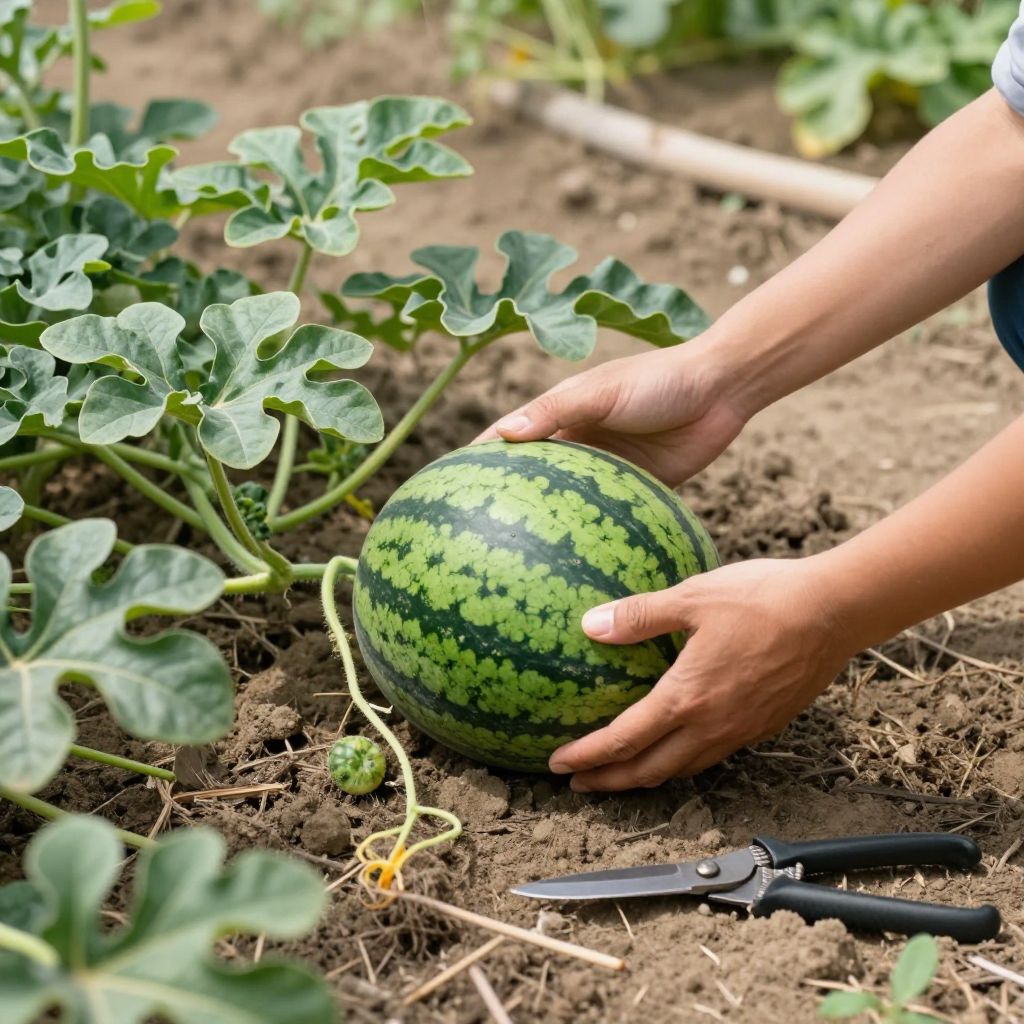
Wondering when to pick Sugar Baby watermelon so you catch it at peak sweetness? Timing matters more than the calendar, because this compact variety can ripen faster or slower depending on heat, sun, and growing conditions.
The good news is that Sugar Baby watermelons give several reliable ripeness clues. If you learn to read the tendril, rind, and ground spot, you can harvest at the right moment instead of guessing.
When To Pick Sugar Baby Watermelon?
Pick Sugar Baby watermelon when the nearest tendril turns brown and dry, the underside develops a creamy yellow ground spot, and the rind looks dull rather than glossy. Most fruits are ready about 75 to 90 days after planting, but the best test is a combination of visual cues, not days alone.
How to Tell Sugar Baby Watermelon Is Ripe
Because watermelons do not continue to sweeten much after harvest, you want to pick at full ripeness. A Sugar Baby that is cut too early may look fine inside but taste watery or bland.
1. Check the curly tendril near the fruit
Look at the small curly vine tendril closest to the watermelon stem. When it is green, the fruit is usually still developing.
When that tendril turns brown, dries up, and looks brittle, it is one of the most dependable signs that the melon is nearing harvest.
2. Look at the ground spot
The side of the melon resting on the soil should change from white or pale green to a creamy yellow or buttery yellow. This is often called the ground spot or field spot.
If the spot is still very pale, the fruit likely needs more time. A rich yellow ground spot is a stronger sign of ripeness than fruit size alone.
3. Watch the rind finish
Immature Sugar Baby watermelons often have a bright, shiny rind. As they ripen, the skin usually becomes duller and less reflective.
The stripes may also look more defined, but rind color alone is not enough. Use it with the tendril and ground spot for better accuracy.
4. Tap test carefully
Some gardeners tap the melon and listen for a deep, dull sound rather than a high, hollow one. This can help, but it is less reliable than the tendril and ground spot signs.
If you are new to growing melons, do not depend on sound alone. It is easy to misread, especially in hot weather or with different fruit sizes.
Typical Harvest Timing for Sugar Baby Watermelon
Sugar Baby is an early, small watermelon, but maturity still depends on warmth and growing conditions. In many gardens, fruits are ready roughly 75 to 90 days after planting, though cooler weather can slow development.
If you started from seed directly in the garden, count from sowing. If you transplanted seedlings, count from transplanting only as a rough guide and still check the ripeness signs on the vine.
What can change ripening time?
- Temperature: Warm, steady heat speeds ripening; cool nights slow it down.
- Sunlight: Full sun helps fruit mature evenly.
- Water consistency: Irregular watering can affect fruit size and flavor.
- Plant health: Stress from pests, disease, or poor soil can delay maturity.
- Season length: Shorter growing seasons may need earlier planting or season extension.
How to Grow Sugar Baby Watermelon for Better Harvest Timing
If you want a better chance of picking at the right time, give the plant strong growing conditions from the start. Healthy vines produce more predictable fruit development and better flavor.
Choose the right site
Plant Sugar Baby watermelon in full sun, with at least 6 to 8 hours of direct light daily. More sun is usually better, especially in cooler climates.
Watermelons need room to sprawl. Even compact varieties need space for vines to spread and for fruit to develop without crowding.
Prepare the soil well
Use loose, fertile, well-drained soil. Watermelons dislike soggy roots, and heavy clay can slow growth or encourage disease.
Before planting, work in compost to improve structure and moisture retention. Compost helps, but avoid making the soil overly rich in nitrogen, which can push leafy growth instead of fruiting.
Water consistently, not constantly
Water deeply so moisture reaches the root zone, then let the top layer of soil dry slightly before watering again. Inconsistent watering can lead to poor fruit sizing and can make ripeness harder to judge.
Try to keep the soil evenly moist while fruit is sizing up. As harvest approaches, many gardeners reduce watering a bit, but do not let the plant wilt badly.
Mulch to stabilize moisture
A layer of straw, shredded leaves, or other clean mulch can help keep soil moisture steadier and reduce weed competition. Mulch also keeps fruit cleaner when it rests on the ground.
Leave a little space around the crown of the plant so the mulch does not trap excess moisture against the stem.
Practical Harvest Steps
Once the fruit shows ripeness signs, harvest promptly. Waiting too long can lead to a softer texture, overripe flesh, or fruit damage from pests and weather.
- Inspect the melon for a brown, dried tendril near the stem.
- Check that the ground spot is creamy yellow.
- Confirm the rind looks dull, not glossy.
- Use a clean, sharp knife or pruners to cut the stem.
- Leave a short stem stub attached to the fruit if possible.
- Handle the melon gently to avoid bruising.
Do not pull the fruit off the vine. Cutting is cleaner and reduces the chance of damaging the melon or the plant.
Common Mistakes When Picking Sugar Baby Watermelon
Harvesting by size alone
Small watermelons can still be immature, and large ones can still be underripe if growing conditions were cool or uneven. Size is not a reliable maturity test by itself.
Picking too early because the rind looks dark
Some gardeners mistake dark color for ripeness. Sugar Baby can look dark before it is truly ready, so always check the tendril and ground spot too.
Waiting for the stem to dry completely
Do not wait until the whole vine is dying back. By then, the fruit may already be overripe or stressed. Focus on the fruit-specific signs instead.
Letting fruit sit on wet soil
Fruit that stays in damp ground can develop rot or blemishes. If your soil is heavy or rainy weather is common, place a board, tile, or dry mulch under ripening melons to keep them cleaner and drier.
Problems That Can Affect Ripening
If your Sugar Baby watermelon is slow to ripen or tastes less sweet than expected, the issue may be growing conditions rather than harvest timing alone.
Too little heat
Cool weather slows sugar development. In short seasons, start plants early indoors if appropriate for your climate, then transplant only when soil is warm enough and frost risk has passed.
Too much nitrogen
Excess nitrogen can produce lush vines and fewer ripe fruits. If your plant is all leaves and little fruit, the soil may be too rich or the feeding balance may be off.
Poor pollination
Watermelons need pollination to set and develop fruit properly. If fruit is misshapen, small, or aborts early, pollination may have been incomplete.
Encourage pollinators by avoiding broad-spectrum insecticides during bloom and by planting nearby flowers that attract bees.
Pests and disease
Common watermelon problems include aphids, cucumber beetles, powdery mildew, and vine decline issues in stressed plants. Healthy foliage helps the fruit finish ripening well.
Remove badly diseased leaves if needed, improve airflow, and avoid overhead watering late in the day. Good sanitation in the garden also helps reduce recurring problems.
Can You Pick Sugar Baby Watermelon Early?
You can harvest a little early if a hard frost, storm, or pest outbreak threatens the crop, but flavor may not be fully developed. If the fruit is close to ripe, it may still be usable after a day or two at room temperature, though it will not improve much after picking.
If the melon is clearly immature, cutting it early usually means pale flesh, lower sweetness, and a less satisfying texture. Whenever possible, wait for the ripeness signs on the vine.
How to Store After Harvest
After picking, keep the fruit in a cool place out of direct sun. Whole watermelons generally hold best if handled gently and kept dry.
Once cut, refrigerate the pieces promptly in a covered container. For the best flavor and texture, eat the fruit soon after harvest rather than storing it too long.
Quick Ripeness Checklist
- The closest tendril is brown and dry.
- The ground spot is creamy yellow.
- The rind looks dull, not shiny.
- The fruit feels full-sized for the plant and variety.
- The melon sounds deep and dull when tapped, if you use that method.
Conclusion
To know when to pick Sugar Baby watermelon, trust the vine more than the calendar. Check the tendril, ground spot, and rind together, then harvest with a clean cut as soon as the fruit looks mature.
If you want to improve your next crop, review your soil, sun, and watering routine now so the plants develop evenly from the start. For more seasonal help, you may also want to read about how to grow watermelon and harvesting summer fruits at peak flavor.