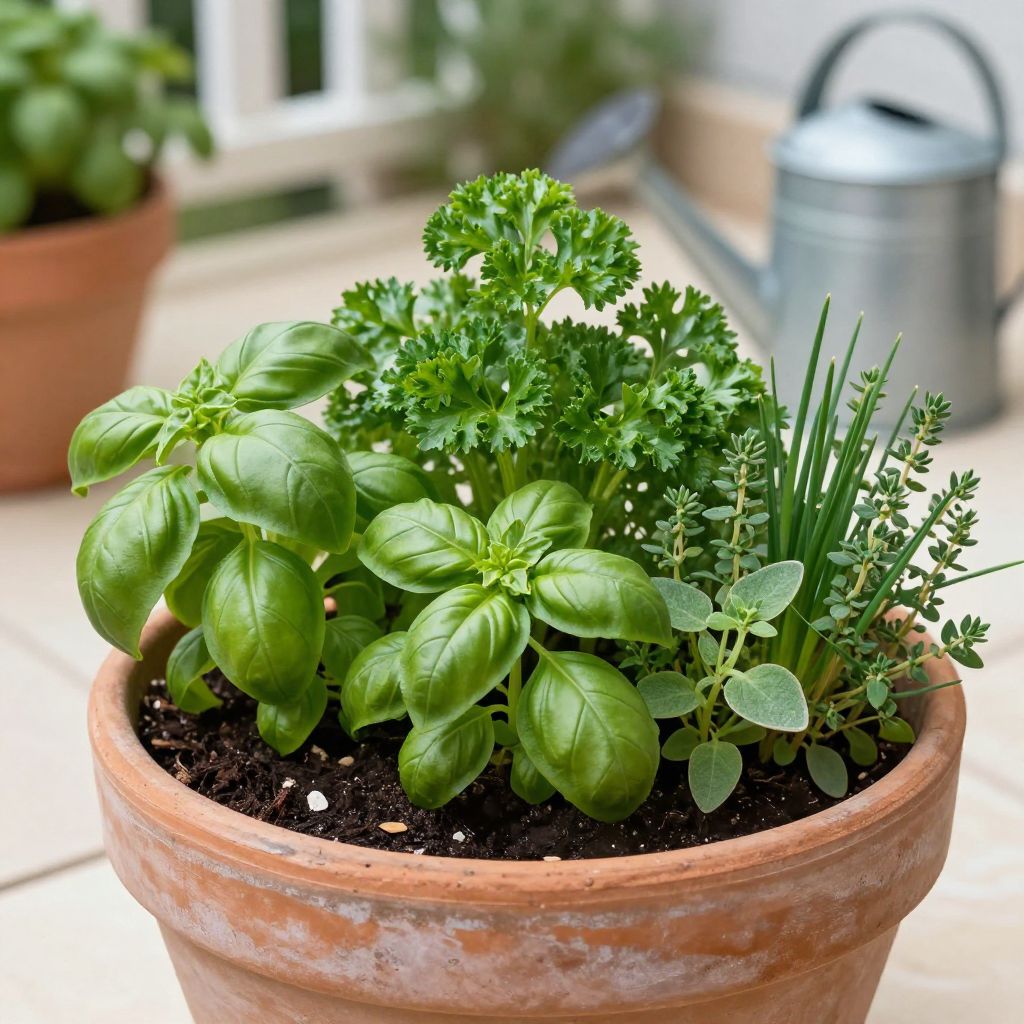
What herbs grow well together in the same container? The best combinations are herbs with similar needs for sunlight, watering, and soil drainage. Group Mediterranean herbs such as thyme, rosemary, oregano, and sage together, and keep moisture-loving herbs like parsley, cilantro, and chives in a separate pot.
Container herb gardening works best when you match the plants, not just the pot. A good pairing helps you avoid overwatering one herb while underwatering another, and it makes pruning, harvesting, and pest control much easier.
What herbs grow well together in the same container?
Herbs that share the same light, water, and soil preferences grow best together. In general, dry-soil herbs like rosemary, thyme, oregano, marjoram, and sage suit one container, while softer herbs like basil, parsley, cilantro, dill, and chives do better in another. The key is to avoid mixing thirsty herbs with drought-tolerant ones.
Best herb combinations for one container
1. Mediterranean herbs
This is the easiest and most reliable group for a shared pot. These herbs prefer full sun, sharp drainage, and soil that dries slightly between waterings.
- Rosemary (Salvia rosmarinus)
- Thyme (Thymus spp.)
- Oregano (Origanum vulgare)
- Marjoram (Origanum majorana)
- Sage (Salvia officinalis)
Why they work together: they all dislike soggy roots and prefer a leaner, well-drained potting mix. If you are new to container herbs, this group is usually the safest place to start.
2. Moisture-loving culinary herbs
These herbs generally want more even moisture and a richer potting mix than Mediterranean herbs. They can share a container if you can keep the soil consistently damp, but not waterlogged.
- Basil (Ocimum basilicum)
- Parsley (Petroselinum crispum)
- Cilantro/coriander (Coriandrum sativum)
- Chives (Allium schoenoprasum)
This group is useful for a kitchen pot or a patio container where you can check moisture often. Basil especially grows faster in warm weather, while cilantro prefers cooler conditions and may bolt in heat, so it may not stay productive as long as the others.
3. A simple mixed container for beginners
If you want one pot with a little variety, combine herbs with similar growth rates and water needs. A practical example is basil, parsley, and chives in one container, or thyme, oregano, and sage in another.
- Good mix: thyme + oregano + marjoram
- Good mix: basil + parsley + chives
- Good mix: rosemary + thyme + oregano, if the pot is large enough and drainage is excellent
Keep in mind that some herbs become woody or larger over time. Rosemary and sage can eventually outgrow small mixed pots, so they may need more space than low-growing herbs like thyme.
Herbs that should usually not share the same container
Dry herbs and wet herbs
The biggest mistake is mixing herbs with opposite watering needs. Rosemary and thyme can struggle if planted with parsley or basil, because the soil often stays too wet for the dry-loving herbs.
- Avoid: rosemary with basil
- Avoid: thyme with parsley
- Avoid: sage with cilantro if you tend to water often
Fast growers and slow growers
Some herbs spread quickly or become tall and woody, while others stay compact. If you combine them carelessly, the stronger plant can shade out the smaller one or crowd its roots.
- Mint is especially aggressive and is usually best grown alone.
- Dill can become tall and may overtop smaller herbs.
- Rosemary can dominate a small pot as it matures.
Mint is the exception worth remembering: even if it can grow in many conditions, it is usually best kept in its own container because it spreads so vigorously.
How to choose the right pot and soil
Container size
Choose a pot that gives each herb enough root room and allows drainage. For a mixed herb container, a pot at least 10 to 12 inches wide is a practical minimum, and larger is better for more than two herbs.
- Use pots with drainage holes.
- Choose a deeper container for rosemary, sage, or parsley.
- Use a wider pot for thyme, oregano, and mixed low-growing herbs.
If you are planting several herbs together, think about mature size, not just the size of the seedlings.
Soil mix
Most container herbs do best in a quality potting mix rather than garden soil. Garden soil can compact in pots and reduce drainage.
- For Mediterranean herbs: use a free-draining potting mix, and you can improve it with coarse material such as perlite if needed.
- For basil, parsley, and cilantro: use a moisture-retentive but still well-draining potting mix with some compost blended in.
Do not make the mix too rich for rosemary, thyme, or oregano. Too much fertility can encourage soft, weak growth and reduce flavor.
How to plant herbs together in one container
- Select herbs with similar water and light needs.
- Choose a pot with drainage holes and fill it with the right potting mix.
- Arrange taller herbs toward the back or center, and lower herbs around the edges.
- Leave enough space between plants for air movement and future growth.
- Water gently after planting so the soil settles around the roots.
If you are combining herbs from nursery pots, loosen circling roots carefully before planting. This helps the roots spread into the new container more quickly.
Spacing tips
Spacing depends on the herb and the container size, but the goal is to avoid a crowded pot. Crowding reduces airflow, increases disease risk, and makes watering harder to manage.
- Plant compact herbs like thyme a few inches apart.
- Give larger herbs like rosemary or sage more room than you think they need.
- Do not pack several vigorous herbs into a small bowl-shaped planter.
Light, water, and feeding needs
Sunlight
Most herbs grow best in bright light. Outdoor containers usually perform best in full sun, though some herbs tolerate light afternoon shade in hot climates.
- Rosemary, thyme, oregano, sage: full sun is ideal.
- Basil: full sun to very bright light.
- Parsley and cilantro: sun to partial shade, especially in warm weather.
Indoors, place herb containers in the brightest window you have, or use supplemental grow lights if natural light is limited.
Watering
Watering should match the herbs in the pot, not a fixed schedule. Check the soil with your finger before watering.
- For dry-loving herbs, let the top inch or two dry before watering again.
- For basil, parsley, and cilantro, keep the soil lightly moist but never soggy.
Always empty saucers after watering so roots do not sit in standing water. That is one of the most common causes of container herb failure.
Feeding
Herbs generally do not need heavy fertilizing. Too much fertilizer can reduce flavor and encourage leafy growth that is weak or floppy.
- Use a light application of compost at planting time if appropriate for the herb group.
- For container herbs, feed sparingly and only if growth looks pale or stunted.
- Do not overfeed Mediterranean herbs.
Pruning, harvesting, and keeping the container productive
Regular trimming
Frequent light harvesting helps many herbs stay compact and productive. Pinch or snip stems just above a leaf node to encourage branching.
- Basil: pinch the top regularly to prevent flowering.
- Thyme and oregano: trim lightly to keep them bushy.
- Rosemary and sage: prune carefully, removing only what you need and avoiding cutting too far into old woody stems.
Watch for flowering
Once herbs flower, leaf production often slows. This is especially true for basil and cilantro. If your goal is leafy growth, remove flower buds early.
Rotate the container
If one side of the pot leans toward the light, rotate it every week or so. This helps all plants receive more even sunlight and reduces lopsided growth.
Common problems and how to fix them
Yellowing leaves
Yellow leaves often point to overwatering, poor drainage, or overcrowding. Check whether the soil stays wet too long and whether the roots have enough air.
- Reduce watering frequency.
- Make sure the pot drains freely.
- Thin or transplant overcrowded herbs if needed.
Leggy growth
Long, weak stems usually mean the herbs need more light. Move the container to a sunnier spot or use a grow light indoors.
Wilting despite wet soil
This can happen when roots are stressed or the soil is staying too wet. If the pot smells sour or the plant declines quickly, drainage may be the issue.
- Check for blocked drainage holes.
- Repot into fresher, better-draining mix if necessary.
- Remove any rotting roots if you discover them during repotting.
Pests
Container herbs can still attract aphids, whiteflies, spider mites, and fungus gnats. Good airflow, proper watering, and regular inspection help prevent most problems.
- Inspect the undersides of leaves.
- Remove heavily infested stems.
- Rinse pests off with a gentle spray of water when appropriate.
Indoor vs. outdoor container herb growing
Outdoor containers
Outdoor herb pots dry out faster, especially in sun and wind. That can be helpful for Mediterranean herbs, but it means moisture-loving herbs may need more frequent attention.
Indoor containers
Indoors, herbs usually get less light and slower drying soil. That makes drainage and light especially important. Choose compact herbs, avoid oversized pots, and water cautiously.
If you are growing indoors, a mixed pot works best when the herbs have similar growth rates and light needs. Basil and parsley can work well together on a bright windowsill, while rosemary often performs better with stronger light and drier air.
Simple container pairings to try
- Sunny, dry pot: thyme + oregano + marjoram
- Sunny, slightly larger pot: rosemary + thyme + sage
- Moisture-friendly pot: basil + parsley + chives
- Cool-season pot: parsley + cilantro + chives
These combinations are starting points, not strict rules. Your climate, container size, and how often you water will affect which herbs stay healthy together.
Conclusion
If you are wondering what herbs grow well together in the same container, start by grouping herbs with the same sun and water needs. Mediterranean herbs usually pair well with one another, while basil, parsley, cilantro, and chives form a better match in a separate pot. Choose a container with drainage, use the right soil, and prune regularly to keep the planting productive. For more container-growing ideas, you may also want to read related herb gardening guides and container planting tips.