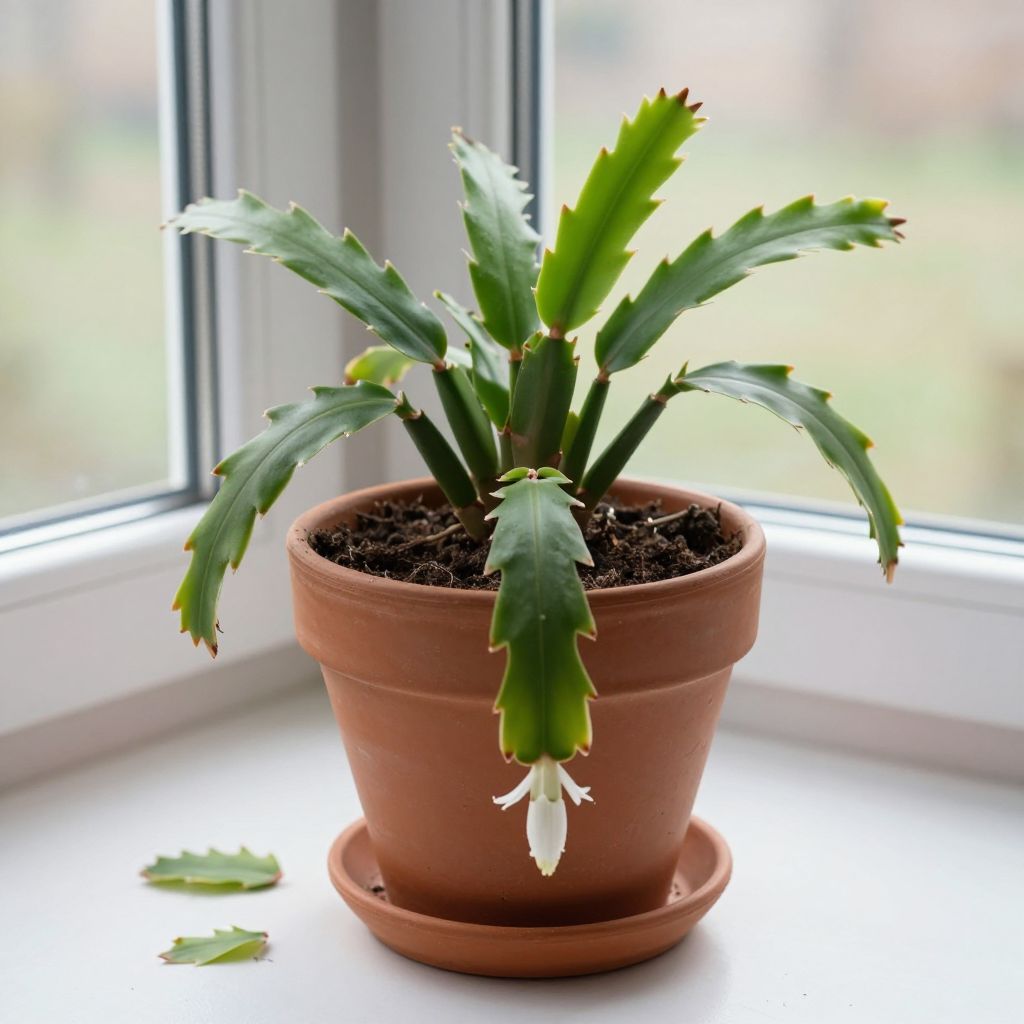
Why is my Christmas cactus dropping leaves? In most cases, it’s reacting to stress from watering problems, poor drainage, sudden temperature swings, or too much sun. Christmas cactus, Schlumbergera, is a tropical cactus that prefers evenly moist but never soggy soil, bright indirect light, and stable indoor conditions.
The good news is that leaf or segment drop is usually fixable once you identify the cause. If you catch it early, you can often stop the decline, restore healthy growth, and help the plant bloom again.
Why Is My Christmas Cactus Dropping Leaves?
Christmas cactus drops leaves, stems, or flattened segments when it’s under stress, especially from overwatering, underwatering, root damage, low humidity, temperature shock, or pests. Check the roots, soil, and light first. In most homes, the fastest fix is improving drainage and giving the plant brighter indirect light with steadier care.
Common Causes of Leaf Drop
1. Overwatering and root rot
This is one of the most common reasons a Christmas cactus drops leaves. When the potting mix stays wet too long, roots lose oxygen and begin to rot, and the plant can no longer support its stems.
Signs include soft, limp segments, yellowing, a musty smell from the soil, and a pot that feels heavy long after watering. The plant may also shed healthy-looking segments suddenly.
What to do:
- Stop watering until the top 1 to 2 inches of mix feel dry.
- Check that the pot has drainage holes.
- If the soil is sour, compacted, or soggy, repot into a fresh, airy mix.
- Trim away any black, mushy roots with clean scissors.
A good mix for Christmas cactus is loose and fast-draining, often a blend made for cacti and succulents with extra peat, coco coir, or fine bark to hold a little moisture without becoming waterlogged.
2. Underwatering or inconsistent watering
Christmas cactus prefers more moisture than desert cacti, but it still dislikes sitting in dry soil for long periods. If the mix dries out completely, the plant may wrinkle, soften, and drop segments to conserve energy.
Underwatering is especially common in warm rooms, near heaters, or in small pots that dry quickly. The problem can also happen if water runs through the pot too fast and never fully wets the root ball.
What to do:
- Water thoroughly until excess drains from the bottom.
- Empty saucers so the pot does not sit in water.
- Check soil moisture with your finger rather than watering on a fixed schedule.
For a thirsty plant, rehydrate gradually if the mix has become very dry and pulled away from the pot. In that case, water once, wait a few minutes, then water again so the root ball absorbs moisture evenly.
3. Too much direct sun
Unlike desert cacti, Christmas cactus grows naturally in filtered light. Harsh direct sun can scorch the segments, cause bleaching, and lead to drop if the plant is stressed for too long.
Indoors, a south- or west-facing window may be too intense unless light is filtered by a sheer curtain. Outdoors, full sun in hot climates is often too much, especially in summer.
What to do:
- Move the plant to bright, indirect light.
- Use a sheer curtain if the window is sunny.
- Outdoors, place it in morning sun and afternoon shade, if climate allows.
If the segments look washed out, reddish, or papery, light stress may be part of the problem.
4. Temperature swings and drafts
Christmas cactus is sensitive to sudden changes. Cold drafts from windows, doors, or vents, and heat from radiators or fireplaces can trigger leaf drop.
Rapid shifts are especially stressful when the plant is setting buds or recovering from watering issues. Even a healthy plant may shed segments if moved abruptly from one environment to another.
What to do:
- Keep it away from heating vents and cold window glass.
- Avoid placing it near frequently opened exterior doors.
- Move it gradually if you need to change its location.
Stable indoor temperatures are more important than chasing a perfect spot.
5. Low humidity
Christmas cactus comes from humid forest habitats, not arid deserts. Very dry indoor air can cause shriveling, edge stress, and occasional segment drop, especially in winter when heating systems run often.
Dry air alone usually is not the only cause, but it can make other problems worse.
What to do:
- Group plants together to raise local humidity slightly.
- Use a pebble tray with water under the pot, without letting the pot sit in water.
- Keep it away from forced-air heat.
Do not mist heavily as a substitute for proper watering. Humidity helps, but it will not fix root problems.
6. Potting mix that stays too wet or too dense
Even if you water carefully, a heavy mix can suffocate roots. Dense soil holds too much water and compacts over time, which can lead to decline and leaf drop.
This is common when a Christmas cactus has been planted in regular houseplant soil without added drainage material.
What to do:
- Repot into a lighter mix with good drainage.
- Choose a pot only slightly larger than the root ball.
- Make sure the container has drainage holes.
Oversized pots hold excess moisture for too long, which increases the risk of root rot.
7. Root damage from repotting or handling
Christmas cactus can drop segments after rough repotting, broken roots, or frequent moving. The plant may look fine for a week or two and then begin shedding as it adjusts.
Minor disturbance is normal, but severe root damage can lead to prolonged stress.
What to do:
- Handle the plant gently when repotting.
- Do not bury the stems deeper than they were before.
- After repotting, keep conditions stable and avoid overwatering.
If the plant was recently repotted, some temporary drop may happen while it settles.
8. Pests
Mealybugs, scale, and spider mites can weaken Christmas cactus and cause leaf drop if the infestation is severe. You may notice sticky residue, cottony clusters, tiny moving specks, or dull, stippled segments.
Pests are more likely when the plant is stressed, dusty, or crowded with other houseplants.
What to do:
- Inspect the joints, undersides, and base of the plant.
- Isolate the plant from others if pests are present.
- Remove visible mealybugs with a cotton swab dipped in rubbing alcohol.
- Rinse the plant gently and repeat treatments as needed.
Act quickly, because pests can spread and make an already stressed plant drop more segments.
9. Nutrient issues or salt buildup
Christmas cactus does not need heavy feeding, but a plant that has not been repotted or fed in a long time may weaken. On the other hand, too much fertilizer can burn roots and cause drop.
Salt buildup from repeated fertilizing or hard water can also stress roots.
What to do:
- Feed lightly during active growth with a balanced houseplant fertilizer diluted to label directions.
- Do not fertilize a stressed or recently repotted plant right away.
- Flush the pot occasionally if you suspect salt buildup, provided drainage is excellent.
Less is usually better than more for this plant.
How to Diagnose the Problem Step by Step
- Check the soil moisture. Is it soggy, dry, or somewhere in between?
- Inspect the pot. Make sure it has drainage holes and is not sitting in water.
- Look at the roots. Healthy roots are firm; rotten roots are brown, black, or mushy.
- Assess the light. Bright indirect light is ideal.
- Review recent changes. New location, repotting, temperature swings, or missed waterings often explain sudden drop.
- Check for pests. Look closely at joints and leaf undersides.
If more than one issue is present, fix the most serious one first, usually watering and drainage.
How to Save a Christmas Cactus That Is Dropping Leaves
If the soil is wet
- Stop watering immediately.
- Remove the plant from the decorative cachepot if it traps water.
- Let excess moisture drain away completely.
- If roots are rotting, trim damaged roots and repot into fresh mix.
- Place the plant in bright, indirect light and keep temperatures steady.
If the soil is dry
- Water slowly and thoroughly until the root ball is evenly moistened.
- Repeat only if the potting mix has become hydrophobic and water runs through too fast.
- Monitor the plant over the next week for improved firmness.
If the plant is sunburned or draft-stressed
- Move it to a more protected spot.
- Avoid further abrupt changes in light or temperature.
- Remove only fully dead or mushy segments.
Do not fertilize a stressed plant until it begins to recover. Feeding too soon can make the problem worse.
Pruning, Propagation, and Recovery
Should you prune dropped or damaged segments?
Yes, but only remove segments that are clearly dead, mushy, or detached. Healthy green segments can stay in place while the plant recovers. Use clean scissors or pinch at the joint if needed.
If the plant has become leggy, you can trim after flowering or during active growth to encourage branching.
Can dropped segments be propagated?
Often, yes. Healthy segments can be rooted to start new plants or replace a declining one.
- Choose firm, healthy segments with at least two or three connected sections.
- Let the cut end dry and callus for a day or two.
- Insert the base into a lightly moist, well-draining mix.
- Keep in bright indirect light and lightly moist soil until roots form.
Propagation is a good backup plan if the parent plant is struggling.
How to Prevent Leaf Drop in the Future
- Use a pot with drainage holes.
- Choose a loose, airy potting mix.
- Water when the top layer of soil begins to dry, not on a rigid schedule.
- Keep the plant in bright, indirect light.
- Avoid hot sun, cold drafts, and sudden moves.
- Inspect regularly for mealybugs and scale.
- Repot only when needed, usually when roots are crowded or the mix has broken down.
Christmas cactus is forgiving once you match its needs more closely. Stable conditions matter more than frequent attention.
When to Worry
If the plant keeps dropping segments after you correct watering and light, or if the base is soft and black, the problem may be advanced root rot. Severe pest infestations can also weaken the plant beyond easy recovery.
At that point, take healthy cuttings as insurance and inspect the root system closely. A small healthy cutting can often be saved even if the mother plant declines.
Conclusion
If you’re asking why is my Christmas cactus dropping leaves, start with the basics: check moisture, drainage, light, and temperature. In most cases, a small correction in care will stop the decline. Adjust one factor at a time, then watch for firm, healthy new growth.
For more help with indoor plant care and troubleshooting, you may also want to read related gardening guidance on houseplant drainage and propagation.