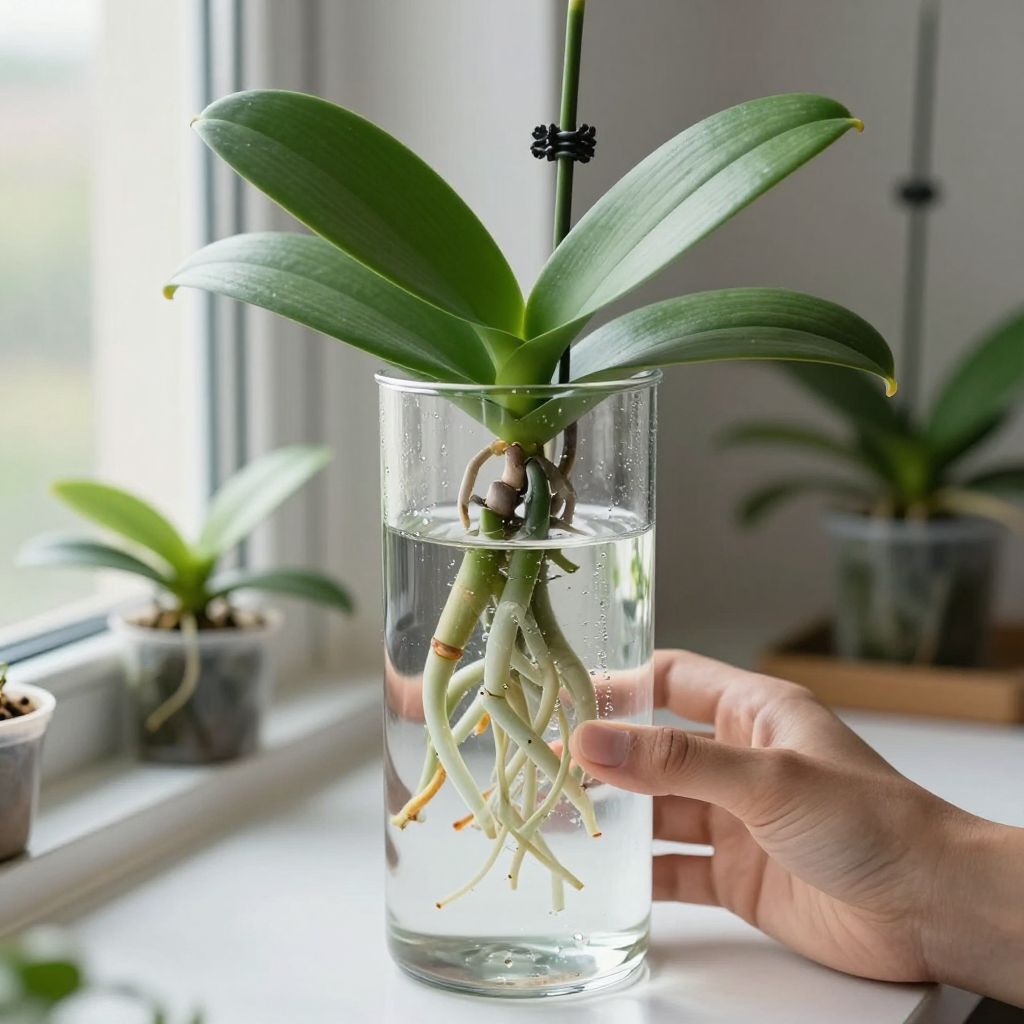
Can orchids grow in water? Yes, some orchids can survive and even root in water culture, but they do not grow best in plain water long term. Most orchids are epiphytes that need oxygen around their roots, so the safest approach is usually a controlled semi-hydro or water-rooting method rather than leaving the plant submerged.
If you want to try it, choose the right orchid, keep the crown dry, and watch the roots closely. With the proper setup, water culture can work for rescue plants or for hobby growers who enjoy experimenting, but it is not the easiest method for every orchid.
Can orchids grow in water?
Yes, orchids can grow in water for short periods, and some can adapt to water culture, especially Phalaenopsis orchids. However, they need frequent access to oxygen, so fully submerging the roots for long periods often causes rot. Success depends on clean water, healthy roots, and careful monitoring.
How orchids grow in nature
Most popular orchids, including Phalaenopsis, are epiphytes. In nature, they cling to trees, where roots are exposed to air, rain, and fast drainage rather than sitting in wet soil.
This is why orchids usually fail in regular potting soil and why plain water can also be risky. Their roots are built to absorb moisture quickly and then dry with plenty of airflow.
Why oxygen matters
Orchid roots do more than drink water. They also need air spaces around them to stay healthy.
- Too much water blocks oxygen and encourages root rot.
- Healthy roots turn firm and green or silvery-white depending on moisture.
- Damaged roots become brown, mushy, or hollow.
Which orchids are most likely to tolerate water culture?
Some orchids handle water culture better than others, especially common houseplant types with thick roots. That said, individual plants vary, and a weak orchid may not adapt well even if the species usually can.
Better candidates
- Phalaenopsis orchids, especially healthy plants with firm roots
- Some Vanda orchids, which naturally prefer very airy root conditions
- Rescue orchids that have lost much of their potting medium and need rehabilitation
Less suitable candidates
- Orchids that already have severe root rot
- Plants that need a very dry rest period, depending on type
- Orchids with delicate, fine roots that collapse easily when kept wet
Water culture versus semi-hydro: what is the difference?
People often use “grow orchids in water” to mean a few different methods. The most practical approach is usually semi-hydro or a partial water method, not full-time submersion.
Full water culture
The roots sit in water for part of the time, then the container is emptied and allowed to dry briefly. This can work, but it requires close attention and is not ideal for every orchid.
Semi-hydroponics
The orchid grows in an inert medium such as LECA or clay pebbles with a small reservoir at the bottom. This keeps moisture available while still leaving air around the roots.
For most home growers, semi-hydro is safer than plain water. It gives you more forgiveness if your home is warm, dry, or inconsistent with humidity.
How to grow orchids in water safely
If you want to try water culture, start with a healthy orchid and move slowly. A stressed plant is less likely to adapt well.
- Inspect the roots. Trim away soft, black, or hollow roots with clean, sterilized scissors.
- Choose a clean container. Use glass or plastic with enough room to keep the crown above the waterline.
- Rinse the roots. Remove all old bark, moss, or debris so the roots are clean.
- Add water carefully. Keep only the lower portion of the roots in water at first, not the crown.
- Refresh the water regularly. Replace it before it becomes cloudy or stagnant.
- Watch for new root growth. New firm roots are a good sign the orchid is adapting.
How much water should you use?
There is no universal level that works for every orchid or home. A common starting point is to keep only the lower root tips in water and let the upper roots stay exposed to air.
If the plant wilts, you may need slightly more moisture. If roots soften or the base stays wet, reduce the water level immediately.
Best growing conditions for orchids in water
Water culture does not change the orchid’s basic needs. It still needs bright light, warmth, airflow, and a stable environment.
Light
Most indoor orchids do best in bright, indirect light. An east-facing window is often a good starting point, while a south- or west-facing window may need a sheer curtain.
Too little light slows growth and weakens flowering. Too much direct sun can scorch leaves, especially if the container acts like a magnifier.
Temperature
Most common orchids prefer comfortable indoor temperatures rather than extremes. Avoid placing them near cold drafts, heating vents, or hot windows that swing sharply in temperature.
Humidity and airflow
Moderate humidity helps, but stagnant air is a problem. A small fan on a low setting nearby can reduce disease risk without drying the plant excessively.
- Use good airflow around the container.
- Keep the crown dry whenever possible.
- Do not let the orchid sit in a sealed, stale environment.
Water quality and cleanliness
Clean water matters more in water culture than in many other orchid setups. Stale water can quickly lead to bacteria, algae, and root decline.
What kind of water is best?
Rainwater, distilled water, or low-mineral water is often safest if your tap water is very hard. If your tap water is suitable for houseplants and not heavily treated, it may still work, but mineral buildup can become an issue over time.
How often should you change the water?
There is no fixed schedule that fits every room and season. Change it whenever it becomes cloudy, smells off, or develops slime.
In warm conditions, you may need to refresh it more often. In cooler rooms, growth slows and the water may stay usable a bit longer, but still check it regularly.
Common mistakes when growing orchids in water
Most failures come from keeping the orchid too wet or ignoring the roots. A few small corrections can make a big difference.
- Submerging the crown causes crown rot and can kill the plant.
- Leaving rotten roots attached spreads decay into healthy tissue.
- Using a dirty container encourages algae and bacteria.
- Moving the orchid too often can stress new roots.
- Expecting instant results leads to overhandling and damage.
Signs your orchid is doing well in water
Watch the plant, not the calendar. Healthy orchids give clear signals when the method is working.
- Roots stay firm, plump, and green or silvery
- New root tips appear
- Leaves remain firm and not wrinkled
- No sour smell comes from the container
- The base of the plant stays dry and clean
Troubleshooting common problems
Roots are turning brown or mushy
This usually means the orchid is staying too wet or the water is not being changed often enough. Remove damaged roots, lower the water level, and improve airflow.
Leaves are wrinkled
The orchid may not be taking up enough water because too many roots were lost, or the water level is too low. Check for healthy roots and make sure the plant is not overheating in direct sun.
Algae is growing in the container
Algae often appears in bright light and nutrient-rich water. Clean the container, change the water, and consider using an opaque inner pot or covering part of the container to reduce light exposure to the water.
The orchid is not flowering
Flowering depends on light, plant maturity, and overall health. A recovering orchid may focus on roots and leaves before blooming again.
Should you fertilize orchids growing in water?
Yes, but very lightly and only when the plant is actively growing. In water culture, nutrients can build up fast, so overfertilizing is easier than underfertilizing.
Use a diluted orchid fertilizer according to the product label, and flush the container with plain water periodically to prevent salt buildup. If the plant is newly moved into water or is recovering from root loss, wait until you see active new growth before feeding.
Can you move an orchid from bark to water?
Yes, but transition carefully. Orchids grown in bark often have roots adapted to air and intermittent moisture, so a sudden switch can shock the plant.
Start by cleaning the roots thoroughly and placing the orchid in a very small amount of water at first. Increase exposure only if the roots remain firm and the plant continues to grow.
When water culture is a good idea
Water culture can be useful if you want to rescue an orchid with declining bark mix, reduce pests hiding in old media, or experiment with a cleaner indoor growing setup.
It can also suit growers who are attentive and enjoy checking plants often. If you prefer a low-maintenance method, a well-draining orchid mix in a slotted pot is usually easier.
When to choose another method
If your home is very cool, very dry, or hard to monitor, traditional orchid potting media may be more forgiving. Many orchids do best in a chunky bark mix, sphagnum moss, or a blend that drains quickly while still holding some moisture.
For most beginners, the best orchid-growing method is the one you can manage consistently. A stable routine matters more than trying the newest technique.
Conclusion: is growing orchids in water worth it?
Can orchids grow in water? Yes, but only with the right orchid, clean water, strong airflow, and careful root management. For many home gardeners, water culture works best as a rescue method or a controlled experiment rather than a default growing system.
If you want to try it, start with one healthy Phalaenopsis, keep the crown dry, and check the roots every few days. For more orchid care guidance, read about orchid potting mix and repotting basics and how to encourage orchids to rebloom indoors.