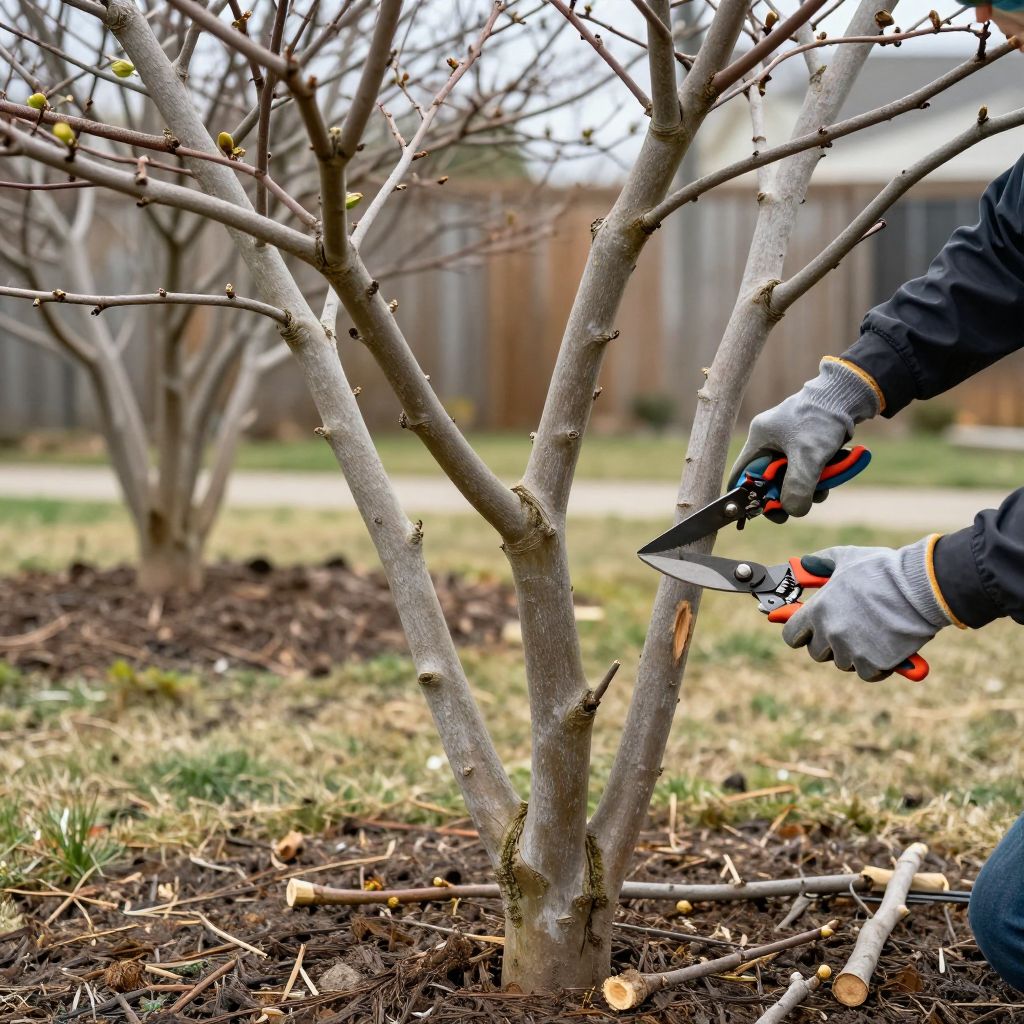
If you’re wondering when to prune crepe myrtles, the short answer is late winter to very early spring, just before new growth starts. That timing lets you shape the plant while it’s dormant and reduces the risk of removing tender new buds.
Prune too early in fall, and you may encourage weak regrowth before cold weather. Prune too late in spring, and you can cut off flower buds or stress the tree as it starts active growth.
When To Prune Crepe Myrtles?
The best time to prune crepe myrtles is late winter through early spring, after the coldest weather has passed but before buds begin to swell. In most climates, that means roughly February to March, though local conditions matter. Avoid hard pruning in fall or during active summer growth unless you are removing damaged, dead, or crossing branches.
Why Timing Matters
Crepe myrtles bloom on new wood, so pruning at the right time can help direct growth without sacrificing flowers. Dormant-season pruning also makes the branch structure easier to see, which helps you make cleaner, more selective cuts.
Good timing also reduces stress. Fresh cuts made in warm weather can push soft new growth that is more vulnerable to heat, drought, and pests.
What happens if you prune at the wrong time?
- Fall pruning can trigger tender new shoots that may be damaged by frost.
- Late spring pruning may remove developing flower buds and delay blooming.
- Summer topping often leads to weak, crowded regrowth and poor flowering.
How Much Should You Prune?
Crepe myrtles usually need selective pruning, not severe cutting back. Remove only what improves the plant’s structure, health, and shape. For established trees and shrubs, the goal is to thin, lift, and clean up the plant rather than reshape it dramatically.
Focus on these cuts first
- Dead, broken, or diseased branches
- Branches that rub or cross
- Weak shoots growing inward
- Suckers from the base or roots, if unwanted
- Low branches that interfere with walkways, mowing, or sightlines
If your crepe myrtle is young, you can train it with light structural pruning. If it is mature, keep cuts modest and purposeful.
Step-by-Step Pruning Tips
1. Wait for the right weather window
Choose a dry day in late winter or early spring. Dry conditions help reduce disease spread and make cuts cleaner.
2. Inspect the whole plant first
Stand back and look at the natural shape before you cut. Decide which stems are dead, crowded, or poorly placed, and plan to keep the strongest framework.
3. Remove dead and damaged wood
Cut dead or broken branches back to healthy tissue or to their point of origin. If you are unsure whether a branch is alive, lightly scratch the bark; green tissue underneath usually means it is still living.
4. Thin crowded growth
Take out a few stems from the center of the plant to improve airflow and light penetration. This helps reduce disease problems and encourages better flowering on the remaining branches.
5. Shorten only what is necessary
If a branch is too long or awkward, shorten it back to a side branch or bud rather than cutting it off at the same height as everything else. This keeps the plant looking natural.
6. Clean up suckers and low shoots
Remove suckers from the base if you want a tree form. If you’re growing a shrub form, you may keep some low stems, but still remove weak or crowded growth.
What Not To Do When Pruning Crepe Myrtles
One of the most common mistakes is “topping,” which means cutting every stem back to a stub. This creates ugly knobby ends, weak regrowth, and more maintenance later. It also can reduce the plant’s natural form and make it more prone to breakage.
- Do not cut all branches to the same height.
- Do not leave long stubs.
- Do not prune heavily in fall.
- Do not remove more than needed just to control size.
Better pruning is selective pruning. The less you remove unnecessarily, the healthier and better-shaped the plant will usually be.
How To Prune Different Types of Crepe Myrtles
Young plants
Young crepe myrtles benefit from light training. Remove competing stems and choose a few strong trunks if you want a tree form. Keep the framework open and balanced, but avoid over-pruning while the plant is still establishing.
Mature shrubs and trees
For established plants, focus on maintenance pruning. Remove dead wood, crossing branches, and any growth that crowds the canopy. Mature crepe myrtles often need only a modest cleanup each year.
Overgrown plants
If a crepe myrtle has become too large, correct it gradually over one or more seasons. Heavy pruning all at once can shock the plant and encourage dense, weak regrowth. Instead, reduce size in stages by removing selected branches back to a lateral branch or main stem.
Best Tools for the Job
Use sharp, clean tools so cuts heal well and the plant is less likely to be damaged. Match the tool to the branch size rather than forcing a cut with the wrong tool.
- Hand pruners for small stems and suckers
- Loppers for medium branches
- Pruning saw for larger limbs
- Gloves for grip and hand protection
Disinfect tools if you are cutting diseased wood, and sharpen blades when they start crushing rather than slicing cleanly.
Seasonal Considerations by Climate
Exact timing depends on where you garden. In colder regions, wait until the worst freezes are over. In warmer climates, pruning may begin earlier, but you should still wait until the plant is mostly dormant and before strong spring growth begins.
If your area has unpredictable late frosts, it is safer to wait a little longer rather than prune too early. The plant can still be shaped once buds begin to swell, as long as you avoid cutting off active new growth.
Watch for local cues
- Buds beginning to swell
- Soil starting to warm
- Hard freezes becoming less frequent
- New shoots not yet fully extended
Common Problems After Pruning
Weak, leafy regrowth
This often happens after topping or severe cutting. The plant may respond with many thin shoots instead of strong flowering branches. The fix is to stop hard pruning and let the plant rebuild a natural framework.
Poor flowering
If blooms are sparse, pruning may have been done too late or too heavily. Crepe myrtles flower best when they have plenty of healthy new growth from an earlier pruning window.
Water stress
Recently pruned plants can dry out faster, especially in hot weather. Water deeply when the soil is dry several inches down, and mulch around the root zone to help conserve moisture without piling mulch against the trunk.
Do Crepe Myrtles Need Annual Pruning?
Not always. Many crepe myrtles look best with light, occasional pruning rather than a strict yearly cut. If the plant is already well shaped, you may only need to remove dead wood and a few crowded stems each year.
If your plant is in a tight space, along a driveway, or near a walkway, you may need more regular maintenance to keep it clear and balanced. Even then, aim for selective cuts instead of severe reduction.
Quick Pruning Checklist
- Wait until late winter or very early spring.
- Remove dead, damaged, or diseased wood first.
- Thin crowded branches for light and airflow.
- Take out suckers if you want a cleaner trunk.
- Make selective cuts, not a hard topping cut.
- Step back often and keep the plant’s natural shape.
Conclusion
When to prune crepe myrtles comes down to one simple rule: prune in late winter to early spring, before new growth gets underway. Use that window to make light, thoughtful cuts, and your plant will usually reward you with better shape, healthier growth, and stronger flowering.
If you want to keep learning, look for more guides on pruning flowering shrubs and caring for ornamental trees to help you make the right cuts at the right time.