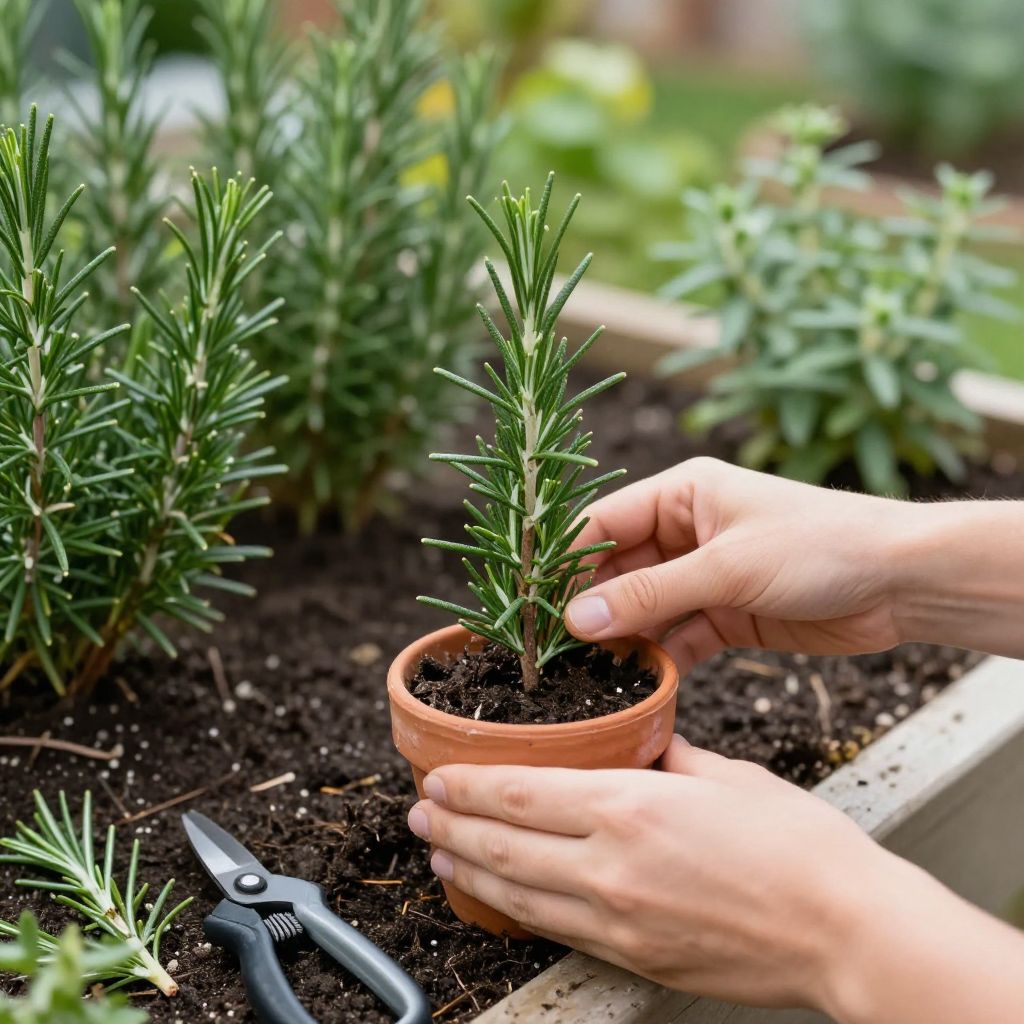
Can you propagate rosemary? Yes—you can, and it’s one of the easiest herbs to multiply at home if you start with healthy stems and give them warm, bright conditions. Rosemary roots well from cuttings, and you can also grow it from seed, though seeds are slower and less reliable.
If you want a new rosemary plant that matches the parent, cuttings are usually the best choice. With the right timing, sharp tools, and well-drained potting mix, you can turn one plant into several strong new starts for your garden or containers.
Can you propagate rosemary?
Yes. Rosemary (Salvia rosmarinus) is commonly propagated from stem cuttings, which root faster and more predictably than seed. Softwood or semi-hardwood cuttings taken from healthy, non-flowering growth usually give the best results, especially in spring or early summer when the plant is actively growing.
Why cuttings are the best way to propagate rosemary
Rosemary grown from cuttings is a clone of the parent plant, so you keep the same flavor, growth habit, and fragrance. That matters if you already have a plant that performs well in your climate or container.
Seed propagation is possible, but it takes longer and seedlings can vary. For most home gardeners, cuttings are faster, simpler, and more dependable.
Best reasons to choose cuttings
- You get a plant that is genetically identical to the parent.
- New plants usually establish faster than seedlings.
- You can use prunings from an existing rosemary plant.
- The method works well for garden beds, pots, and indoor herb growing.
How to propagate rosemary from cuttings
Take 4- to 6-inch stem cuttings from healthy, non-flowering shoots. Remove the lower leaves, place the stems in a free-draining mix, and keep them lightly moist in bright, indirect light. Most cuttings root best when the medium stays airy rather than wet.
What you need
- A healthy rosemary plant
- Sharp, clean snips or scissors
- Small pots or a tray with drainage holes
- Seed-starting mix or a gritty potting mix
- Optional: rooting hormone
- A clear cover or plastic bag, if your air is very dry
Step-by-step cutting method
- Select a vigorous stem that is not flowering and has fresh green growth.
- Cut a 4- to 6-inch section just below a leaf node.
- Strip leaves from the lower half of the cutting.
- If the stem is woody at the base, gently trim just below a node to expose fresh tissue.
- Dip the cut end in rooting hormone if you want extra insurance, though it is not required.
- Insert the cutting into moist, well-drained mix so at least one bare node is below the surface.
- Firm the mix lightly around the stem.
- Place in bright, indirect light and keep the medium barely moist.
Softwood vs. semi-hardwood cuttings
Softwood cuttings come from tender new growth and root quickly, but they dry out more easily. Semi-hardwood cuttings come from slightly firmer stems and are often more resilient. Either can work well if the cutting is healthy and the mix drains freely.
How to root rosemary cuttings successfully
Rosemary roots best in warmth, light, and excellent drainage. A mix that holds a little moisture but never stays soggy gives the stem enough oxygen to form roots. Overwatering is the most common reason cuttings fail.
Ideal rooting conditions
- Light: bright, indirect sunlight
- Temperature: warm room conditions, not cold drafts
- Moisture: slightly moist, never saturated
- Airflow: gentle airflow helps prevent rot
If you use a humidity cover, vent it regularly. Rosemary likes some humidity while rooting, but stagnant, wet air can encourage fungal problems.
How long rooting takes
Rooting time varies with temperature, light, and the type of cutting. Some cuttings root in a few weeks, while others take longer. A gentle tug after several weeks can tell you whether roots have formed, but avoid pulling too often because it can disturb new growth.
Can you propagate rosemary in water?
You can root rosemary in water, but it is usually less reliable than rooting in soil or a gritty mix. Water-rooted cuttings often form fragile roots that struggle when transplanted, especially if they stay in water too long.
If you try water propagation, change the water regularly and move the cutting into potting mix as soon as roots are a few inches long. For most gardeners, soil propagation is the better long-term method.
Water propagation tips
- Use a clean jar and fresh water.
- Remove leaves that would sit below the waterline.
- Keep the jar in bright, indirect light.
- Transfer to potting mix promptly once roots appear.
Can you propagate rosemary from seed?
Yes, but seed propagation is slower and less predictable than cuttings. Rosemary seed can germinate unevenly, and young seedlings grow slowly at first. If you want a true-to-type plant quickly, cuttings are usually the better option.
Seed may be worth trying if you cannot access a mature rosemary plant or if you want to experiment. Use fresh seed and a light, sterile seed-starting mix, and expect variable results.
Best planting mix and container for rosemary cuttings
Rosemary dislikes heavy, waterlogged soil. For propagation, use a light mix that drains quickly, such as seed-starting mix amended with perlite or coarse sand. A small pot with drainage holes is better than a large container that stays wet too long.
Good mix characteristics
- Loose and airy
- Low in excess compost or rich organic matter
- Moisture-retentive enough to prevent drying out
- Fast-draining to reduce stem rot
If you are potting up rooted cuttings later, choose a container that is only slightly larger than the root ball. Oversized pots hold too much moisture and can slow establishment.
When to propagate rosemary
The best time depends on your climate and whether the plant is indoors or outdoors. In many regions, spring and early summer are ideal because rosemary is actively growing and stems root more readily. In mild climates, you may also take cuttings in early fall.
Avoid taking cuttings during extreme heat, drought stress, or cold weather. A stressed parent plant is less likely to produce strong, healthy cuttings.
Signs the parent plant is ready
- Healthy green growth
- No obvious pest damage
- No active flowering on the stems you plan to cut
- Firm stems that are not wilted or diseased
How to care for young rosemary plants
Once a cutting roots, move it gradually into stronger light and slightly drier conditions. Young rosemary plants need careful watering, good drainage, and enough sun to keep growth compact and healthy.
Aftercare basics
- Increase light slowly to avoid shock.
- Water when the top layer of mix feels dry, not on a fixed schedule.
- Pinch back soft tips to encourage branching.
- Protect young plants from heavy rain and cold snaps.
For outdoor planting, choose a site with full sun and sharply draining soil. Rosemary often struggles in heavy clay unless the bed is raised or heavily amended for drainage.
Common problems when propagating rosemary
Most propagation failures come from too much water, poor drainage, weak light, or cuttings taken from unhealthy stems. If you know what to watch for, you can usually correct the problem early.
Problem: The cutting turns black or mushy
This usually means rot. Remove the cutting, discard any damaged tissue, and start again in a drier, airier mix. Reduce watering and make sure the pot drains freely.
Problem: The cutting wilts and dries out
The air may be too dry, the light too intense, or the stem too leafy for its rootless state. Trim off a little more foliage, move it out of direct sun, and use a humidity cover if needed.
Problem: No roots after several weeks
Patience matters, but stalled cuttings often need better warmth or a fresher stem. Try a new cutting from active growth and keep conditions stable.
Problem: Yellowing leaves
Yellowing can signal overwatering, low light, or poor drainage. Let the mix dry slightly, improve light, and avoid heavy compost-rich soil while the cutting is rooting.
Pruning and harvesting rosemary for propagation
Light pruning can give you the material you need for cuttings while also keeping the parent plant tidy. Harvest from healthy stem tips rather than cutting deep into old woody growth unless you are shaping the plant carefully.
When harvesting rosemary for kitchen use, avoid removing too much at once from a small plant. Keeping enough foliage on the parent plant helps it recover and keeps future cuttings healthy.
Outdoor vs. indoor rosemary propagation
Indoor propagation is often easier if you can control temperature and light. A bright windowsill, grow light, or sheltered indoor space can help cuttings root without weather stress.
Outdoor propagation can work well in mild weather, but protect cuttings from hot sun, heavy rain, wind, and sudden cold. In cooler climates, many gardeners root rosemary indoors and move it outside after it has developed a strong root system.
How to know when a rosemary cutting is ready to pot up
A rooted cutting will resist a gentle tug, and you may see roots emerging from the drainage holes or the edge of the pot. New growth is another good sign, but visible top growth alone does not always mean the root system is strong enough.
Pot up rooted cuttings carefully and keep the new plant in a slightly larger container with excellent drainage. Water lightly after transplanting, then allow the mix to dry a bit between waterings.
Simple troubleshooting checklist
- Use healthy, non-flowering stems.
- Choose a small pot with drainage holes.
- Keep the mix moist, not soggy.
- Provide bright, indirect light while rooting.
- Move rooted plants gradually into stronger sun.
- Avoid rich, heavy soil that stays wet.
Conclusion
So, can you propagate rosemary? Absolutely—and cuttings are the most reliable way to do it. Start with healthy stems, use a fast-draining mix, and keep the young plants warm, bright, and lightly moist. If you want to expand your herb garden, take a few cuttings from your best plant and root them this season.
For more herb-growing help, you may also want to read about how to grow rosemary and general herb garden care.