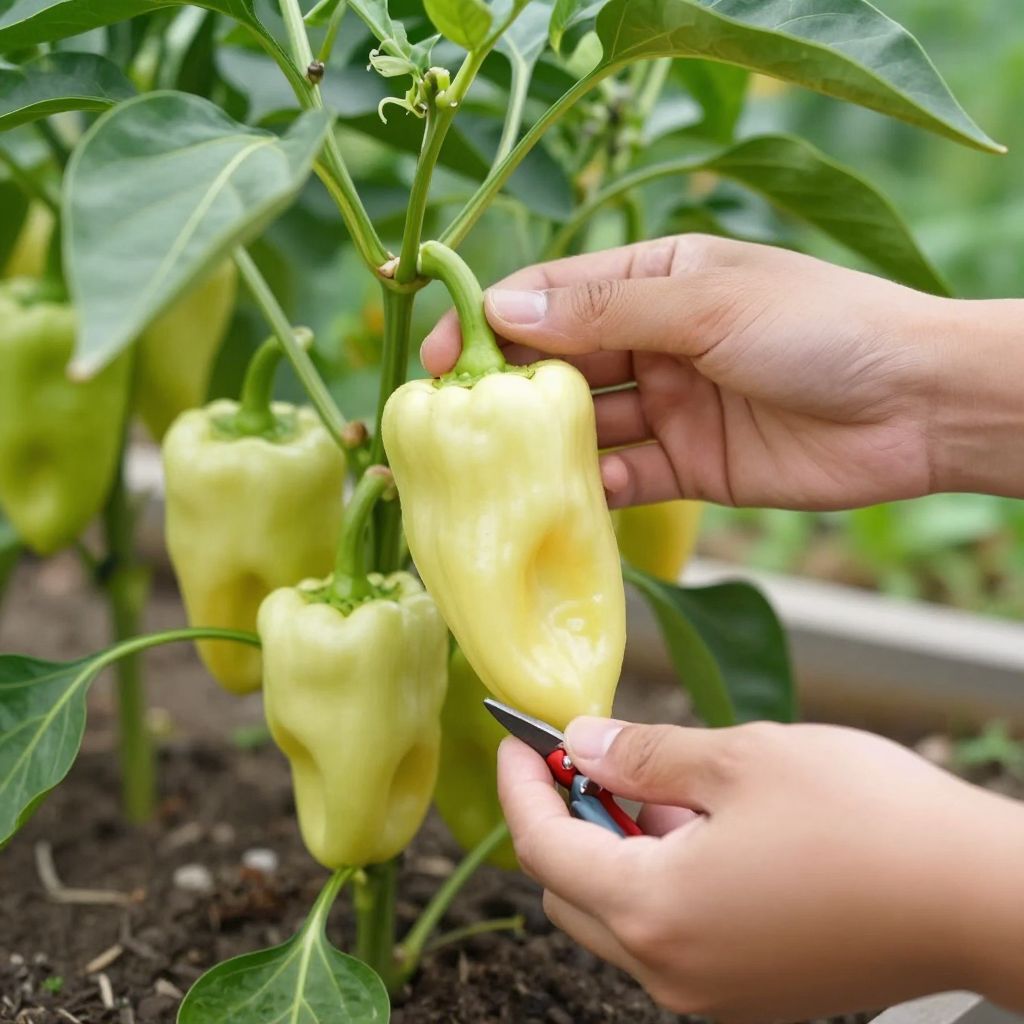
If you’re wondering when to harvest banana peppers, the best answer is: pick them once the fruits have reached usable size, firm texture, and the color you want. Many gardeners harvest banana peppers when they are pale yellow-green and about 4 to 6 inches long, but you can also wait for full ripeness if you want a sweeter, hotter pepper.
The right timing depends on the variety, weather, and how you plan to use the peppers. A plant can keep producing longer when you harvest regularly, so learning the signs of readiness helps you get better flavor and more peppers overall.
When To Harvest Banana Peppers?
Harvest banana peppers when the pods are full-sized, glossy, and firm, usually before the seeds become hard and the skin starts to dull. Most are picked at the yellow stage, but they can also be harvested green for a milder taste or red when fully ripe for more sweetness and heat.
How to Tell Banana Peppers Are Ready
Banana peppers do not have one exact harvest day. Instead, look for a combination of size, color, texture, and plant maturity.
Size and shape
Most banana peppers are ready when they are about 4 to 6 inches long, though some varieties may be a little shorter or longer. The pepper should look plump and well-formed, not thin or underdeveloped.
Color changes
Banana peppers are commonly harvested when they turn pale yellow or creamy yellow. If you leave them on the plant longer, many will deepen to orange and then red. Yellow is the standard harvest stage for most home gardeners, but the best stage depends on your flavor preference.
Texture and firmness
Ripe-for-picking banana peppers should feel firm when gently squeezed. If the pepper is soft, wrinkled, or leathery, it has likely been left on the plant too long or has been stressed by heat, drought, or pests.
Seed development
As peppers mature, the seeds inside become more developed and the flesh may become thicker. If you want a smoother texture and milder flavor, harvest before the seeds fully harden.
Harvesting at Different Stages
You can pick banana peppers at several stages, and each one gives a slightly different flavor and use. The plant will usually keep producing as long as you keep harvesting gently.
Green stage
Green banana peppers are harvested early. They are usually milder, crisp, and a little less sweet than yellow peppers. This stage is useful if you want a firmer texture or prefer a less developed flavor.
Yellow stage
This is the most common harvest point. Yellow banana peppers are still mild, but they have a fuller flavor and a more classic banana pepper look. If you are unsure when to pick, this is a safe stage for most gardeners.
Orange to red stage
Letting banana peppers stay on the plant longer can increase sweetness and sometimes heat. The skin may also become thinner or more delicate. Harvesting at this stage works best if you want fully ripe peppers and do not mind slower production from the plant.
How Often to Check Your Plants
Once peppers start sizing up, check them every few days. In warm weather, fruit can change quickly, and a pepper can go from perfect to overripe faster than you expect.
- Check every 2 to 3 days during peak season.
- Inspect the undersides of leaves and hidden fruit clusters.
- Harvest promptly after rain or heavy watering if fruit is growing quickly.
Regular picking encourages the plant to keep flowering and setting new fruit. If peppers stay on the plant too long, production can slow down.
How to Harvest Banana Peppers the Right Way
Use clean scissors, pruning snips, or a sharp knife to cut the pepper from the plant. Leaving a short stem attached helps reduce damage to the fruit and the plant.
- Hold the pepper gently with one hand.
- Cut the stem about 1/4 to 1/2 inch above the fruit.
- Avoid twisting hard, which can break branches.
- Place harvested peppers in a shallow container to prevent bruising.
If the stem is tough, do not pull. Snapping fruit off by hand can tear the plant and reduce future harvests.
What Affects Harvest Timing?
Several growing conditions can change when banana peppers are ready. A plant in one garden may ripen earlier or later than the same variety in another yard.
Sunlight
Banana peppers usually ripen best in full sun. If plants receive too little light, fruit may take longer to size up and color may stay pale longer than expected.
Temperature
Warm days and mild nights help peppers mature. Very hot weather can slow flowering or cause blossoms to drop, while cool nights can delay ripening.
Watering
Even moisture supports steady fruit development. Irregular watering can lead to slower growth, flower drop, or fruit that looks dull and thin-walled.
Soil and nutrition
Well-drained soil rich in organic matter helps peppers mature evenly. Too much nitrogen can push leafy growth instead of fruit, which may delay harvest. Compost is usually a better long-term improvement than heavy feeding.
Signs You Waited Too Long
Overripe banana peppers are not always ruined, but they may be less tender and less productive for the plant. Watch for these signs:
- Fruit turns deep orange or red and feels softer.
- Skin becomes wrinkled or dull.
- Seeds feel hard and the flesh seems thicker or tougher.
- The plant slows down production because fruit is staying on too long.
If you want more peppers from the same plant, harvest before the fruit becomes fully overripe. Leaving some fruit to mature fully is fine, but doing it with every pepper can reduce new growth.
Common Harvesting Mistakes to Avoid
Small mistakes can reduce quality or damage the plant. These are the most common ones to watch for.
- Picking too early: fruit may be small, underdeveloped, and less flavorful.
- Waiting for perfect color only: size and firmness matter just as much as color.
- Pulling fruit off by hand: this can break branches or tear the stem.
- Ignoring hidden peppers: fruit tucked under leaves may be ready before the ones you see first.
- Letting overripe fruit stay on the plant: this can slow new pepper production.
How Harvest Timing Affects Flavor
Banana peppers change flavor as they mature, so the best harvest time depends on what you like. Early-picked peppers are usually milder and crisper. Later-picked peppers are sweeter and may have more bite.
If you are growing them for fresh eating, sandwiches, or pickling, many gardeners prefer the yellow stage. If you want a stronger flavor, let a few peppers ripen to orange or red and compare them.
Keeping the Plant Productive After Harvest
Good harvest timing is only part of the job. A healthy plant can keep producing for a long time if you maintain it well.
Remove damaged fruit
Take off any split, sunscalded, or pest-damaged peppers. These can attract insects or encourage disease.
Support the plant
Use a stake or cage if branches bend under the weight of fruit. Supporting the plant helps prevent breakage and keeps peppers cleaner.
Watch for pests and disease
Check for aphids, flea beetles, hornworms, and signs of leaf spot or blossom-end rot. Stress from pests or irregular watering can delay ripening and reduce harvest quality.
Keep picking regularly
Frequent harvesting often leads to more flowers and more fruit. A plant that is allowed to hold too many mature peppers may slow down.
Indoor and Container-Grown Banana Peppers
If you grow banana peppers in pots or indoors under strong light, the harvest signs are the same, but timing can shift a little. Container plants may dry out faster, which can speed up ripening or cause uneven fruit development if watering is inconsistent.
For container plants, check moisture often and make sure the pot drains freely. A healthy container pepper with enough light can produce fruit just as reliably as an in-ground plant, but it may need closer attention during hot, dry weather.
Quick Harvest Checklist
Before you pick, use this simple checklist:
- Fruit is the expected length for the variety.
- Skin is smooth, glossy, and firm.
- Color matches the stage you want: green, yellow, orange, or red.
- The pepper detaches cleanly with a cut, not a yank.
- The plant still has healthy leaves and new blossoms.
Conclusion
When to harvest banana peppers comes down to watching the fruit, not the calendar. Pick them when they are firm, full-sized, and the color you prefer, then keep harvesting regularly to encourage more peppers. If you are unsure, start with one pepper at the yellow stage and compare it with a later-ripened one so you can learn what your garden produces best.
For more practical pepper-growing guidance, you may also want to read related articles on how to grow peppers in containers and common pepper plant problems and fixes.