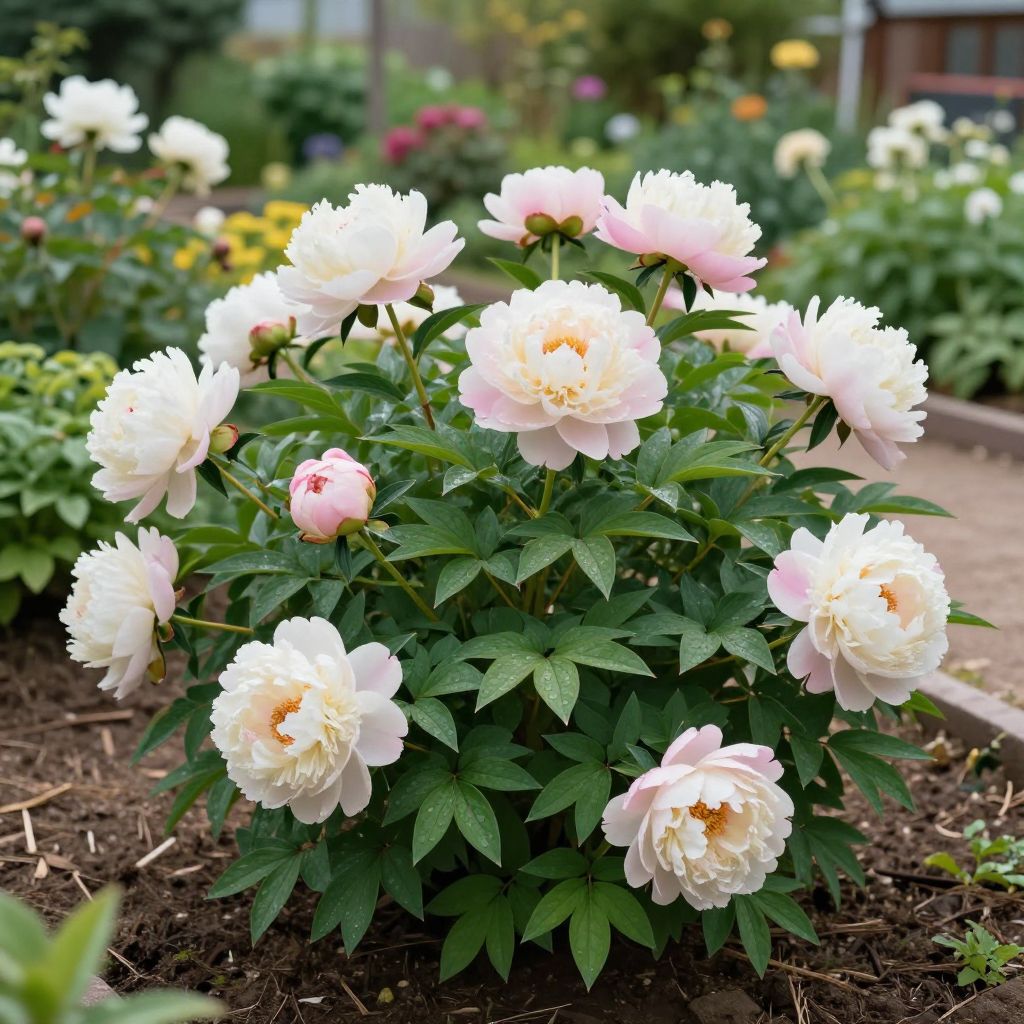
Are peonies in season? Yes—but the season is fairly short, and it depends on your climate and the type of peony you grow. Most garden peonies bloom from late spring into early summer, with the exact timing shifting by region, weather, and variety.
If you want the longest display possible, it helps to know when peonies flower, what conditions they need, and why healthy plants sometimes bloom poorly. Here’s how to tell when peonies are in season and how to keep them performing well year after year.
Are peonies in season?
Peonies are in season in late spring to early summer in most temperate gardens. Herbaceous peonies usually bloom first, followed by tree peonies in many climates, and intersectional (Itoh) peonies often bridge the gap. Cool spring weather can delay bloom, while warm weather can bring flowers on sooner.
When do peonies bloom?
Peony bloom time is best thought of as a window rather than a fixed date. In many areas, flowers open anywhere from April through June, but local conditions matter more than the calendar.
What affects bloom timing?
- Climate zone and latitude: cooler regions bloom later than warmer ones.
- Spring temperatures: a warm spring can speed up flowering.
- Sun exposure: more sun often means earlier, stronger bloom.
- Plant type: herbaceous, tree, and Itoh peonies do not always bloom at the same time.
- Plant age: young plants may take a few years to flower well.
If you are shopping for peonies, ask the nursery about early-, mid-, or late-season bloom times. Planting a mix of those types is the easiest way to stretch the season.
What peonies need to bloom well
Peonies are long-lived perennials that reward patience. They flower best when planted in the right spot and left undisturbed once established.
Sunlight
Give peonies at least 6 hours of direct sun daily for the best flowering. In hot climates, a little afternoon shade can help blooms last longer, but too much shade usually leads to fewer flowers and weaker stems.
Soil and drainage
Peonies prefer fertile, well-drained soil. Heavy, soggy ground can cause root rot and poor growth, so drainage matters as much as fertility.
- Work in compost to improve soil structure.
- Avoid planting where water pools after rain.
- If soil is clay-heavy, raise the planting area slightly or improve drainage before planting.
Planting depth
Planting depth is one of the most common reasons peonies fail to bloom. The eyes, or growing buds, should be placed shallowly—generally about 1 to 2 inches below the soil surface in many climates.
If peonies are planted too deep, they may grow leaves but produce few or no flowers. Too shallow, and the roots may dry out or heave in winter.
How to care for peonies through the season
Once peonies are established, care is fairly simple. The main job is to support healthy foliage, strong roots, and good air circulation so the plant can store energy for next year’s blooms.
Watering
Water newly planted peonies regularly until they are established, especially during dry spells. Mature plants are more drought-tolerant, but they still benefit from deep watering when the soil is dry.
- Water at the base of the plant rather than overhead when possible.
- Let the top few inches of soil dry slightly between waterings.
- Mulch lightly to conserve moisture, but keep mulch off the crown.
Overwatering is a common mistake. Peonies dislike constantly wet soil more than they dislike brief dry periods.
Feeding
Peonies usually do not need heavy fertilizing. A light top-dressing of compost in spring is often enough in good soil. If growth is weak, a balanced, slow-release fertilizer can help, but avoid overdoing nitrogen, which can produce lush leaves and fewer blooms.
Staking and support
Many peonies have large flowers that can bend stems, especially after rain. Use a ring support, peony cage, or discreet stakes early in the season before stems flop outward.
Supporting the plant early is easier than trying to prop up heavy blooms later.
Why peonies sometimes fail to bloom
If your peony is healthy but not flowering, the problem is usually environmental or related to planting depth, not a disease. The good news is that many bloom issues can be corrected.
Common reasons for no flowers
- Too much shade: the plant may grow leaves but skip blooms.
- Planting too deep: buds buried too far below the surface often stay dormant.
- Recent transplanting: peonies may pause blooming after being moved.
- Too much nitrogen: all foliage, little flowering.
- Late frost: buds may be damaged before opening.
- Young plant: some peonies need a few seasons to settle in.
How to fix it
- Check that the plant gets enough sun.
- Inspect planting depth and adjust if necessary in the dormant season.
- Reduce high-nitrogen feeding.
- Do not cut back foliage too early in summer.
- Be patient with newly planted peonies; they often improve with age.
Seasonal peony care from spring to fall
Peonies follow a simple rhythm through the year. Matching your care to that cycle helps the plant store energy for the next bloom season.
Spring
As shoots emerge, remove winter mulch if it is packed tightly over the crown. Watch for frost warnings, because tender new growth can be damaged by a sudden cold snap.
When buds appear, keep the soil evenly moist and install support before stems get tall.
After flowering
Deadhead spent blooms if you want the plant to look tidy, but leave the foliage in place. The leaves are still feeding the roots and building next year’s flower buds.
Do not cut peonies to the ground right after bloom. That is one of the fastest ways to weaken next year’s display.
Late summer and fall
Let foliage remain until it yellows naturally. Once leaves decline in fall, you can cut herbaceous peonies back to the ground and remove fallen debris to reduce disease carryover.
Tree peonies are different: they are woody shrubs, so only remove dead or damaged stems and avoid cutting them back like herbaceous peonies.
Common pests and diseases
Healthy peonies are fairly resilient, but a few issues can affect flowers and foliage. Good spacing, sun, and cleanup go a long way toward prevention.
Botrytis blight
This fungal disease is most likely during cool, wet weather. It can cause blackened buds, gray mold, or collapsing stems.
- Remove affected plant parts promptly.
- Improve air circulation around the plant.
- Water at soil level instead of over the foliage.
- Clean up dead leaves and stems in fall.
Powdery mildew
Powdery mildew can appear as a white coating on leaves, especially in humid conditions. It is usually more unsightly than fatal, but severe cases can weaken the plant.
Space plants properly, avoid overcrowding, and keep the area around the plant clean.
Ants on buds
Ants are often seen on peony buds, but they are usually harmless. They are attracted to the sweet nectar on the buds and do not need to be controlled unless they are causing a nuisance indoors or on cut flowers.
Can you cut peonies for bouquets when they are in season?
Yes. Peonies make excellent cut flowers, and the best time to harvest them is when buds are soft and marshmallow-like but not fully open. If you cut them too tight, they may never open properly indoors.
Simple cutting tips
- Cut in the cool part of the day.
- Use clean, sharp pruners or scissors.
- Leave plenty of foliage on the plant.
- Place stems immediately in clean water.
If you want the longest vase life, harvest buds at the “soft bud” stage. Fully open blooms are beautiful, but they fade faster.
How to extend the peony season in your garden
You cannot make peonies bloom for months, but you can stretch the display by choosing varieties with different bloom times and by growing more than one type.
Best ways to lengthen the season
- Plant early-, mid-, and late-blooming peonies.
- Combine herbaceous, tree, and Itoh peonies where climate allows.
- Grow in full sun for strong flowering.
- Keep plants healthy so they bloom reliably each year.
In a well-planned garden, peonies can provide several weeks of color even though each individual plant blooms for a relatively short time.
Planting and dividing: what you should know
Peonies dislike being moved, so choose the planting site carefully. If you must transplant or divide them, do it when the plant is dormant, and expect a recovery period before it flowers well again.
When to divide peonies
Division is usually only necessary if a plant is overcrowded or you need to move it. Because peonies resent disturbance, divide them sparingly and only when truly needed.
How to handle a move
- Dig wide to protect as many roots as possible.
- Replant promptly at the correct depth.
- Water thoroughly after planting.
- Be patient; bloom may be reduced for a season or two.
Conclusion
So, are peonies in season? Yes—usually in late spring to early summer, with exact timing shaped by your climate and the type of peony you grow. Give them full sun, well-drained soil, shallow planting, and steady but not excessive moisture, and they should reward you with reliable blooms.
If you are planning your garden for next year, now is a good time to note which peonies bloom early, midseason, or late, and to learn more about perennial border planning and basic spring flower care for a longer, more colorful display.