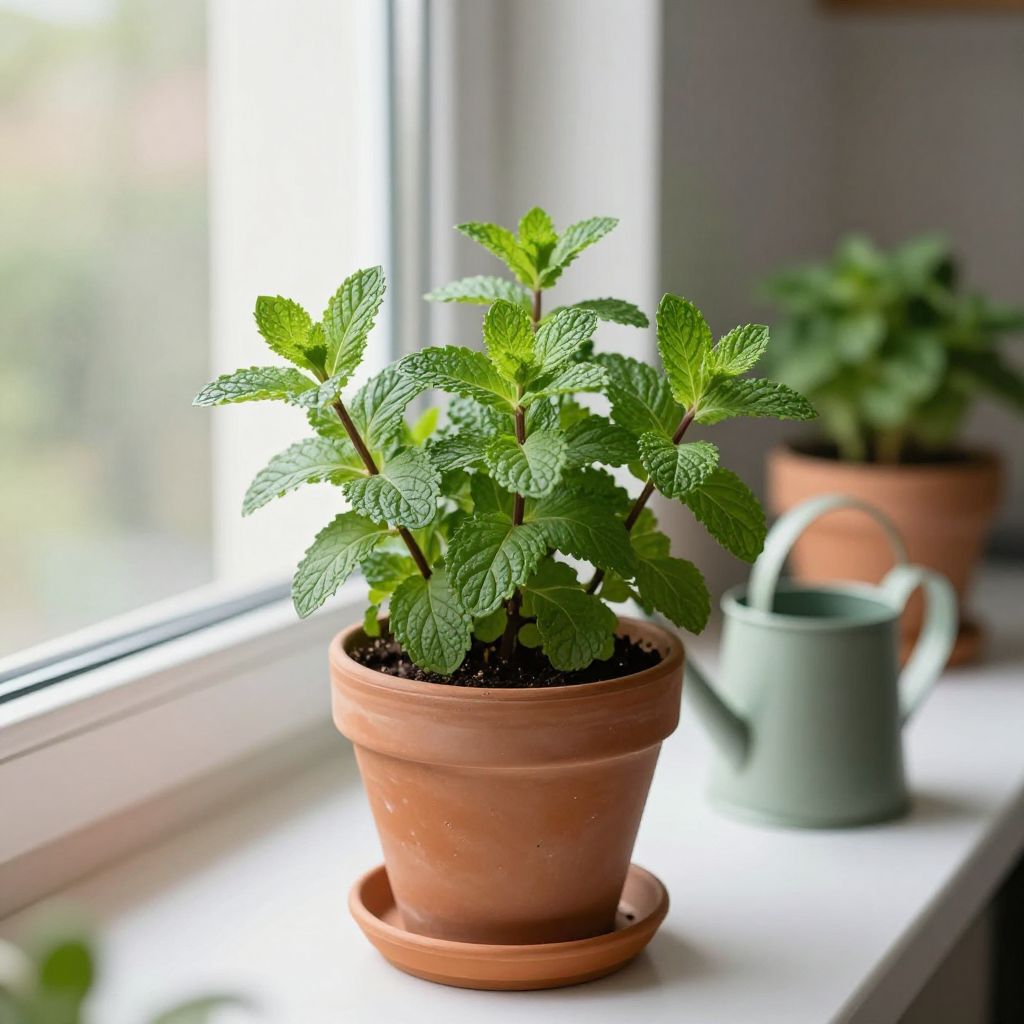
Can you grow mint indoors? Yes, and it’s one of the easiest herbs to keep on a sunny windowsill or under grow lights. Mint adapts well to containers, grows quickly, and tolerates regular harvesting, which makes it a great choice for beginners.
The main challenge is not getting mint to grow, but keeping it healthy, compact, and contained. With the right pot, light, water, and pruning, you can keep mint productive indoors for months or even years.
Can you grow mint indoors?
Yes, mint grows very well indoors if you give it bright light, consistently moist but well-drained soil, and regular trimming. The biggest indoor issues are legginess from low light, root crowding, and overwatering. A pot with drainage and a bright windowsill or grow light usually gives the best results.
Why mint does well indoors
Mint is a vigorous perennial herb that naturally spreads, so it adapts well to container life. Indoors, you can control moisture, temperature, and harvesting, which often keeps the plant tender and usable longer than outdoor plants exposed to heat, drought, or pests.
What mint needs most
- Light: bright indirect light or several hours of direct sun
- Water: evenly moist soil, never soggy
- Drainage: a pot with holes and loose potting mix
- Pruning: regular pinching to prevent leggy growth
- Space: room to spread, but not too much, since mint likes to fill a container
Choosing the right mint and container
Common mint types such as Mentha spicata (spearmint) and Mentha × piperita (peppermint) are both suitable for indoor growing. Choose a healthy nursery plant or start from a cutting if you want a faster, more reliable indoor start than seed.
Best pot size and material
Start with a pot about 6 to 10 inches wide for a young plant. As the plant grows, move it to a container around 8 to 12 inches wide, or slightly larger if you want a fuller clump.
- Use a pot with at least one drainage hole.
- Terracotta dries faster, which can help if you tend to overwater.
- Plastic or glazed pots hold moisture longer, which may suit dry indoor air.
Mint spreads by runners, so it does better in a container than in a mixed indoor planter. If you plant it with other herbs, it can quickly crowd them out.
Best soil for indoor mint
Mint prefers a rich, loose potting mix that drains well but still holds some moisture. A standard indoor potting mix works well, especially if you improve it with a little compost or perlite for structure.
Simple potting mix approach
- Use quality potting soil, not garden soil.
- Mix in a small amount of compost for gentle nutrition.
- Add perlite or coarse sand if the mix seems too dense.
Good drainage matters more than heavy feeding. If soil stays wet for too long, mint roots can decline quickly indoors.
How much light mint needs indoors
Mint grows best with bright light for much of the day. A south- or west-facing window often works well, though very hot direct sun through glass can scorch leaves in some climates. East-facing light is usually fine if the plant gets enough brightness overall.
Signs your mint needs more light
- Long, weak stems
- Pale leaves
- Large gaps between leaf pairs
- Slow growth even when the soil is moist
If natural light is limited, a simple LED grow light can make a big difference. Keep the light close enough to support compact growth, and rotate the pot every week or so so the plant grows evenly.
Watering indoor mint the right way
Mint likes steady moisture, but indoor pots dry more slowly than garden beds. Water when the top inch of soil feels dry, then water thoroughly until excess drains out. Empty saucers so the roots do not sit in water.
Common watering mistakes
- Overwatering: causes yellowing leaves and weak roots
- Underwatering: causes drooping, crispy edges, and slowed growth
- Inconsistent watering: leads to stress and poor regrowth after harvest
Indoor humidity also affects mint. In very dry homes, the plant may need closer attention, especially near heating vents. Keep it away from hot, dry airflow whenever possible.
Temperature and indoor placement
Mint prefers moderate indoor temperatures and usually does well in typical household conditions. Avoid placing it next to radiators, heating vents, or cold drafty windows. Stable conditions help the plant stay leafy and productive.
If your home gets very warm and dry, mint may need more frequent watering and more careful monitoring for spider mites. If the room is cool and dim, growth may slow, but the plant can still survive if light is adequate.
How to plant mint indoors
You can start mint indoors from a nursery plant, division, or stem cutting. Seeds are possible, but they are slower and less predictable for home gardeners who want a quick harvest.
Step-by-step planting guide
- Choose a pot with drainage holes.
- Fill it with moist, loose potting mix.
- Set the mint at the same depth it was growing before.
- Firm the soil gently around the roots.
- Water thoroughly and let excess drain away.
- Place the pot in bright light, then monitor moisture closely for the first couple of weeks.
If you are transplanting a store-bought herb pot, gently loosen circling roots before repotting. Many grocery-store herbs are crowded, so dividing them into two smaller pots can help them settle in better indoors.
Pruning and harvesting for a bushier plant
Regular harvesting is one of the best ways to keep mint compact indoors. Pinch or snip stems just above a leaf pair so the plant branches and fills out instead of becoming tall and sparse.
Harvesting tips
- Take the top few inches of stem growth.
- Leave enough leaves behind for the plant to keep growing.
- Harvest often, but avoid removing too much at once.
Never let indoor mint flower if you want the best leaf production. Flowering can slow leafy growth and make stems less tender. If buds appear, pinch them off early.
Fertilizing indoor mint
Mint is not a heavy feeder indoors. Too much fertilizer can produce lush but weak growth and reduce flavor. A light feeding during active growth is usually enough if your potting mix contains some compost or slow-release nutrition.
If the plant looks pale or growth is slow despite good light and moisture, a mild balanced houseplant or herb fertilizer can help. Follow the label directions carefully and avoid overfeeding, especially in winter when growth naturally slows.
Common indoor mint problems and fixes
Most indoor mint issues are easy to correct once you identify the cause. Watch for changes in leaf color, stem length, and soil moisture, because these often tell you what the plant needs.
Yellow leaves
Yellowing can come from overwatering, poor drainage, low light, or depleted soil. Check the pot first. If the mix stays wet for days, let it dry slightly and improve drainage before watering again.
Leggy growth
Long, weak stems usually mean the plant needs more light. Move it closer to a brighter window or use a grow light, then prune it back to encourage branching.
Wilting despite wet soil
This often points to root stress from soggy conditions. Let the plant dry a bit, make sure the pot drains freely, and avoid keeping the saucer full of water.
Brown leaf edges
Dry air, inconsistent watering, or too much direct sun through glass can cause leaf edges to crisp. Adjust placement and water more evenly.
Pests and diseases to watch for
Indoor mint is usually less troubled by pests than outdoor mint, but it can still attract aphids, spider mites, or whiteflies. Check the undersides of leaves and new growth regularly, especially if the plant is crowded or stressed.
Simple pest control
- Rinse leaves with lukewarm water if pests are light.
- Remove badly infested stems.
- Improve airflow around the plant.
- Keep the plant isolated from other houseplants until the issue is under control.
Fungal problems are more likely when mint stays too wet or air cannot move around the foliage. Water the soil, not the leaves, and avoid dense, constantly damp conditions.
Propagating mint indoors
Mint is easy to propagate from stem cuttings, which is useful if you want a backup plant or a fresh start from a healthy parent. This is often more reliable than starting from seed indoors.
How to root a cutting
- Cut a healthy stem just below a leaf node.
- Remove the lower leaves.
- Place the stem in water or moist potting mix.
- Keep it in bright, indirect light.
- Once roots form, pot it up in a small container.
Water-rooted cuttings should be transplanted carefully once roots are a few inches long. Pot them into soil promptly so they can adapt to a more stable growing medium.
Can mint live indoors year-round?
Yes, mint can live indoors year-round if it gets enough light and regular care. That said, it may slow down in winter when days are shorter and indoor conditions are drier. Growth often picks up again in brighter months.
To keep it productive long term, refresh the potting mix occasionally, divide crowded plants when needed, and keep pruning. If the plant becomes woody, sparse, or rootbound, replacing it with a fresh cutting is often the easiest solution.
Quick indoor mint care checklist
- Use a pot with drainage holes.
- Grow in loose, well-drained potting mix.
- Place in bright light.
- Water when the top inch of soil dries.
- Pinch often to keep it bushy.
- Watch for pests and yellowing leaves.
- Repot or divide when roots fill the container.
Conclusion
So, can you grow mint indoors? Absolutely. Give it a bright spot, a draining pot, steady moisture, and regular trimming, and you can keep this herb healthy and harvestable inside your home. Start with one plant or cutting, then adjust light and watering based on how your space performs.
If you enjoy growing herbs and other compact plants indoors, you may also want to read about growing strawberries indoors for another useful container-growing project.