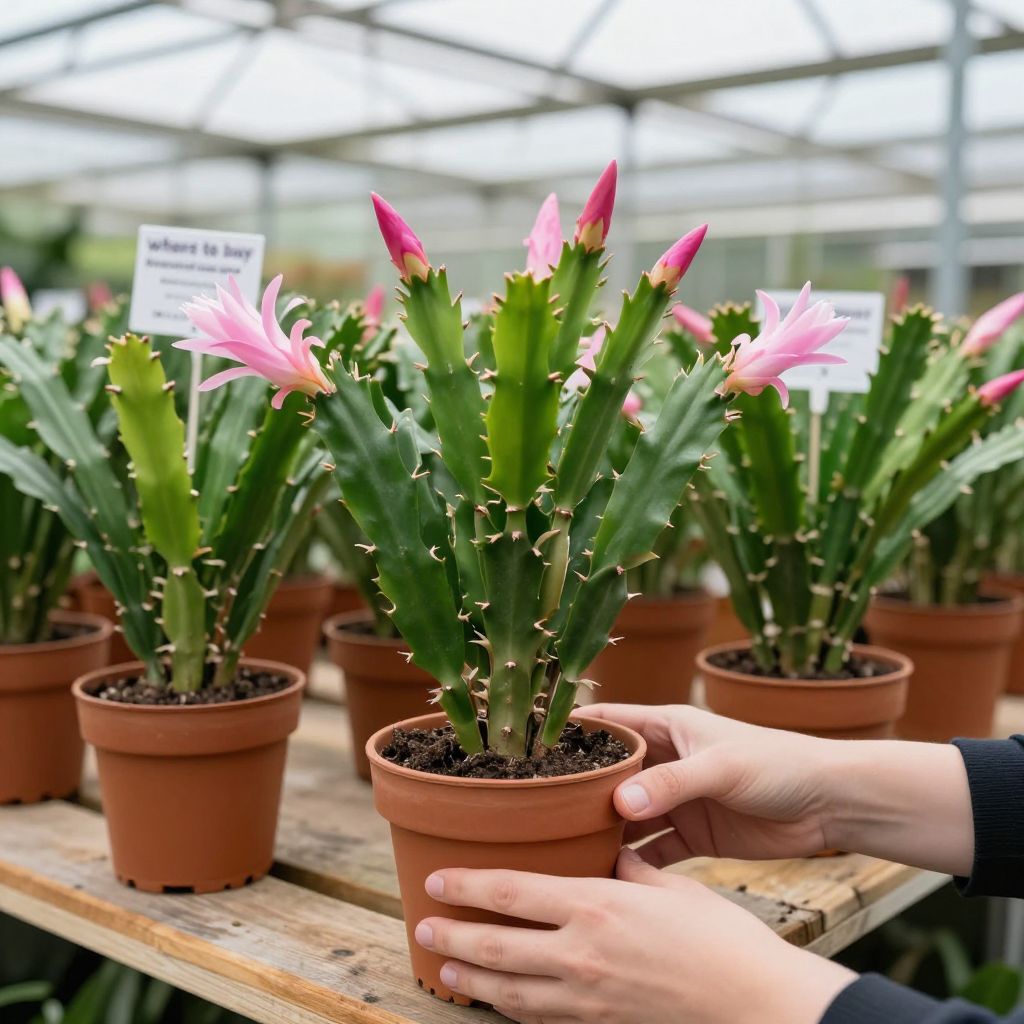
Wondering Christmas cactus where to buy and how to choose a healthy plant? The best place to buy one depends on whether you want a quick gift plant, a long-lasting houseplant, or a larger specimen for future blooms. A good purchase starts with a healthy plant, the right potting mix, and a seller who keeps it in bright, indirect light.
Christmas cactus is usually sold as Schlumbergera, most often Schlumbergera x buckleyi or closely related hybrids. Once you know what to look for, you can avoid weak, rootbound, or stressed plants and bring home one that settles in well.
Christmas cactus where to buy?
You can buy Christmas cactus at garden centers, independent nurseries, big-box stores, grocery stores, farmers’ markets, and reputable online plant shops. The best option is usually a local nursery with healthy stock, because you can inspect the plant in person for pests, firm stems, and fresh growth before you buy.
Best places to buy a Christmas cactus
Different sellers suit different needs. If you want the safest choice, buy locally and inspect the plant yourself. If you want a rare color or a larger plant, an online specialist may offer more selection.
1. Local garden centers and nurseries
This is often the best place to buy a Christmas cactus for beginners. Plants are usually better cared for, and staff may know how long the plant has been in stock.
- Look for plants with firm, flat segmented stems.
- Choose one with buds just beginning to form if you want blooms soon.
- Avoid plants sitting in waterlogged saucers or very dry, shriveled pots.
2. Big-box stores and supermarkets
These stores can be convenient and affordable, especially in the holiday season. The trade-off is that plant care may be inconsistent, so inspect carefully.
- Check the underside of stems for mealybugs or scale.
- Make sure the pot has drainage holes.
- Skip plants with yellowing segments, mushy stems, or dropped buds.
3. Online plant retailers
Online buying is useful if local options are limited or you want a specific cultivar. Choose sellers with clear plant photos, shipping details, and live-arrival policies.
- Read reviews for packing quality and plant condition on arrival.
- Confirm the plant size, not just the pot size.
- Check whether the plant is shipped bare-root or potted.
4. Plant swaps, local sales, and friends
Christmas cactus is easy to propagate, so you may find excellent plants through plant swaps or from friends. This can be a budget-friendly way to get a well-established plant.
- Ask whether the plant has bloomed reliably.
- Inspect for pests before bringing it home.
- Quarantine it away from other houseplants for a couple of weeks if possible.
How to choose a healthy plant
A healthy Christmas cactus should feel sturdy, not limp, and look evenly green with no major damage. A little budding is good; heavy flower damage, soft stems, or visible pests are warning signs.
What to inspect before you buy
- Stems: They should be firm and plump, not wrinkled or mushy.
- Leaves/segments: Look for even color and good turgor, not shriveling.
- Roots: If visible, they should not smell sour or look black and rotten.
- Buds: Small buds are fine, but avoid plants dropping buds in the store.
- Pests: Check for white cottony clusters, sticky residue, or fine webbing.
Signs to avoid
- Waterlogged soil with fungus gnats flying around the pot
- Soft, transparent, or collapsing stem segments
- Large gaps in the plant from dropped buds or damaged stems
- Plants that have been kept in hot, dry air near vents or doors
What to expect from store-bought Christmas cactus
Most store-bought plants are grown in peat-based mixes and decorative pots that may hold too much moisture. After purchase, your first job is to stabilize the plant rather than repotting it immediately unless the soil is soggy or the pot has no drainage.
After you bring it home
- Place it in bright, indirect light.
- Keep it away from heating vents, cold drafts, and direct afternoon sun.
- Check the soil before watering; let the top layer dry slightly between waterings.
- Inspect for pests over the next 1–2 weeks.
Do not rush to repot a blooming Christmas cactus. Sudden changes can trigger bud drop. If the plant is healthy and the pot drains well, wait until after flowering or until active growth resumes.
How to care for a newly purchased Christmas cactus
Christmas cactus is an epiphytic cactus, so it prefers a lighter, airier potting mix than desert cacti. Good drainage and steady, moderate moisture are more important than frequent feeding.
Light
Give it bright, indirect light. An east-facing window is often ideal, while a south or west window may need a sheer curtain.
Water
Water when the top inch or so of mix feels dry, then let excess water drain away. Never let the pot sit in standing water.
Soil
Use a well-draining mix, such as a houseplant mix amended with perlite or fine orchid bark. A heavy, compact soil can lead to root rot.
Temperature and humidity
Normal indoor temperatures suit it well, but avoid sudden swings. Moderate humidity helps, especially in dry homes, though it does not need a greenhouse environment.
When and how to repot
Repot only when needed, usually when roots fill the pot or the mix breaks down and stays wet too long. A pot only one size larger is usually enough.
- Choose a pot with drainage holes.
- Use fresh, airy potting mix.
- Handle the roots gently and avoid burying the stem segments deeply.
- Water lightly after repotting, then let the plant settle.
If the plant is blooming or full of buds, wait until after flowering unless the soil is clearly failing.
Common problems after purchase
Many issues show up after the plant leaves the store. Most are caused by too much water, too much sun, or a sudden change in environment.
Bud drop
Bud drop is often caused by moving the plant, temperature changes, dry air, or inconsistent watering. Keep conditions steady and avoid turning the pot repeatedly once buds form.
Yellowing or soft segments
This usually points to overwatering or poor drainage. Let the mix dry a bit more between waterings and check the roots if the plant feels unstable.
Wrinkled stems
Wrinkling can mean the plant is too dry, but it can also happen if roots are damaged and cannot absorb water. Check the potting mix and roots before watering heavily.
Pests
Mealybugs are the most common troublemaker on Christmas cactus. Remove small infestations with a cotton swab dipped in alcohol or use another suitable houseplant treatment, following label directions.
Can you buy one for outdoor growing?
In most climates, Christmas cactus is grown as an indoor houseplant or moved outdoors only in warm weather. If you live where temperatures stay mild, it may spend part of the year outside in bright shade, but it still needs protection from frost and harsh sun.
For outdoor placement, choose a sheltered spot with filtered light and excellent drainage. Bring the plant inside before cool nights or seasonal weather swings become a problem.
Propagation if you want more plants
Once you have a healthy plant, you can make more by stem cuttings. This is useful if you find a strong plant locally and want backups or gifts.
- Take a cutting with 2 to 4 stem segments.
- Let the cut end dry briefly before planting.
- Insert it into a lightly moist, well-draining mix.
- Keep it in bright, indirect light and avoid overwatering.
Propagation is easiest during active growth rather than while the plant is heavily blooming.
Buying tips that save time and money
- Buy from a seller that labels the plant clearly as Christmas cactus or Schlumbergera.
- Choose a plant with more healthy segments than flowers alone.
- Skip bargain plants that are already declining; they often need more recovery than they are worth.
- If ordering online, buy when temperatures are mild enough for shipping.
- Keep the receipt in case the plant arrives damaged or pest-infested.
Conclusion
If you are asking Christmas cactus where to buy, start with a local nursery if you can, then compare online specialists for selection. Inspect the plant for firm stems, healthy roots, and no pests, and bring it home only if the pot drains well and the plant looks stable. With the right purchase, you will have a houseplant that can bloom for years.
For more practical houseplant guidance, you may also enjoy reading about how to repot houseplants safely and the best indoor light for flowering plants.